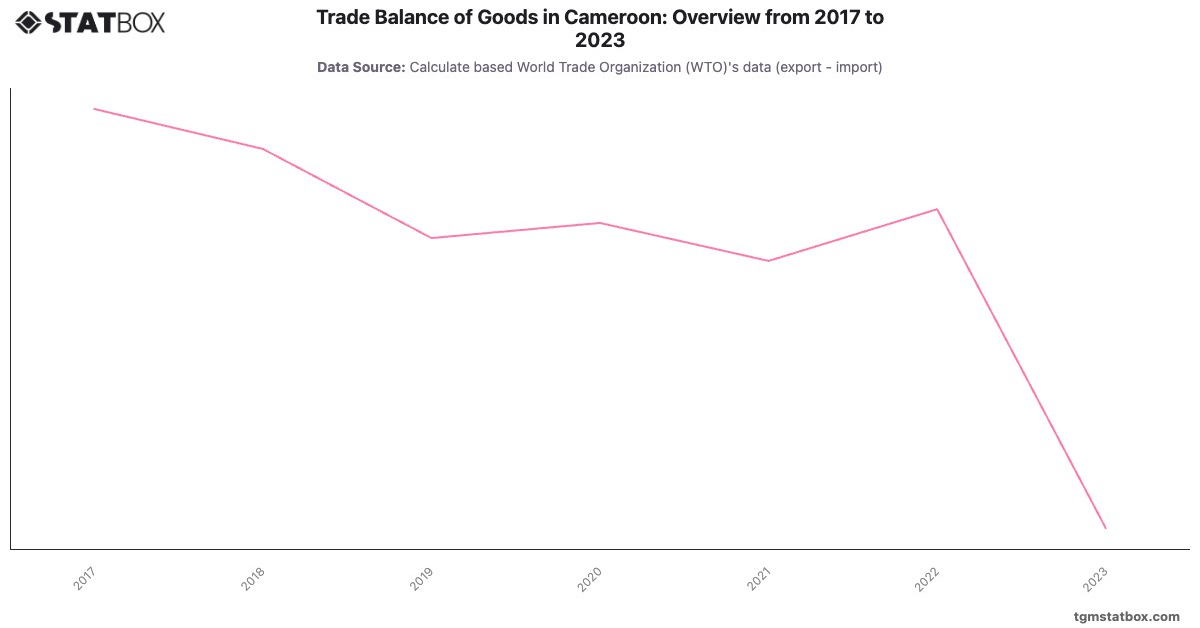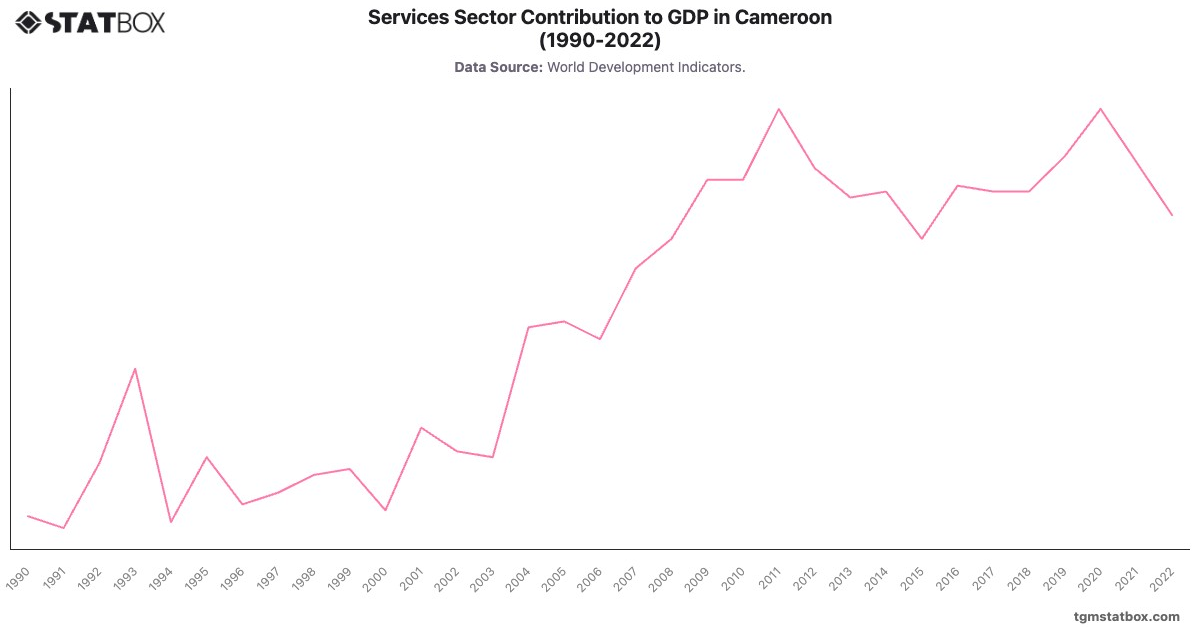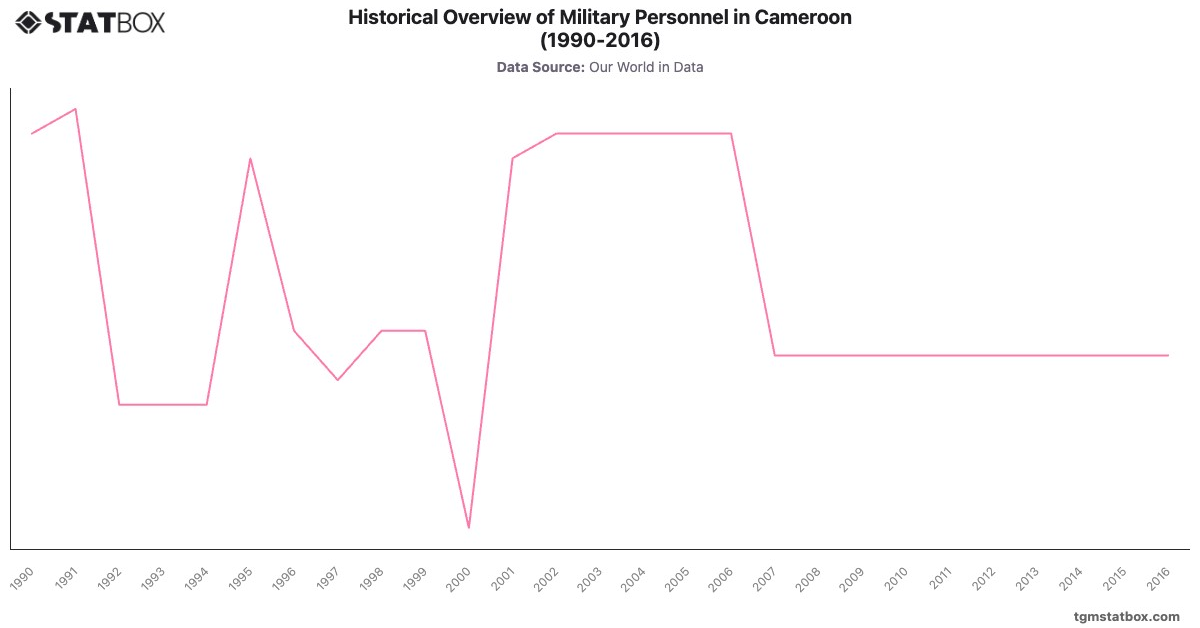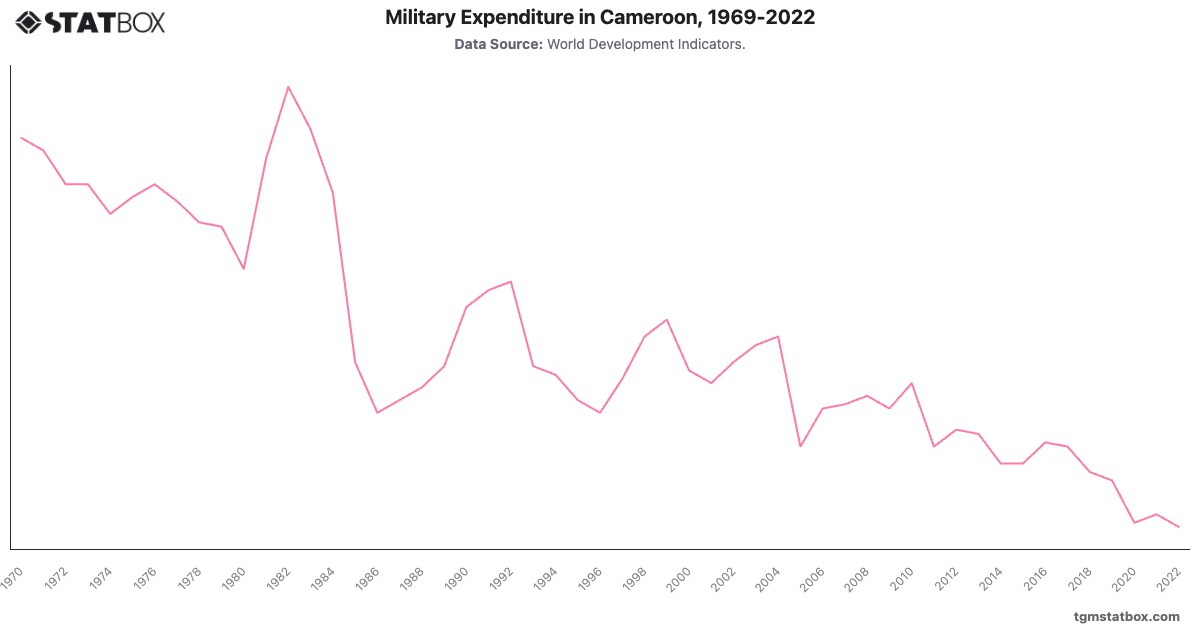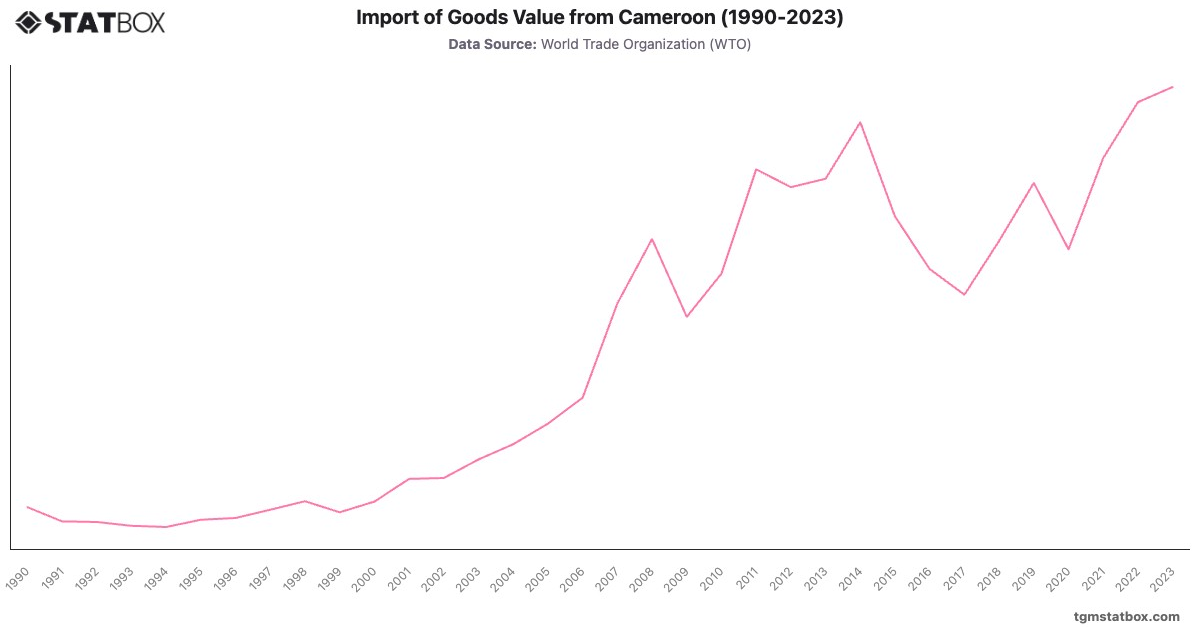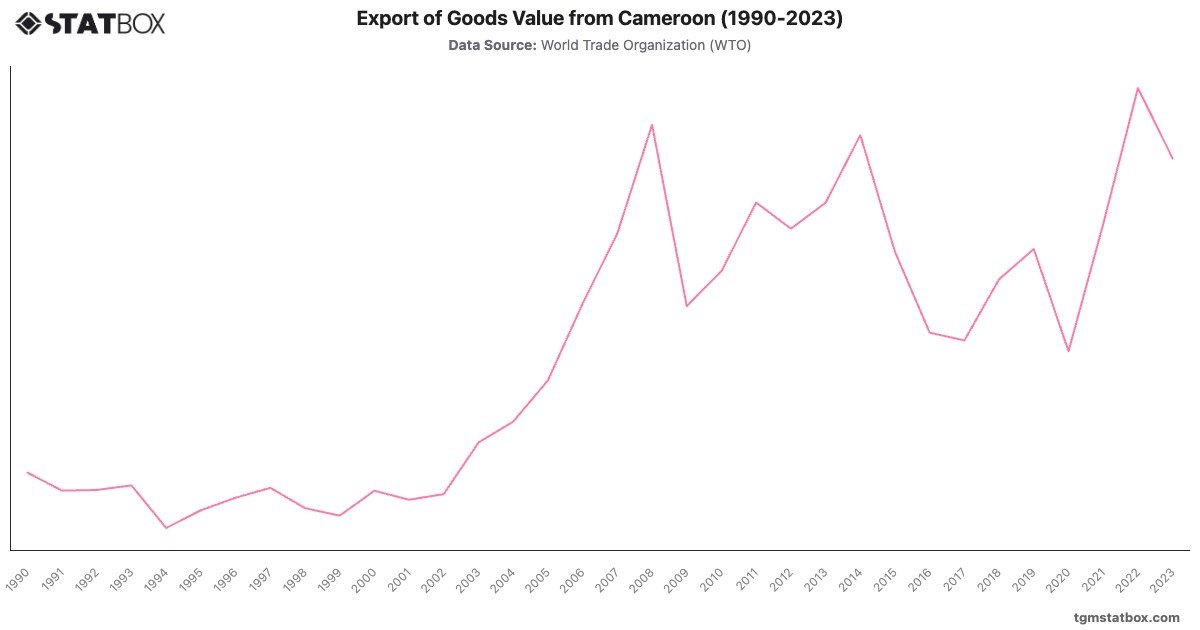
Cameroon's export value has experienced fluctuations influenced by its reliance on primary commodities like oil, cocoa, and timber. Starting at $2 billion in 1990, exports peaked at $5.2 billion in 2008, reflecting high global demand and favorable commodity prices. However, this growth was punctuated by sharp declines during global financial crises and oil price volatility, such as in 2009 and again in 2015 when exports dropped to $4 billion.
The post-pandemic recovery saw exports rise to $5.6 billion in 2022, driven by increased global demand for Cameroonian crude oil and agricultural goods. While exports slightly declined to $4.9 billion in 2023, the upward trajectory remains tied to ongoing efforts to diversify export products and improve trade agreements. Structural reforms and infrastructure development are expected to bolster long-term export stability.
The post-pandemic recovery saw exports rise to $5.6 billion in 2022, driven by increased global demand for Cameroonian crude oil and agricultural goods. While exports slightly declined to $4.9 billion in 2023, the upward trajectory remains tied to ongoing efforts to diversify export products and improve trade agreements. Structural reforms and infrastructure development are expected to bolster long-term export stability.
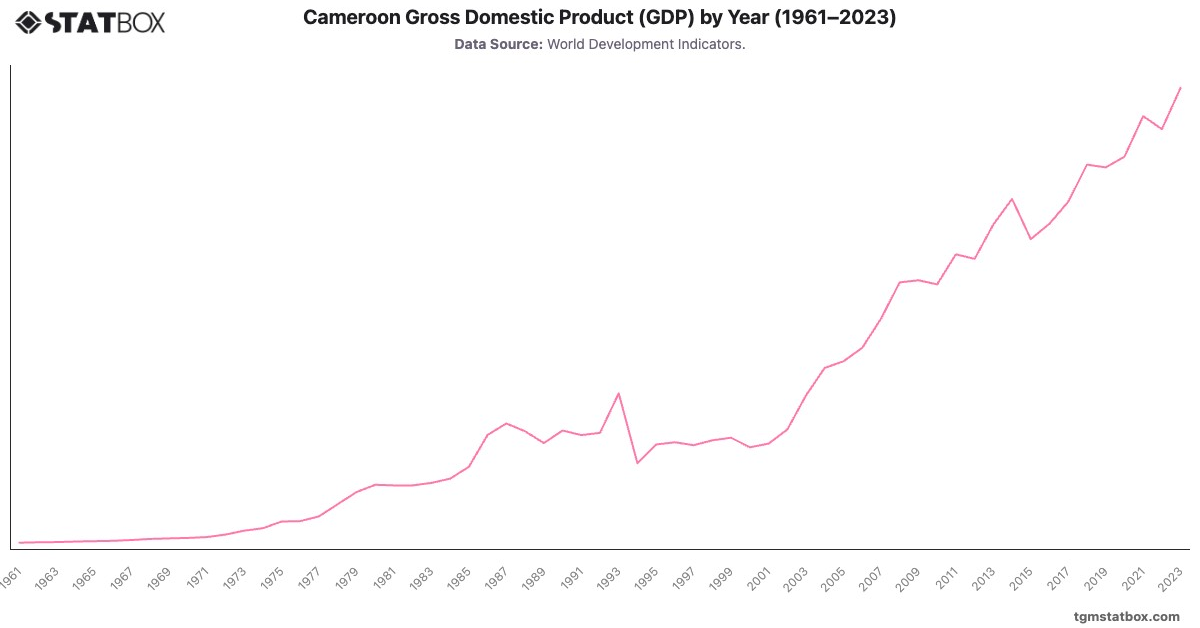
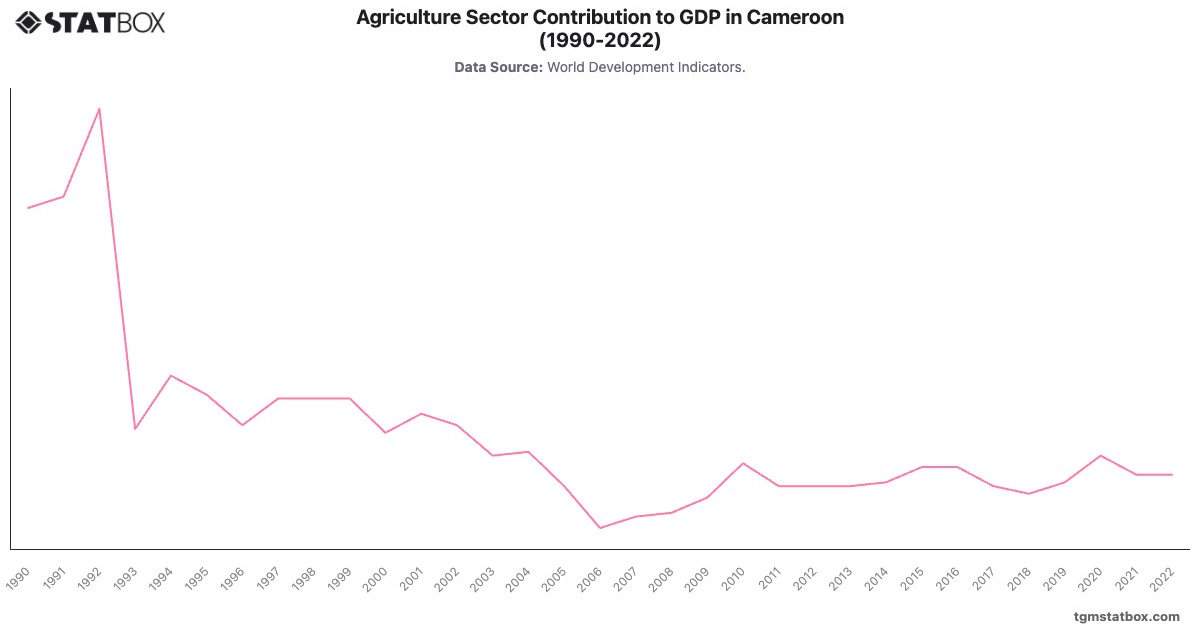
For a broader context, visit other statistics on Cameroon’s yearly GDP data, Cameroon’s central government debt, as a percentage of GDP, Cameroon’s agriculture GDP contribution.