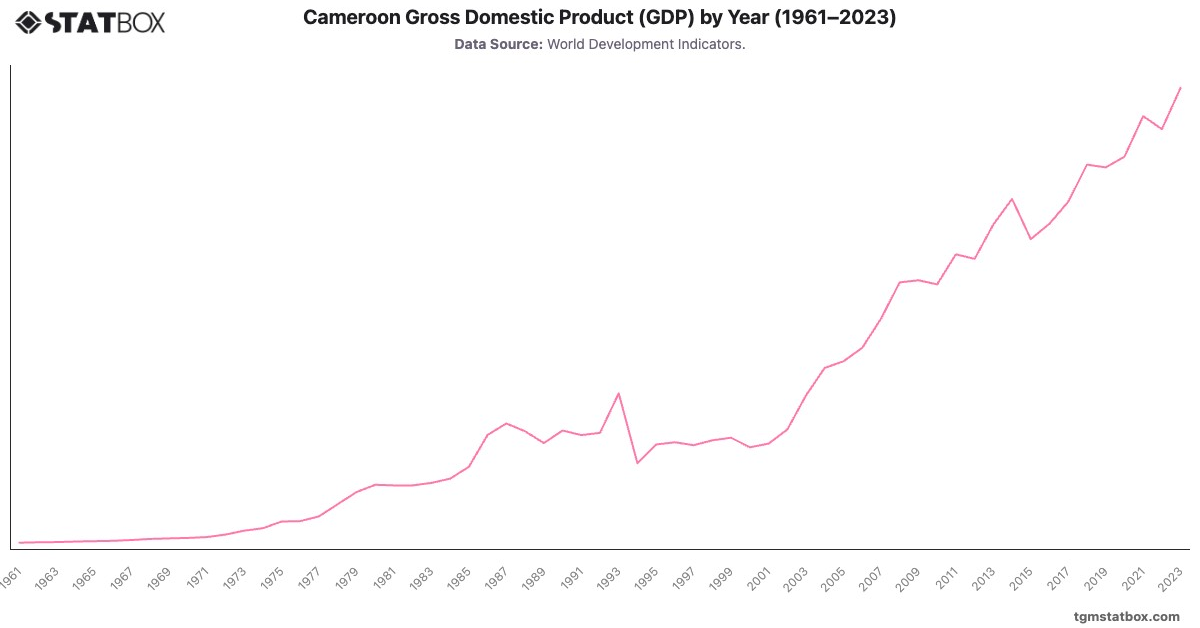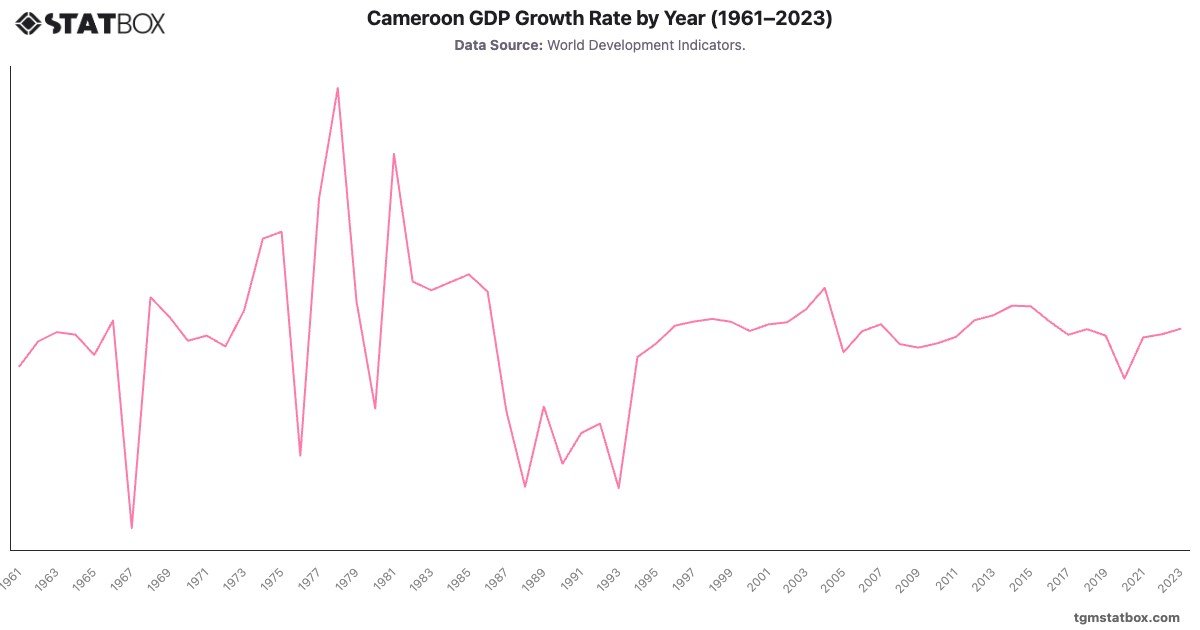
Cameroon's GDP growth rate from 1961 to 2023 reveals significant fluctuations influenced by a variety of internal and external factors. The economy experienced early instability, highlighted by a drastic decline of - in 1967. However, it rebounded to a peak growth rate of in 1978, marking a period of robust economic activity. The following decades saw continued volatility, with the 1980s and 1990s characterized by structural adjustments and external shocks that impacted growth.
In the 2010s, the country recorded growth in 2015, but faced a contraction of in 2020 due to the COVID-19 pandemic. Nevertheless, the economy showed resilience, rebounding with growth in 2021. More recently, the growth trajectory has continued to improve, with rates of in 2022 and in 2023. This recent recovery suggests potential opportunities for economic expansion, particularly with ongoing investments in infrastructure and efforts to diversify the economy. The interplay of external factors, such as global commodity prices, alongside internal dynamics like political stability and economic reforms, will be crucial for sustaining growth in the coming years.
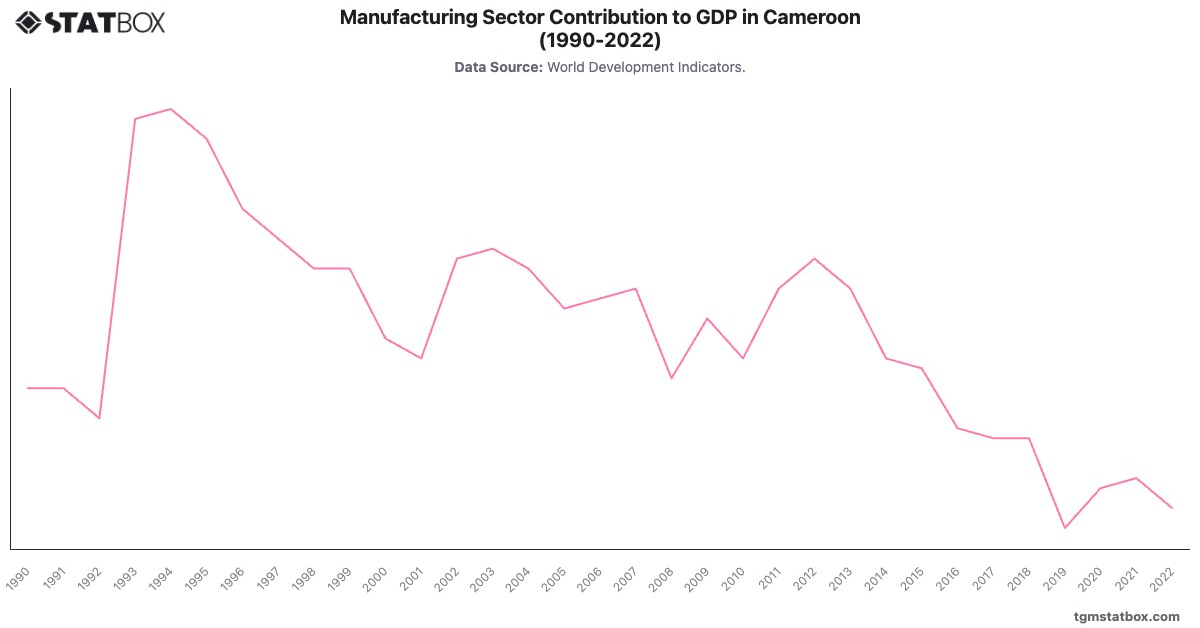
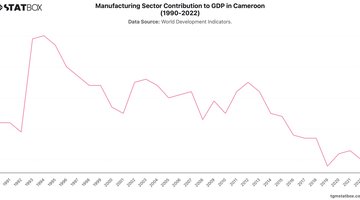
For additional information, visit statistics on Cameroon’s urban expansion, Cameroon’s manufacturing share in GDP, Cameroon’s population growth rate.