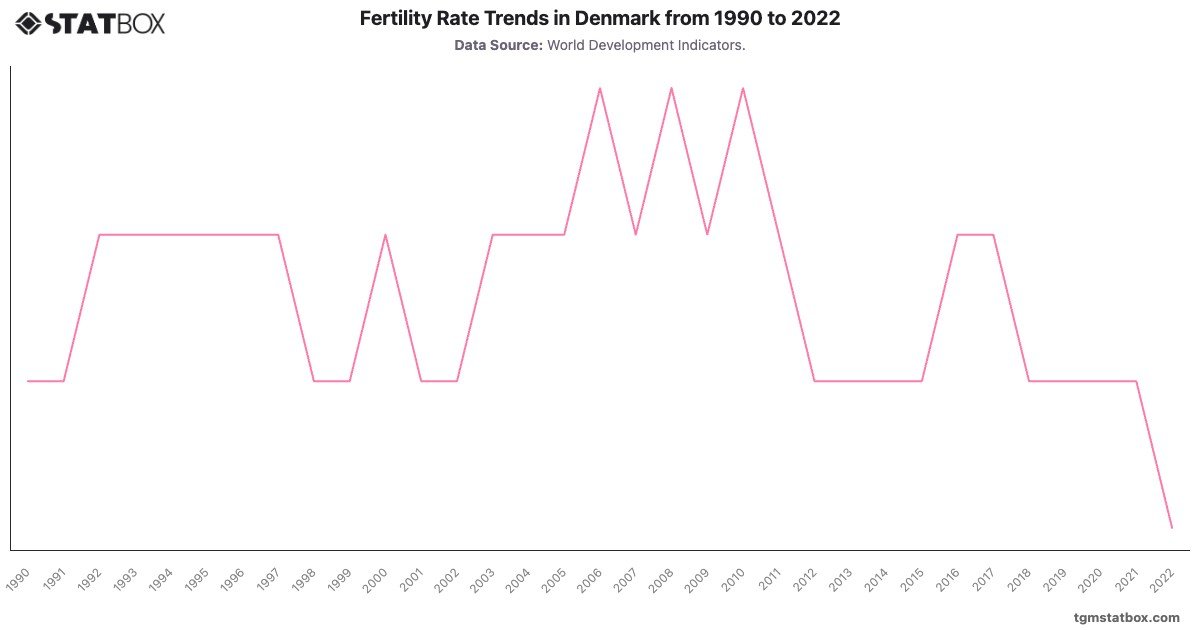
Denmark's fertility rate exhibited relative stability from 1990 to 2022, fluctuating between 1.7 and 1.9. In the early 1990s, the fertility rate increased slightly from 1.7 to 1.8, influenced by strong social support systems and generous parental leave policies. A notable peak occurred in 2006 and 2010 at 1.9, coinciding with economic growth and targeted family incentives.
By the 2010s, the fertility rate stabilized at around 1.7, reflecting changing family dynamics and delayed childbearing. The slight dip to 1.6 by 2022 aligns with broader European trends, driven by economic uncertainties and shifting cultural attitudes toward family life. Denmark’s proactive policies continue to mitigate sharper declines.
By the 2010s, the fertility rate stabilized at around 1.7, reflecting changing family dynamics and delayed childbearing. The slight dip to 1.6 by 2022 aligns with broader European trends, driven by economic uncertainties and shifting cultural attitudes toward family life. Denmark’s proactive policies continue to mitigate sharper declines.
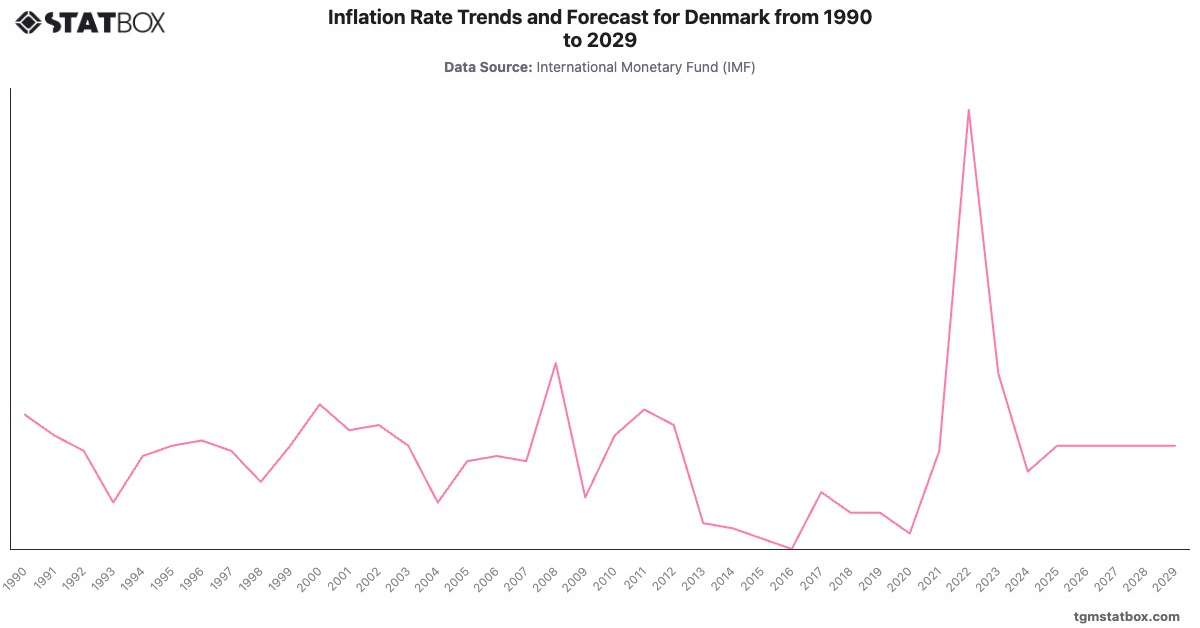
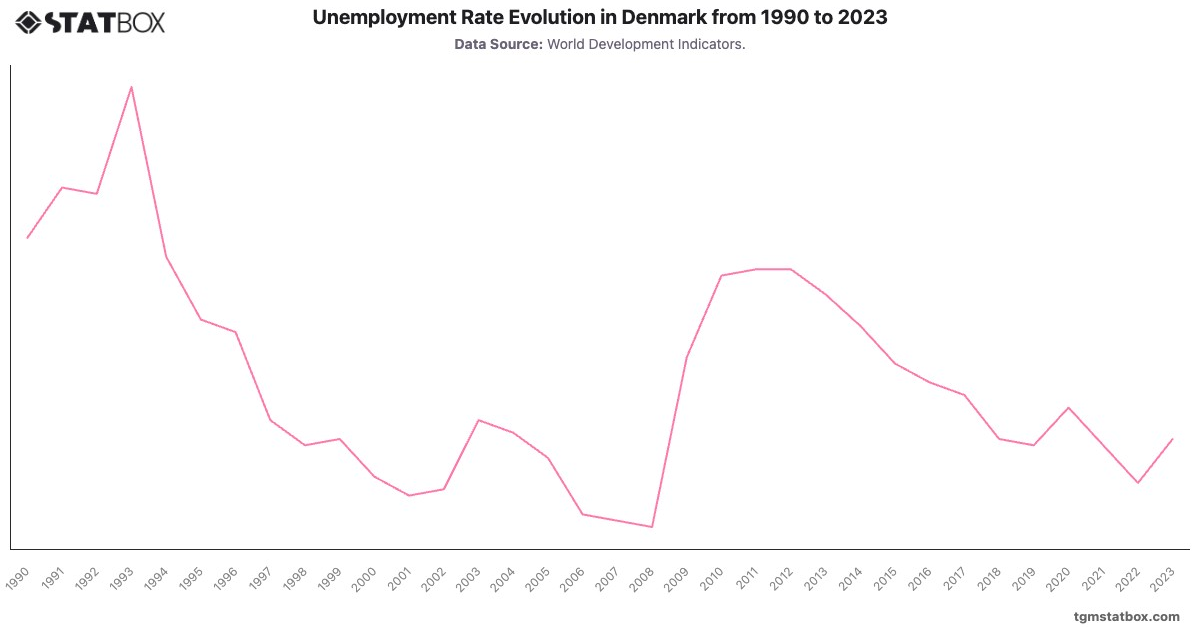
For a broader context, visit other statistics on Denmark’s inflation rate trends, Denmark’s annual GDP growth, Denmark’s unemployment rate.