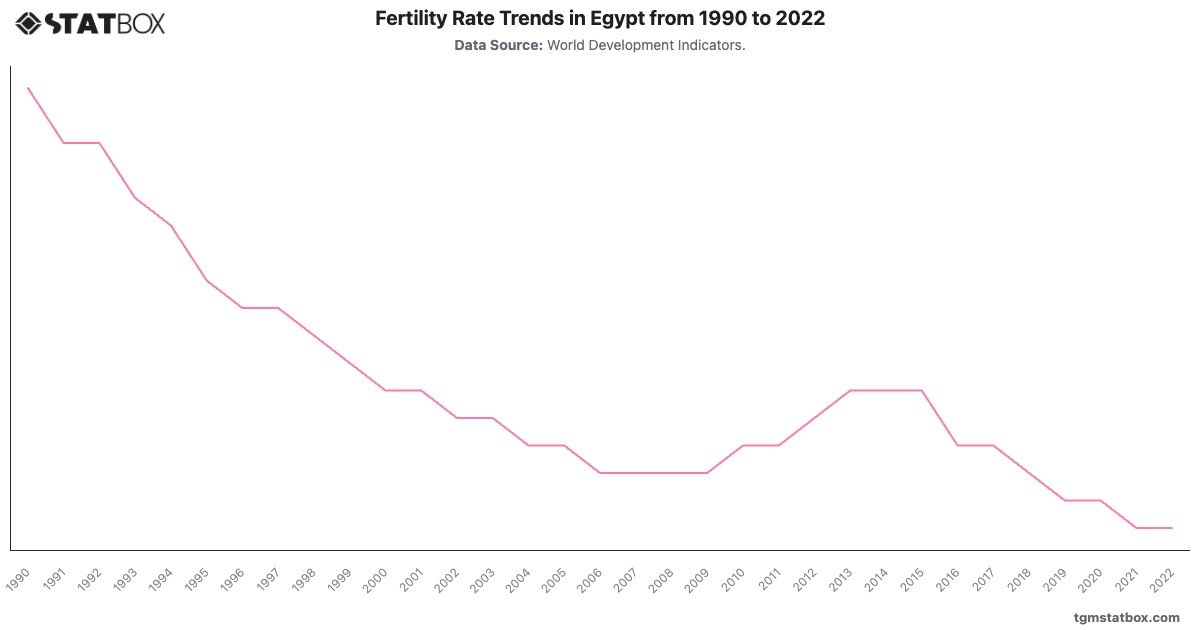
Egypt's fertility rate showed a consistent downward trend from 4.5 in 1990 to 2.9 by 2022, reflecting significant socioeconomic changes and public health initiatives. The most rapid decline occurred in the 1990s, when the rate fell to 3.4 by 2000, driven by government-led family planning programs and improved access to education.
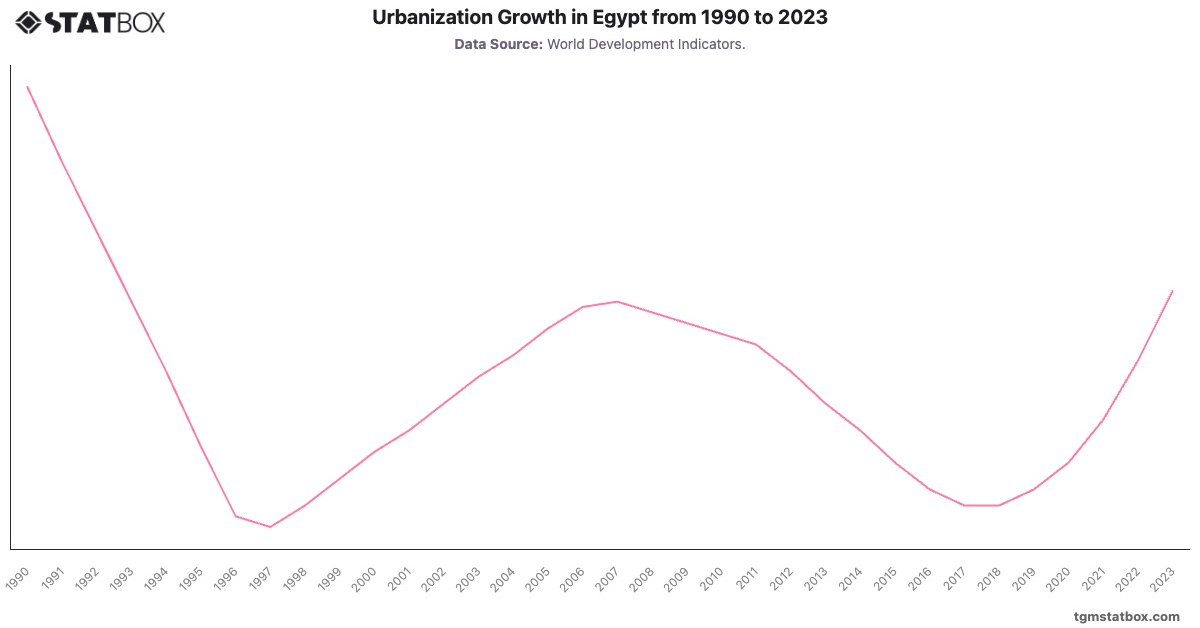
After a brief stabilization in the 2000s, the fertility rate began to decline again, reaching 2.9 by 2021. Factors such as urbanization, delayed marriages, and increased female participation in education and the workforce contributed to this trend. However, Egypt’s fertility rate remains higher than the global average, underlining the ongoing need for balanced demographic policies.
After a brief stabilization in the 2000s, the fertility rate began to decline again, reaching 2.9 by 2021. Factors such as urbanization, delayed marriages, and increased female participation in education and the workforce contributed to this trend. However, Egypt’s fertility rate remains higher than the global average, underlining the ongoing need for balanced demographic policies.
For additional information, visit statistics on Egypt’s mortality trend, Egypt’s population density metric, Egypt’s birth life span.