Population Growth Trends in Germany (1990-2023)
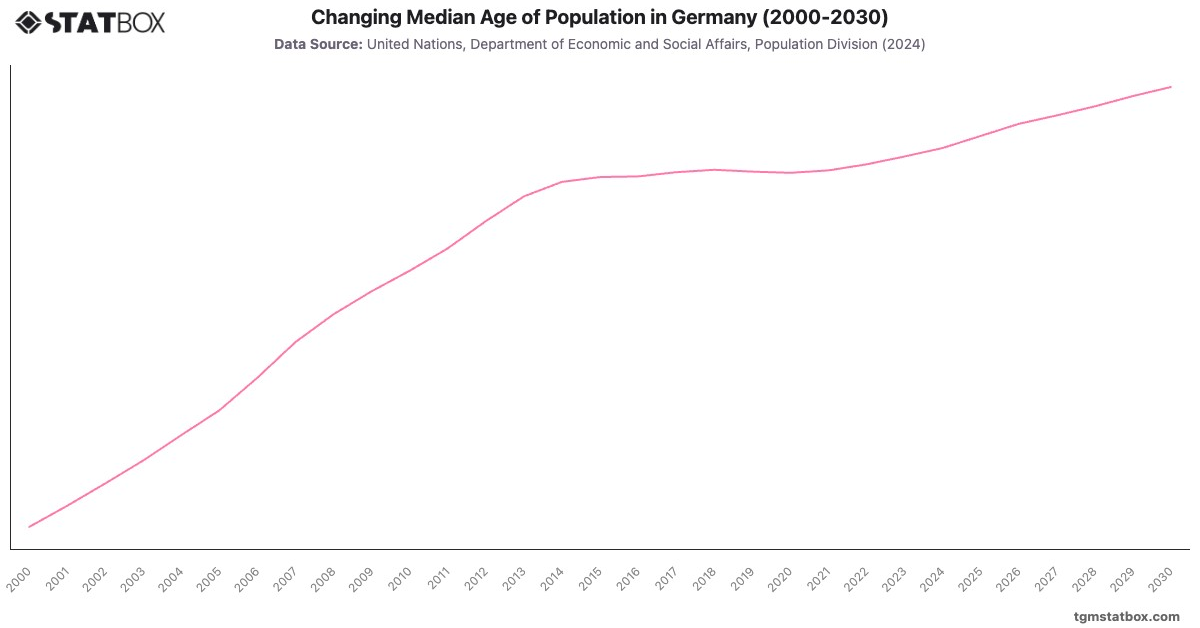
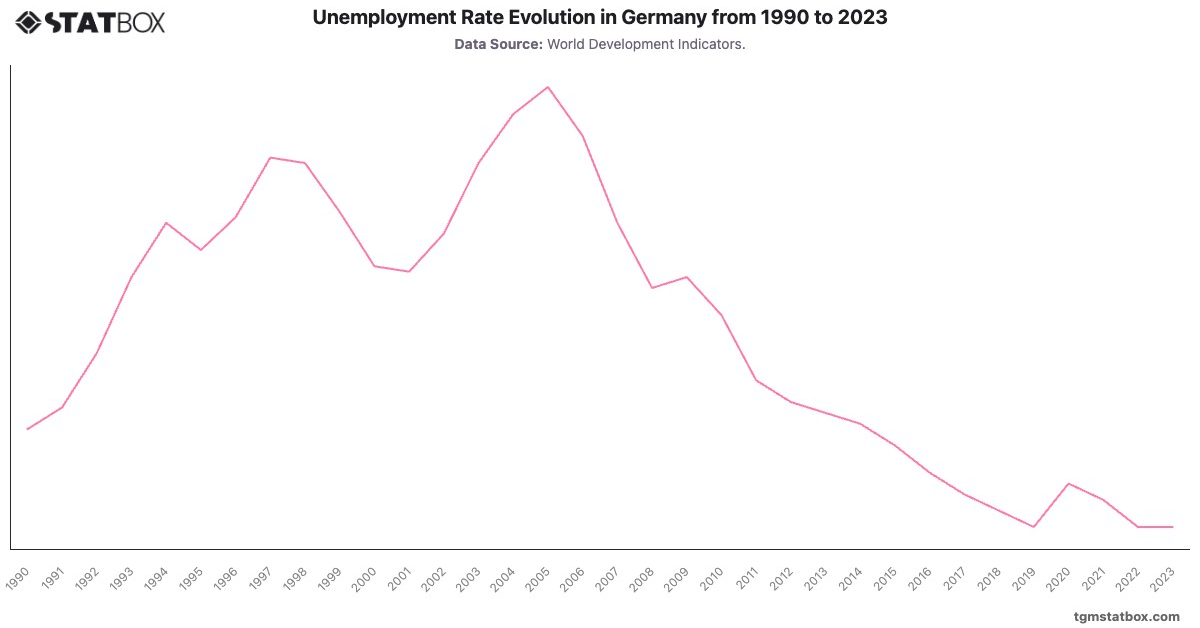
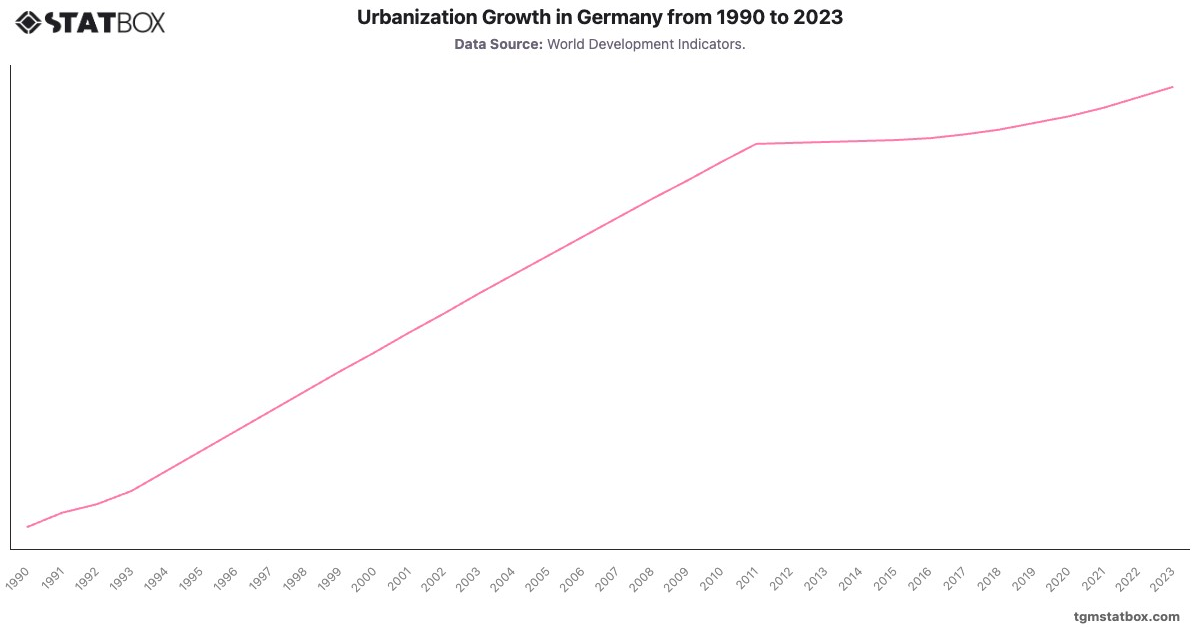
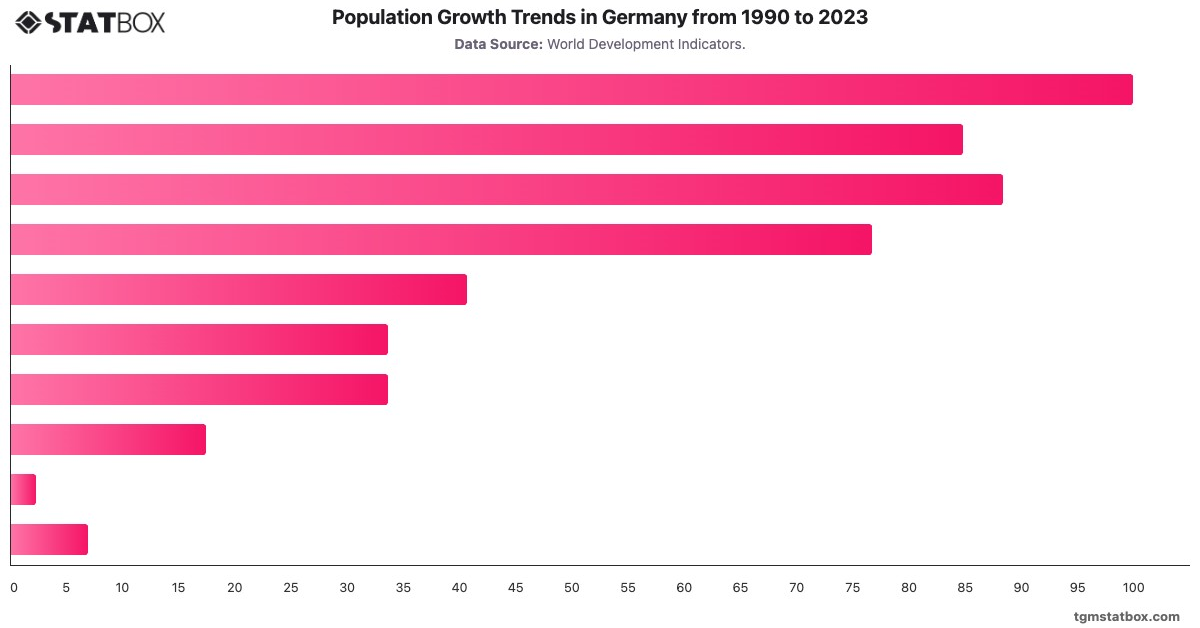
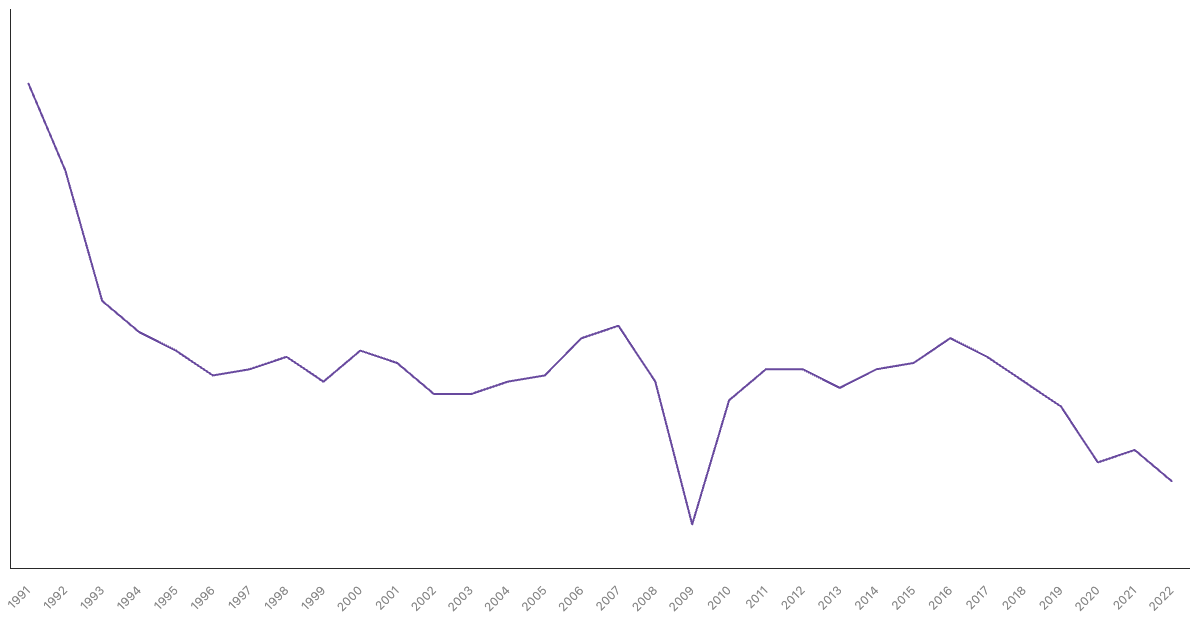
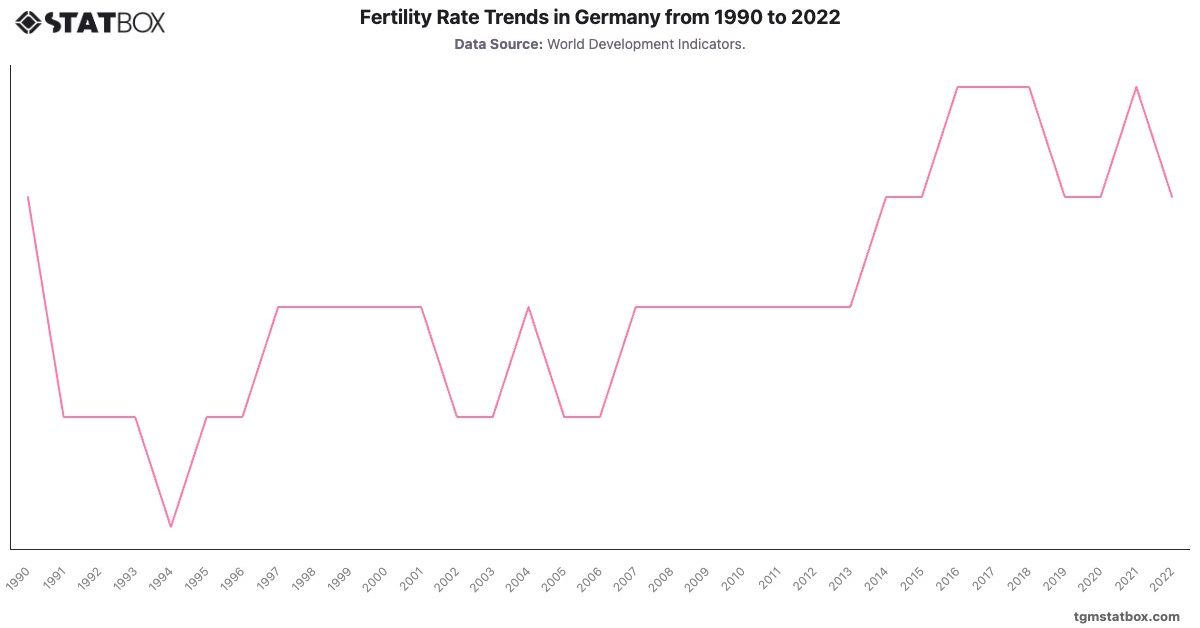
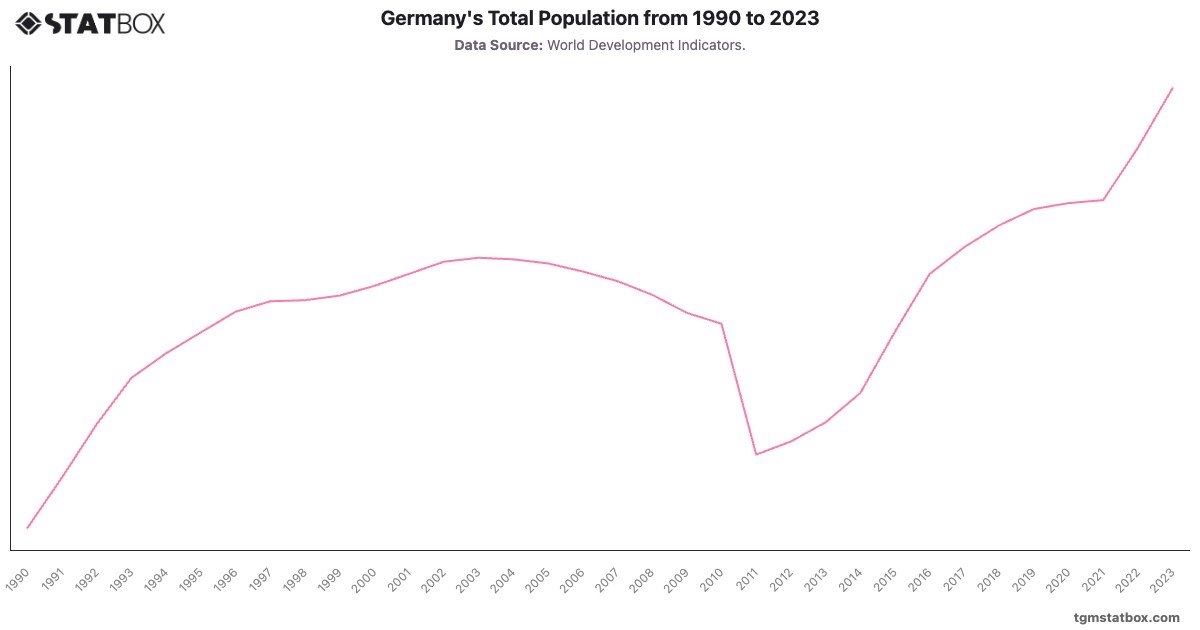
Germany’s population increased from 79.4 million in 1990 to 84.5 million in 2023, marked by periods of stagnation and growth. The early 1990s saw a demographic boost post-reunification, but the late 1990s and early 2000s experienced population stagnation, attributed to low birth rates and a declining natural increase. The 2000s and 2010s marked a gradual turnaround, spurred by migration inflows as Germany became an attractive destination for skilled workers and refugees. Economic prosperity, alongside robust social welfare systems, contributed to a steady population increase. The influx of immigrants in 2015, during the European migration crisis, provided a significant demographic boost. While birth rates have remained low, life expectancy has steadily risen due to advancements in healthcare. By 2023, the population reached a record high, reflecting a strong focus on integrating migrants into society. However, Germany faces challenges related to its aging population and sustaining economic productivity in a shifting demographic landscape.
Germany’s population increased from 79.4 million in 1990 to 84.5 million in 2023, marked by periods of stagnation and growth. The early 1990s saw a demographic boost post-reunification, but the late 1990s and early 2000s experienced population stagnation, attributed to low birth rates and a declining natural increase. The 2000s and 2010s marked a gradual turnaround, spurred by migration inflows as Germany became an attractive destination for skilled workers and refugees. Economic prosperity, alongside robust social welfare systems, contributed to a steady population increase. The influx of immigrants in 2015, during the European migration crisis, provided a significant demographic boost. While birth rates have remained low, life expectancy has steadily risen due to advancements in healthcare. By 2023, the population reached a record high, reflecting a strong focus on integrating migrants into society. However, Germany faces challenges related to its aging population and sustaining economic productivity in a shifting demographic landscape.
For additional information, visit statistics on Germany’s population growth, Germany’s industry sector’s GDP contribution, Germany’s average lifespan.