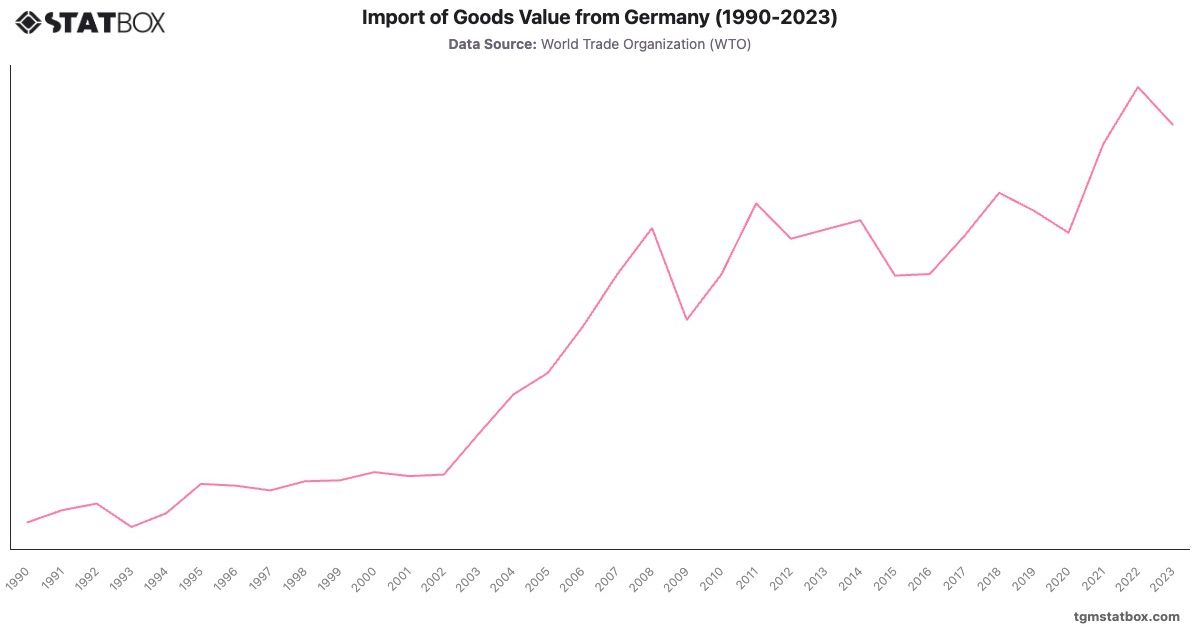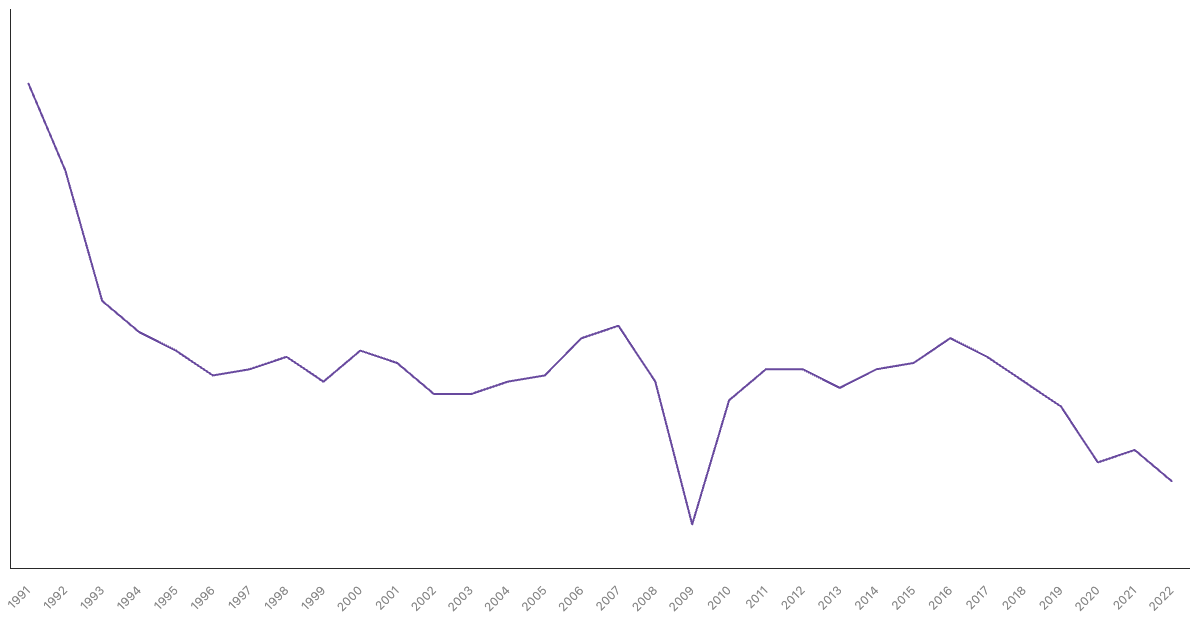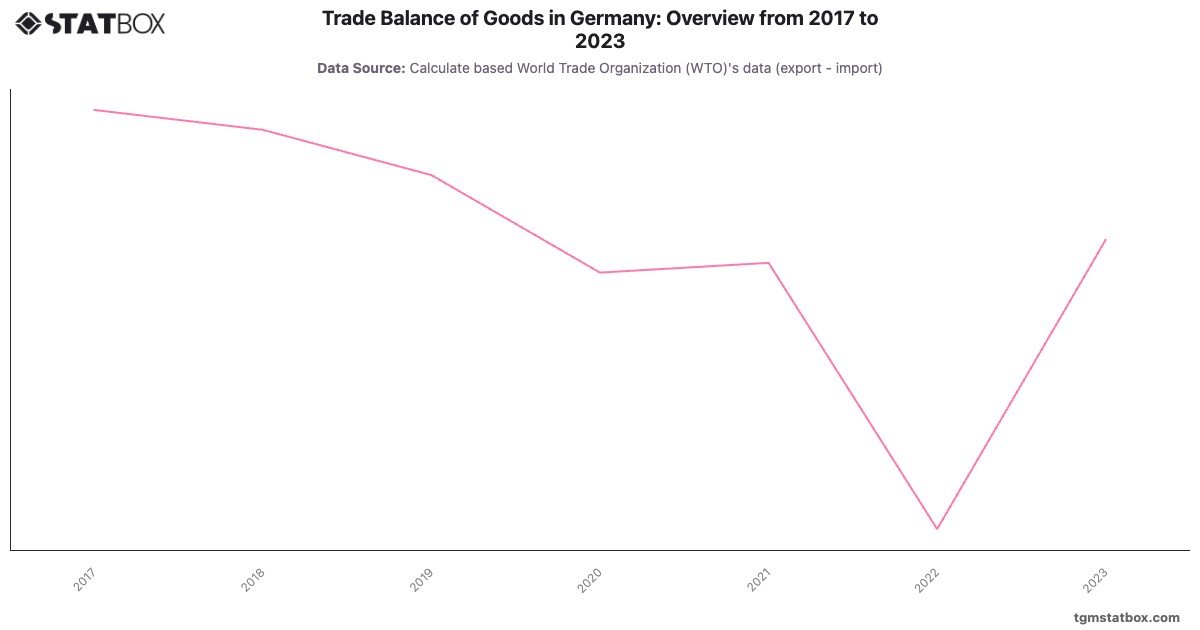
Germany’s trade balance of goods consistently recorded significant surpluses from 2017 to 2023, underlining its position as a global export powerhouse. The surplus peaked at 285,283.7 million USD in 2017, driven by strong exports in automotive, machinery, and chemical sectors. However, by 2022, the surplus declined dramatically to 93,252.1 million USD, reflecting rising energy import costs due to the European energy crisis and supply chain disruptions.
In 2023, the trade surplus rebounded to 225,817.3 million USD, supported by stabilizing energy prices and a recovery in key export sectors, including machinery and vehicles. Germany’s trade balance underscores its reliance on export-driven growth, but the 2022 downturn highlights vulnerabilities to external shocks such as energy price volatility and global economic uncertainties.
In 2023, the trade surplus rebounded to 225,817.3 million USD, supported by stabilizing energy prices and a recovery in key export sectors, including machinery and vehicles. Germany’s trade balance underscores its reliance on export-driven growth, but the 2022 downturn highlights vulnerabilities to external shocks such as energy price volatility and global economic uncertainties.
Explore related charts to gain a better understanding of Germany’s inflation rate overview, Germany’s annual GDP figures, Germany’s goods export value.