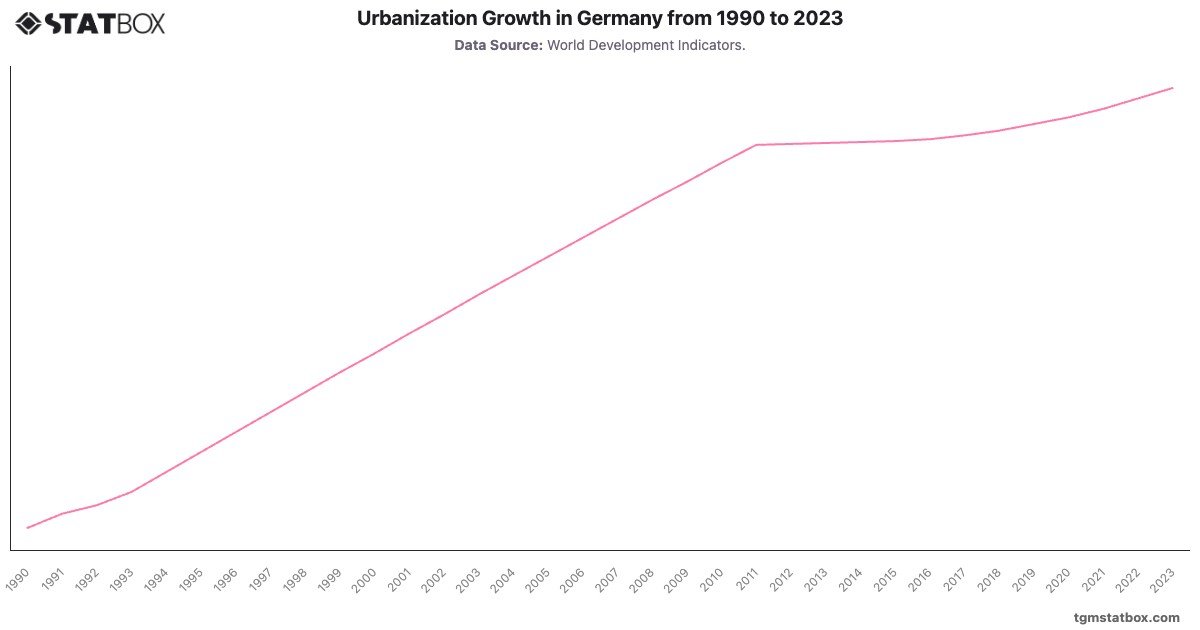
Germany’s urbanization increased gradually from in 1990 to in 2023, reflecting stable urban growth. Early growth was influenced by reunification in 1990 and subsequent economic expansion, with cities like Berlin and Hamburg drawing populations from smaller towns. Urbanization reached by 2014 and stayed constant until slight increases resumed in 2017. By 2023, Germany's urbanization reached , supported by urban job opportunities and consistent infrastructure investments in major cities.
Gain a broader perspective by reviewing Germany’s industry sector’s GDP contribution, Germany’s goods import value, Germany’s fertility rate.