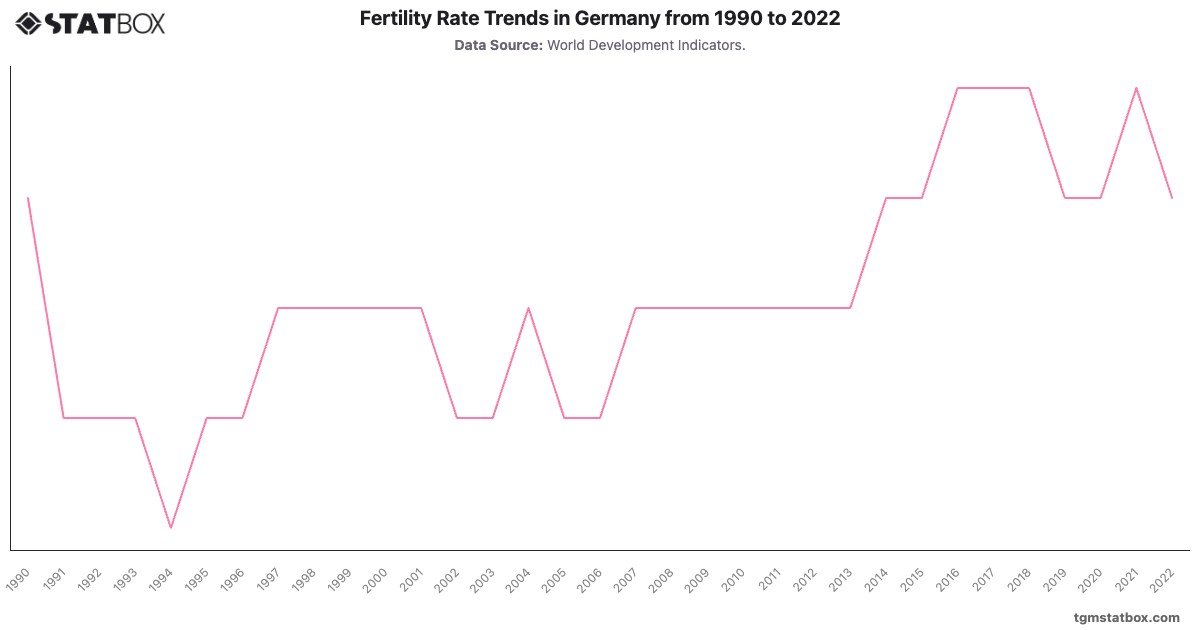
Germany maintained one of the lowest fertility rates globally, fluctuating between 1.3 and 1.6 from 1990 to 2022. After reunification in 1990, the fertility rate dropped sharply to 1.3, reflecting economic uncertainty and social adjustments during the post-reunification period. Stabilization followed in the late 1990s, with a modest increase to 1.5 by 2014, aided by family-friendly policies like parental leave and childcare support.
In the 2010s, Germany saw minor fluctuations in fertility, with a peak at 1.6 in 2016, driven by economic stability and increased immigration. However, by 2022, the rate slightly declined to 1.5, mirroring trends in other high-income countries. Despite these variations, Germany's fertility rate has remained below the replacement level, highlighting ongoing demographic challenges.
In the 2010s, Germany saw minor fluctuations in fertility, with a peak at 1.6 in 2016, driven by economic stability and increased immigration. However, by 2022, the rate slightly declined to 1.5, mirroring trends in other high-income countries. Despite these variations, Germany's fertility rate has remained below the replacement level, highlighting ongoing demographic challenges.
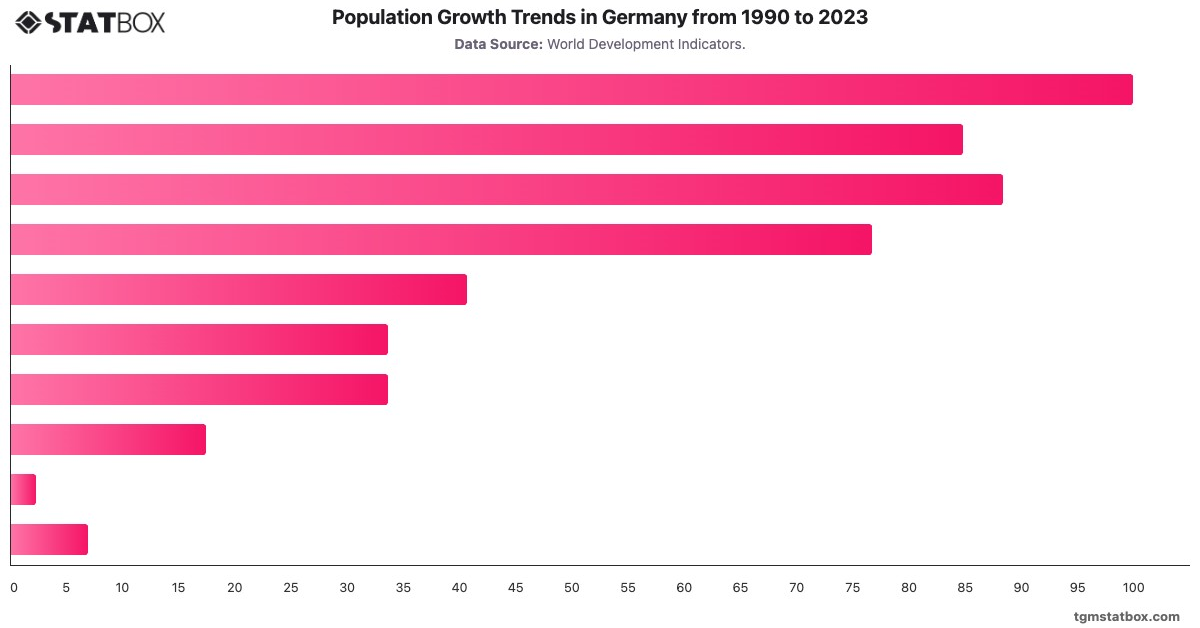
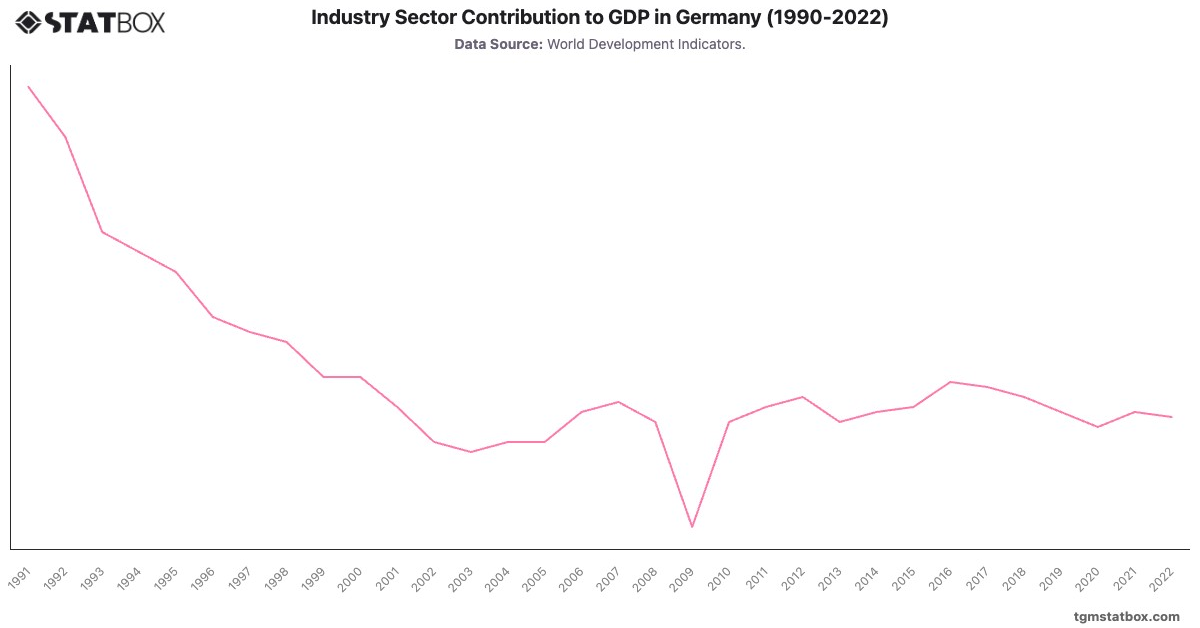
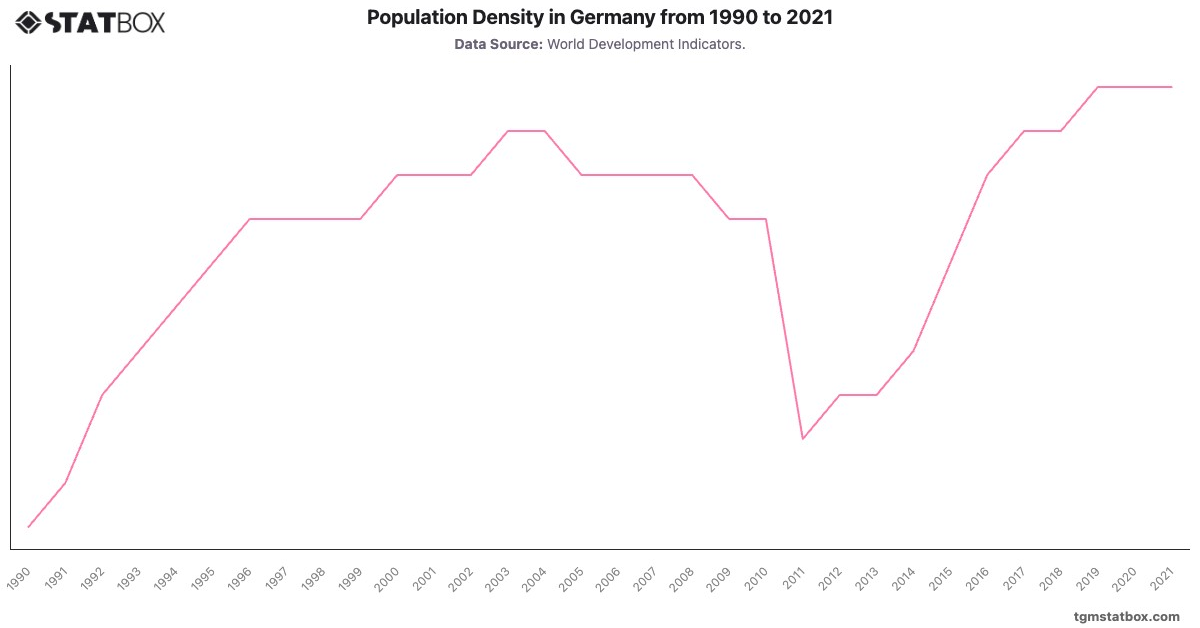
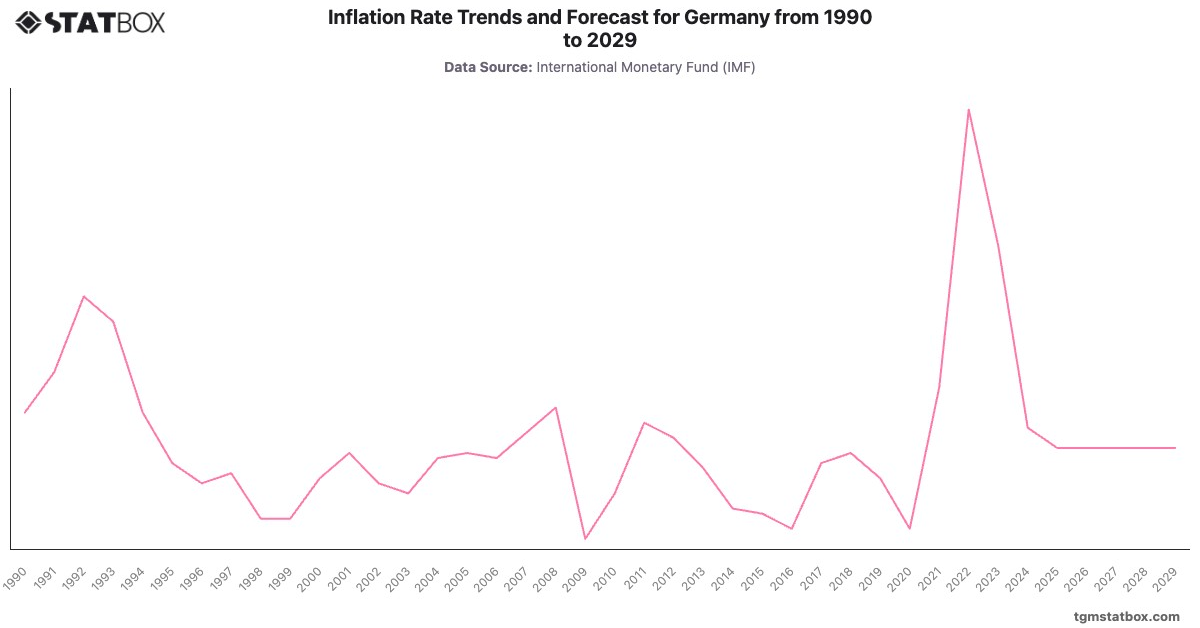
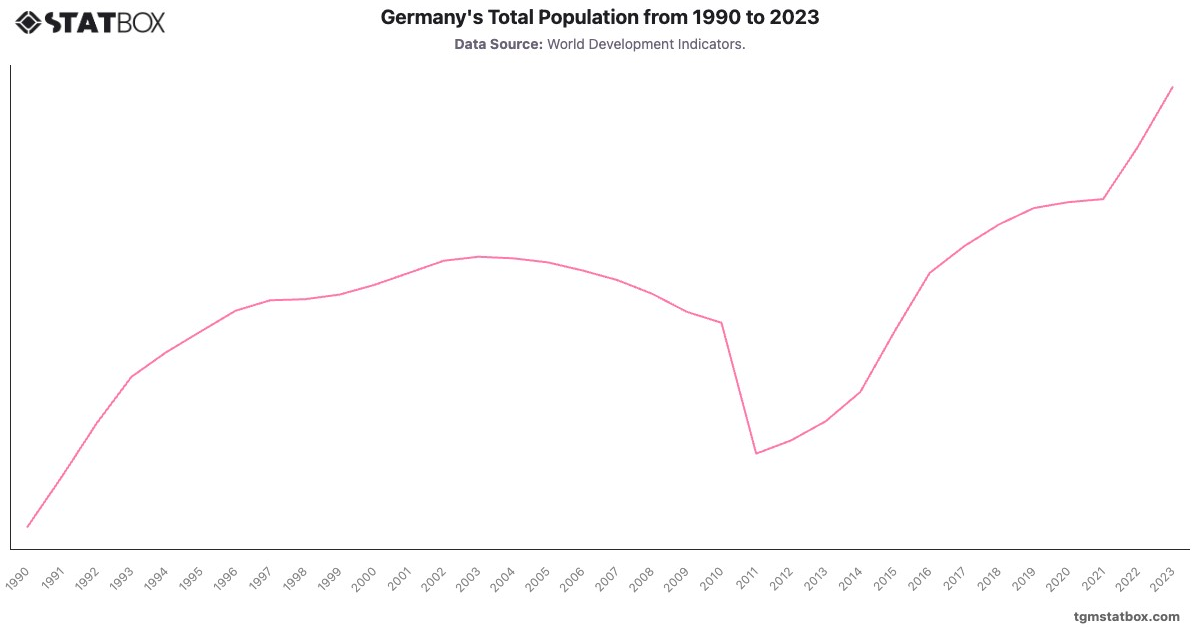
Explore related charts to gain a better understanding of Germany’s industry sector’s GDP contribution, Germany’s population growth, Germany’s inflation rate overview.