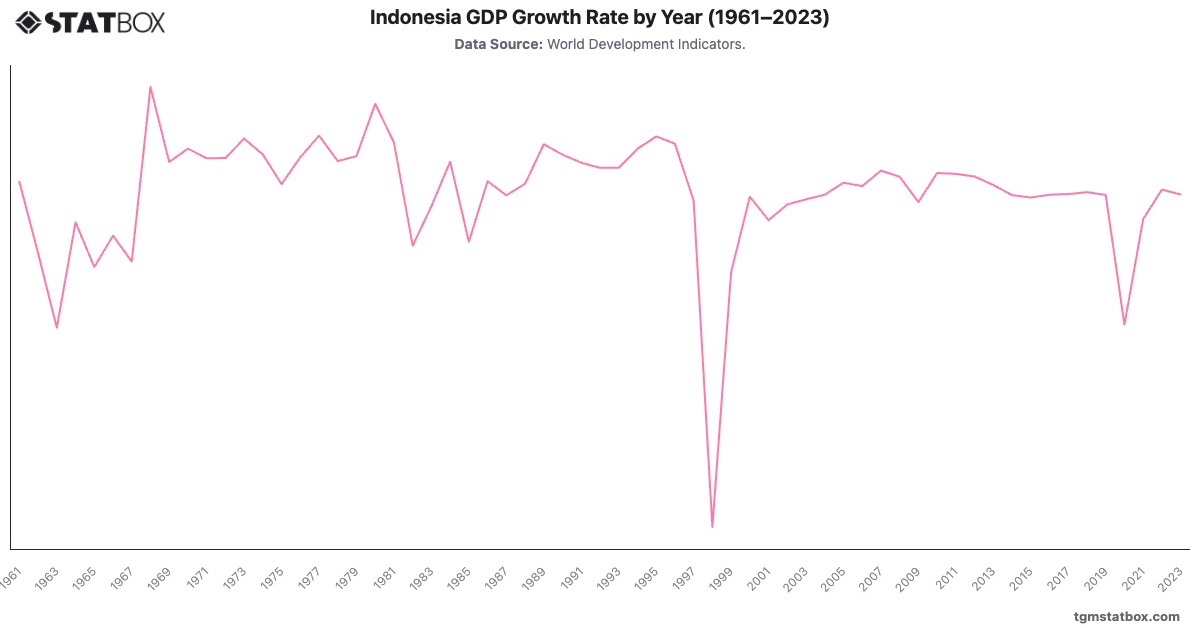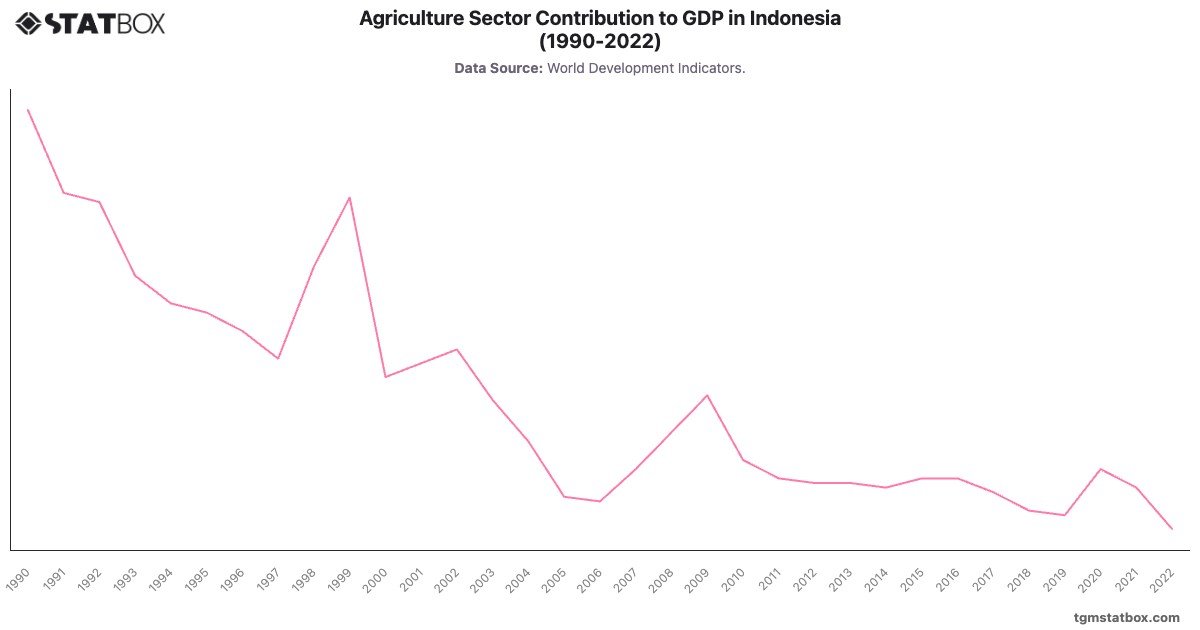
Indonesia’s agriculture sector contribution to GDP declined steadily from in 1990 to by 2022, reflecting a transition toward industry and services. The Asian Financial Crisis in 1997-1998 temporarily increased agriculture’s share as the country’s economy contracted, with agriculture remaining relatively stable compared to other sectors. This spike to in 1999 underscored agriculture’s resilience during economic instability.
The sector’s share stabilized around in the 2010s, with a slight rise to in 2020, likely due to increased demand for food security during the COVID-19 pandemic. Indonesia’s agriculture, though reduced in GDP share, remains vital for employment and exports, with key products like palm oil and rubber being globally significant.
The sector’s share stabilized around in the 2010s, with a slight rise to in 2020, likely due to increased demand for food security during the COVID-19 pandemic. Indonesia’s agriculture, though reduced in GDP share, remains vital for employment and exports, with key products like palm oil and rubber being globally significant.
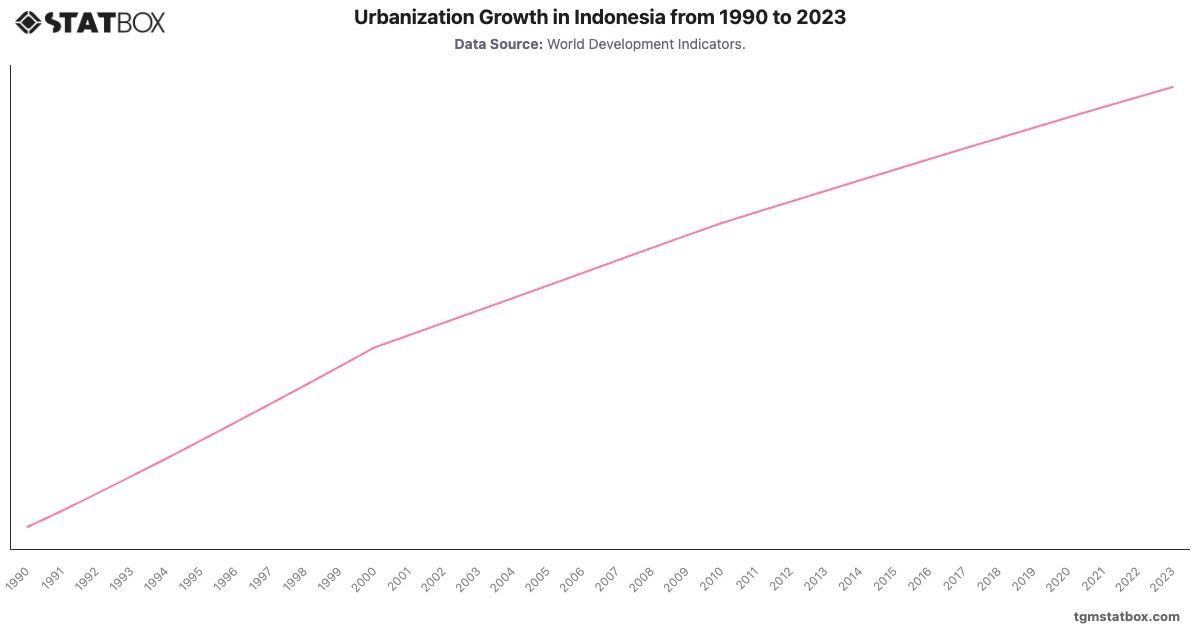
Discover additional trends and data on Indonesia’s net ODA, Indonesia’s government debt-to-GDP ratio, Indonesia’s urbanization increase.