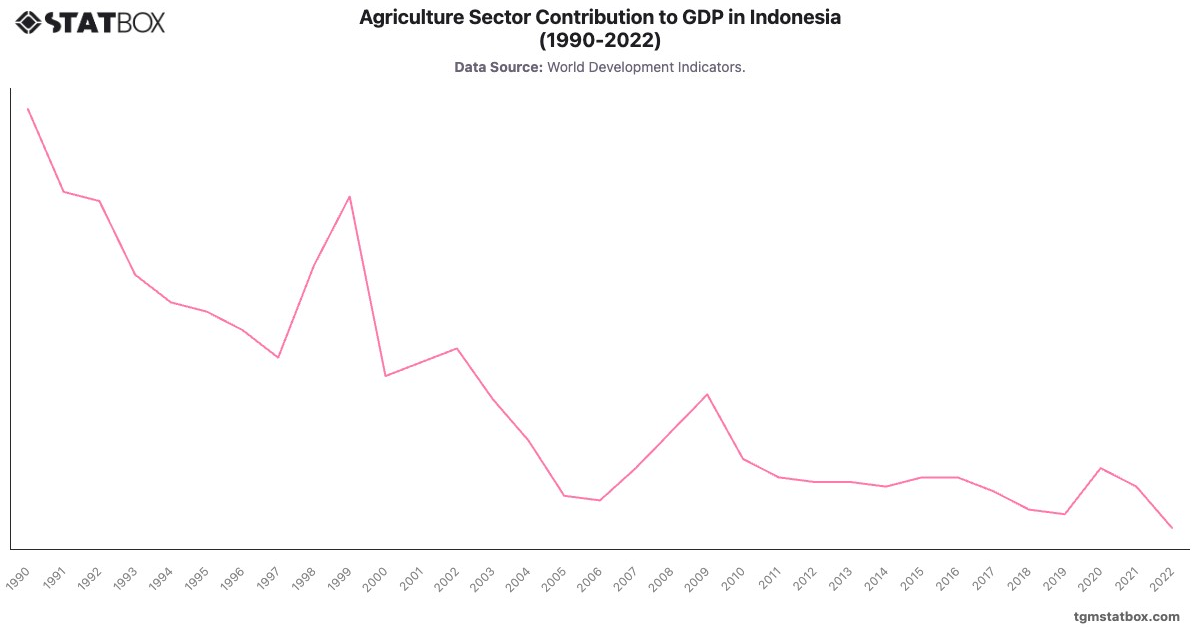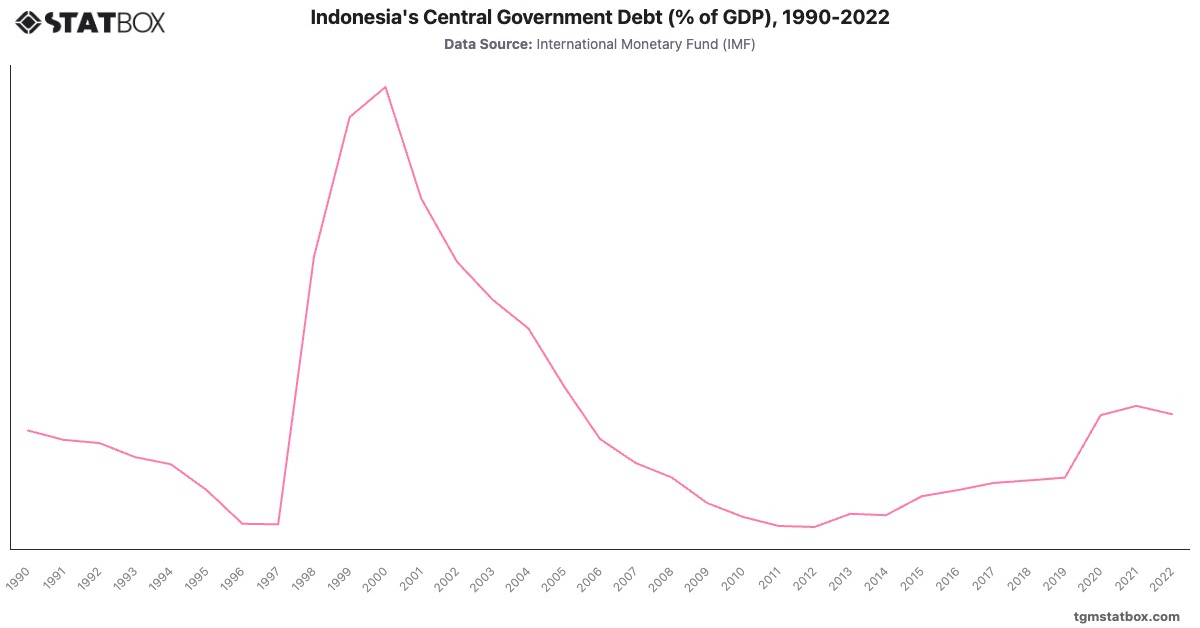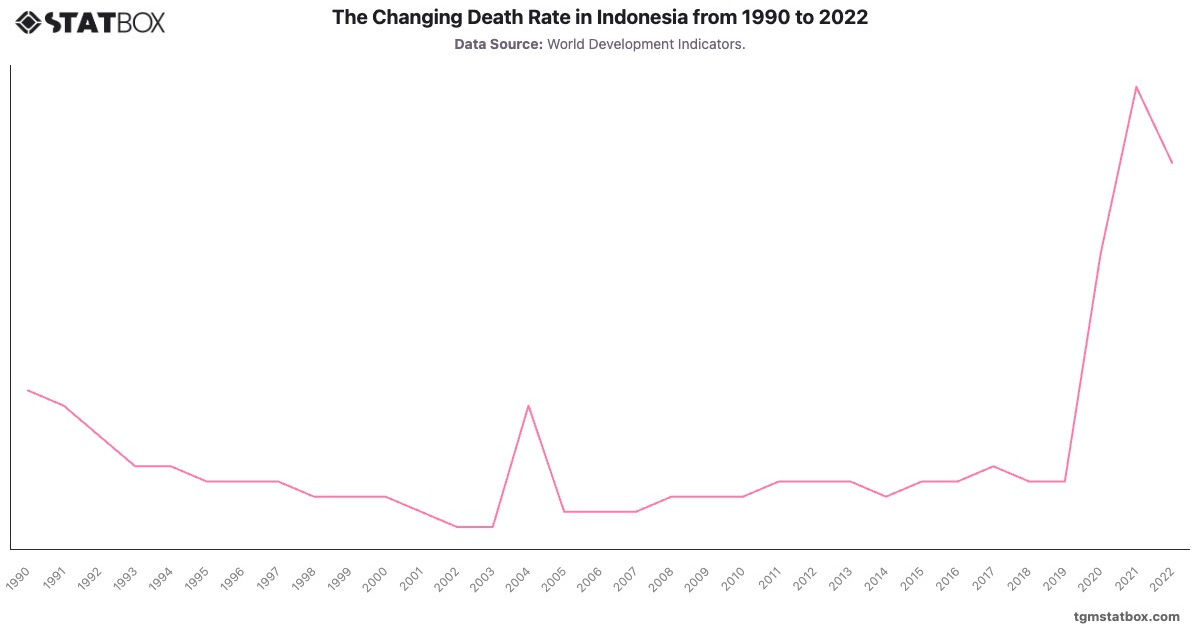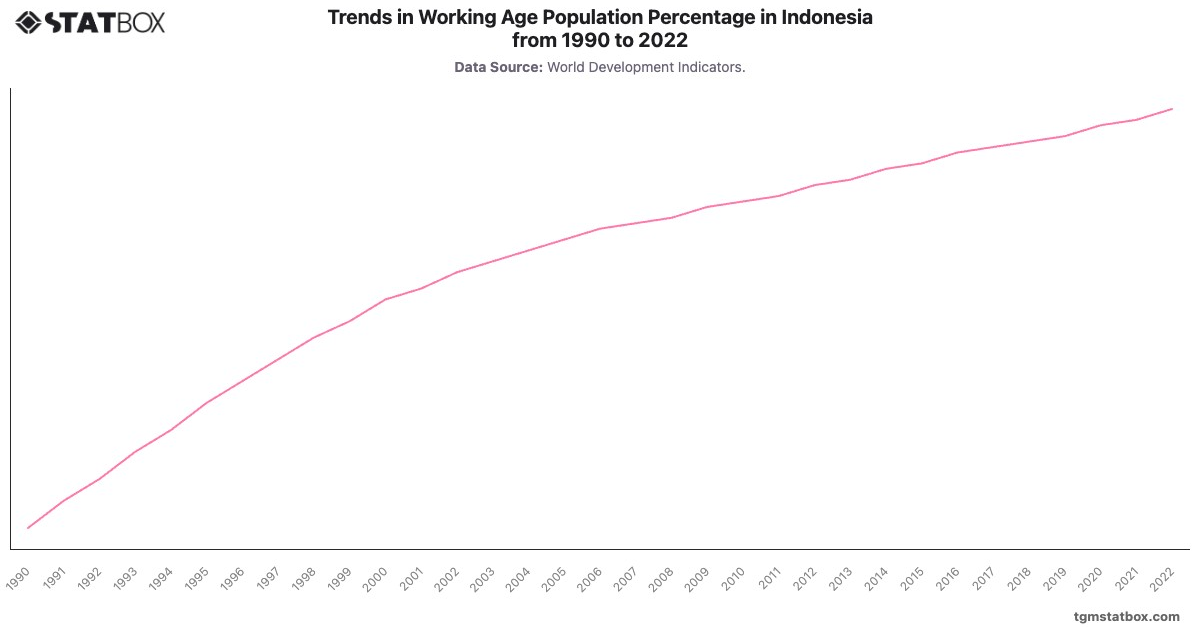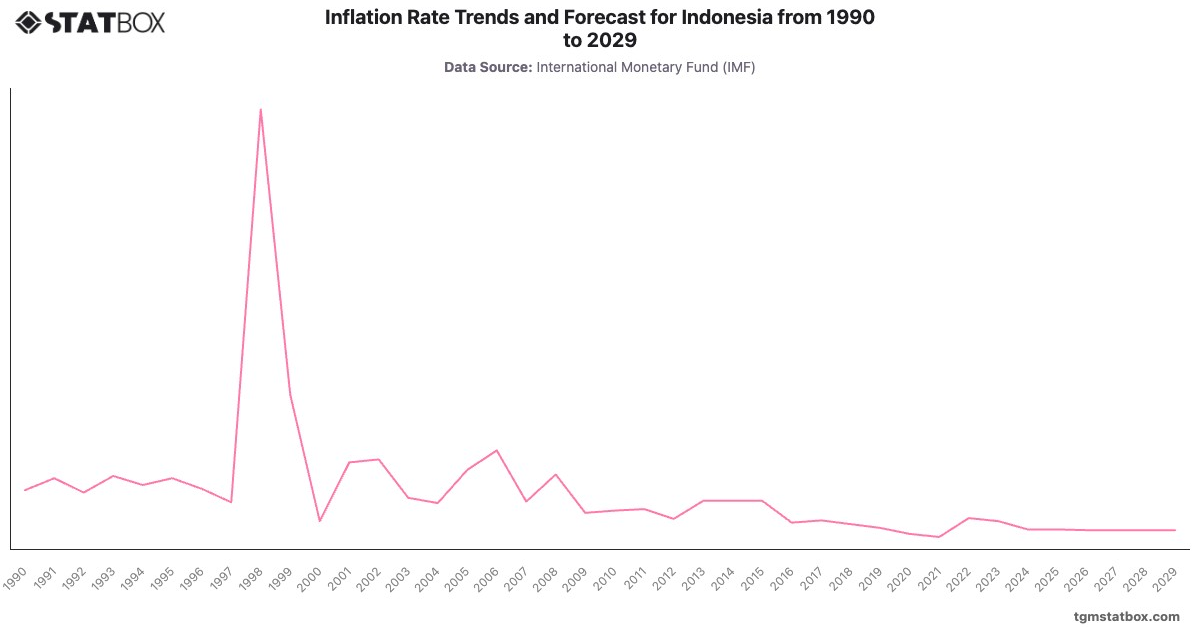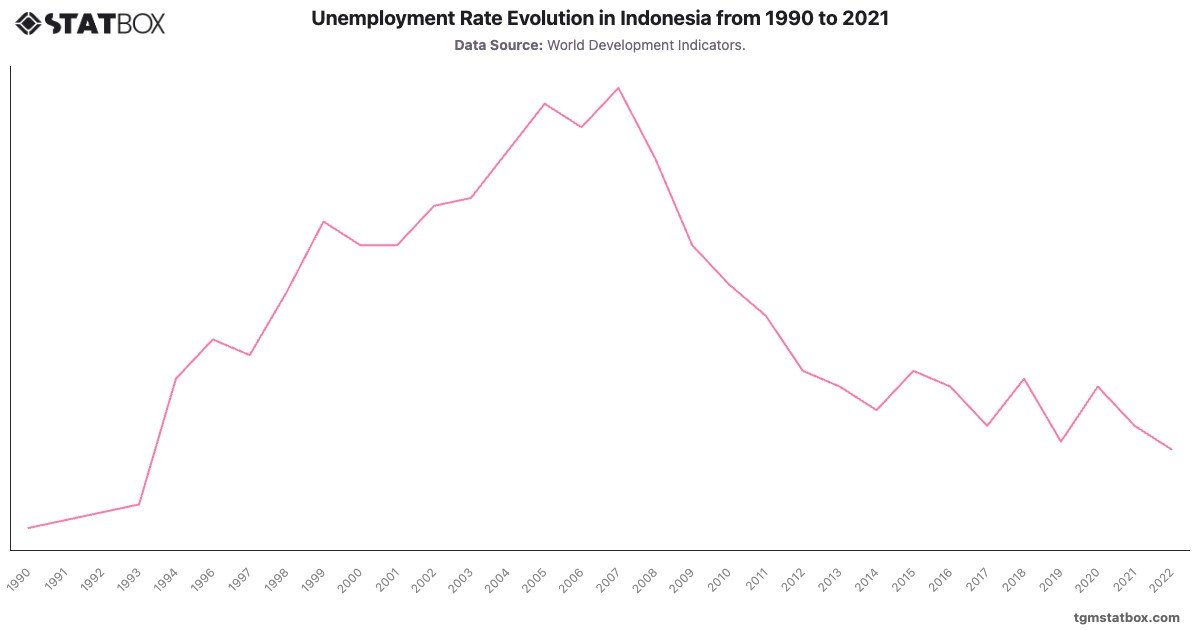
Indonesia’s unemployment rate saw a gradual increase in the early 1990s, rising from in 1990 to in 1999, largely driven by the Asian Financial Crisis, which severely impacted economic stability. The early 2000s continued this trend of high unemployment, with rates peaking at in 2005. This period reflects economic restructuring and an effort to diversify the economy, moving away from a strong reliance on agriculture towards manufacturing and services.
By 2017, the unemployment rate declined to a steady , attributed to consistent economic growth and governmental focus on infrastructure development and job creation. The 2020 pandemic caused a slight rise, reaching , but by 2022, the rate had recovered to . This pattern underscores Indonesia’s resilience and adaptability, as well as successful policy measures aimed at balancing labor supply and economic growth.
By 2017, the unemployment rate declined to a steady , attributed to consistent economic growth and governmental focus on infrastructure development and job creation. The 2020 pandemic caused a slight rise, reaching , but by 2022, the rate had recovered to . This pattern underscores Indonesia’s resilience and adaptability, as well as successful policy measures aimed at balancing labor supply and economic growth.
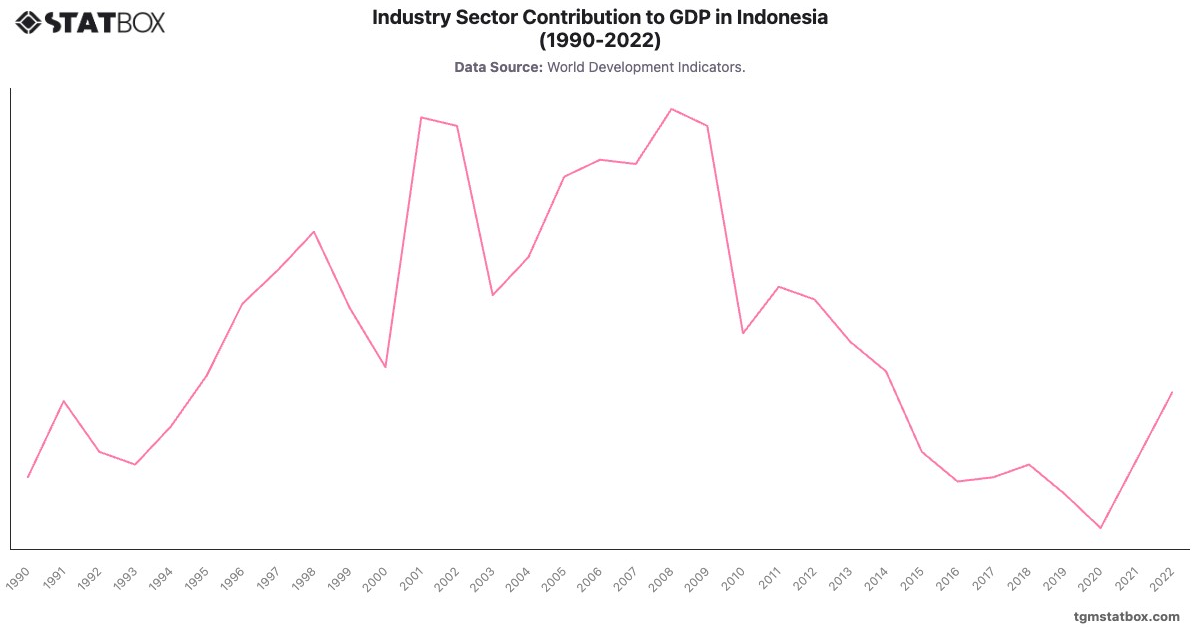
Explore related charts to gain a better understanding of Indonesia’s services sector share in GDP, Indonesia’s manufacturing sector share in GDP, Industry sector’s GDP share in Indonesia.