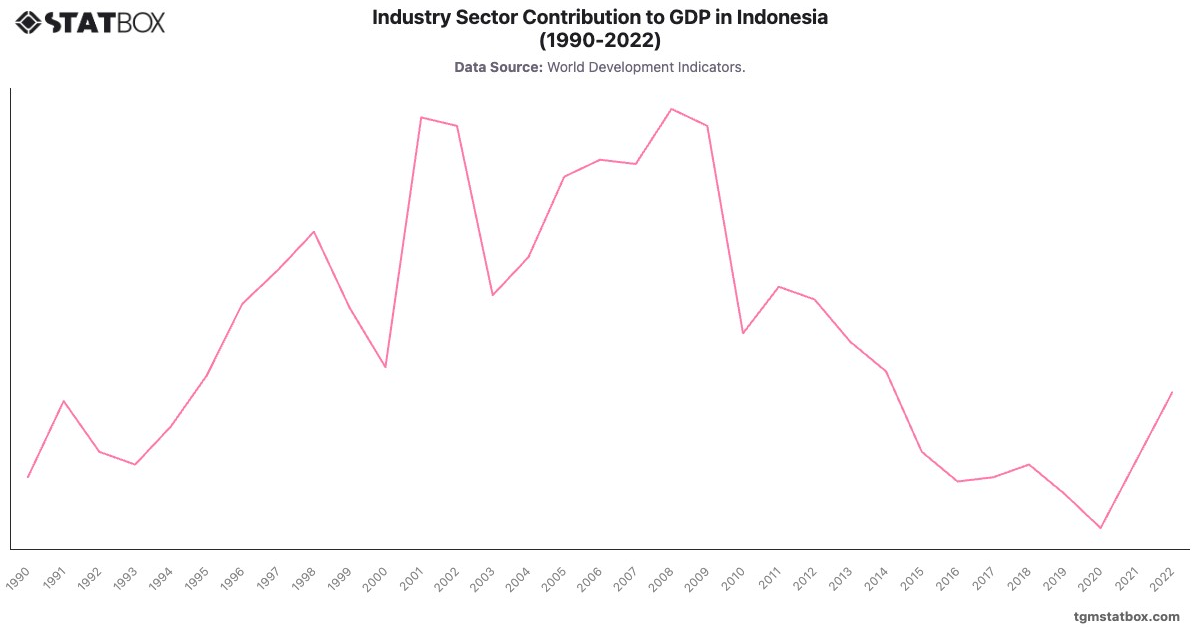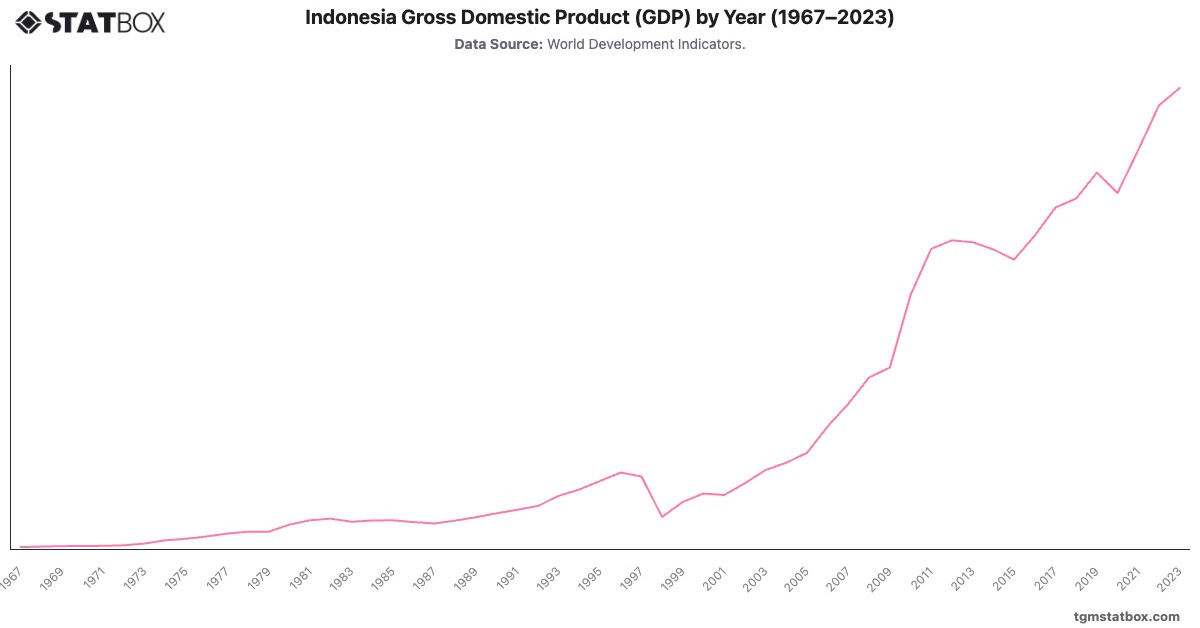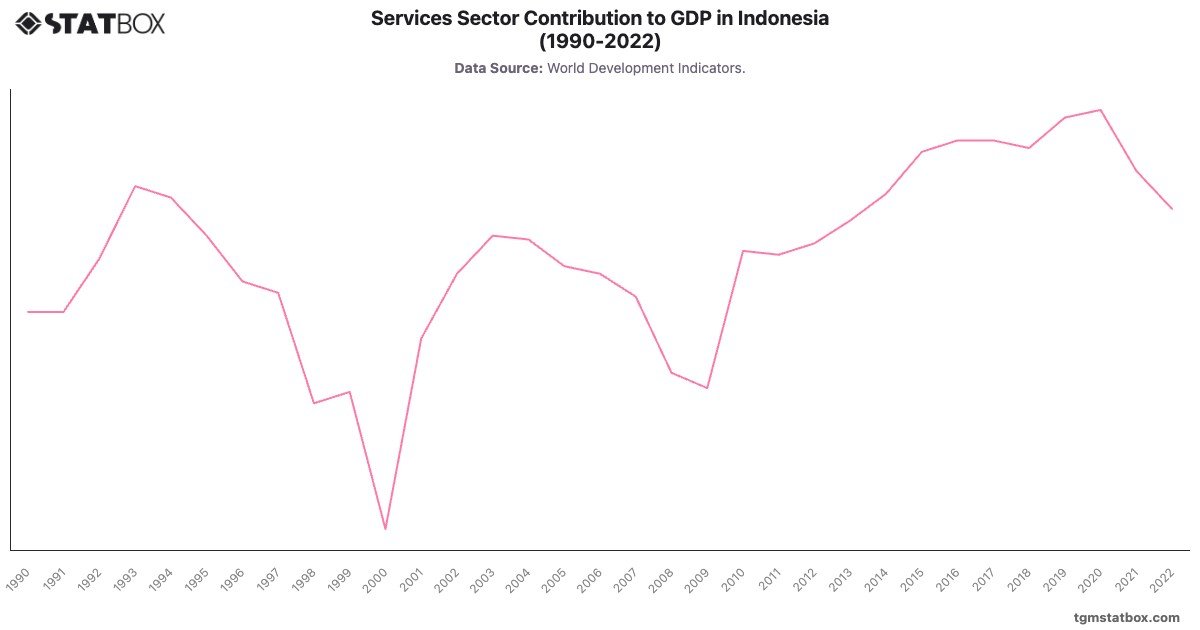
Indonesia's services sector demonstrated resilience and adaptability despite economic fluctuations from 1990 to 2022. Starting with a contribution of in 1990, the sector grew modestly to by 1993. However, the Asian Financial Crisis (1997-1998) caused a decline to in 1998, highlighting the vulnerability of Indonesia’s economy to regional shocks. Post-crisis recovery efforts supported gradual growth, and by 2003, services accounted for of GDP. The Global Financial Crisis of 2008 saw another dip, reducing the sector’s contribution to by 2009. Recovery efforts again proved successful as the sector rose to by 2019, buoyed by growth in digital services and domestic consumption. During the pandemic, the sector peaked at in 2020 but faced setbacks due to mobility restrictions, reducing its share to by 2022. This trend underscores the sector’s role as a stabilizing force in Indonesia’s economy, while also reflecting sensitivity to both global and regional crises.
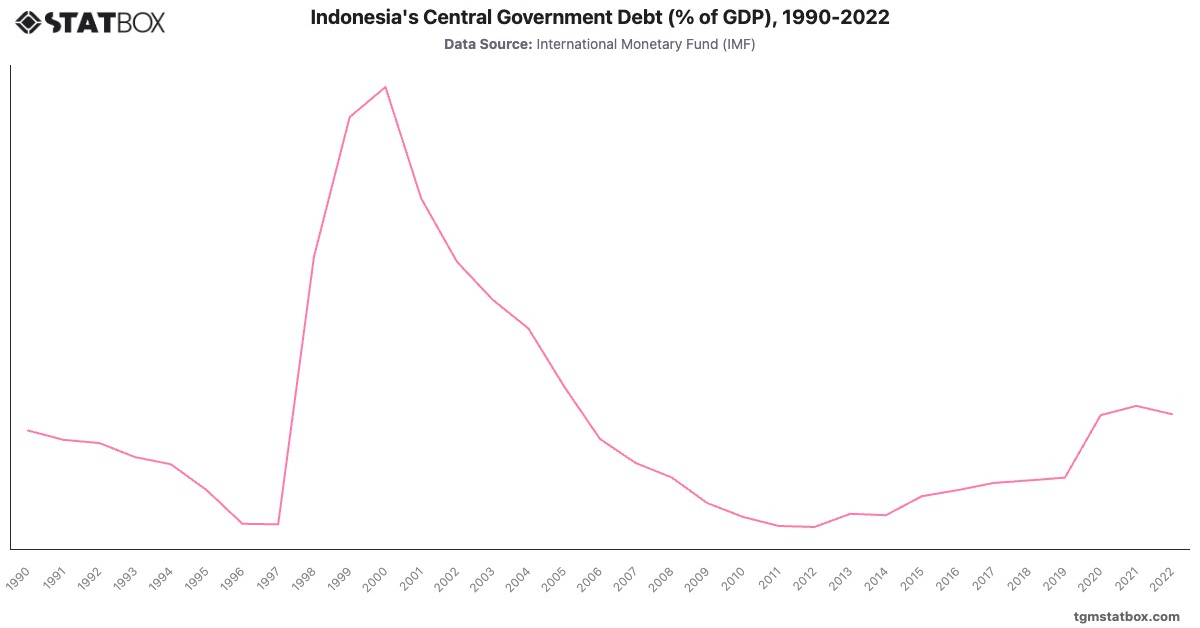
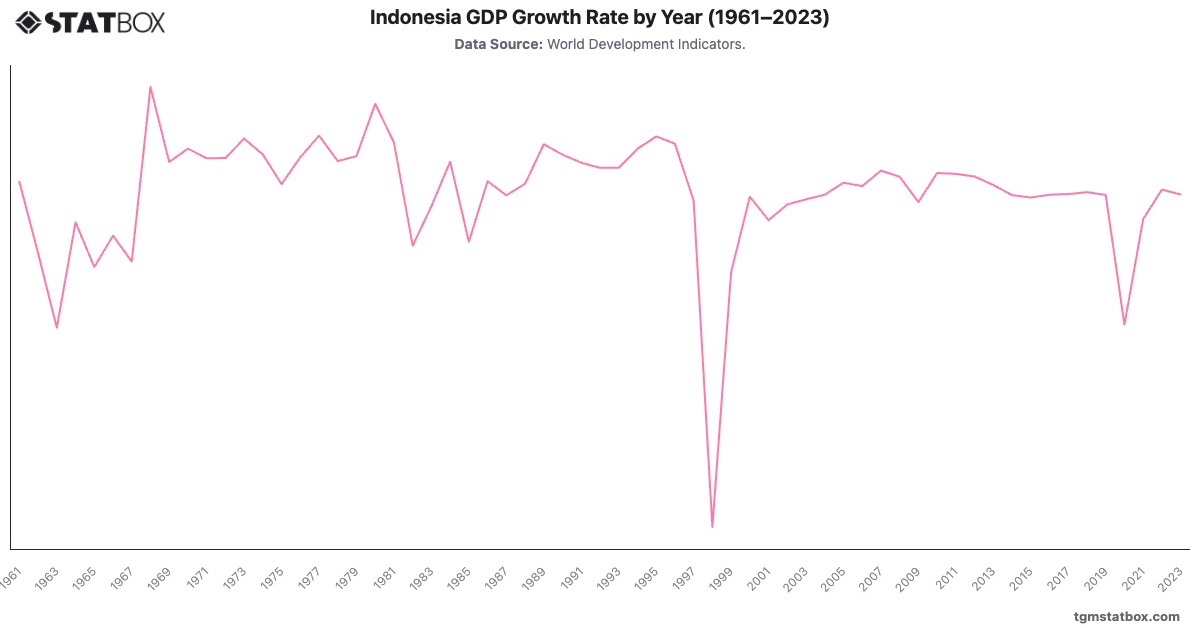
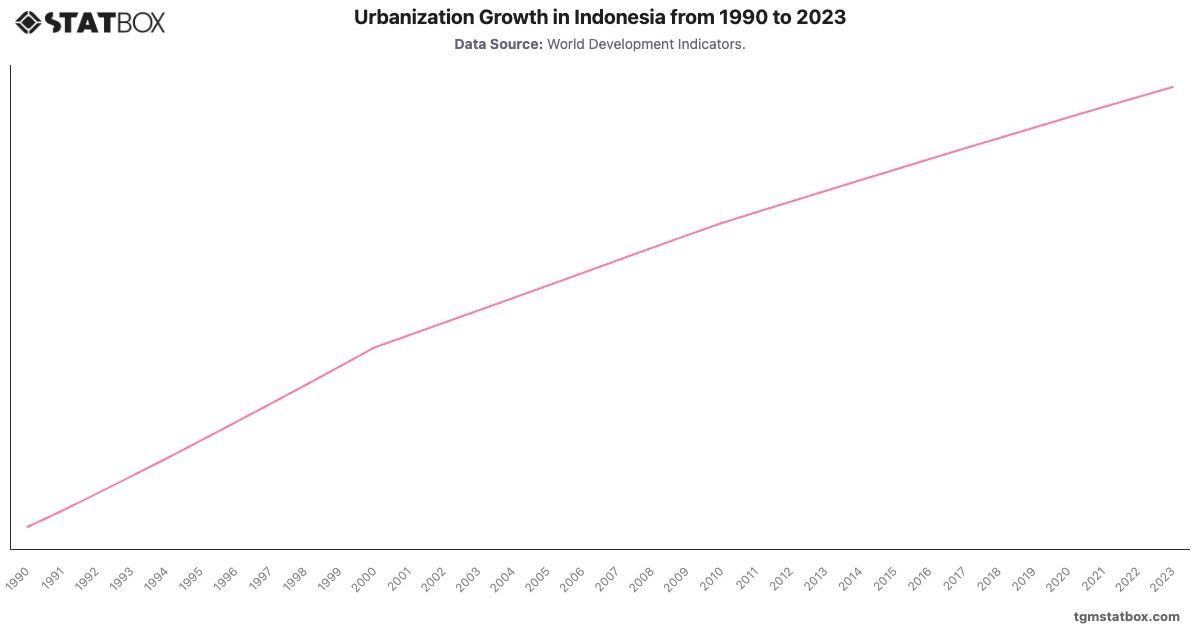
Find out more through related statistics on Indonesia’s central government debt-to-GDP ratio, Indonesia’s annual GDP growth rate, Indonesia’s urbanization increase.