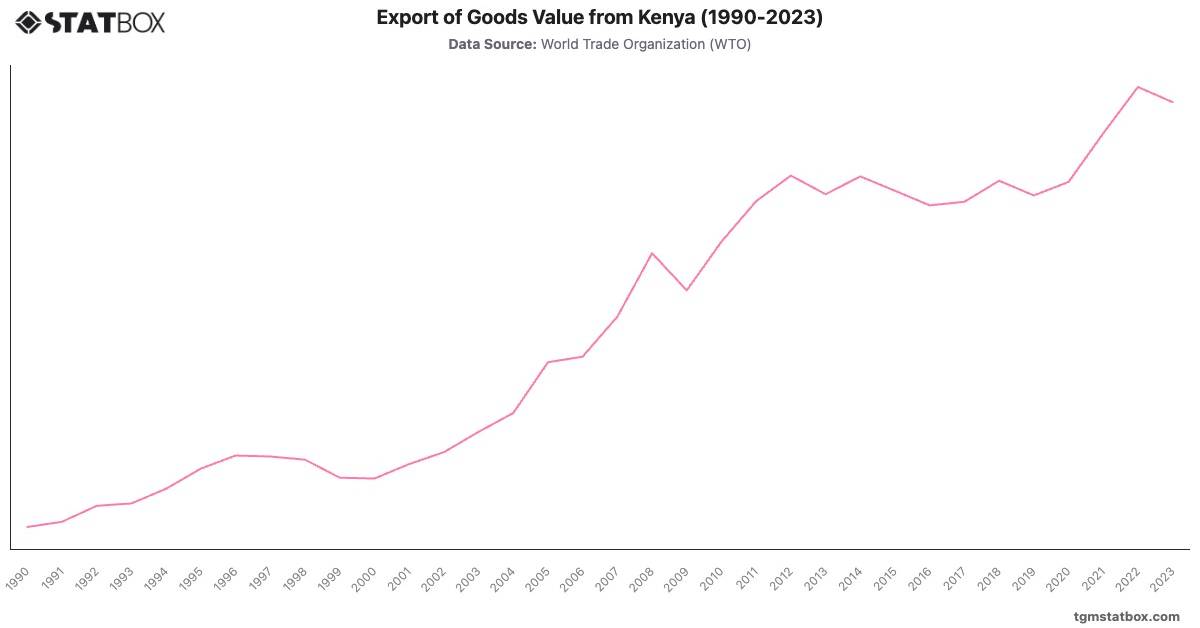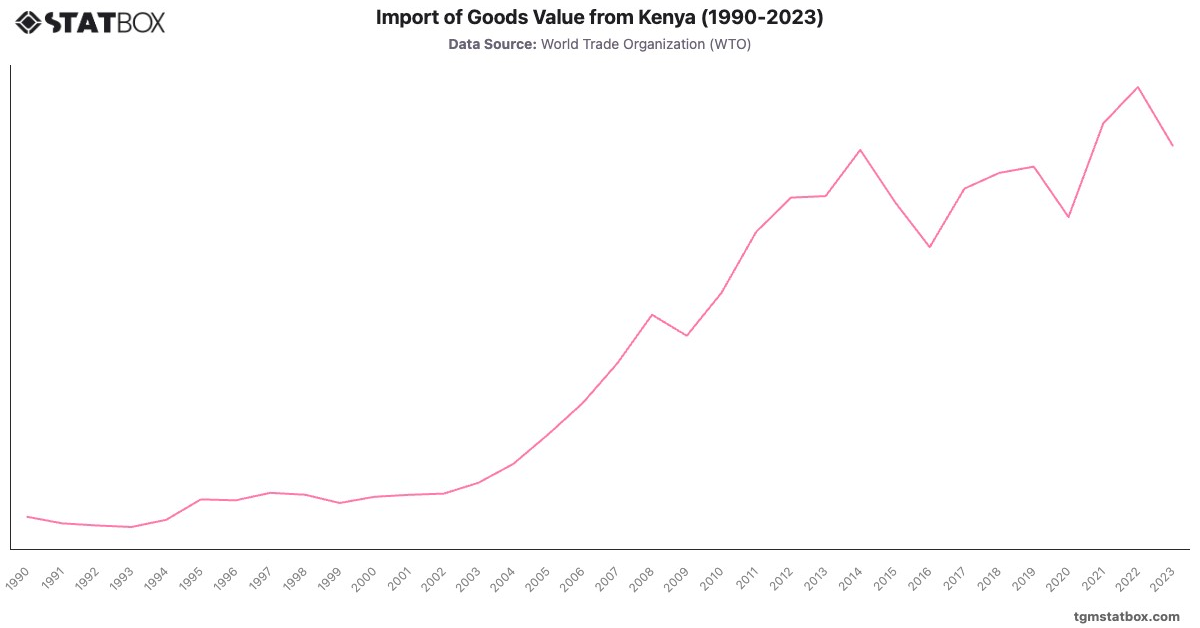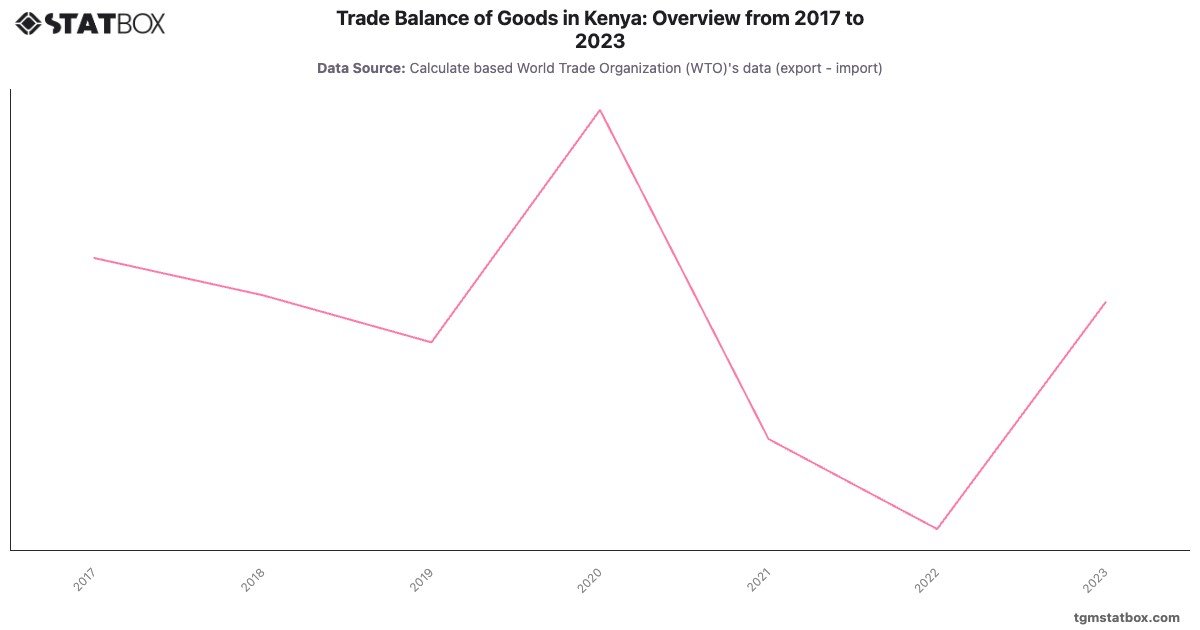
Kenya’s trade balance of goods consistently remained in deficit over the 2017–2023 period, reflecting the country’s reliance on imports. The deficit widened from -10,939.6 million USD in 2017 to a peak of -13,755.2 million USD in 2022, driven by higher imports of petroleum, machinery, and consumer goods amidst rising global prices and increasing domestic demand.
In 2023, the deficit narrowed to -11,397.6 million USD, possibly due to declining fuel prices and efforts to promote exports in tea, horticulture, and textiles. However, Kenya’s trade dynamics underscore structural challenges, including a limited export base and dependency on imported goods for industrial and consumer needs, which continue to weigh on its trade balance.
In 2023, the deficit narrowed to -11,397.6 million USD, possibly due to declining fuel prices and efforts to promote exports in tea, horticulture, and textiles. However, Kenya’s trade dynamics underscore structural challenges, including a limited export base and dependency on imported goods for industrial and consumer needs, which continue to weigh on its trade balance.
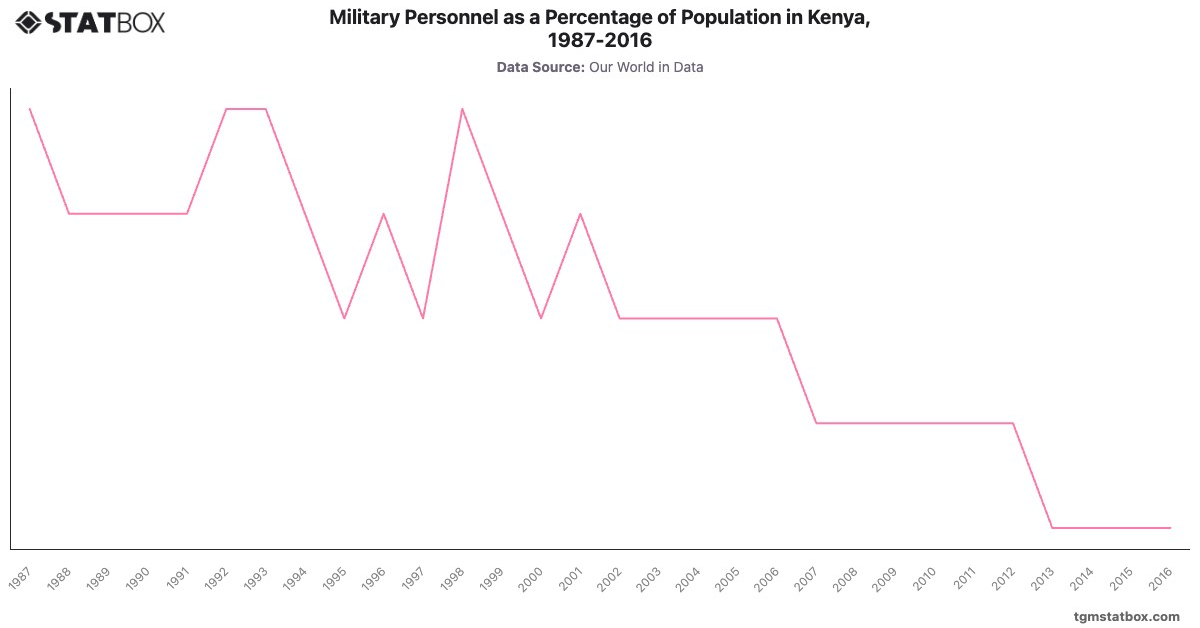
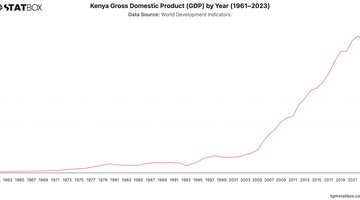
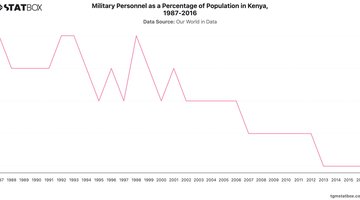
Find out more through related statistics on historical military personnel data for Kenya, Kenya’s annual GDP growth rate, Kenya’s unemployment rate.