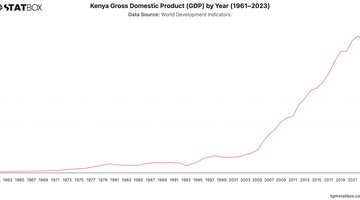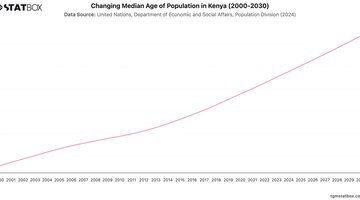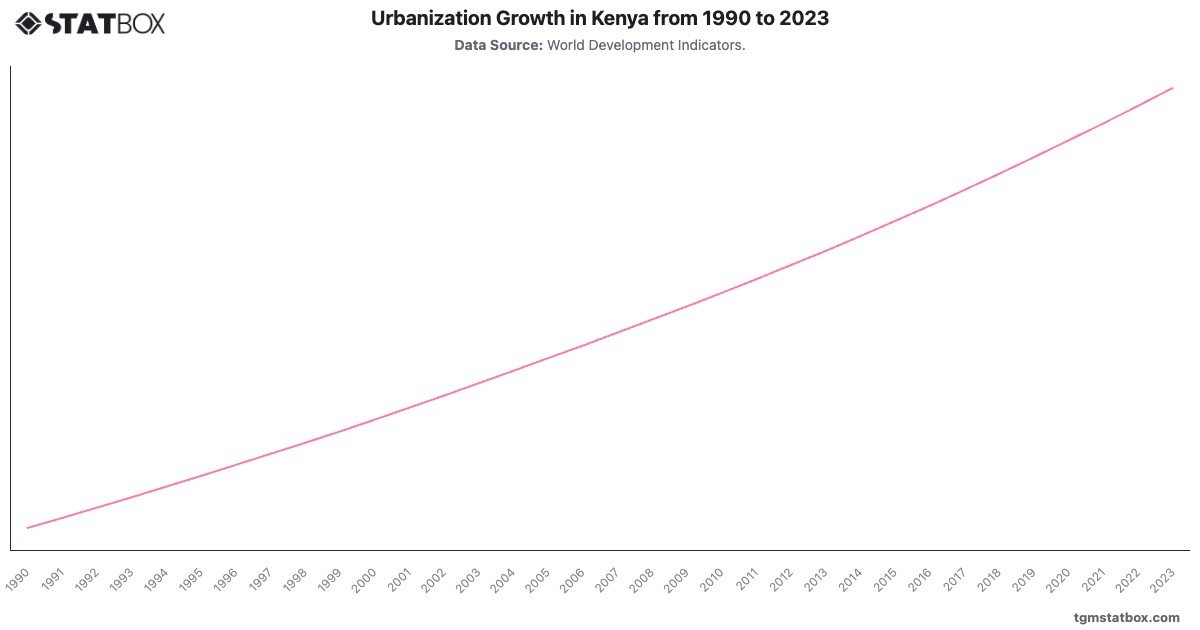
In the 1990s, urbanization was slower, with annual increases around , due to Kenya’s predominantly agrarian economy and limited urban infrastructure. However, in the 2000s, urban growth picked up as the country’s industrial and service sectors expanded. Improved road networks, electricity, and housing developments further boosted urban migration. By 2023, urbanization continued to rise as more Kenyans sought improved livelihoods in cities. This shift presents opportunities for economic growth but also challenges in managing housing, transportation, and service delivery to Kenya’s burgeoning urban population.
Find out more through related statistics on Kenya’s population density, Industry sector’s share in Kenya’s GDP, Kenya’s population figures.