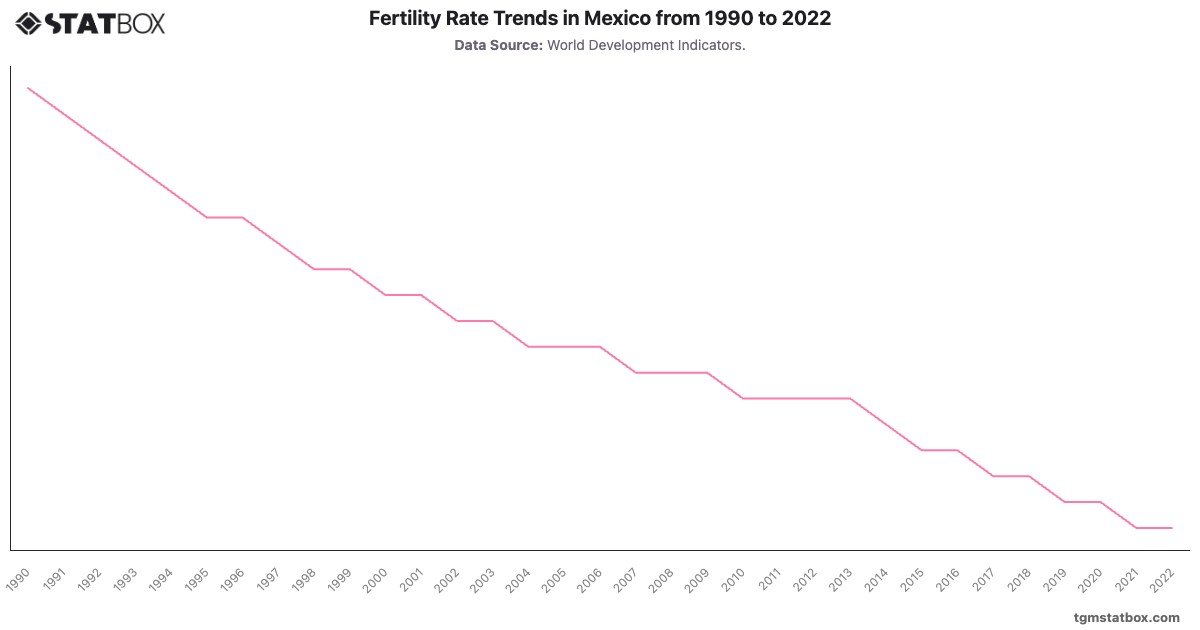
Mexico’s fertility rate declined consistently from 3.5 in 1990 to 1.8 in 2022, signaling a significant demographic transition. The sharp reduction during the 1990s, with the rate reaching 2.8 by 1999, was driven by government-led family planning initiatives and increased education among women. Economic modernization also played a role, influencing family size preferences.
From the early 2000s, the rate continued to decrease but at a slower pace, stabilizing around 2.3 in 2010 and eventually reaching 1.8 by 2022. The sustained decline reflects changing cultural attitudes toward family size and the increasing economic pressures faced by younger generations.
From the early 2000s, the rate continued to decrease but at a slower pace, stabilizing around 2.3 in 2010 and eventually reaching 1.8 by 2022. The sustained decline reflects changing cultural attitudes toward family size and the increasing economic pressures faced by younger generations.
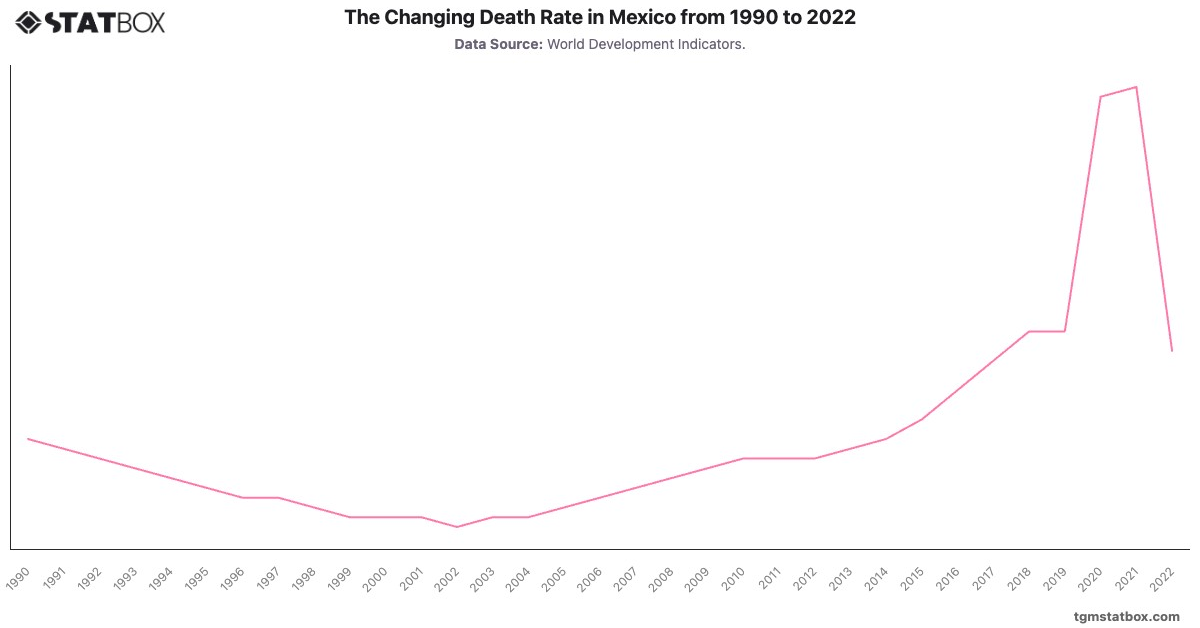
For a broader context, visit other statistics on Mexico’s shifting median age, Mexico’s shifting mortality rate, Mexico’s population growth rate.