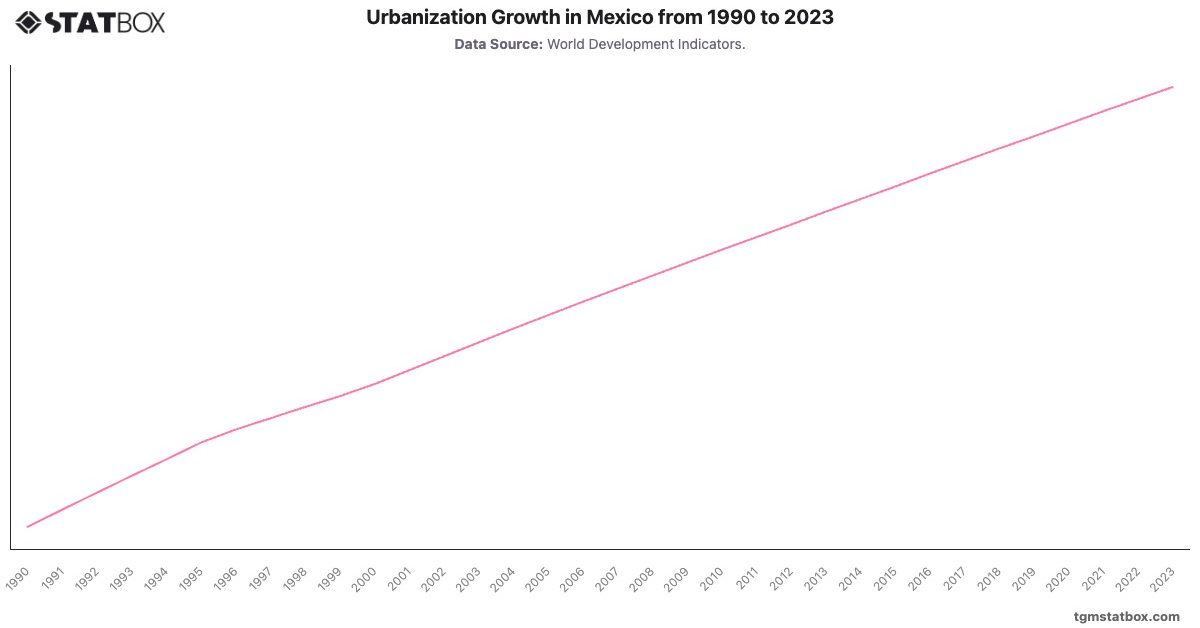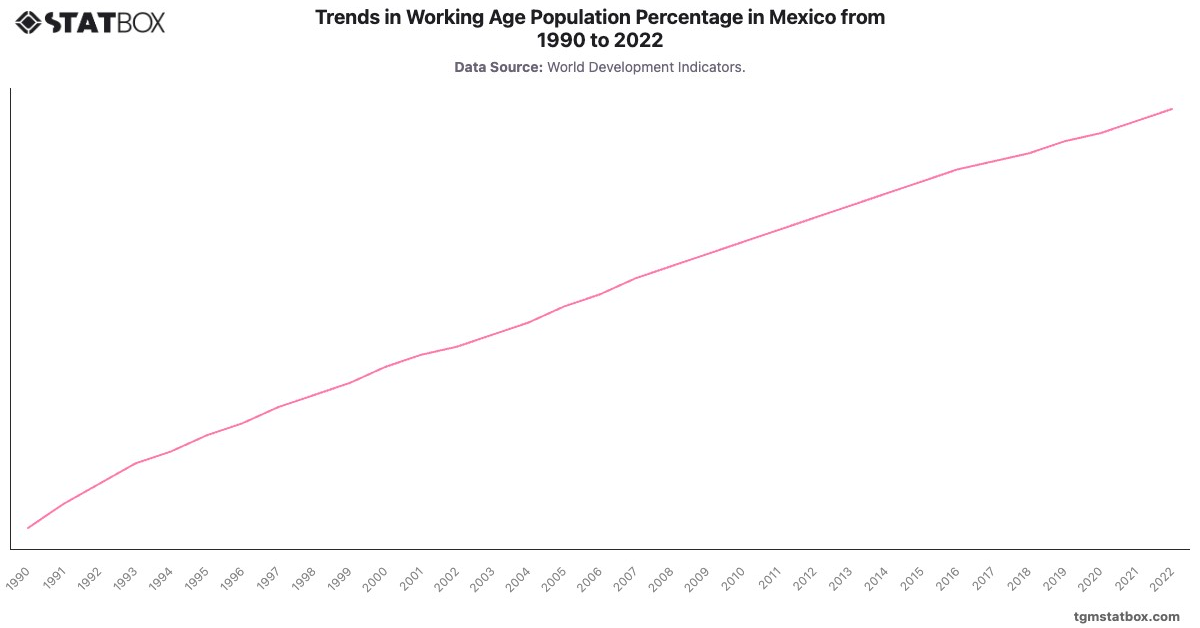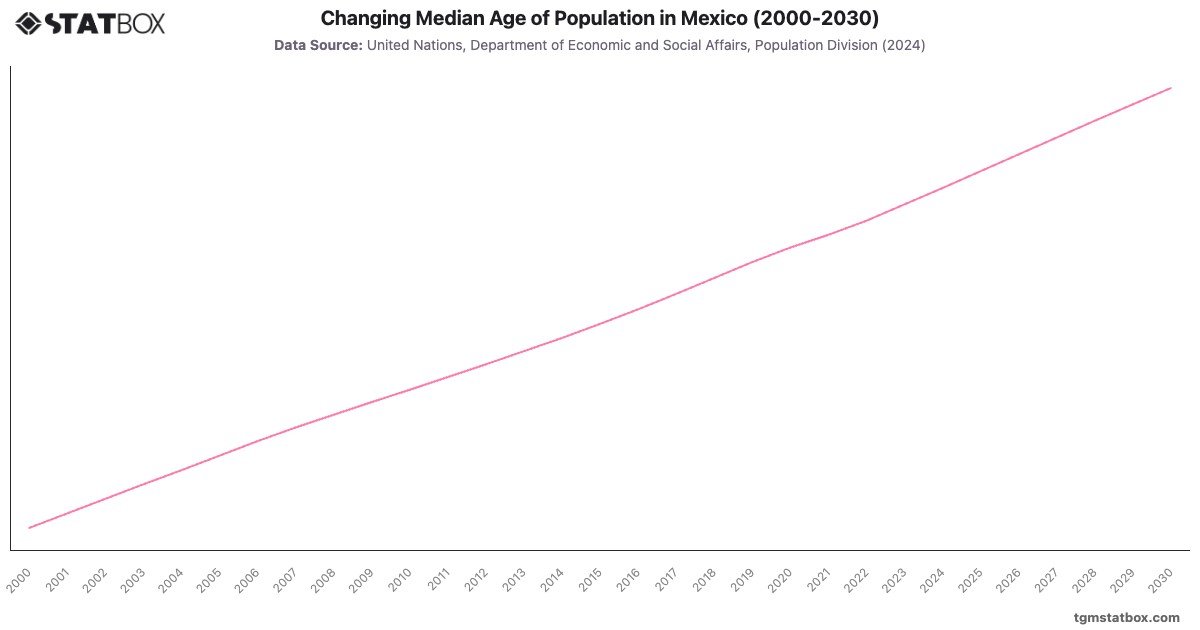
From 2000 to 2030, Mexico's median age steadily rises from 21.8 to an anticipated 31.5. The most significant growth occurs from 2000 to 2010, where the median age shifts from 21.8 to 24.8. This initial increase can be attributed to urbanization and improved healthcare, gradually shifting Mexico’s demographics toward an aging population. As Mexico’s urban population grows, rural-to-urban migration and modernized healthcare contribute to increased life expectancy, impacting the overall median age.
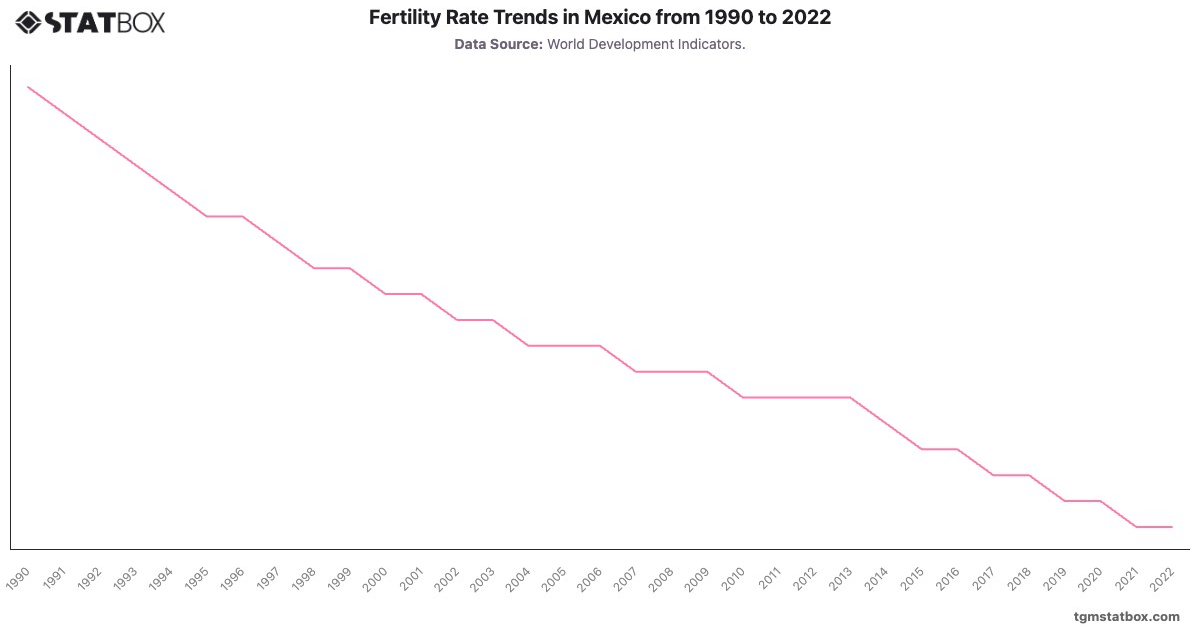
In the decade following 2010, Mexico’s median age continues to increase, reaching 27.9 by 2020. The trend reflects a slowing population growth rate as younger generations have fewer children, a common effect of urbanization and education growth. By 2030, Mexico’s median age is projected to reach 31.5, highlighting the long-term impact of urbanization and socio-economic changes that contribute to a more balanced age structure.
In the decade following 2010, Mexico’s median age continues to increase, reaching 27.9 by 2020. The trend reflects a slowing population growth rate as younger generations have fewer children, a common effect of urbanization and education growth. By 2030, Mexico’s median age is projected to reach 31.5, highlighting the long-term impact of urbanization and socio-economic changes that contribute to a more balanced age structure.
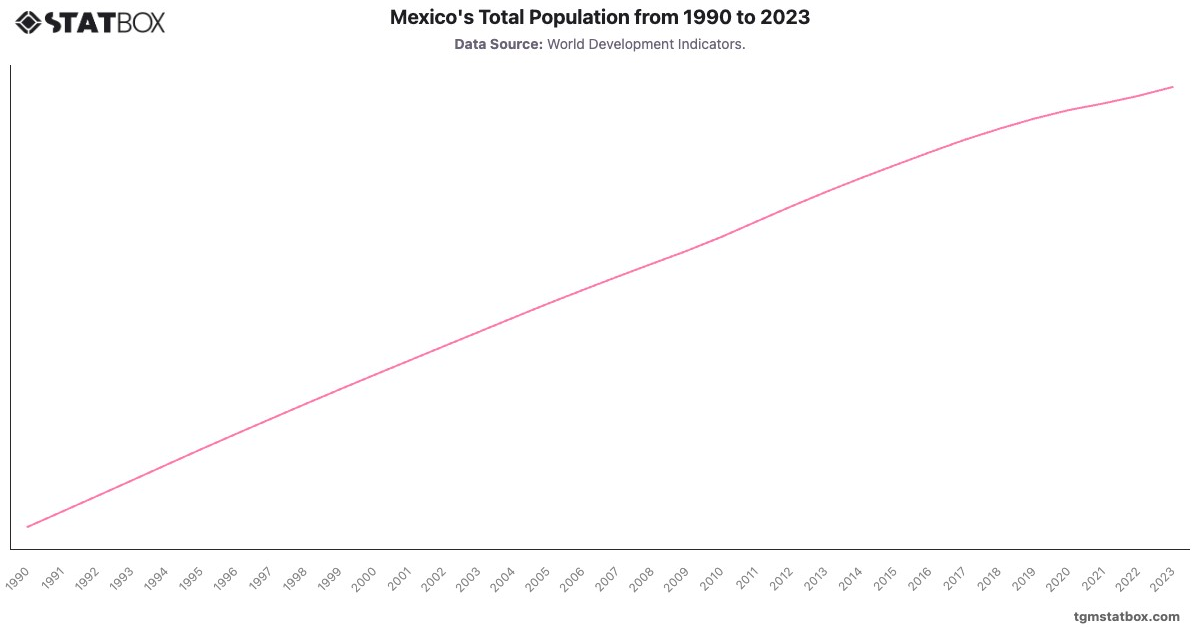
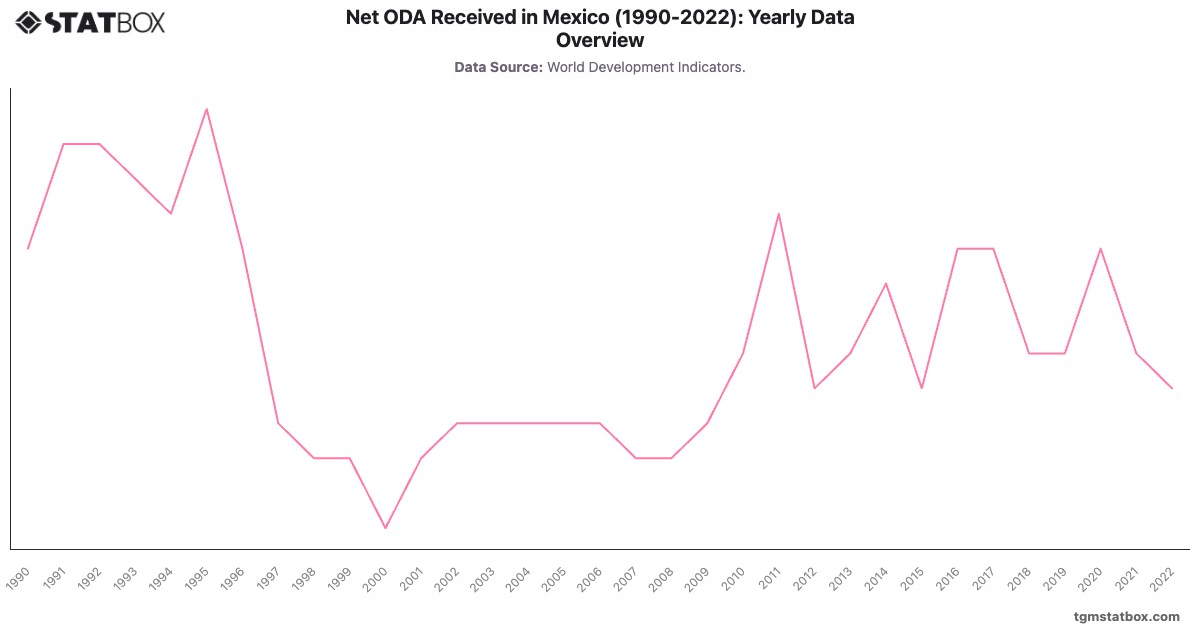
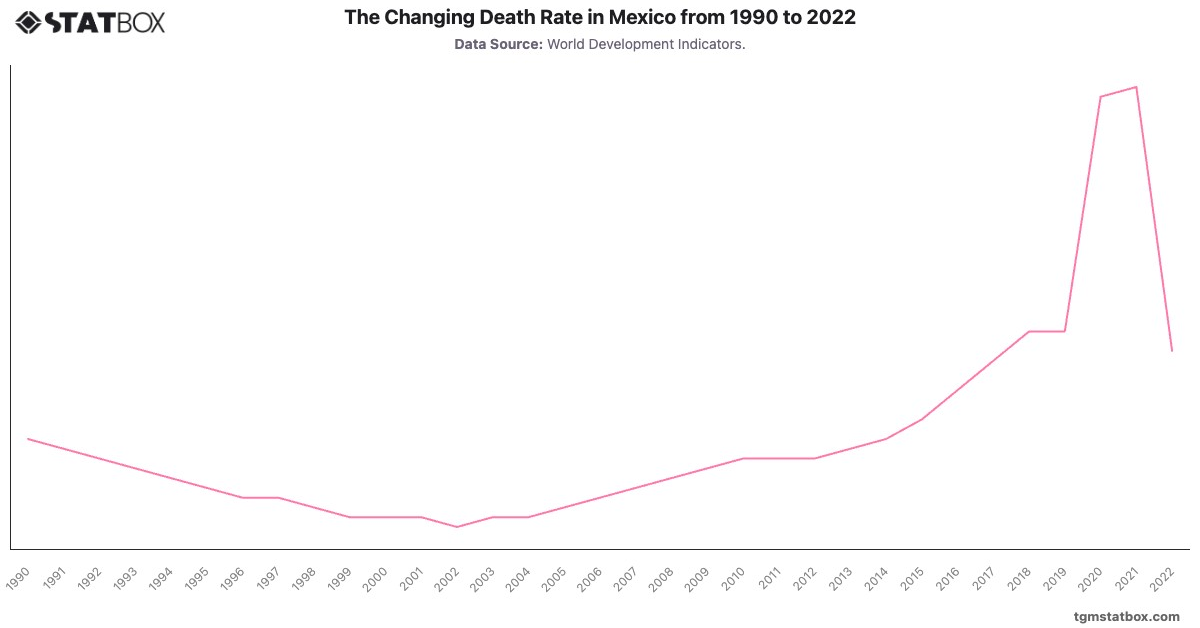
For additional information, visit statistics on Mexico’s population totals, Mexico’s net ODA received, Mexico’s shifting mortality rate.