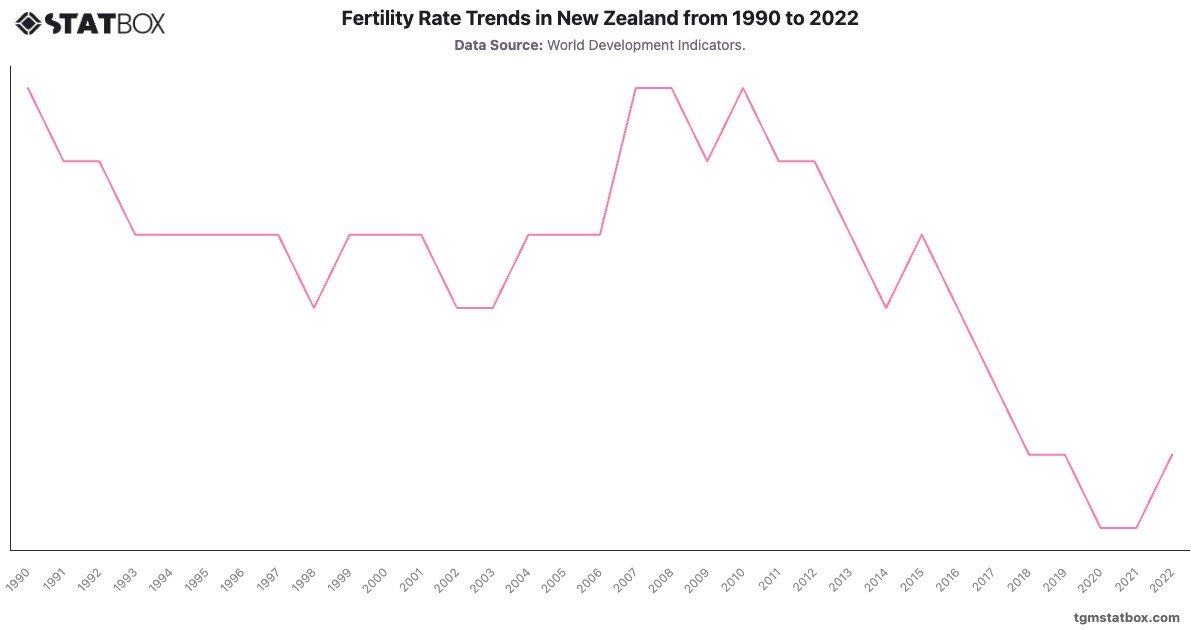
New Zealand's fertility rate saw a gradual decline from 2.2 in 1990 to 1.7 by 2022. The rate hovered around 2.0 through the 1990s and early 2000s, reflecting a balance between traditional family structures and increasing urbanization. A temporary rise to 2.2 in the late 2000s coincided with strong economic conditions and family-friendly policies.
By the 2010s, the rate began declining, reaching 1.7 in 2022. Factors contributing to this shift include rising housing costs, delayed parenthood, and changing societal norms. Despite the drop, New Zealand's fertility rate remains higher than many other developed nations, partly due to policies supporting families and migrants.
By the 2010s, the rate began declining, reaching 1.7 in 2022. Factors contributing to this shift include rising housing costs, delayed parenthood, and changing societal norms. Despite the drop, New Zealand's fertility rate remains higher than many other developed nations, partly due to policies supporting families and migrants.
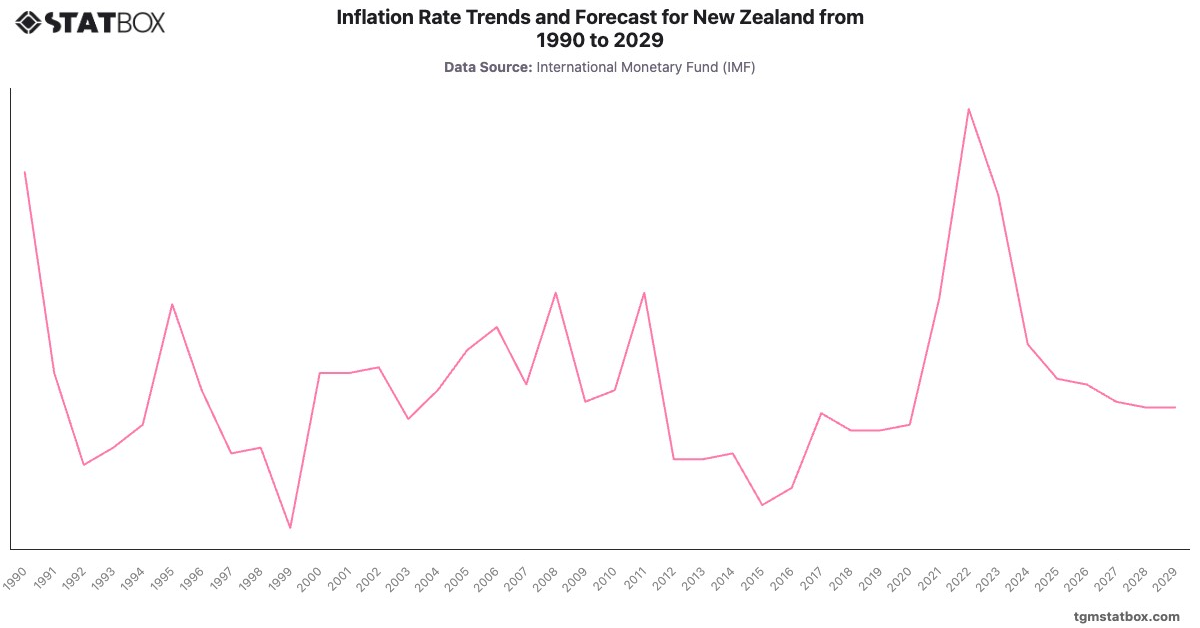
Discover additional trends and data on New Zealand’s inflation rate trends, New Zealand’s population numbers, New Zealand’s unemployment rate trend.