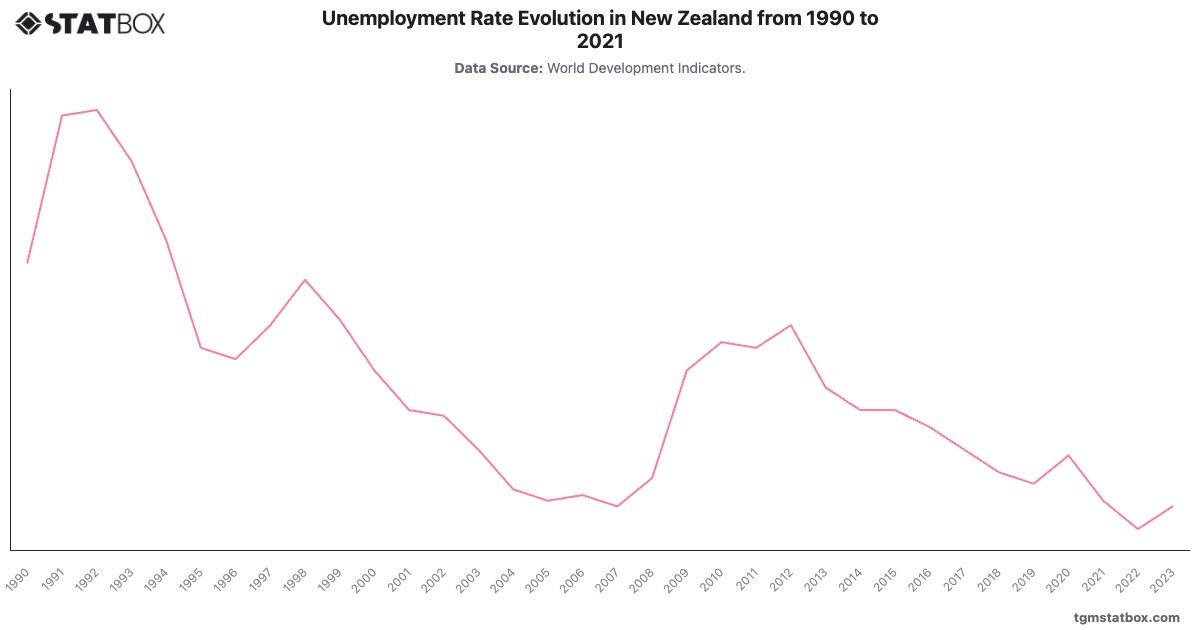
New Zealand experienced elevated unemployment rates in the early 1990s, peaking at in 1992 due to structural economic changes and global recessionary pressures. By the mid-90s, government reforms and economic growth helped reduce unemployment to around by 1996. The rate continued to improve, reaching a historic low of in 2007 before the global financial crisis drove it back up to in 2010, as New Zealand’s economy was impacted by reduced global demand.
In the years following, New Zealand’s unemployment rate slowly declined as the economy recovered, with the rate dropping to in 2019. The pandemic saw a brief rise to in 2020, but New Zealand’s swift economic recovery measures helped the rate decrease to by 2022. By 2023, unemployment was at , demonstrating a stable labor market response amid global challenges.
In the years following, New Zealand’s unemployment rate slowly declined as the economy recovered, with the rate dropping to in 2019. The pandemic saw a brief rise to in 2020, but New Zealand’s swift economic recovery measures helped the rate decrease to by 2022. By 2023, unemployment was at , demonstrating a stable labor market response amid global challenges.
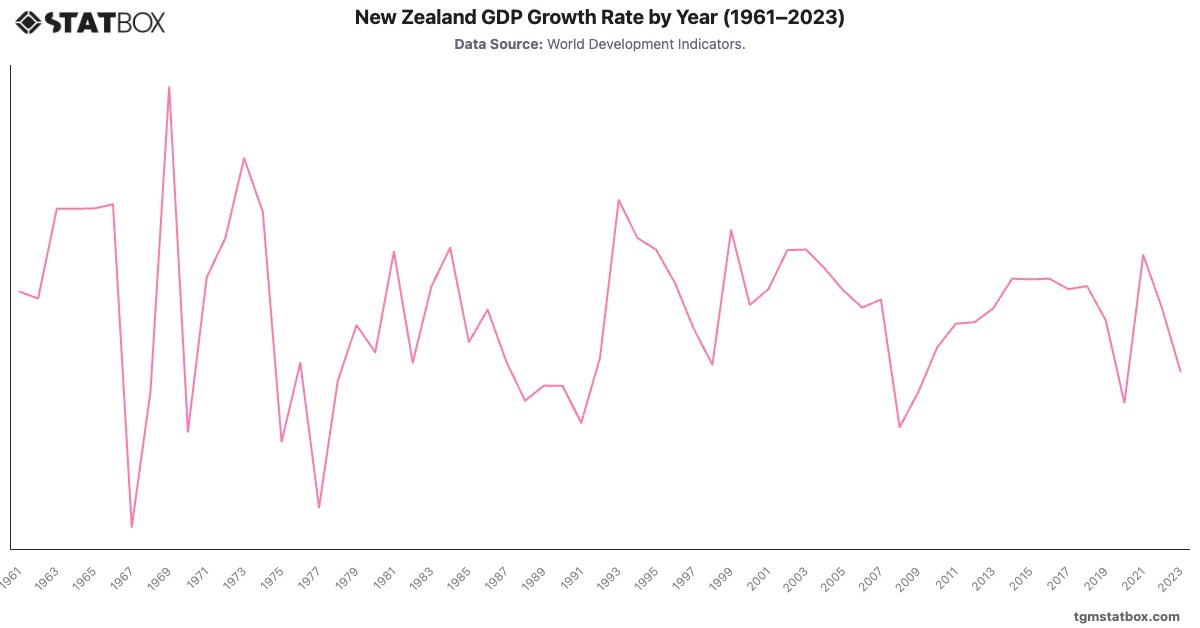
For a broader context, visit other statistics on Military personnel share in New Zealand, New Zealand’s yearly GDP growth rate, New Zealand’s sectoral contribution to GDP.