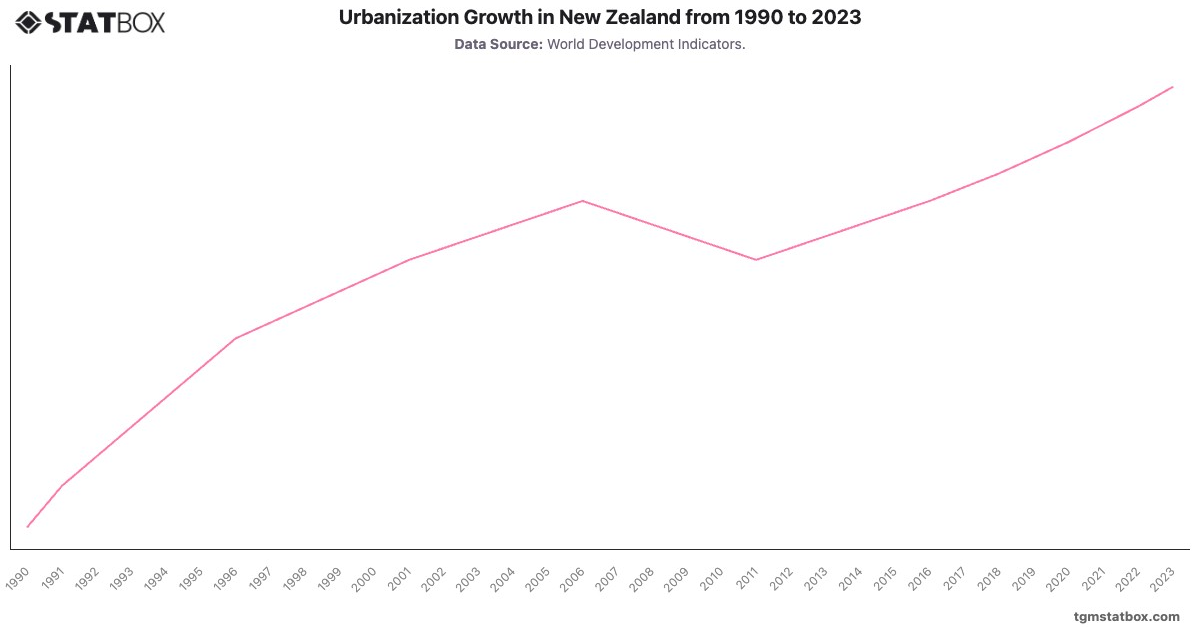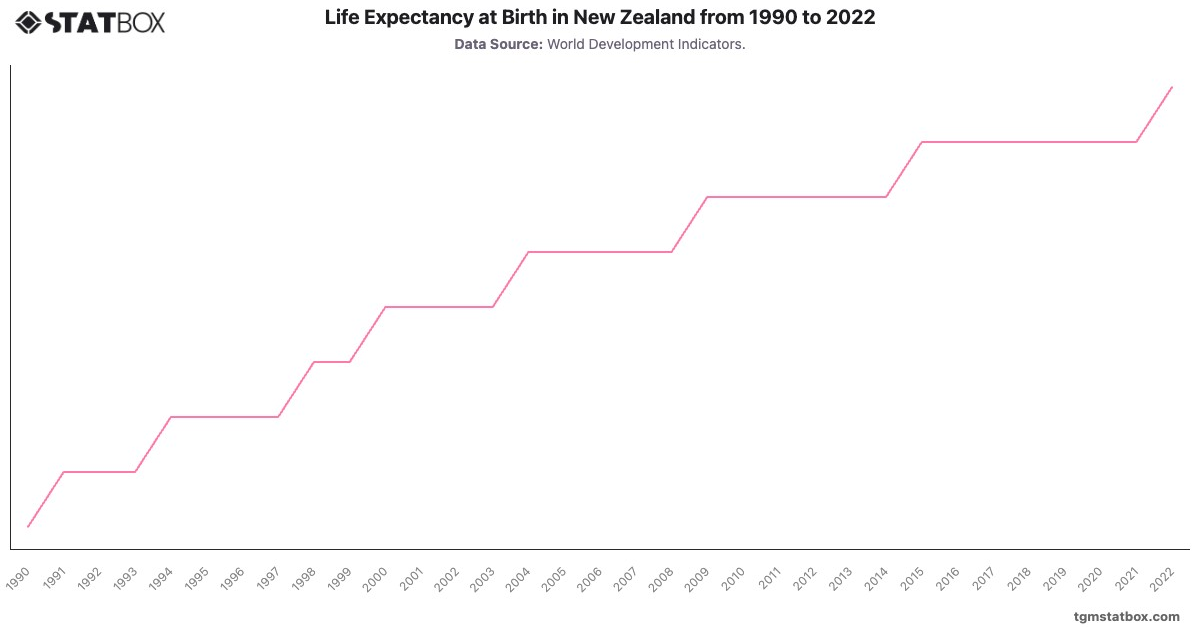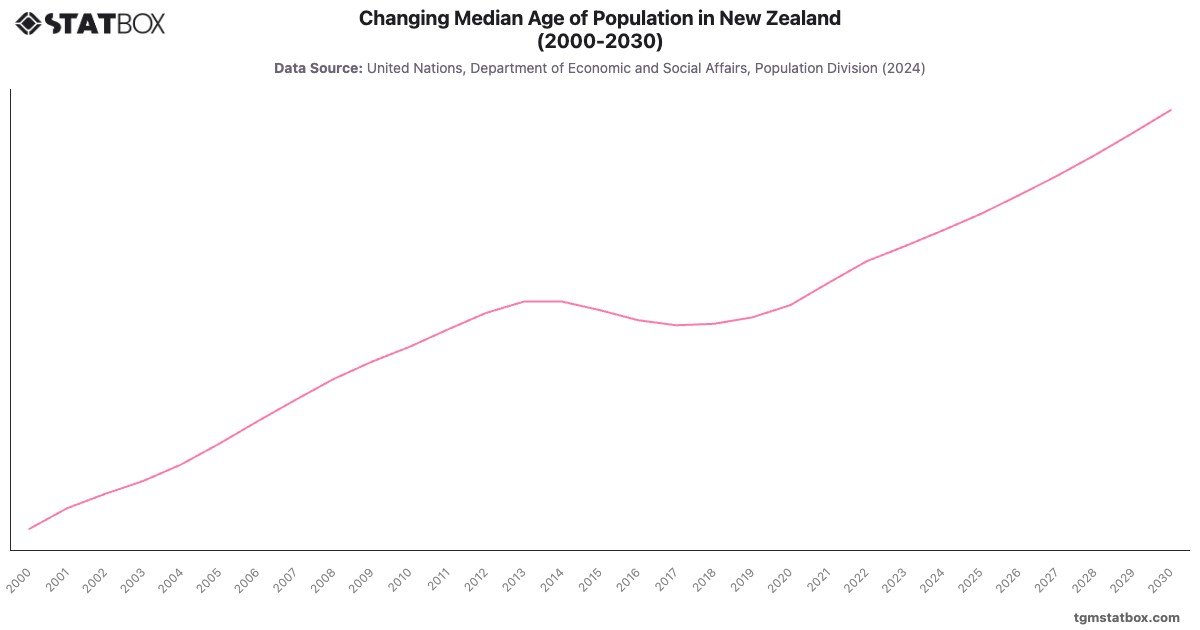
New Zealand’s median age increases from 33.3 in 2000 to an estimated 39.2 by 2030. In the early 2000s, the median age rises steadily due to the country’s urbanization and enhanced healthcare systems, which contribute to greater life expectancy and a shift toward an aging population. By 2010, the median age reaches 35.9, reflecting New Zealand's transition toward an older population, typical in urbanized regions.
From 2020 onward, New Zealand’s median age continues to grow as birth rates remain relatively low, reaching 37.3 by 2023 and projected to reach 39.2 by 2030. The steady increase in the median age is consistent with New Zealand’s urbanization, where younger generations have fewer children, leading to a predominantly older population structure over time.
From 2020 onward, New Zealand’s median age continues to grow as birth rates remain relatively low, reaching 37.3 by 2023 and projected to reach 39.2 by 2030. The steady increase in the median age is consistent with New Zealand’s urbanization, where younger generations have fewer children, leading to a predominantly older population structure over time.
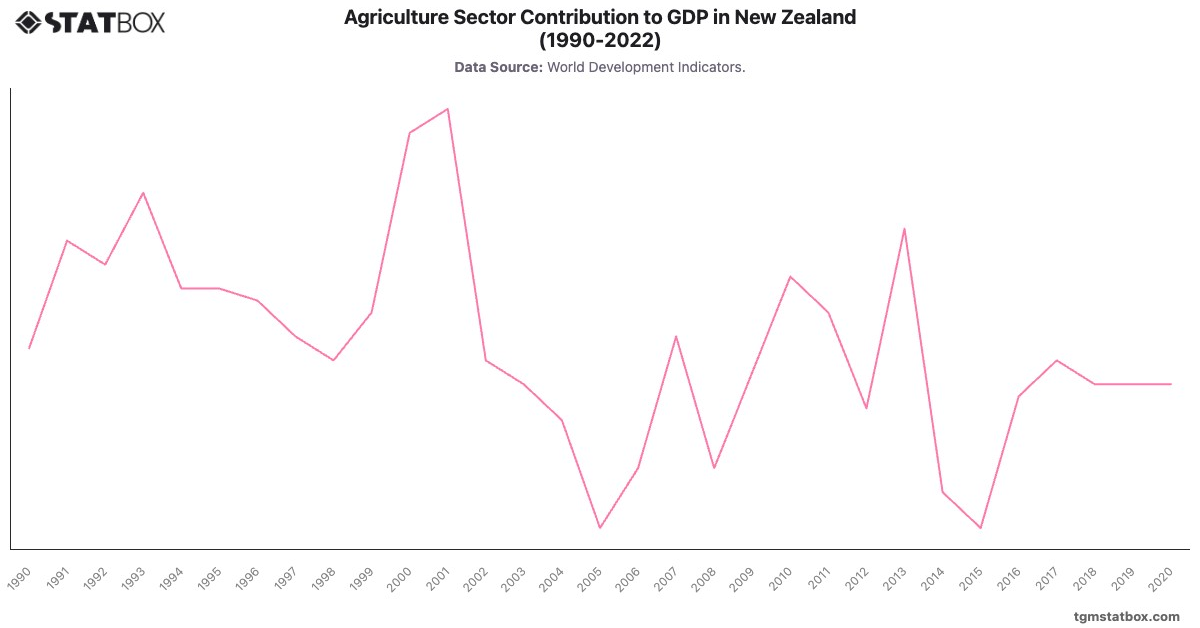
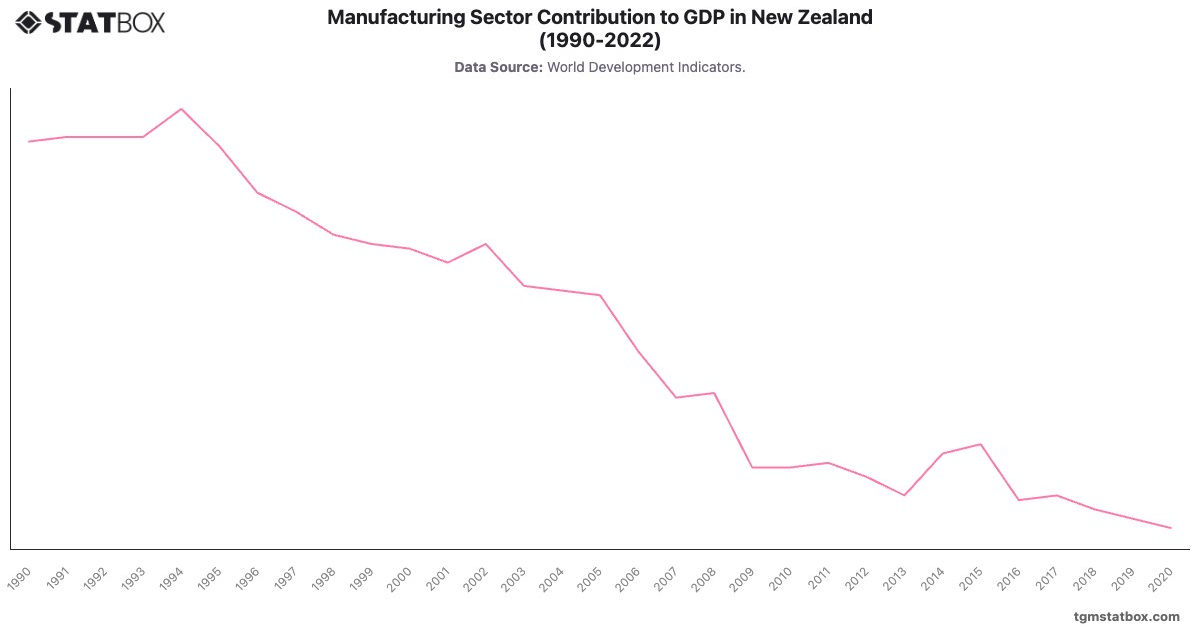
For a broader context, visit other statistics on New Zealand’s unemployment rate trend, New Zealand’s manufacturing sector GDP share, growth of urbanization in New Zealand.