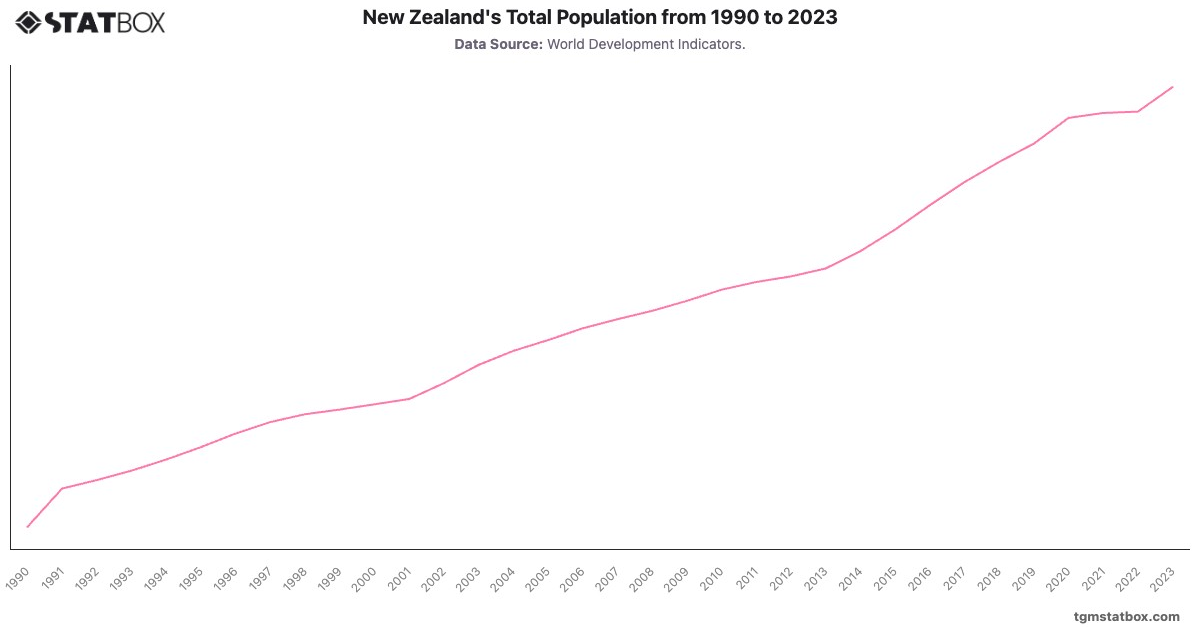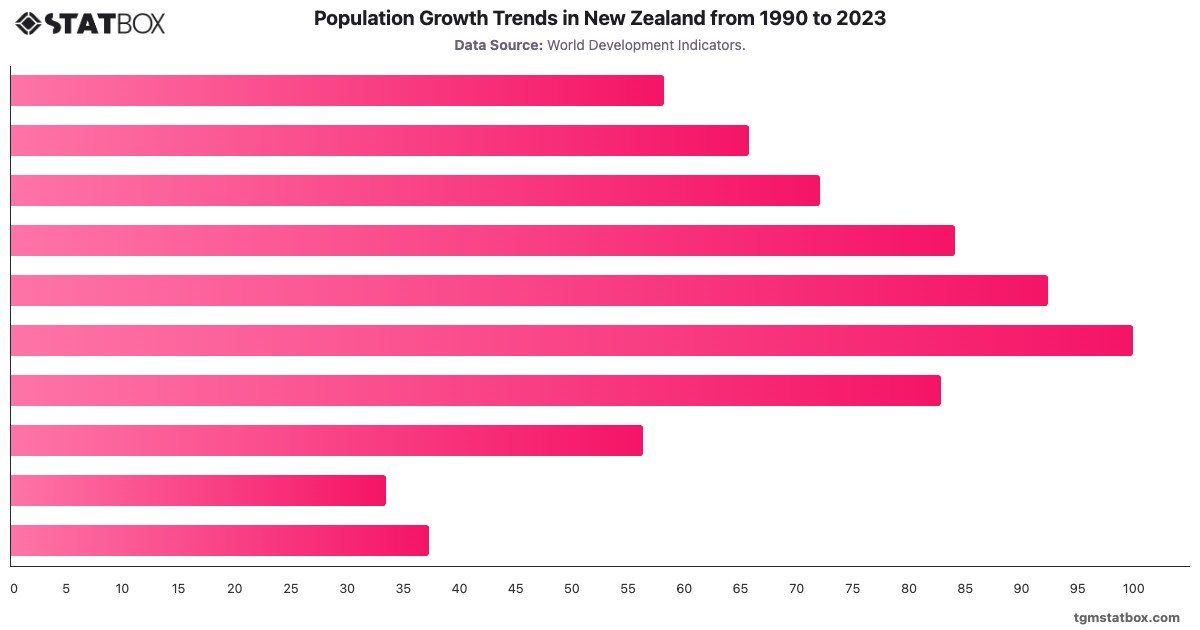
New Zealand's population growth rates showed variability over the decades, reflecting shifts in migration policies and economic conditions. The early 1990s saw moderate growth, peaking at in 1996, driven by strong immigration flows. However, the late 1990s marked a slowdown, with rates declining to by 1999, as the country faced economic challenges.
The early 2000s witnessed a rebound, highlighted by a significant spike of in 2003, due to favorable migration policies. Growth remained robust through the 2010s, with peaks like in 2016, reflecting sustained immigration and natural increases. A sharp dip in 2021 () and 2022 () can be attributed to pandemic-related border closures. However, the growth rate bounced back to in 2023 as international migration resumed.
The early 2000s witnessed a rebound, highlighted by a significant spike of in 2003, due to favorable migration policies. Growth remained robust through the 2010s, with peaks like in 2016, reflecting sustained immigration and natural increases. A sharp dip in 2021 () and 2022 () can be attributed to pandemic-related border closures. However, the growth rate bounced back to in 2023 as international migration resumed.
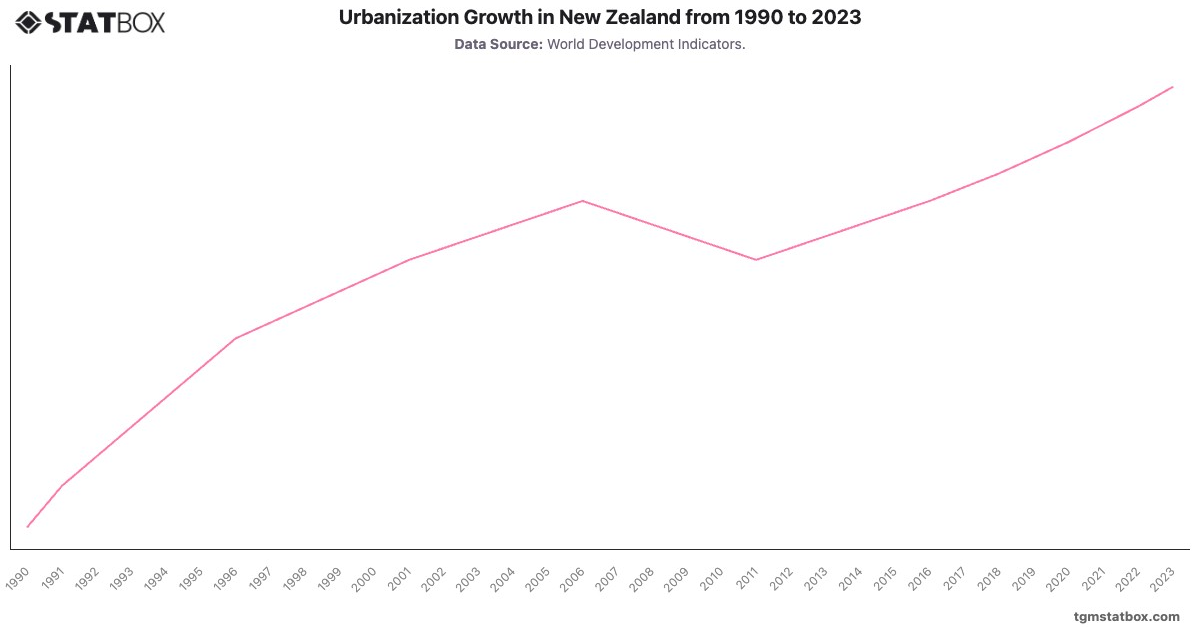
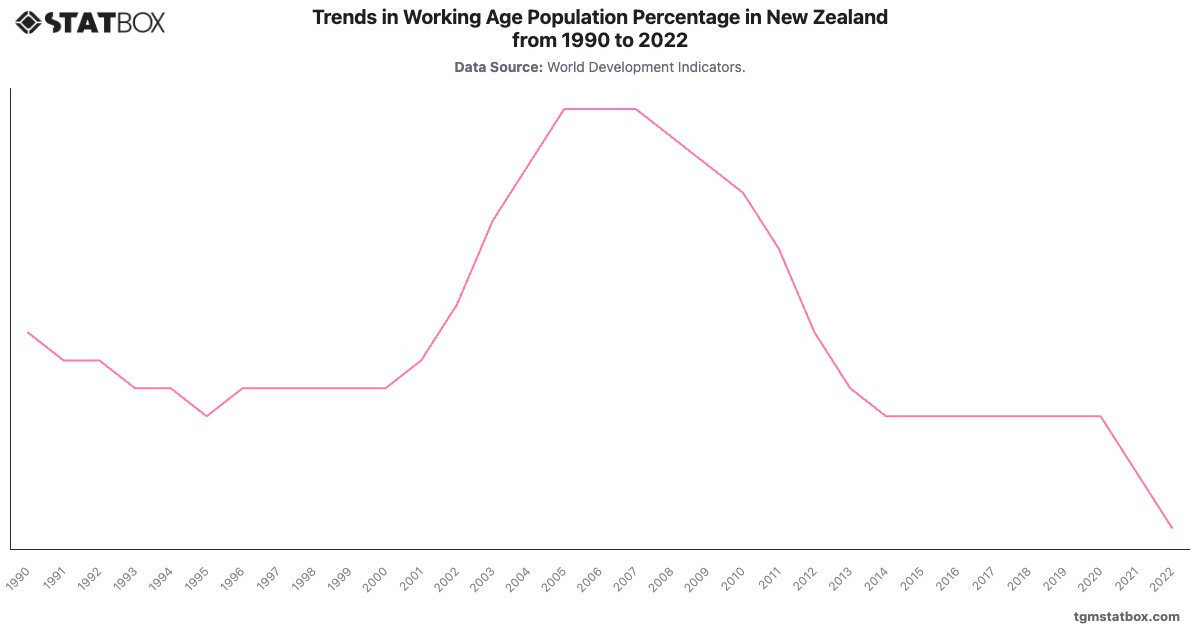
Discover additional trends and data on New Zealand’s working age population ratio, New Zealand’s population density, growth of urbanization in New Zealand.