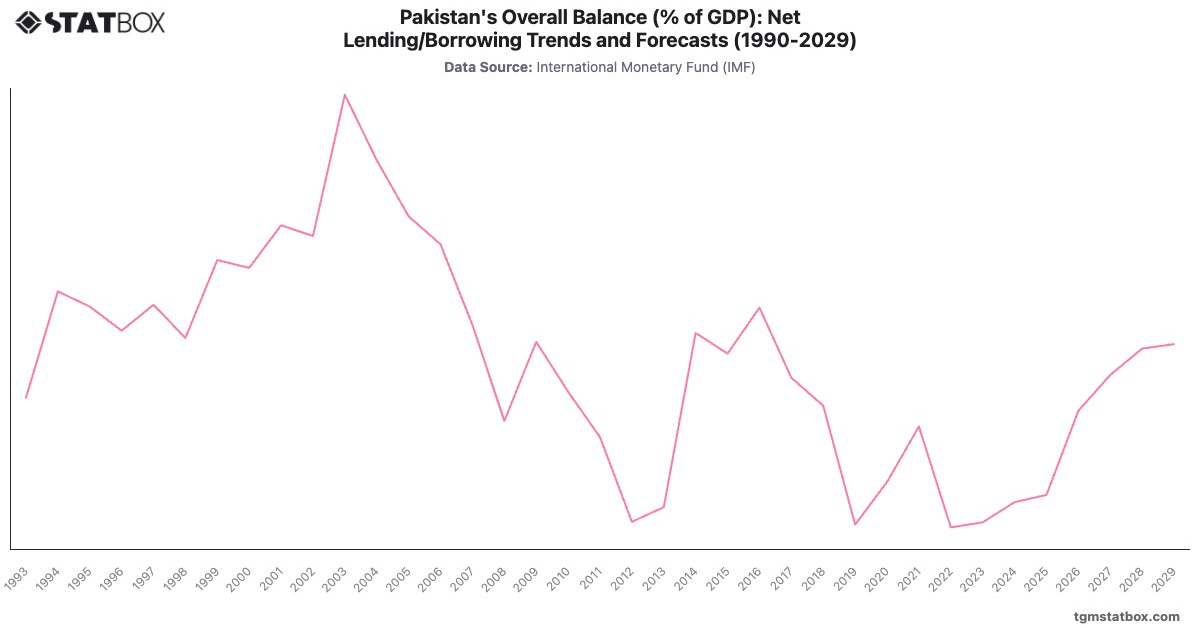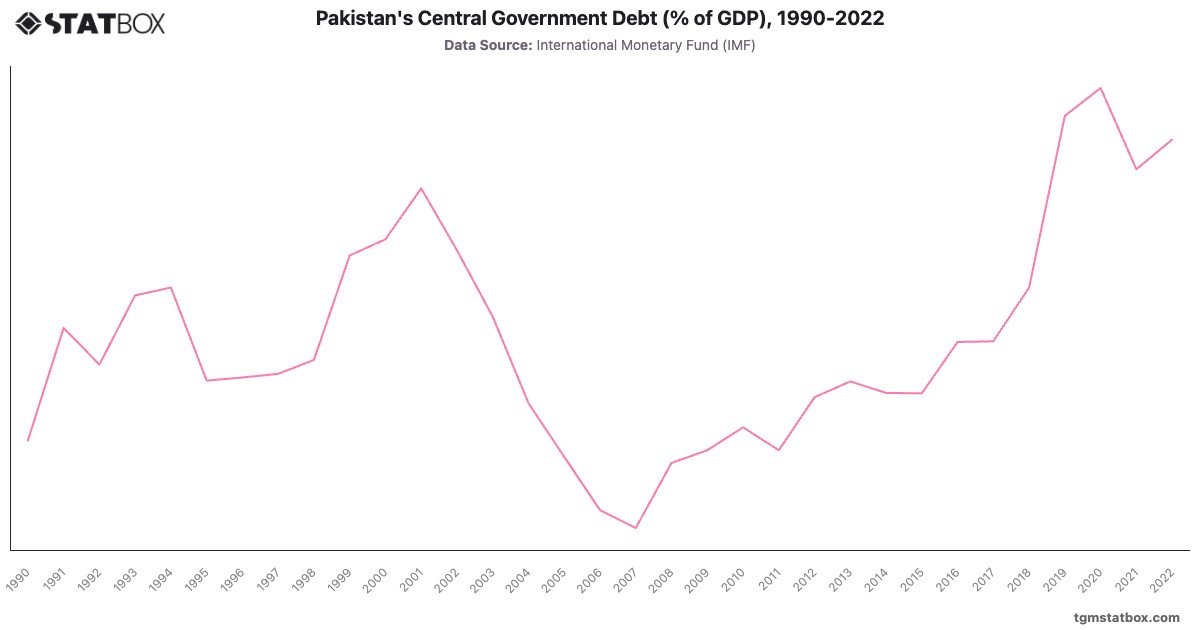
Pakistan's central government debt fluctuated significantly from 1990 to 2022, influenced by fiscal deficits, economic crises, and external assistance. Debt rose from in 1990 to in 2001 due to high borrowing and weak revenue performance. Subsequent reforms in the 2000s brought debt down to by 2007, supported by economic growth and fiscal discipline.
However, challenges returned post-2008, with debt increasing steadily, peaking at in 2020 amid pandemic-related spending. By 2022, debt remained elevated at , reflecting ongoing economic challenges, including currency depreciation and high borrowing costs.
However, challenges returned post-2008, with debt increasing steadily, peaking at in 2020 amid pandemic-related spending. By 2022, debt remained elevated at , reflecting ongoing economic challenges, including currency depreciation and high borrowing costs.
For a deeper dive into the topic, explore Pakistan’s manufacturing sector share in GDP, Pakistan’s services sector share in GDP, Pakistan’s annual GDP growth rate.