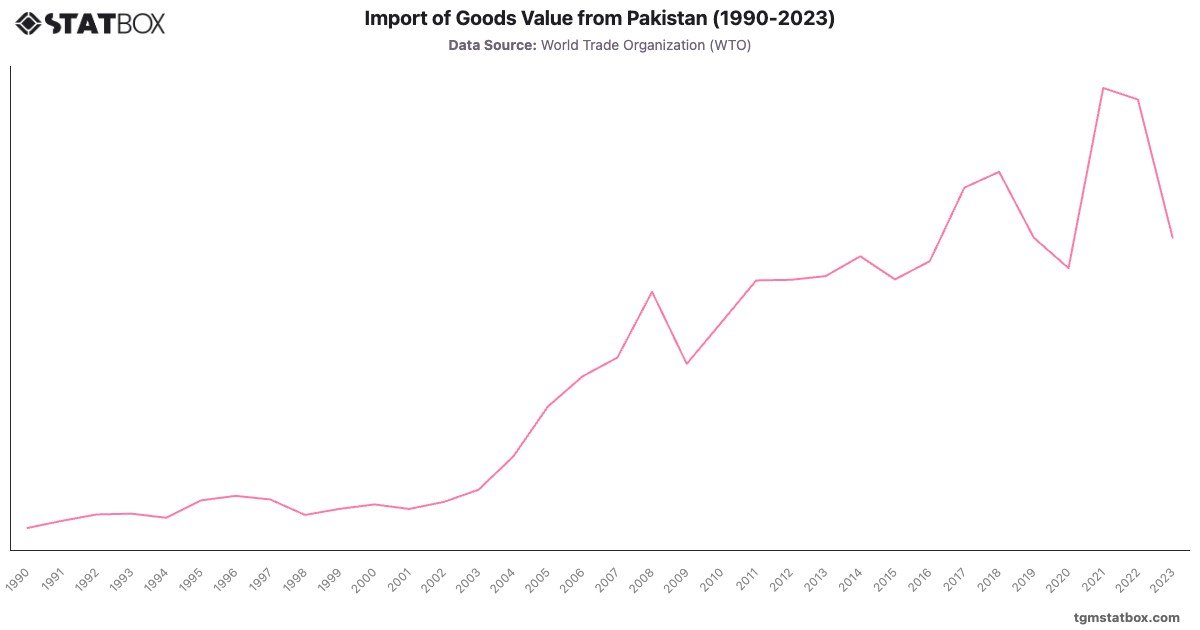
Pakistan’s import value demonstrated a consistent upward trend, growing from $7.4B in 1990 to $72.5B in 2021, followed by a peak of $70.7B in 2022. The sharp increase during the 2000s, from $13B in 2003 to $42.3B in 2008, was driven by rising demand for energy, machinery, and consumer goods during a period of economic liberalization and growth. However, the global financial crisis caused imports to dip to $31.7B in 2009.
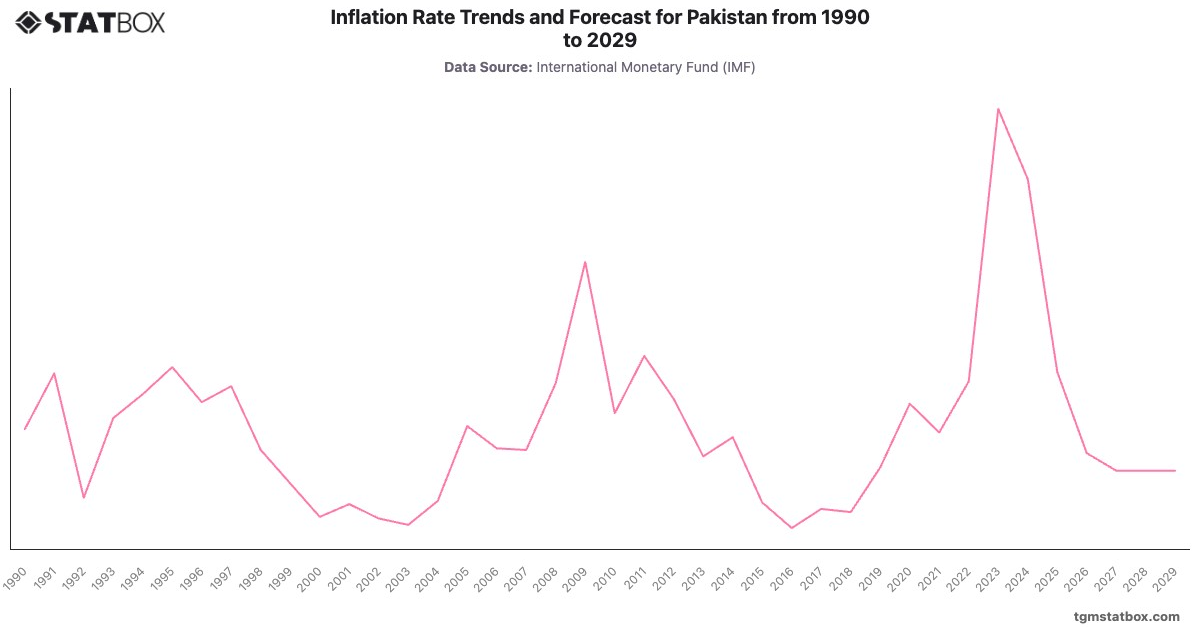
The recent rise to $72.5B in 2021 reflects a post-pandemic recovery and increased energy imports to meet growing industrial and consumer demand. The decline to $50.3B in 2023 signals adjustments to macroeconomic pressures, including currency depreciation and high inflation. Pakistan’s reliance on imports for energy and essential commodities highlights its vulnerability to external economic shocks.
The recent rise to $72.5B in 2021 reflects a post-pandemic recovery and increased energy imports to meet growing industrial and consumer demand. The decline to $50.3B in 2023 signals adjustments to macroeconomic pressures, including currency depreciation and high inflation. Pakistan’s reliance on imports for energy and essential commodities highlights its vulnerability to external economic shocks.
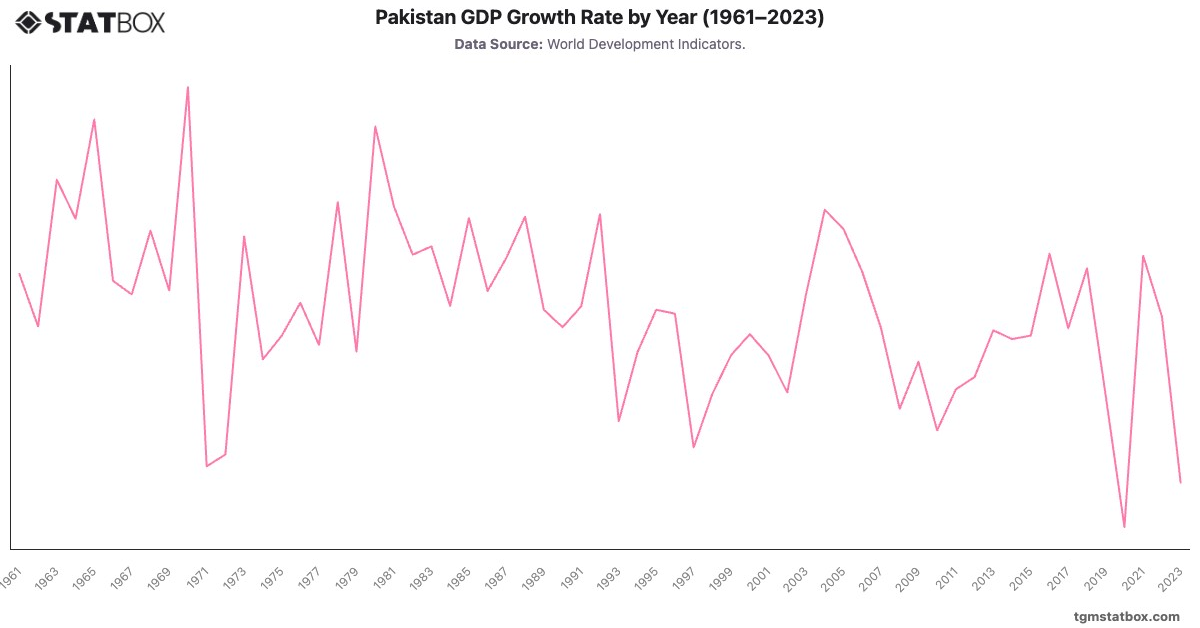
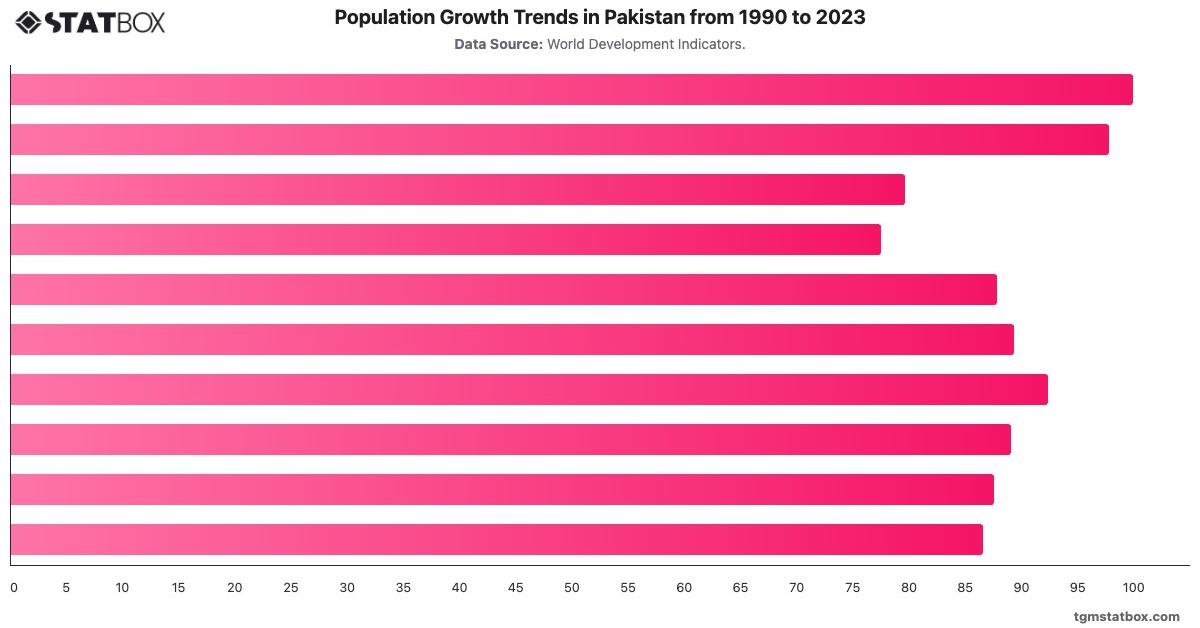
For a deeper dive into the topic, explore Pakistan’s annual GDP growth rate, Pakistan’s working age population ratio, Pakistan’s population count.