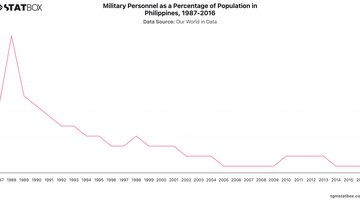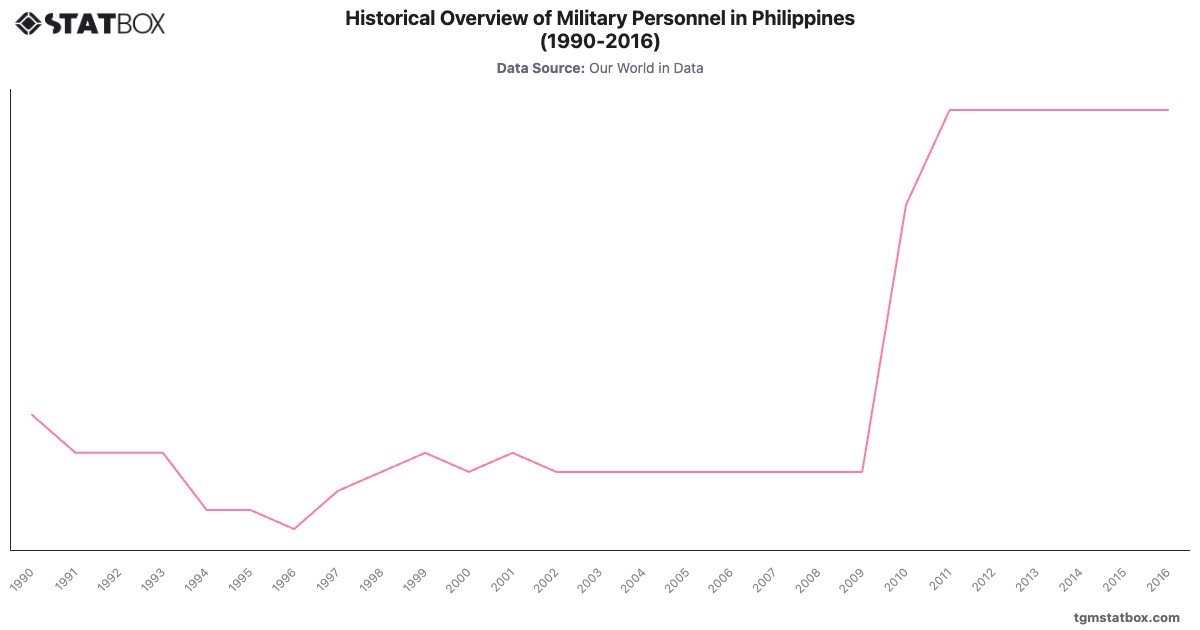
The Philippines maintained relatively stable military personnel levels throughout the 1990s and early 2000s, with figures hovering around 106,000. Slight fluctuations, such as a minor drop to 103,000 in 1996, reflect adjustments during peacetime operations. However, a significant increase occurred in 2010, when personnel numbers rose to 120,000 and peaked at 125,000 by 2011, where they remained steady until 2016. This growth aligns with the Philippines' intensified focus on modernizing its armed forces amidst rising regional tensions in the South China Sea and a growing emphasis on internal security threats.
The early 2010s mark a pivotal period in the country’s defense strategy, driven by geopolitical challenges and domestic insurgencies. The steady rise in military personnel during this time highlights the government's efforts to strengthen territorial defense and combat local security threats, such as those posed by extremist groups. This commitment underscores the broader defense transformation aimed at addressing both regional and internal challenges.
The early 2010s mark a pivotal period in the country’s defense strategy, driven by geopolitical challenges and domestic insurgencies. The steady rise in military personnel during this time highlights the government's efforts to strengthen territorial defense and combat local security threats, such as those posed by extremist groups. This commitment underscores the broader defense transformation aimed at addressing both regional and internal challenges.