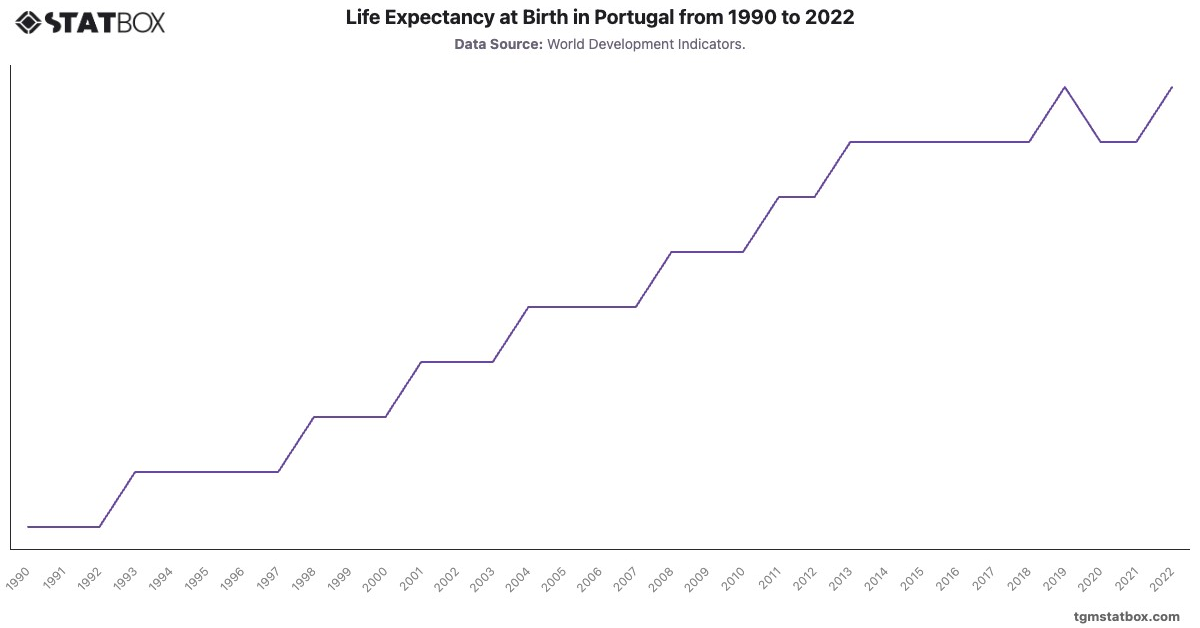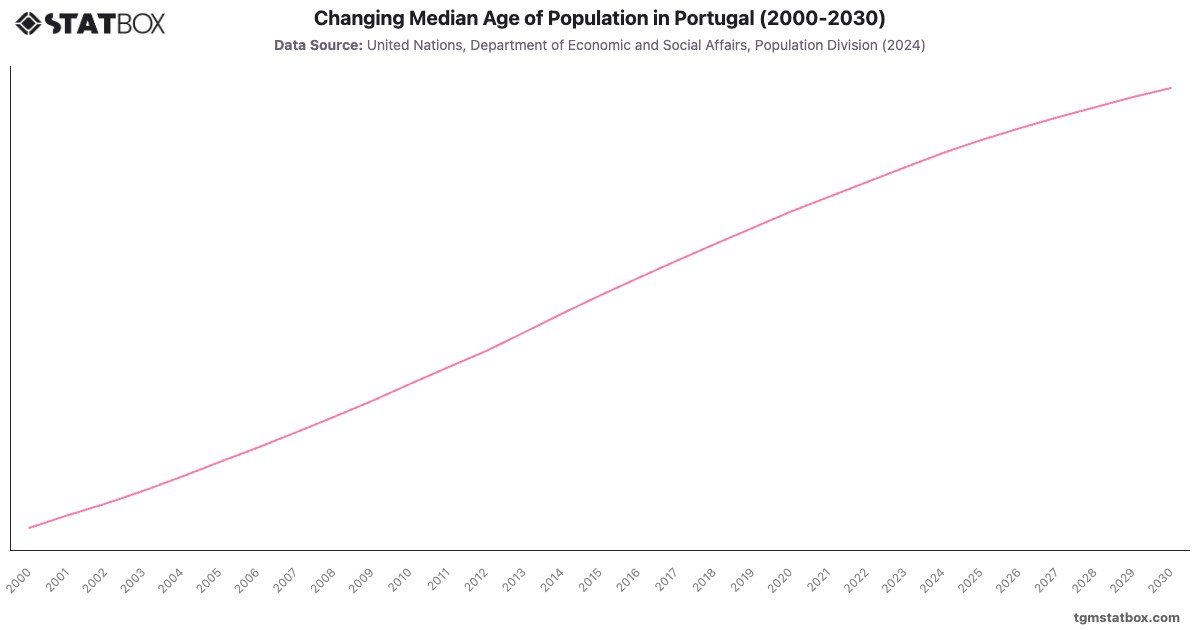
Portugal’s median age shifts from 36.7 in 2000 to an estimated 48.3 by 2030, demonstrating one of the most significant aging trends among these countries. Between 2000 and 2010, the median age increases to 40.5 due to urbanization and healthcare improvements that enhance life expectancy. Portugal’s rapidly aging population highlights the effects of low birth rates in an urbanized society.
By 2020, the median age reaches 45.0, with the trend continuing as fewer younger people replace older generations. The projected 2030 median age of 48.3 reflects a substantial shift toward an older population, driven by urbanized lifestyles and low birth rates that characterize Portugal’s demographic trends.
By 2020, the median age reaches 45.0, with the trend continuing as fewer younger people replace older generations. The projected 2030 median age of 48.3 reflects a substantial shift toward an older population, driven by urbanized lifestyles and low birth rates that characterize Portugal’s demographic trends.
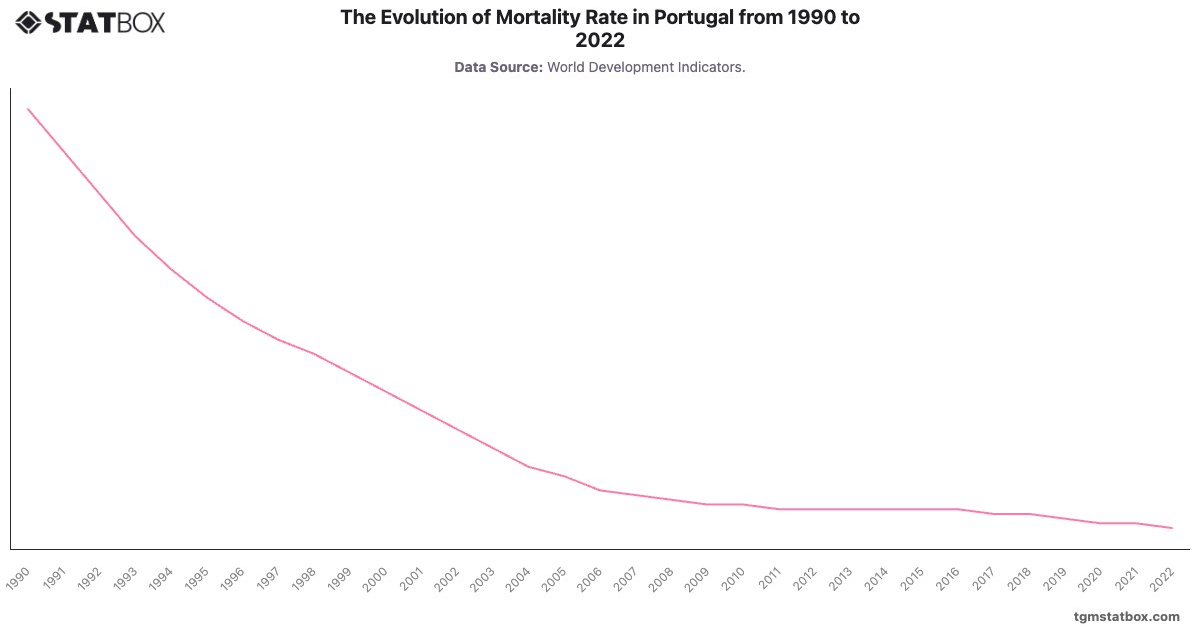
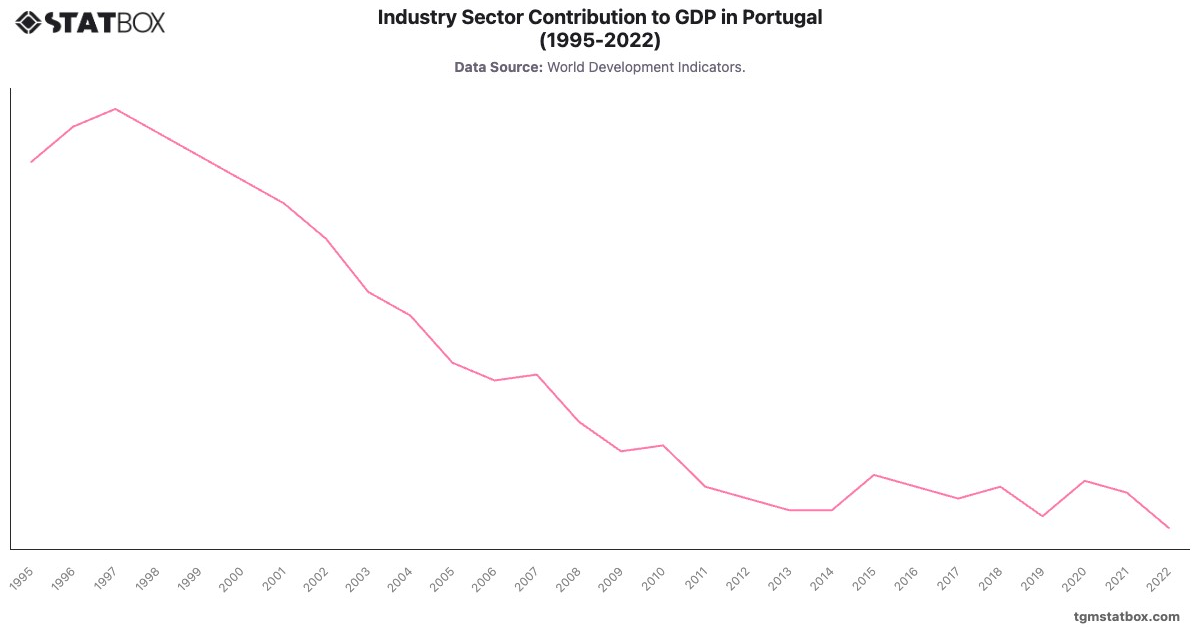
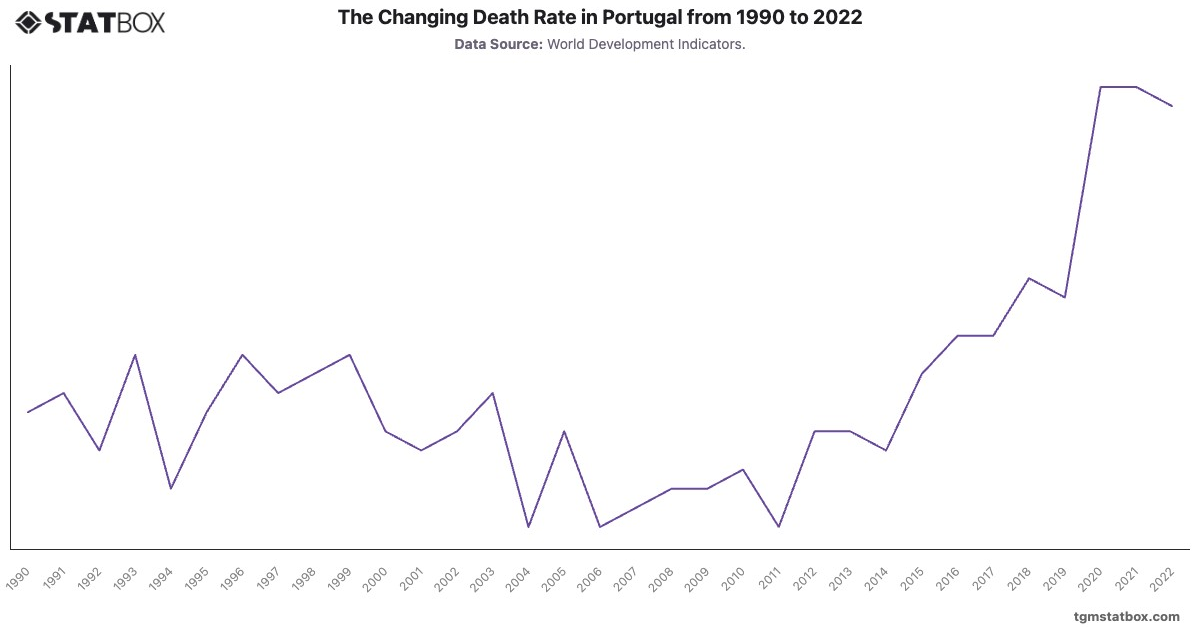
Gain a broader perspective by reviewing urban expansion in Portugal, Portugal’s evolving mortality rate, Portugal’s industry sector share in GDP.