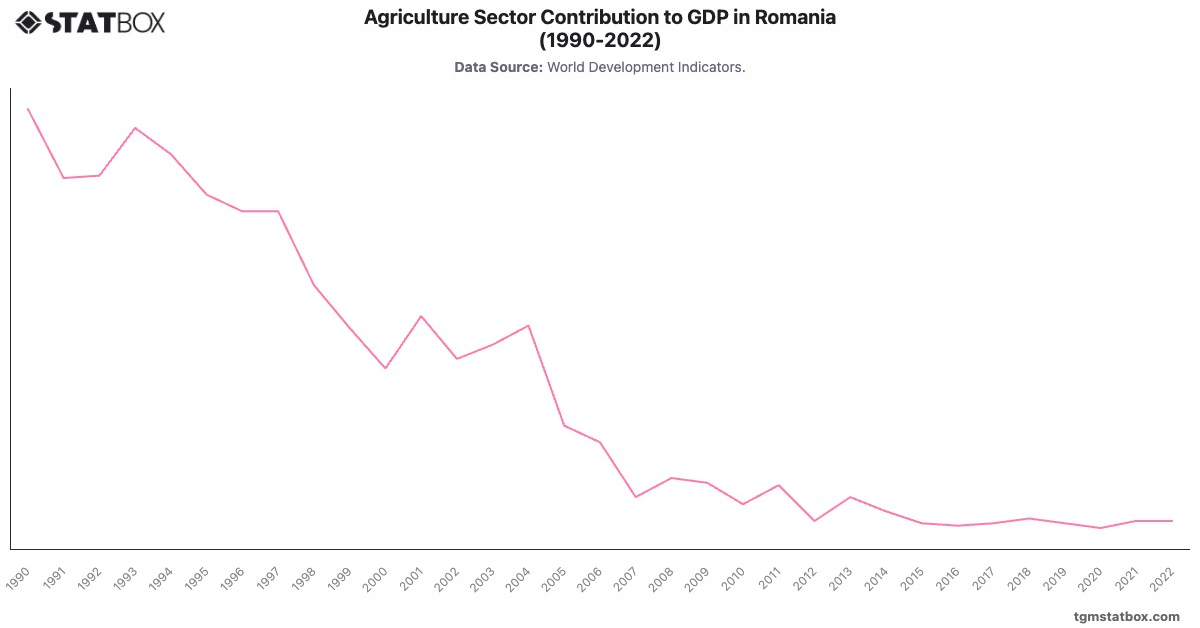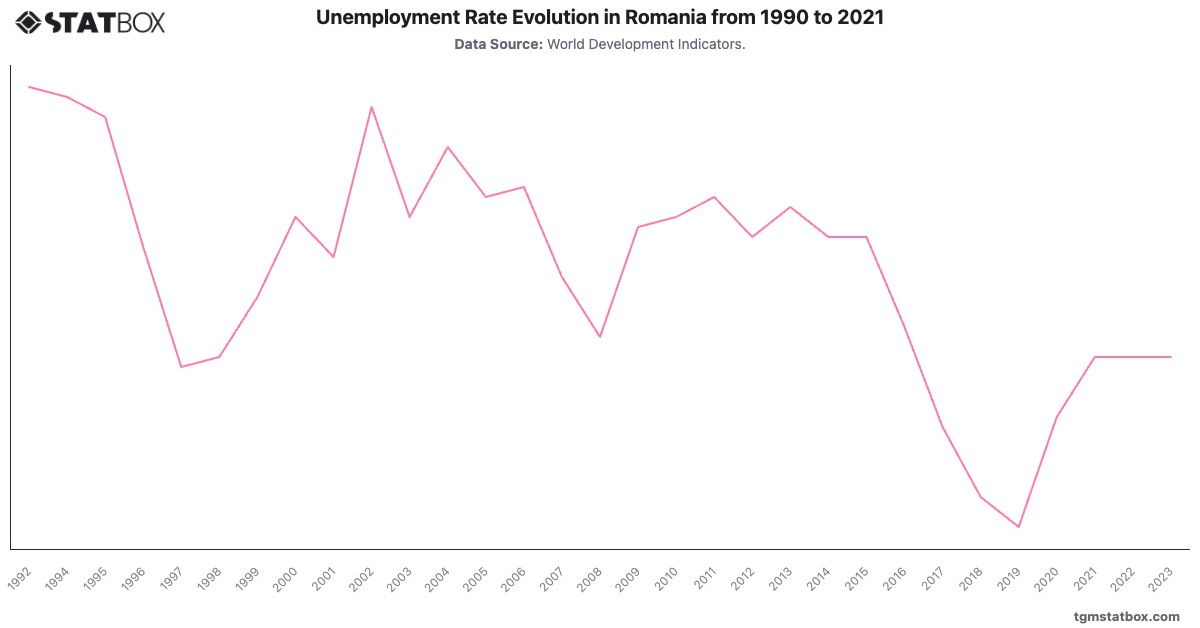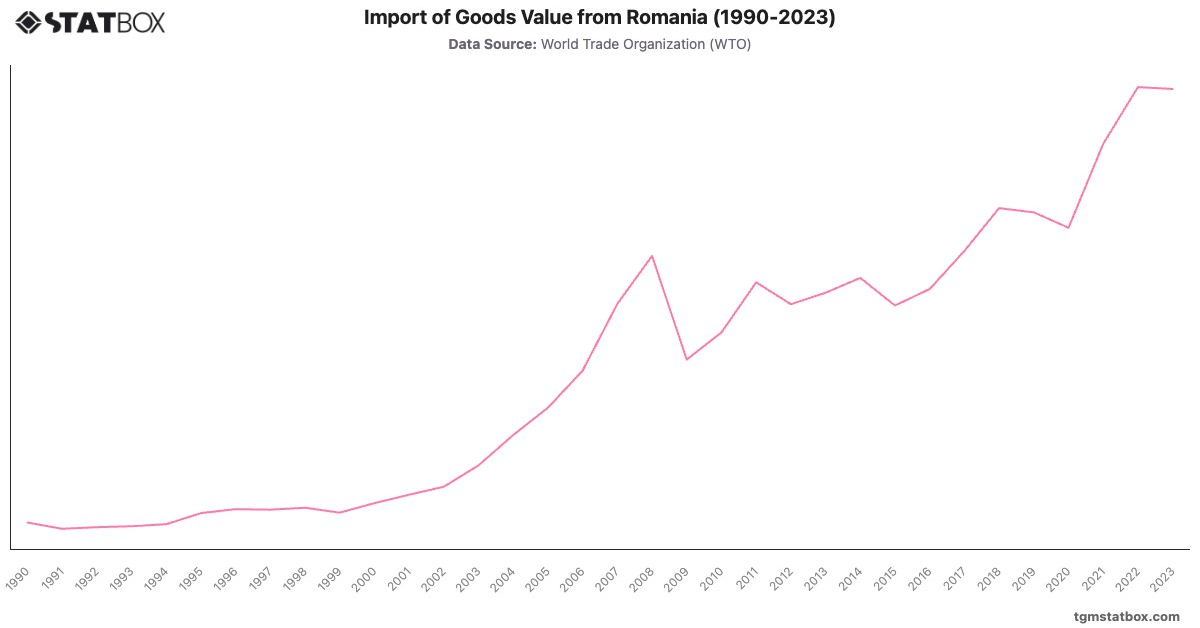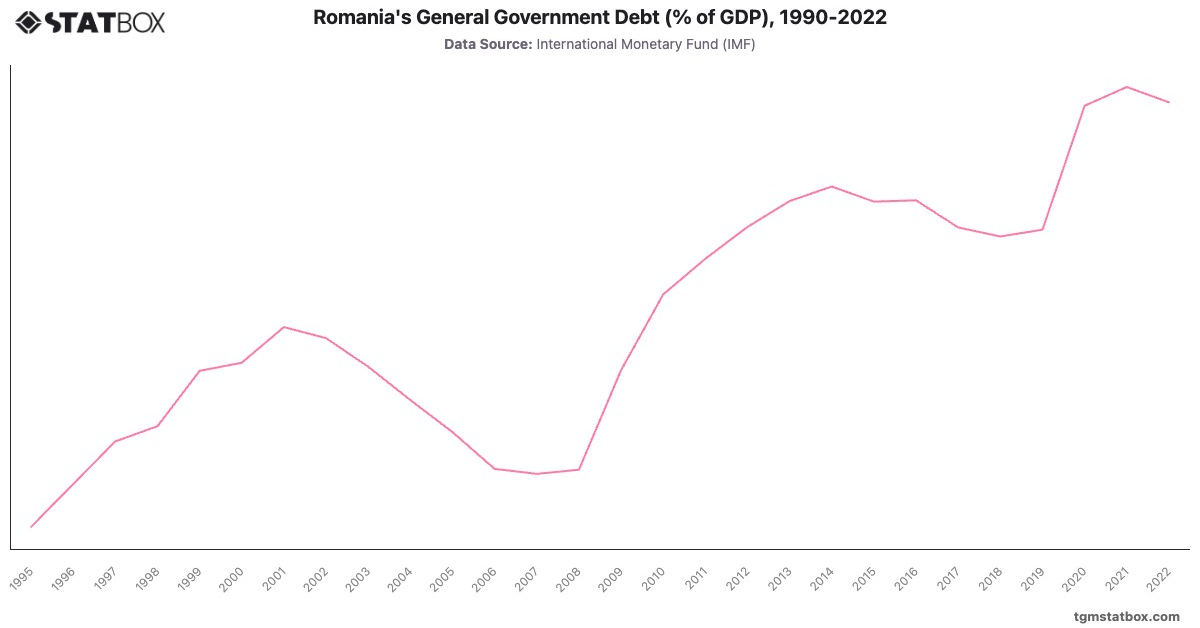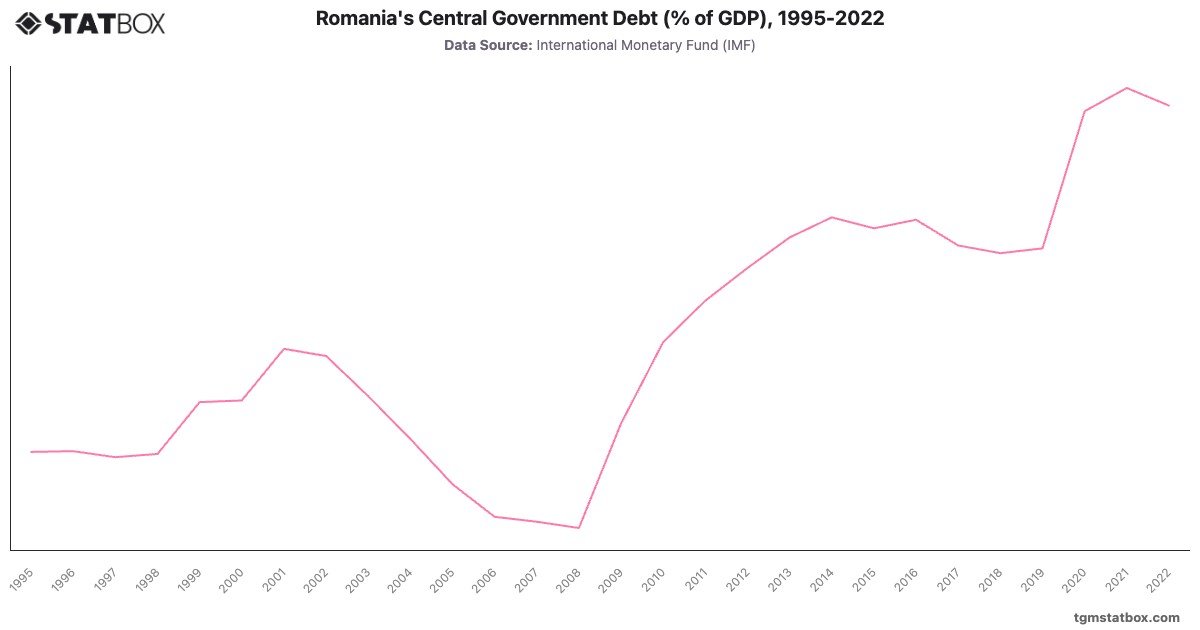
Romania's central government debt displayed a fluctuating trajectory from 1995 to 2022, reflecting varying economic challenges and policy adjustments. Between 1995 and 2008, the debt-to-GDP ratio remained relatively low, declining from in 1995 to a low of in 2008. This period of reduction was driven by strong economic growth and fiscal consolidation efforts, aligning with Romania's aspirations to join the European Union in 2007.
The 2009 global financial crisis marked a turning point, pushing the debt to as Romania implemented fiscal stimulus measures to mitigate the recession's impact. By 2014, the ratio rose to , reflecting the cumulative effects of increased borrowing during the crisis and slow recovery. Post-2015, debt hovered around -, with minor fluctuations. However, the COVID-19 pandemic caused a sharp surge, with the debt ratio peaking at in 2021 due to fiscal support measures and declining GDP. Despite a partial recovery in 2022, debt remained elevated at .
The 2009 global financial crisis marked a turning point, pushing the debt to as Romania implemented fiscal stimulus measures to mitigate the recession's impact. By 2014, the ratio rose to , reflecting the cumulative effects of increased borrowing during the crisis and slow recovery. Post-2015, debt hovered around -, with minor fluctuations. However, the COVID-19 pandemic caused a sharp surge, with the debt ratio peaking at in 2021 due to fiscal support measures and declining GDP. Despite a partial recovery in 2022, debt remained elevated at .
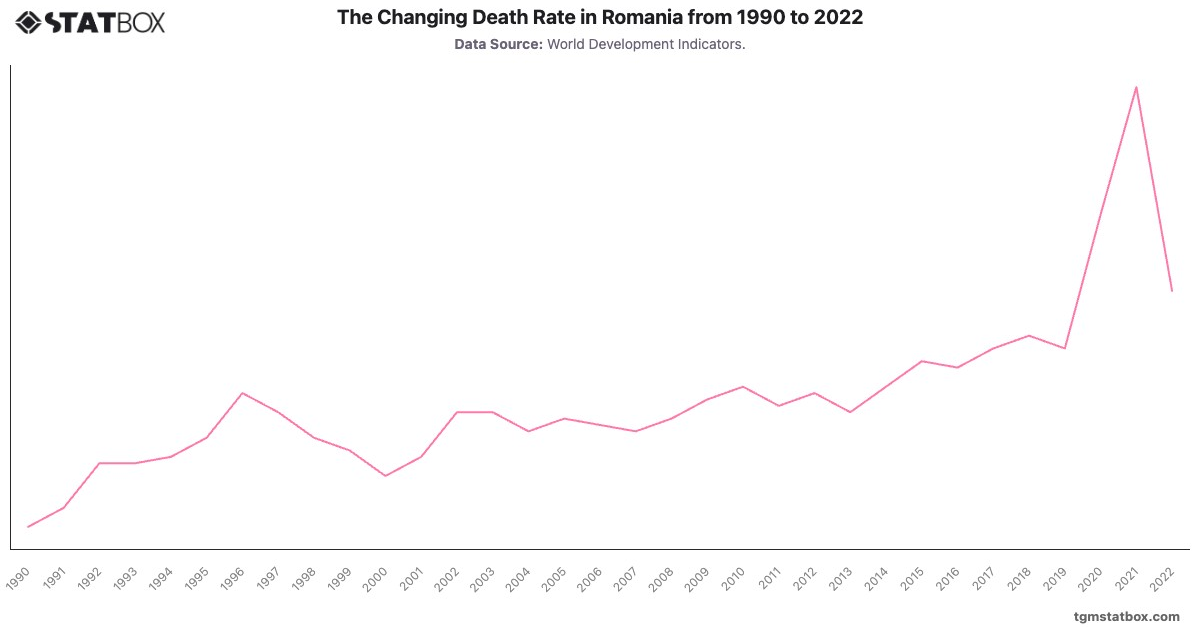
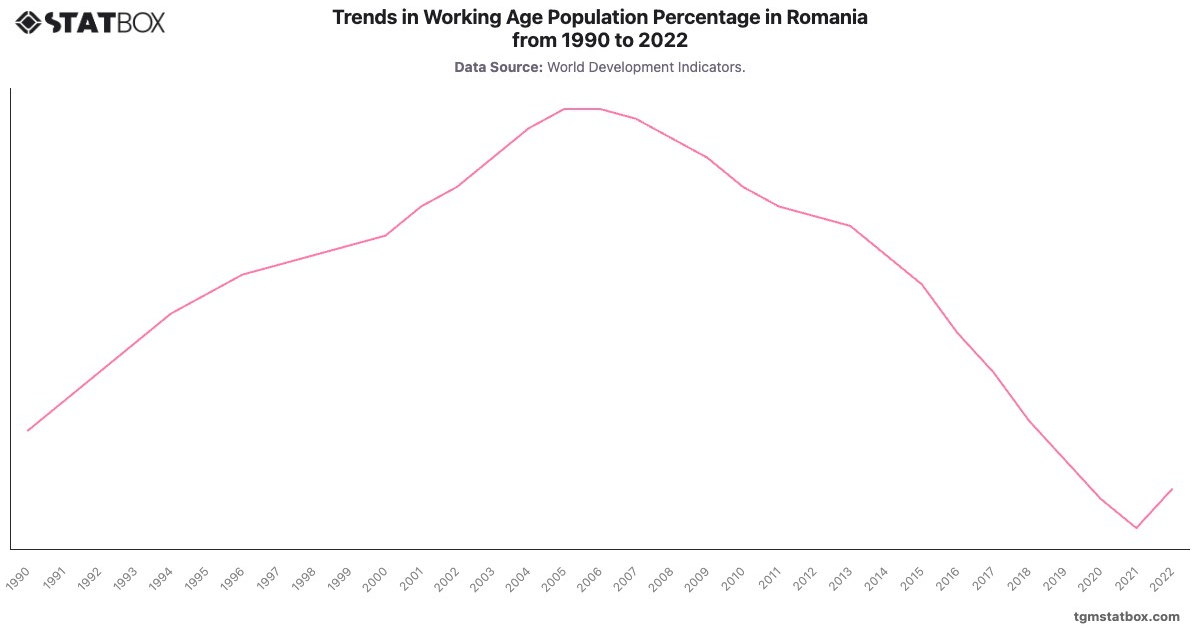
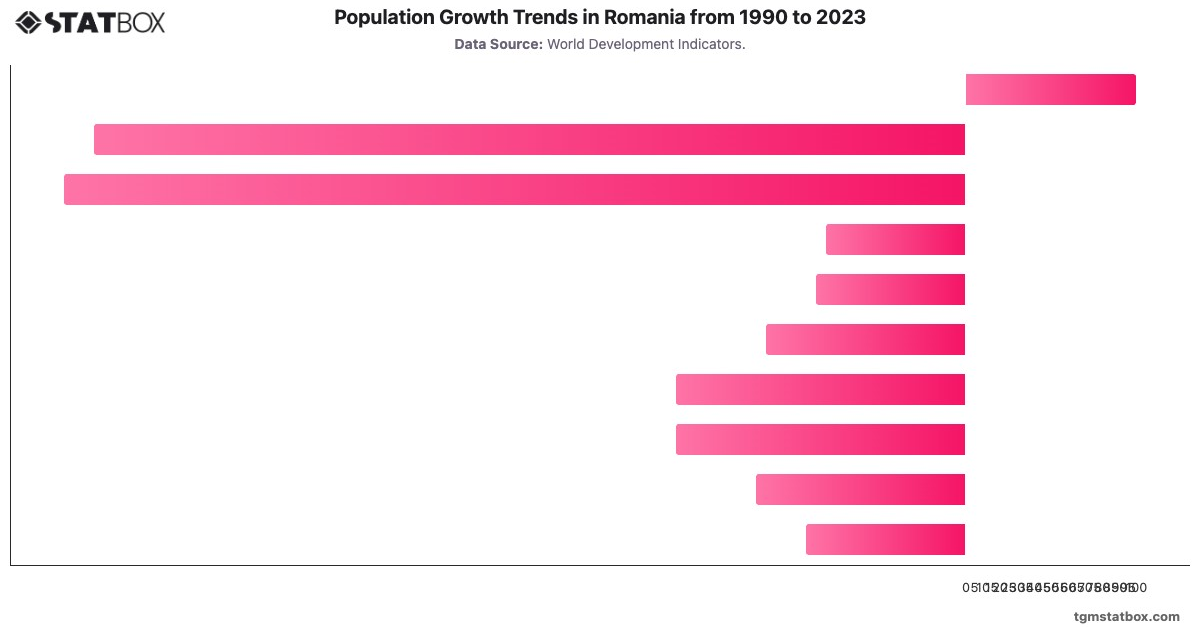
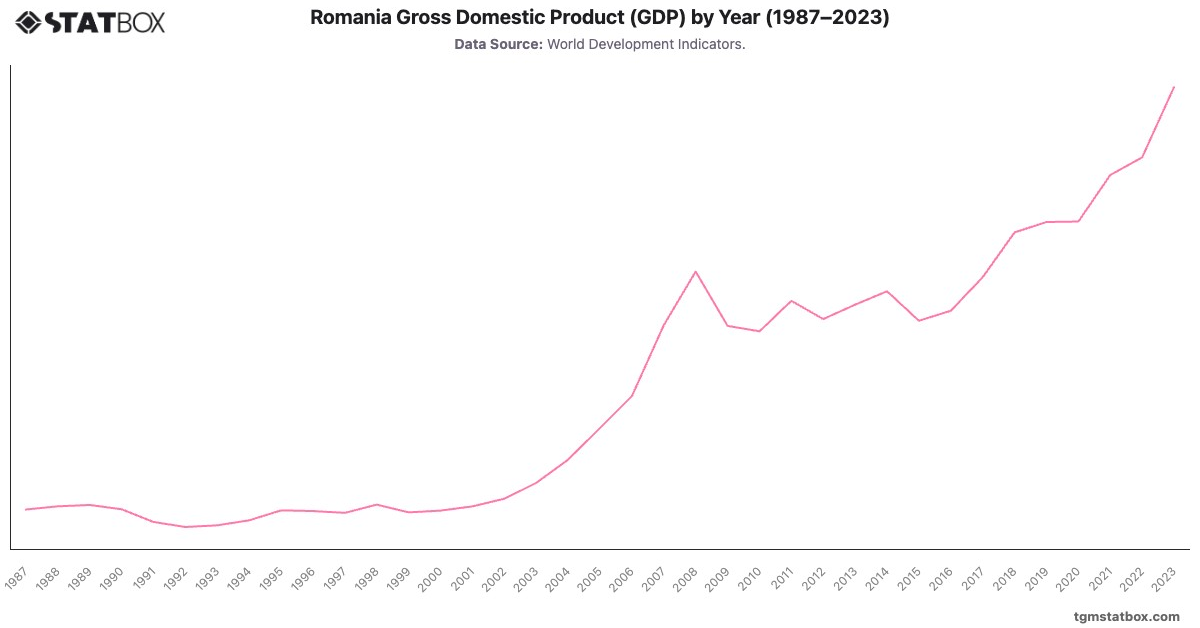
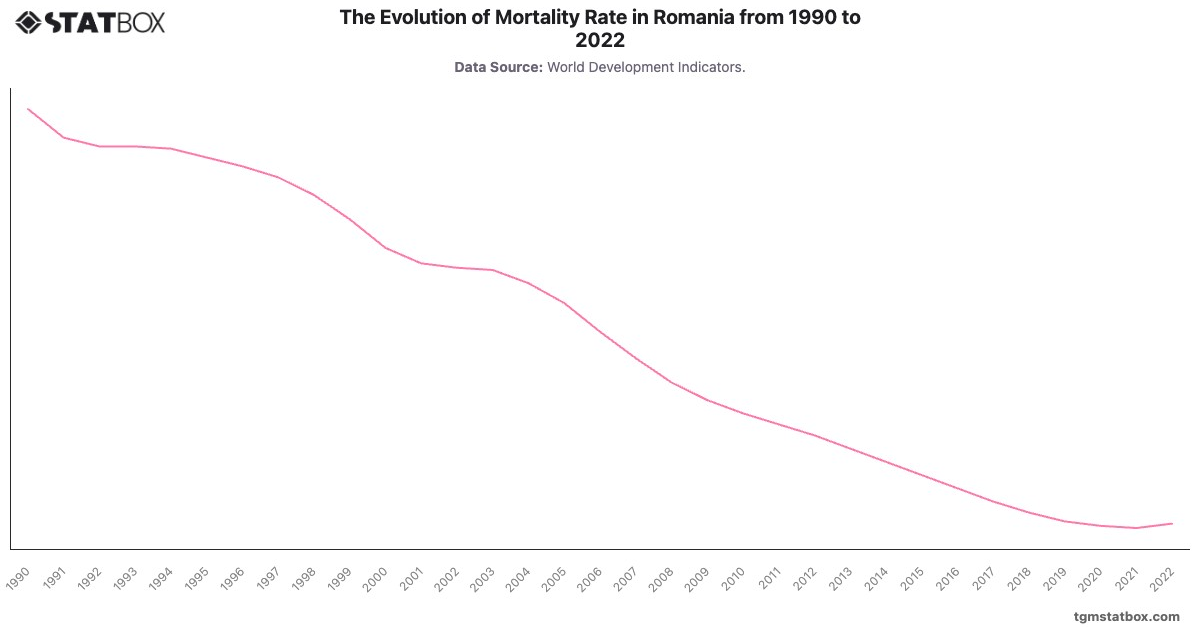
Explore related charts to gain a better understanding of Romania’s mortality trend, yearly GDP growth rate for Romania, Romania’s urbanization rate.