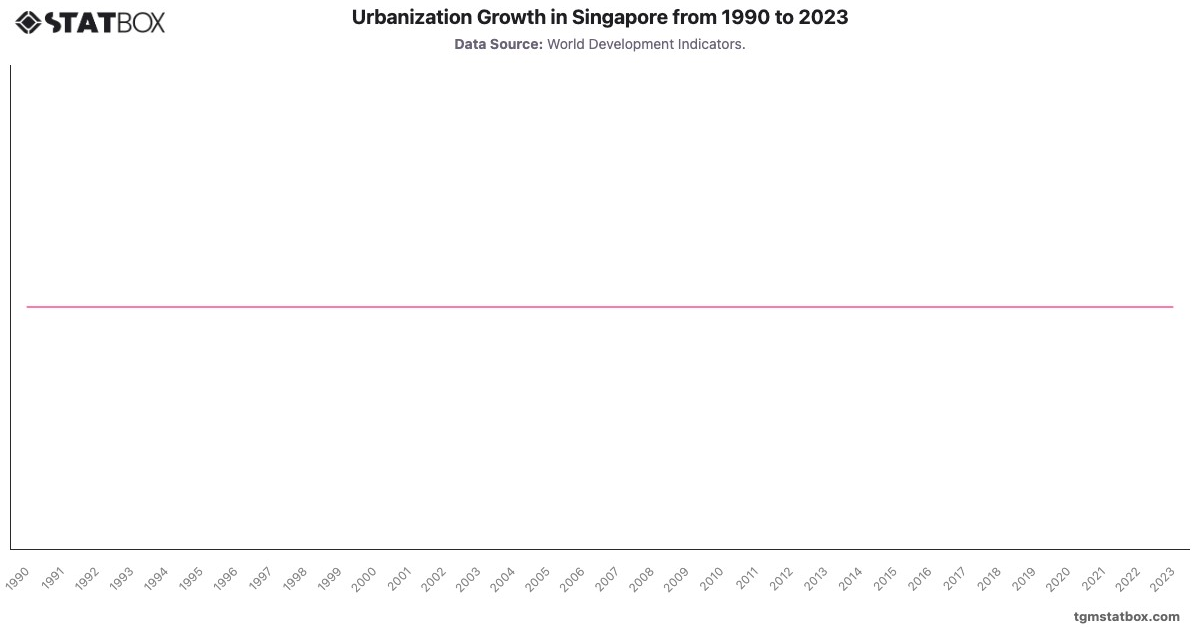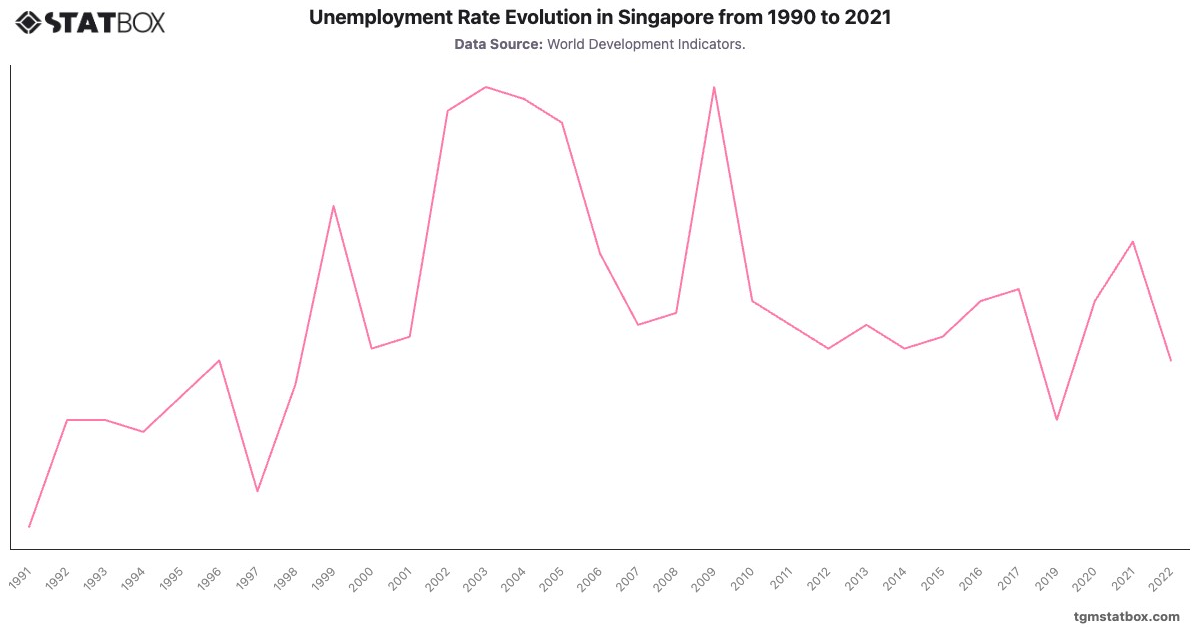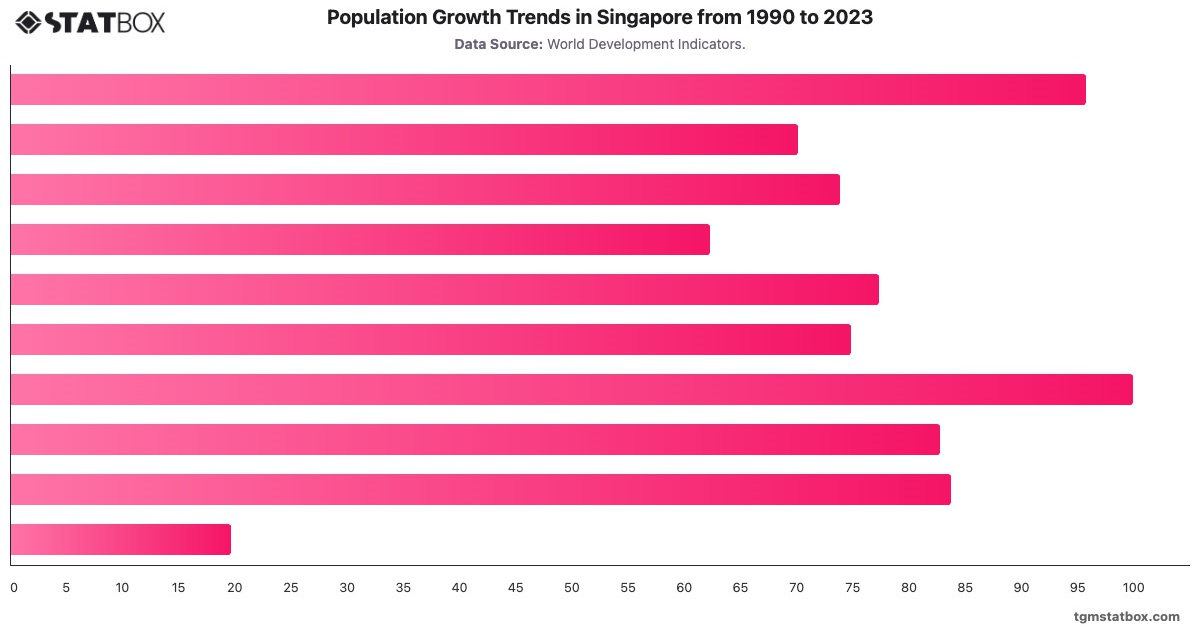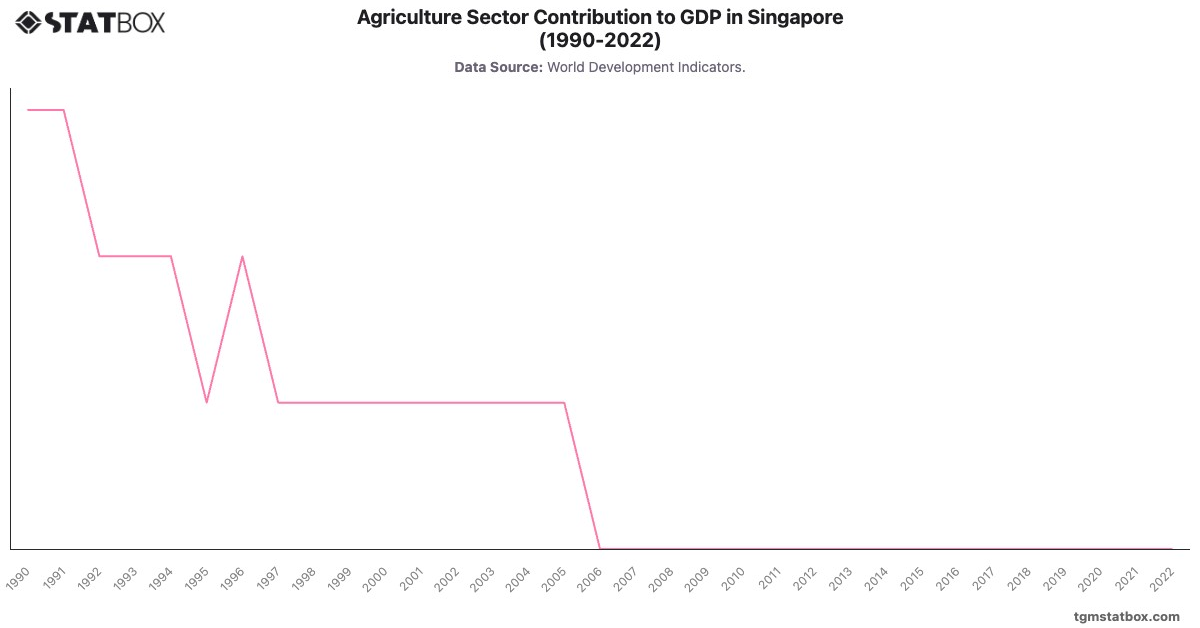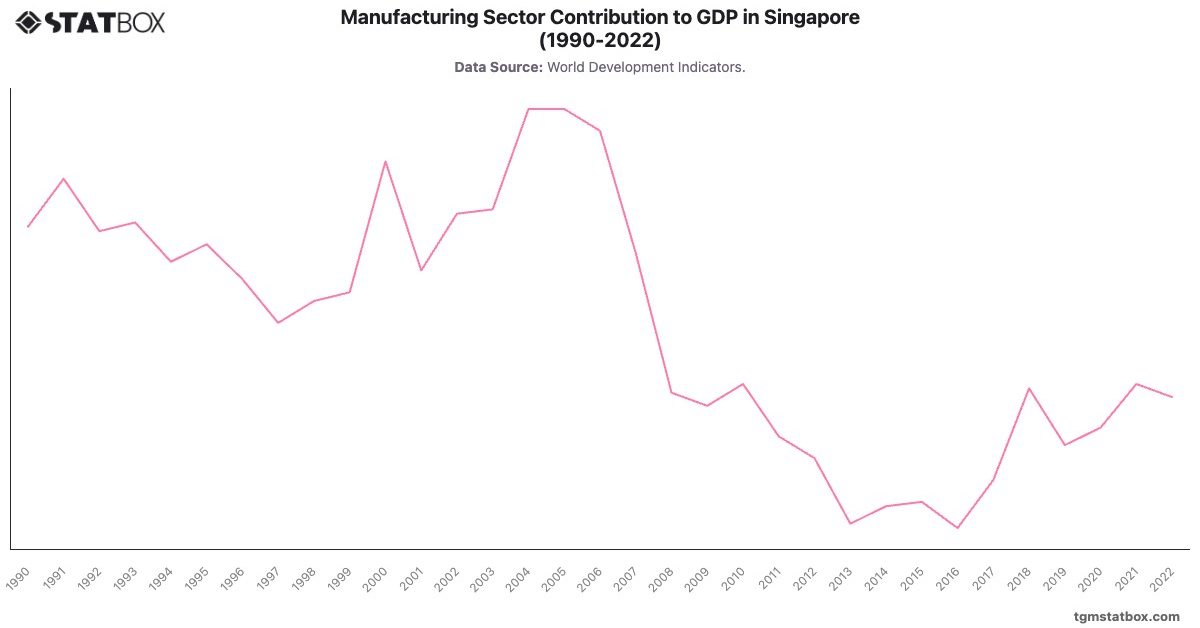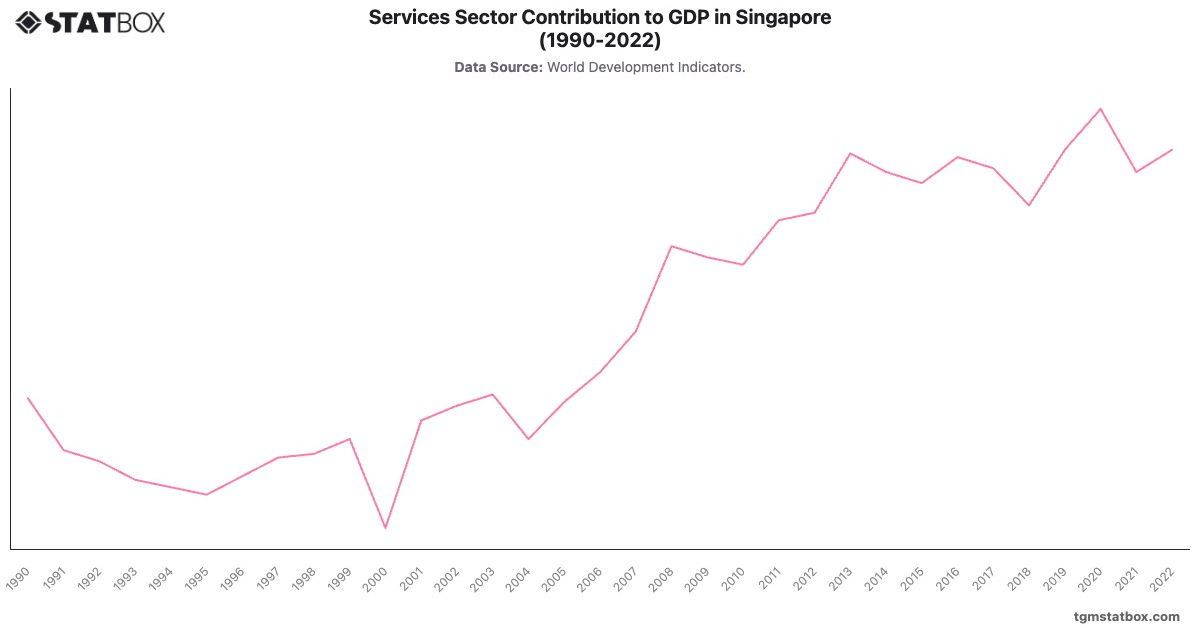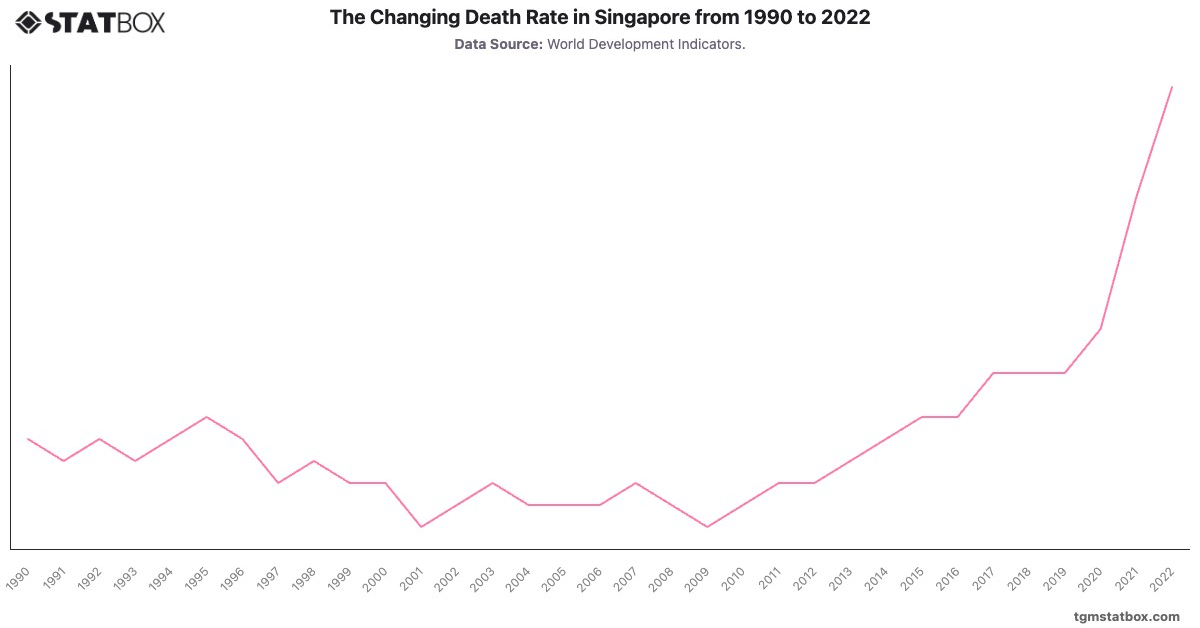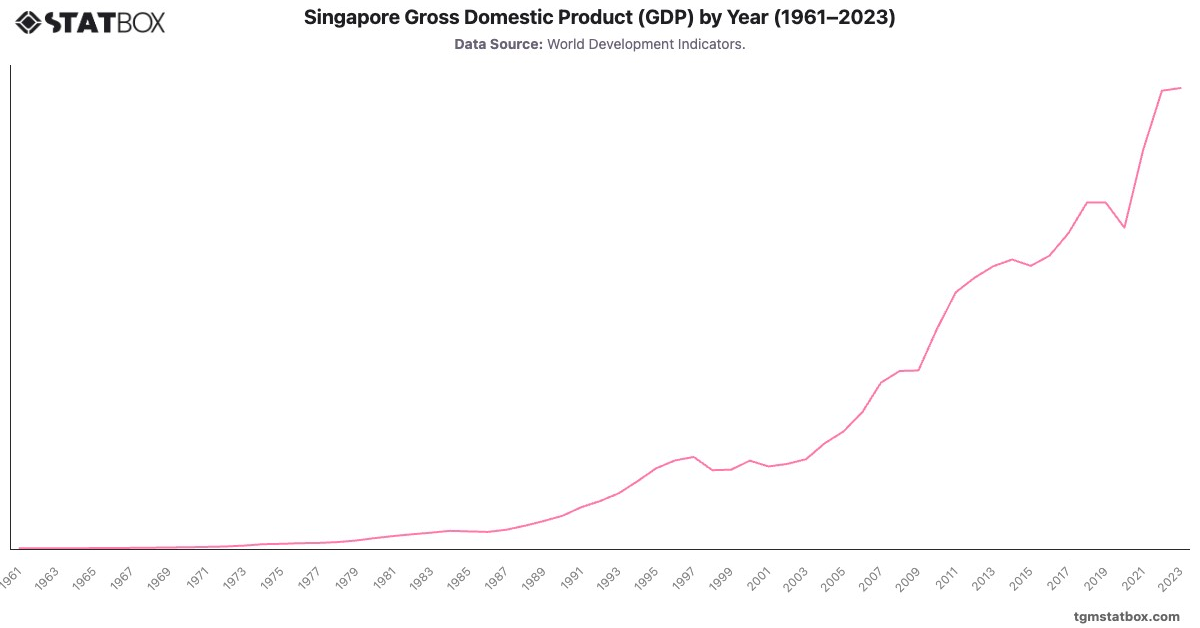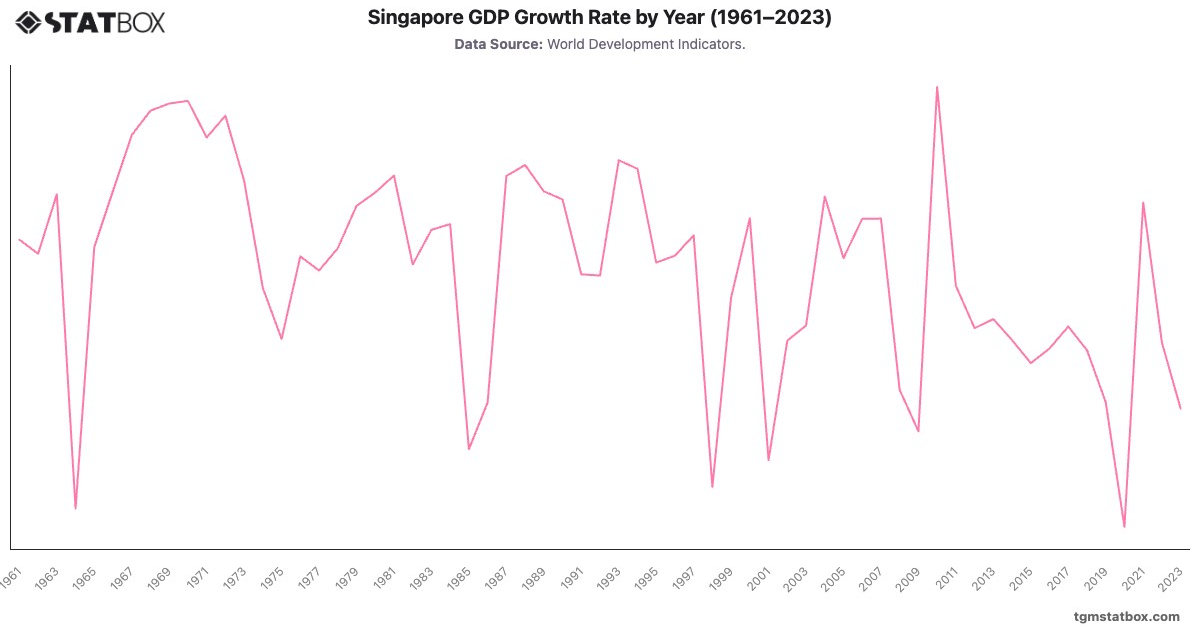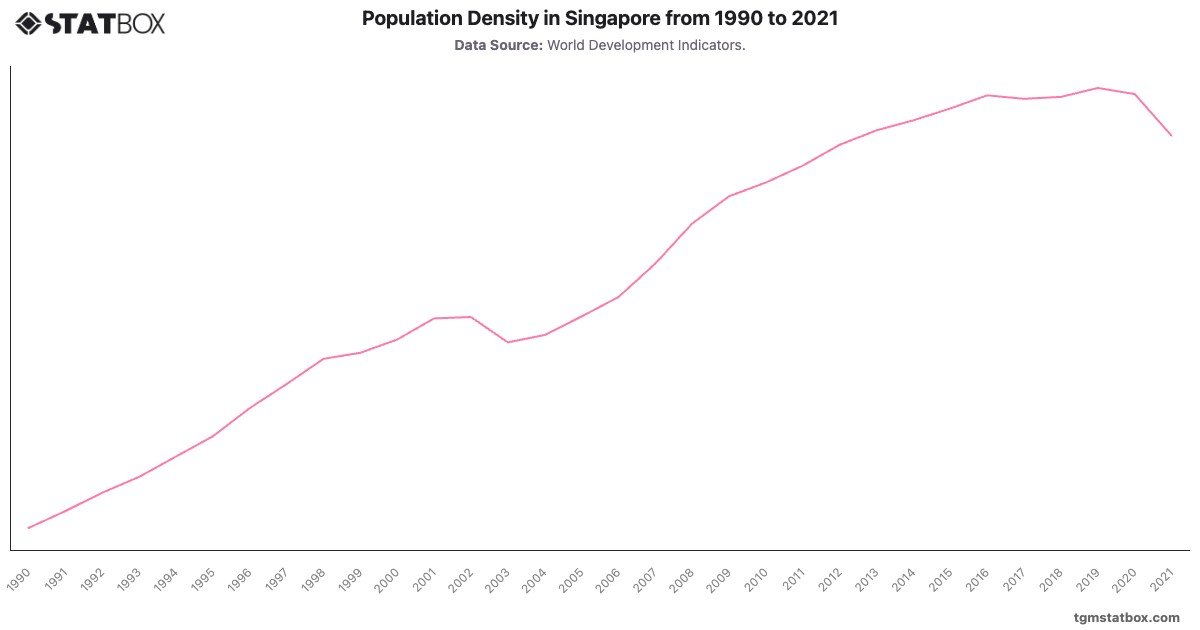
Singapore’s population density surged from 4,548 people per square kilometer in 1990 to over 7,900 by 2020, demonstrating one of the world’s highest urban densities. This steady increase is attributed to the city-state's economic growth and high urbanization rate, coupled with limited land area. Government-led urban planning and housing policies have optimized space to accommodate growth, especially during the 1990s and 2000s, as the economy expanded rapidly.
The slight decrease in density observed around 2021 reflects both the pandemic's impact on migration and government efforts to manage population growth sustainably. As Singapore continues to innovate in urban planning and public housing, its ability to balance high density with a high quality of living remains a key factor in its urban development strategy.
The slight decrease in density observed around 2021 reflects both the pandemic's impact on migration and government efforts to manage population growth sustainably. As Singapore continues to innovate in urban planning and public housing, its ability to balance high density with a high quality of living remains a key factor in its urban development strategy.
Discover additional trends and data on Singapore’s birth life span, Singapore’s urban expansion, Singapore’s working-age population share.