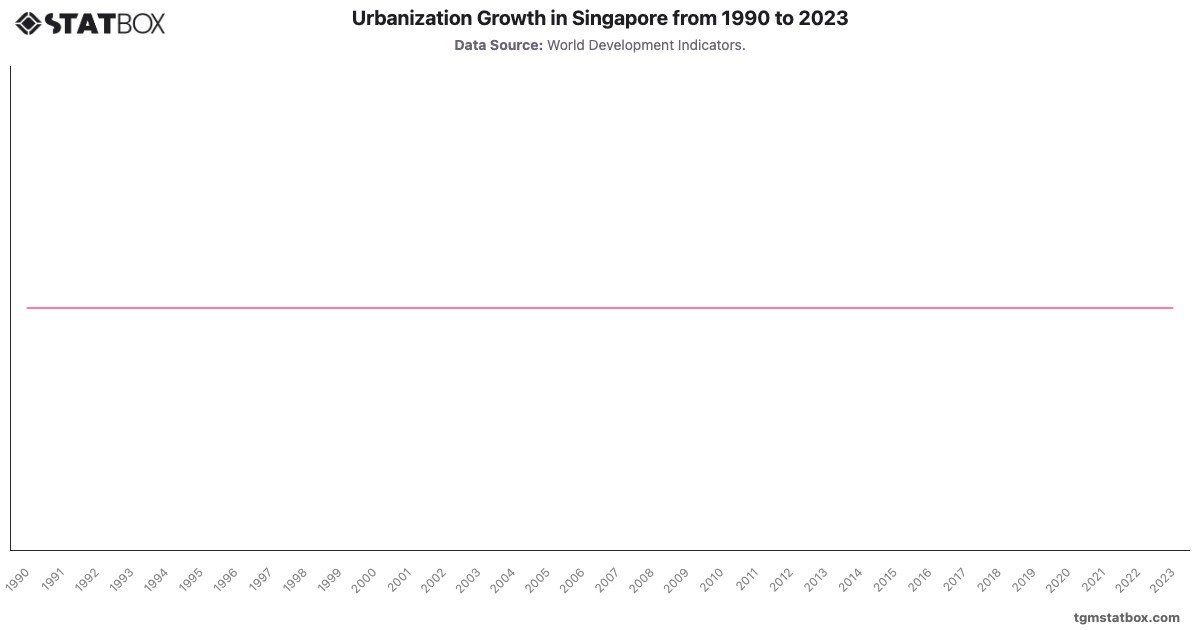
Singapore exhibits a consistent urbanization rate from 1990 to 2023, showcasing the nation’s unique geographic and economic structure. As a small city-state, Singapore's lack of rural areas means that urbanization is synonymous with its overall development. By the 1990s, Singapore was already a global economic hub with a robust infrastructure and dense urban planning to support its growing population and commercial sectors. The complete urbanization reflects the government's focus on efficient land use, advanced transportation systems, and sustainable urban policies. Singapore’s urban growth was also driven by industrial expansion, especially in finance, electronics, and biotechnologies. With limited space, high-rise residential and commercial buildings characterize the cityscape, optimizing vertical space for urban needs. As a result, Singapore’s stable rate of urbanization mirrors its strategic urban planning and commitment to maintaining its status as a fully developed urban center.
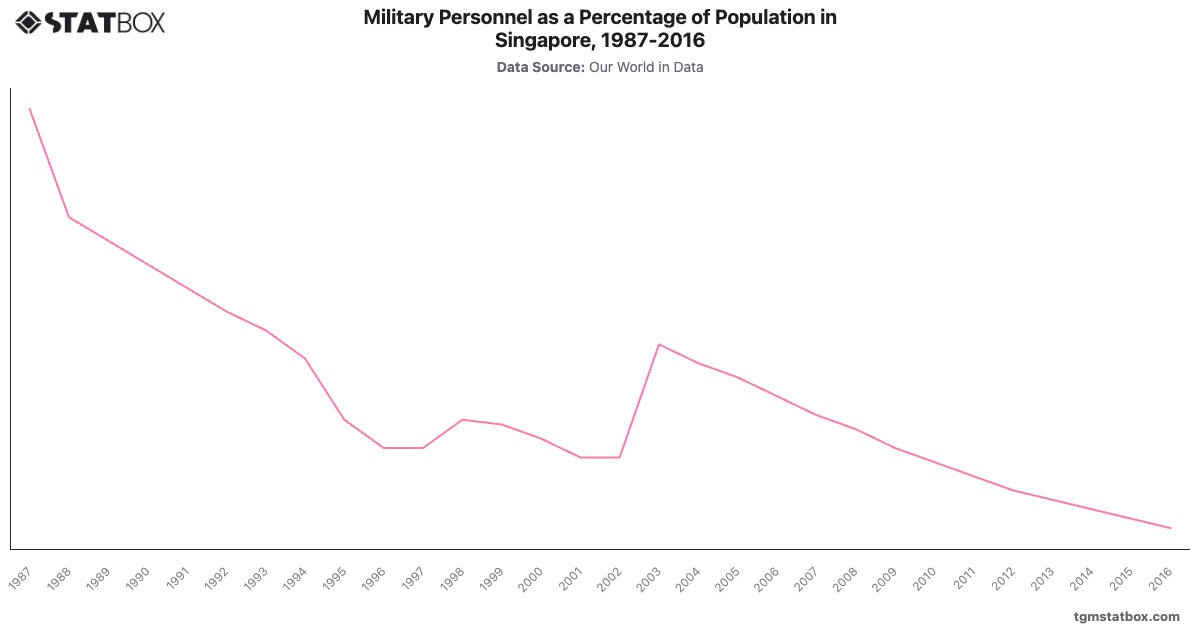
For a broader context, visit other statistics on Singapore’s net lending/borrowing as a percentage of GDP, military personnel proportion in Singapore, Singapore’s population count.