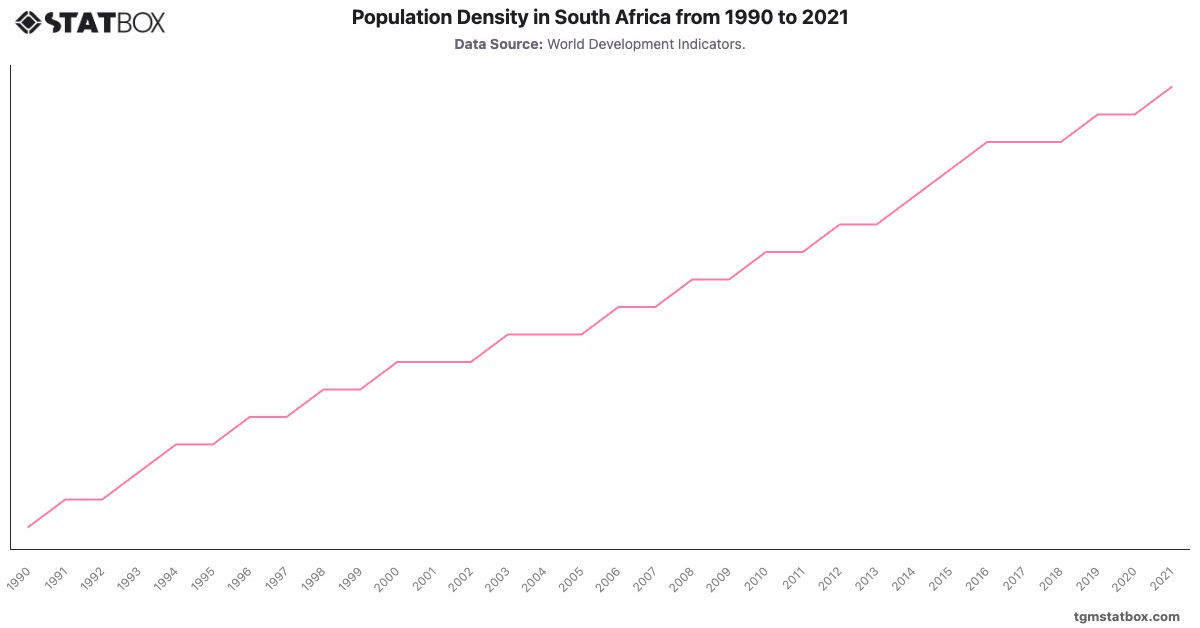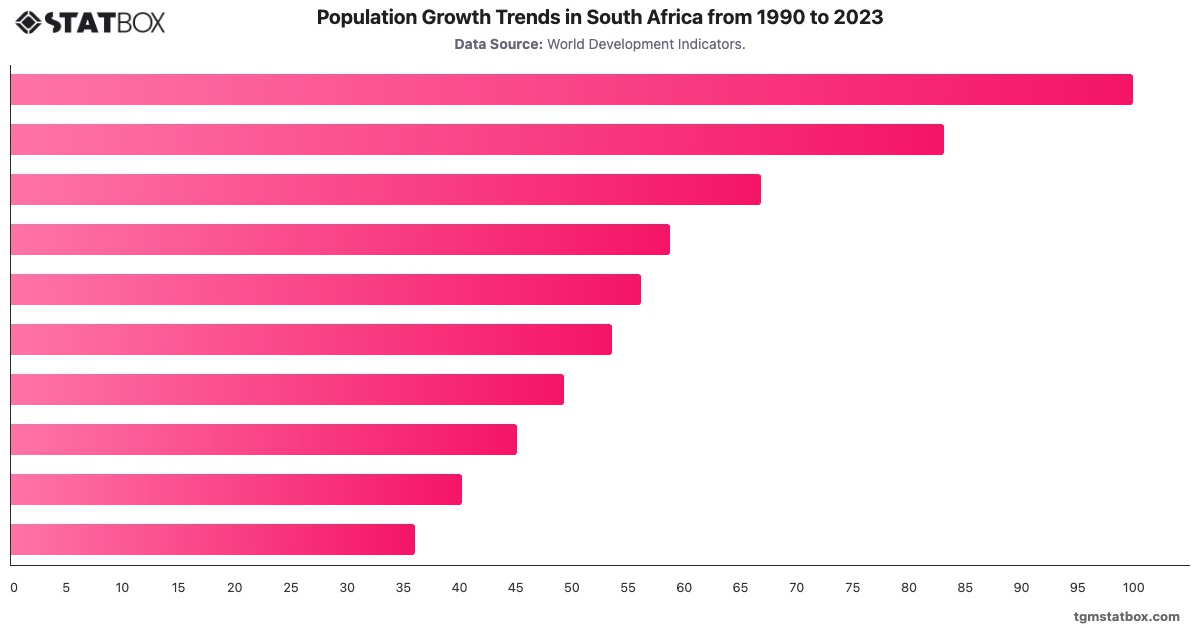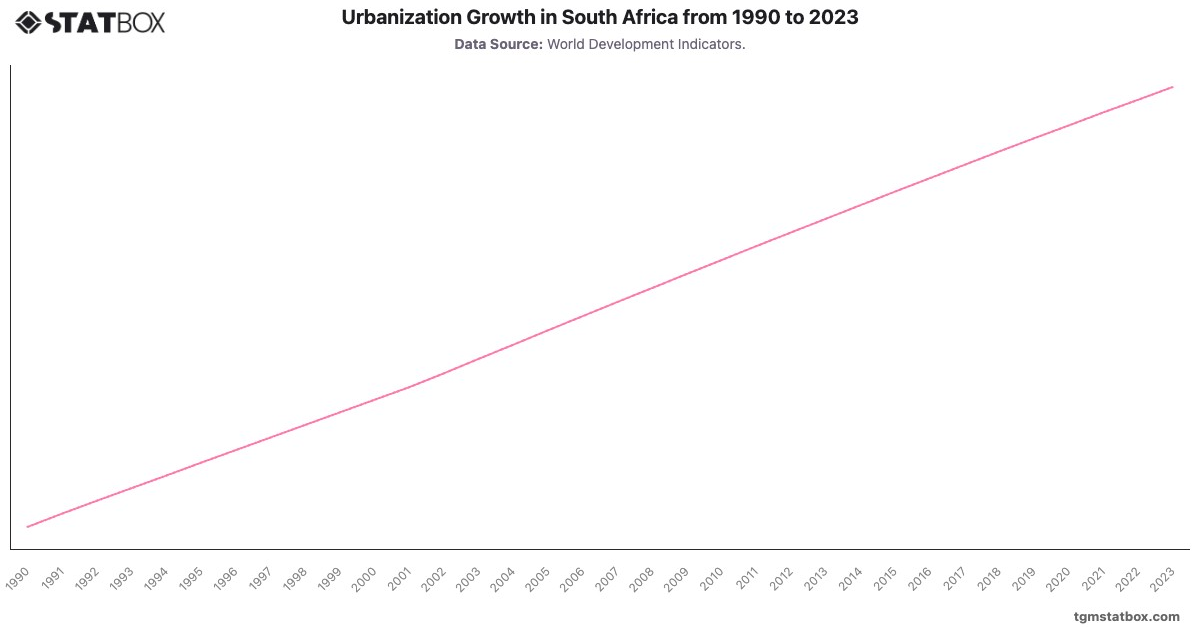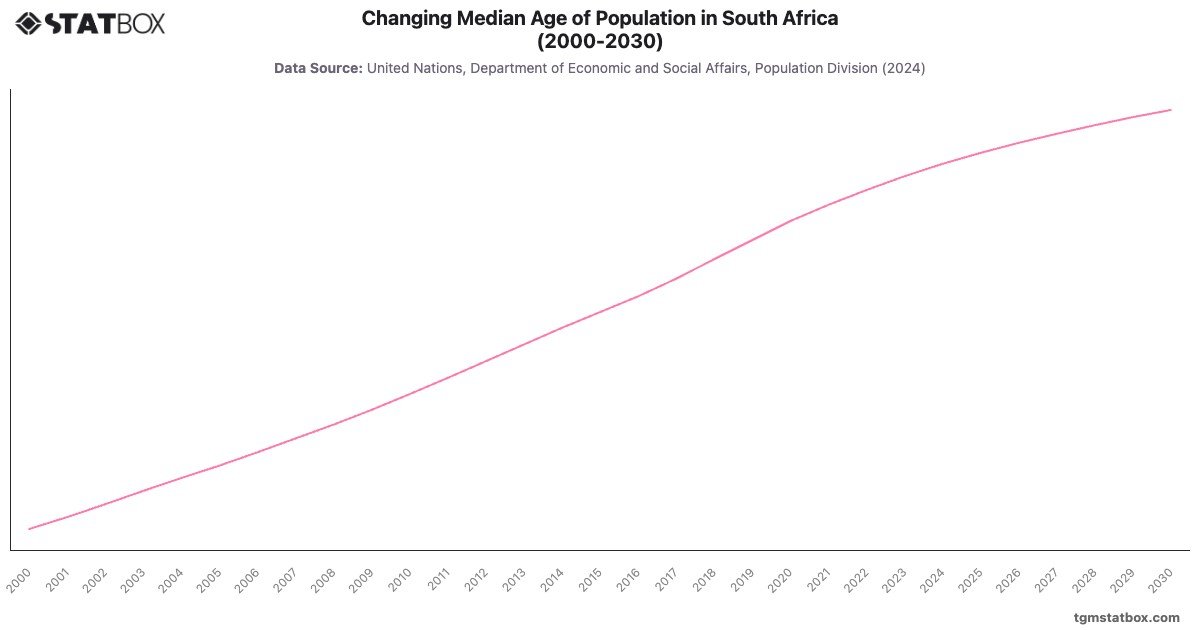
South Africa's median age has risen gradually from 20.8 years in 2000 to a projected 29.6 years by 2030, reflecting the country’s moderate aging trend. Urbanization and improvements in healthcare have influenced the rise in life expectancy, while urban populations have grown steadily as people migrate to cities for better employment opportunities. By 2010, the median age had reached 23.6, reflecting these ongoing changes.
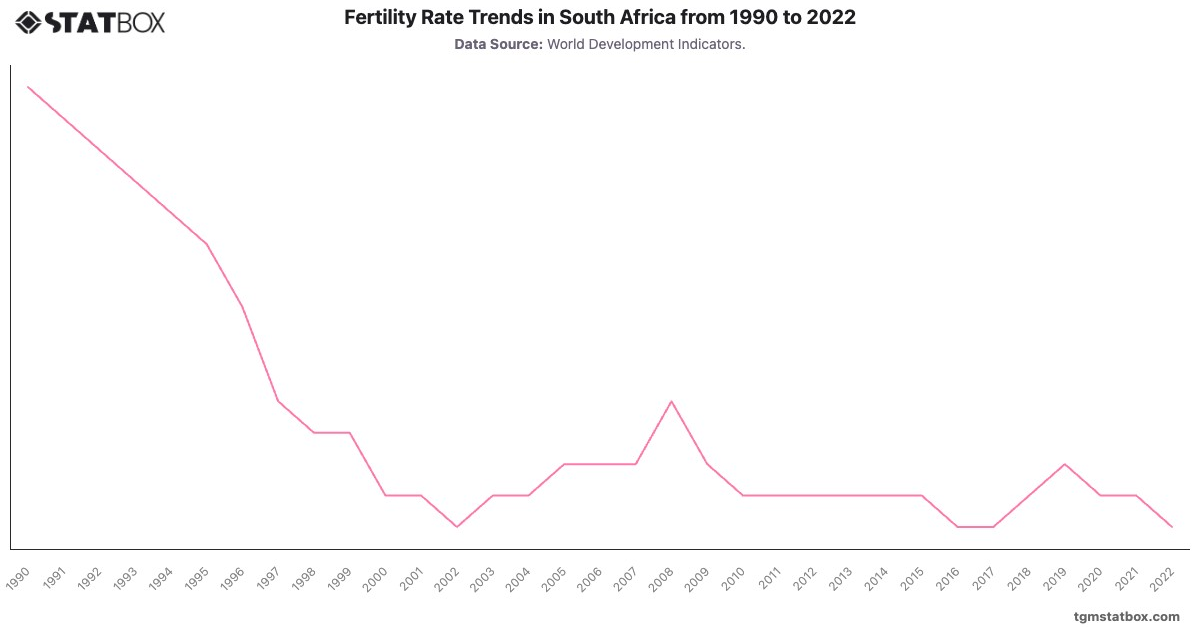
From 2020 onwards, South Africa's median age climbed to 27.3, marking a shift toward an older demographic as urban populations grew and birth rates began to stabilize. The median age is projected to reach 29.6 by 2030, reflecting the combined impact of increased urban living and healthcare access, which has contributed to a higher life expectancy. This shift in age structure could influence urban infrastructure needs and social support systems as South Africa continues its economic and social transformation.
From 2020 onwards, South Africa's median age climbed to 27.3, marking a shift toward an older demographic as urban populations grew and birth rates began to stabilize. The median age is projected to reach 29.6 by 2030, reflecting the combined impact of increased urban living and healthcare access, which has contributed to a higher life expectancy. This shift in age structure could influence urban infrastructure needs and social support systems as South Africa continues its economic and social transformation.
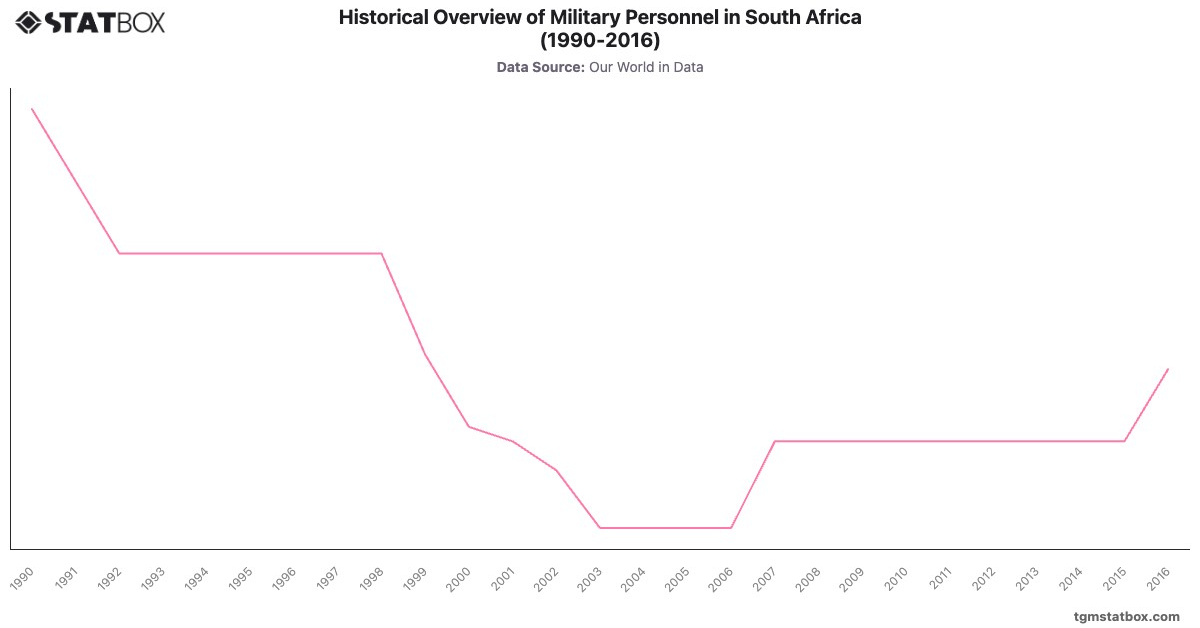
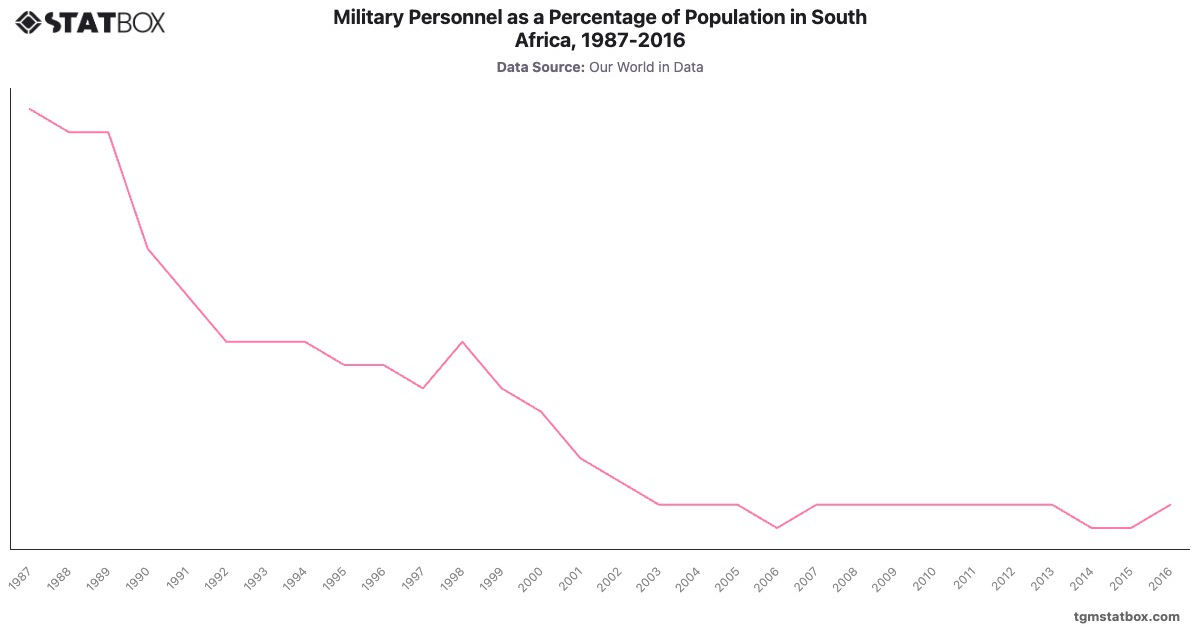
For a broader context, visit other statistics on military personnel share in South Africa’s population, south africa’s urbanization rate, South Africa’s fertility rate trends.