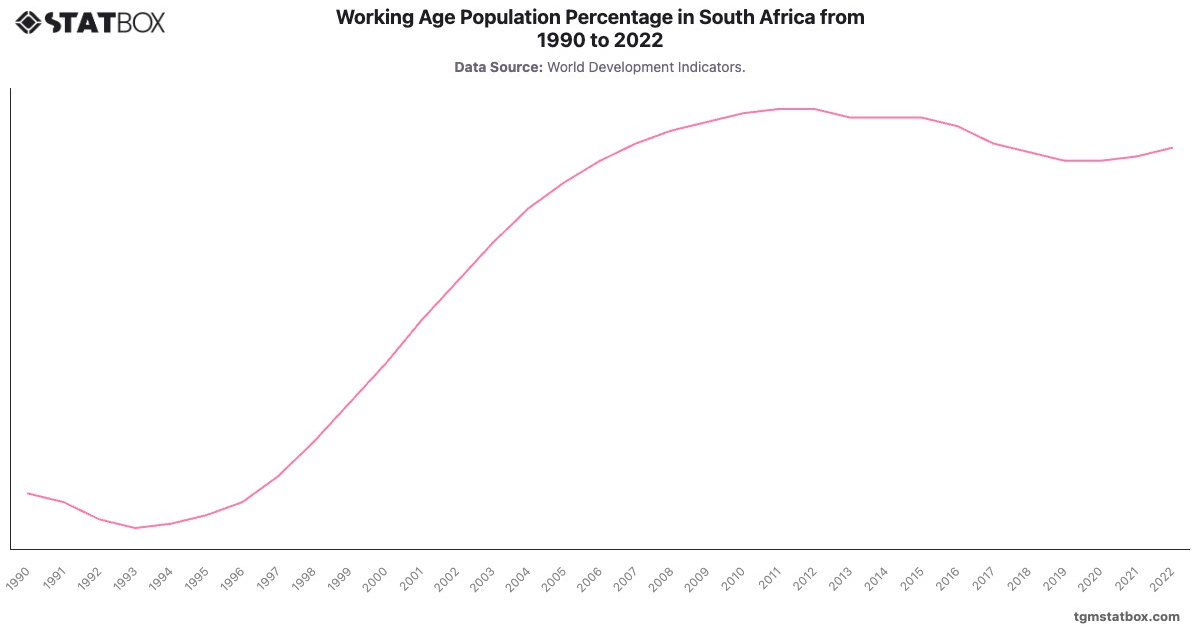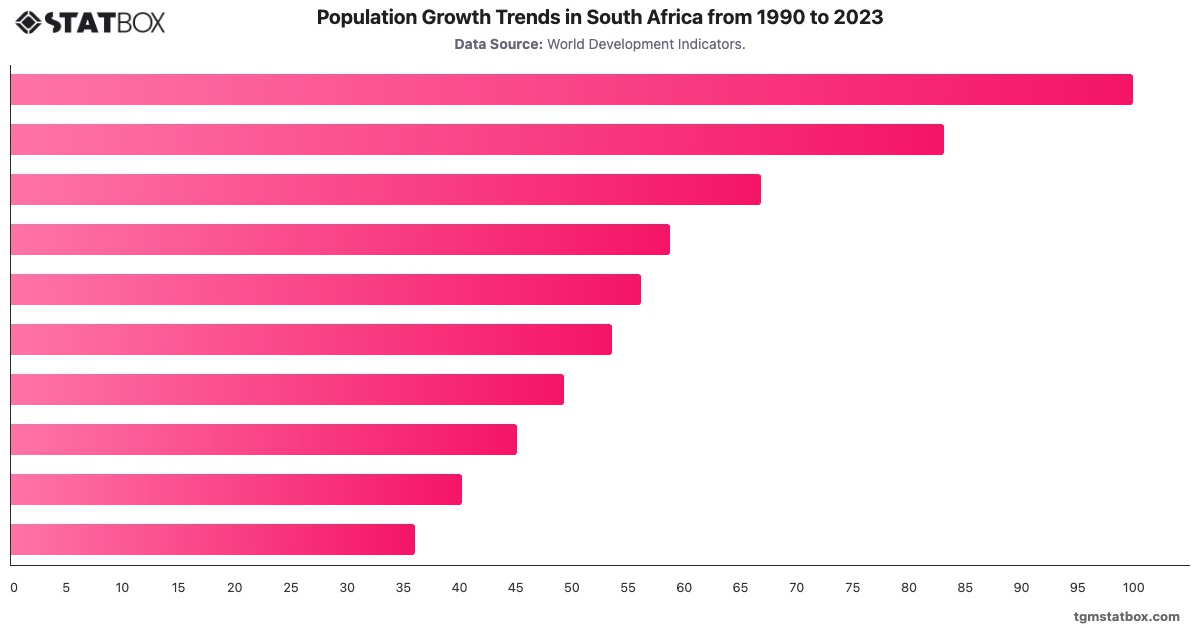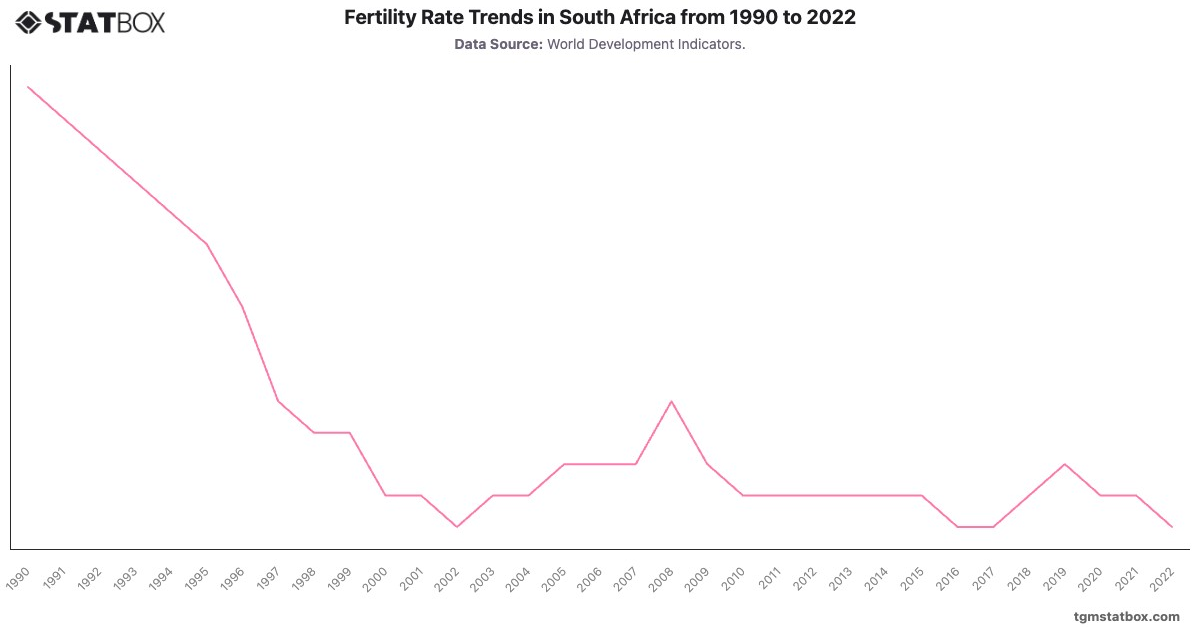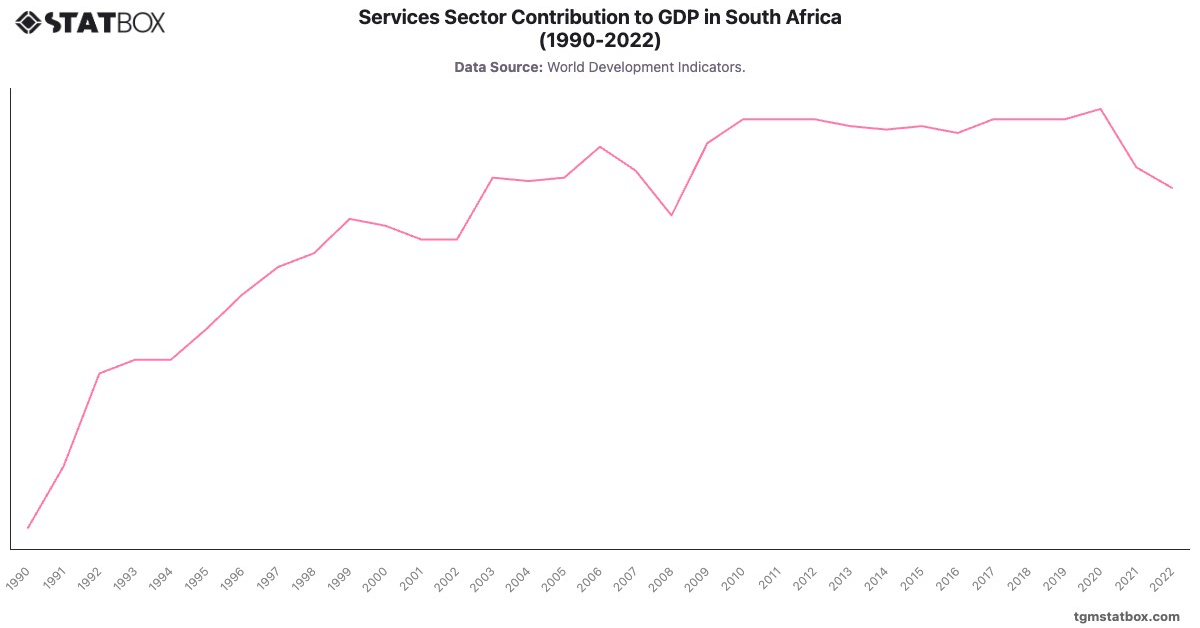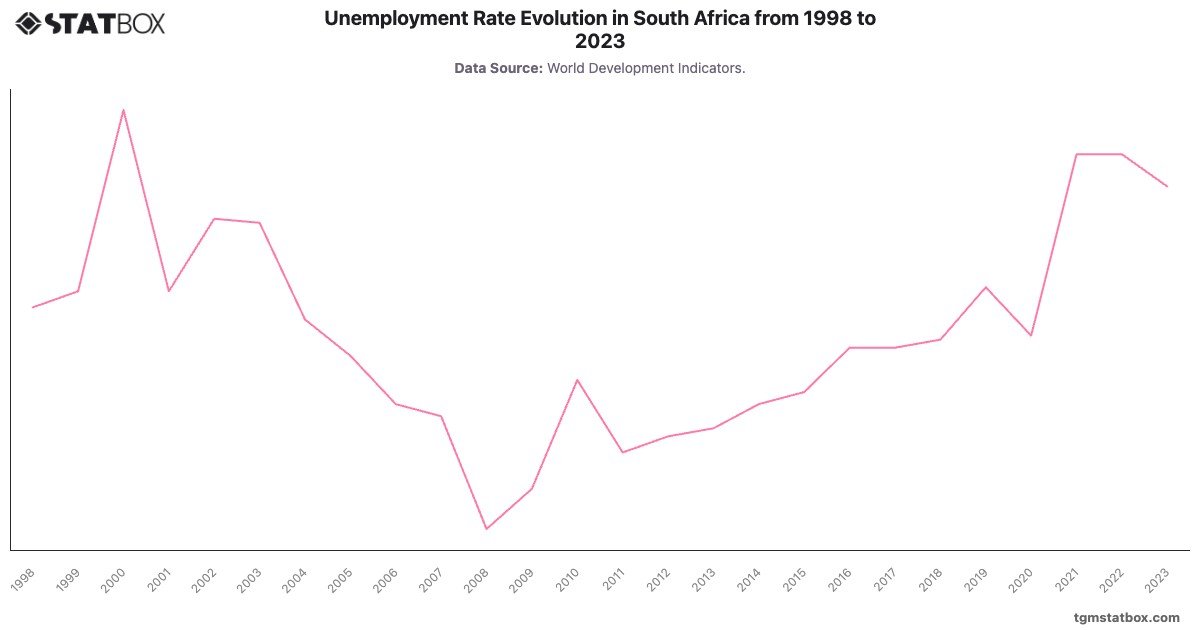
South Africa’s unemployment rate has remained persistently high, beginning at in 1998 and fluctuating in the years that followed. Early 2000s levels rose to nearly , reflecting economic restructuring and challenges in job creation within a developing economy. Unemployment then improved slightly, declining to in 2008, largely due to growth in mining and service sectors, as well as increased public sector hiring. However, the global financial crisis in 2008 led to economic contractions, causing the unemployment rate to rise again to over by 2010.
From 2010 onward, unemployment fluctuated around the mid- range, with a notable rise beginning in 2016 due to slower economic growth and limited private-sector job creation. By 2021, South Africa’s unemployment reached amid the COVID-19 pandemic’s impact, which strained an already fragile labor market. Despite a slight decrease to in 2023, the high unemployment rate continues to reflect deep-rooted structural issues, including skill mismatches and limited economic diversification.
From 2010 onward, unemployment fluctuated around the mid- range, with a notable rise beginning in 2016 due to slower economic growth and limited private-sector job creation. By 2021, South Africa’s unemployment reached amid the COVID-19 pandemic’s impact, which strained an already fragile labor market. Despite a slight decrease to in 2023, the high unemployment rate continues to reflect deep-rooted structural issues, including skill mismatches and limited economic diversification.
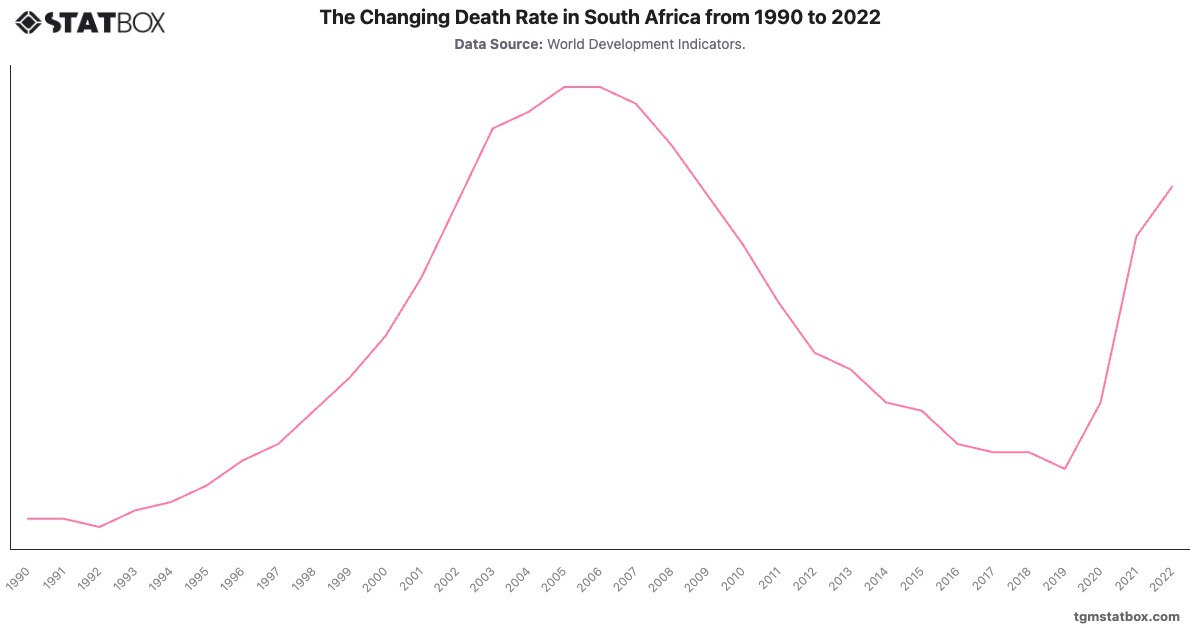
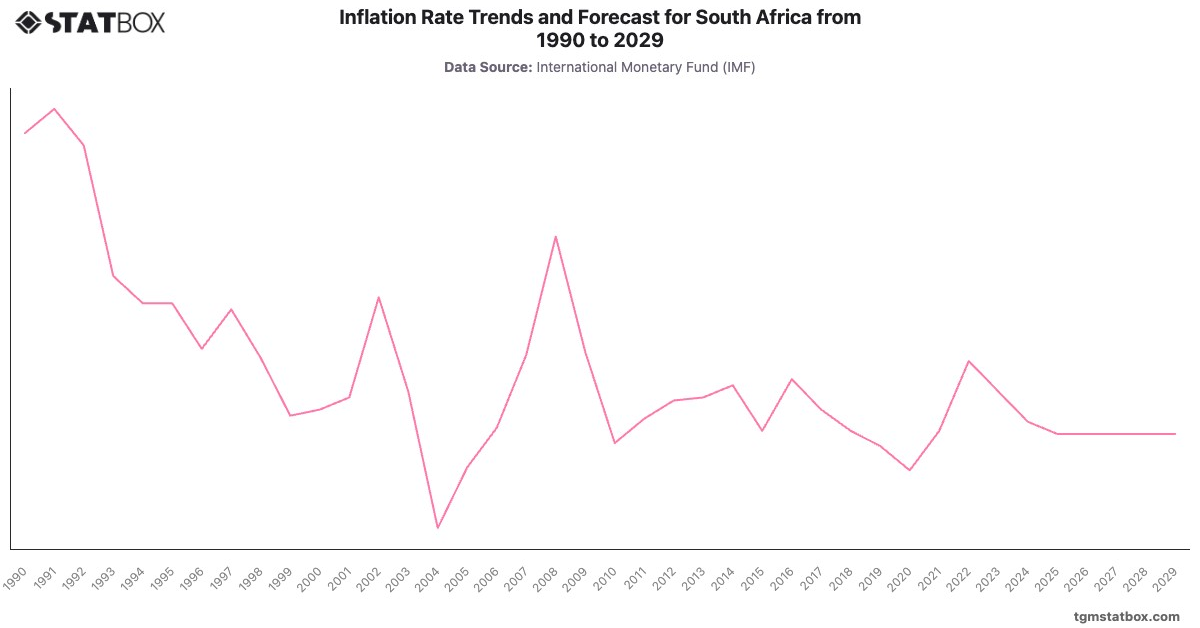
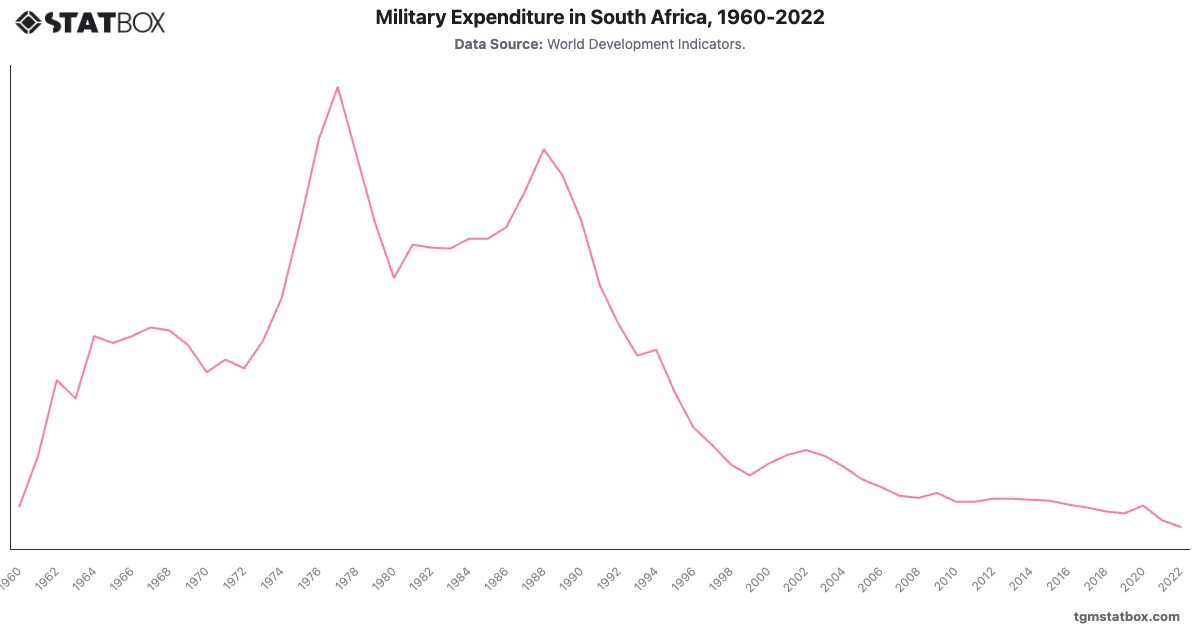
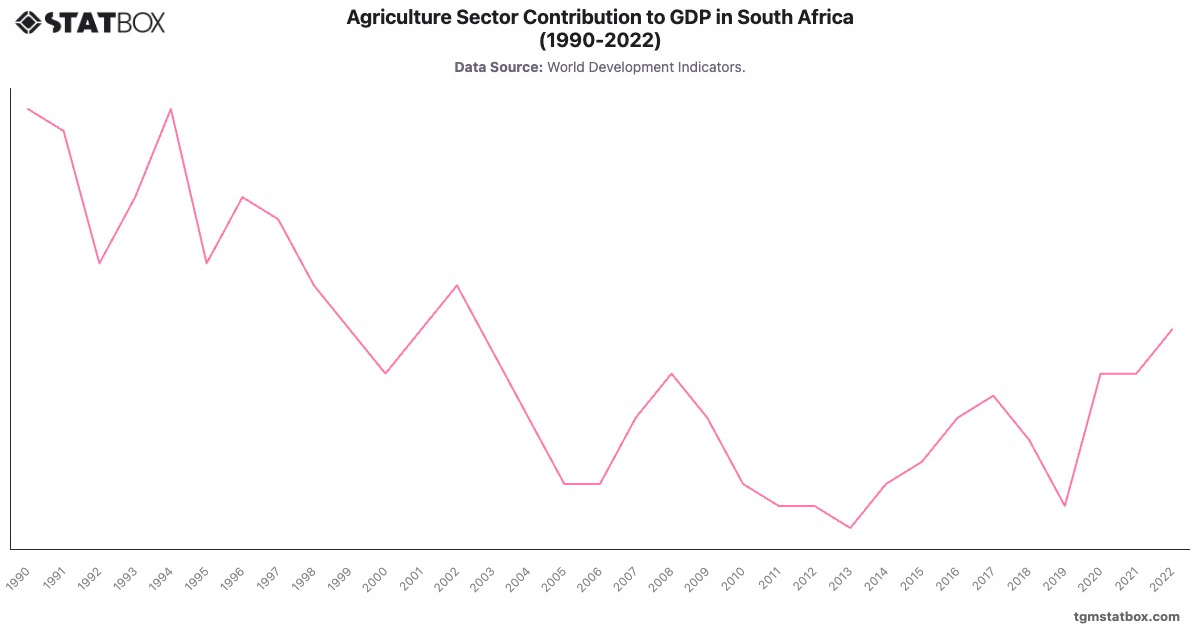
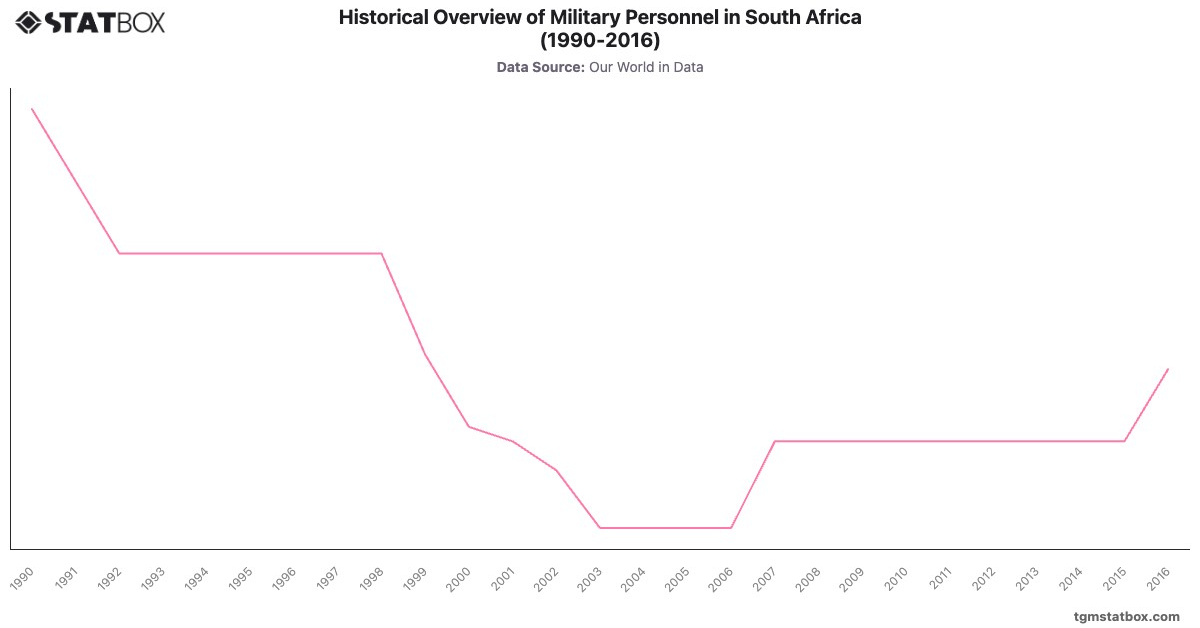
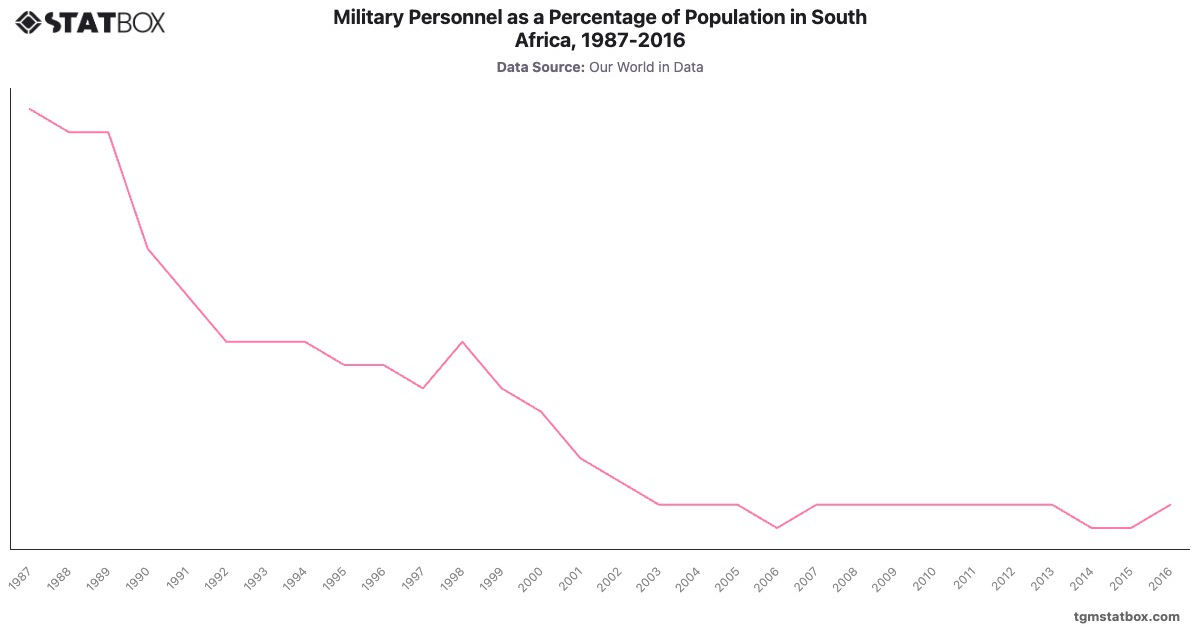
For a broader context, visit other statistics on South Africa’s population size, agriculture’s share in South Africa’s GDP, military personnel share in South Africa’s population.