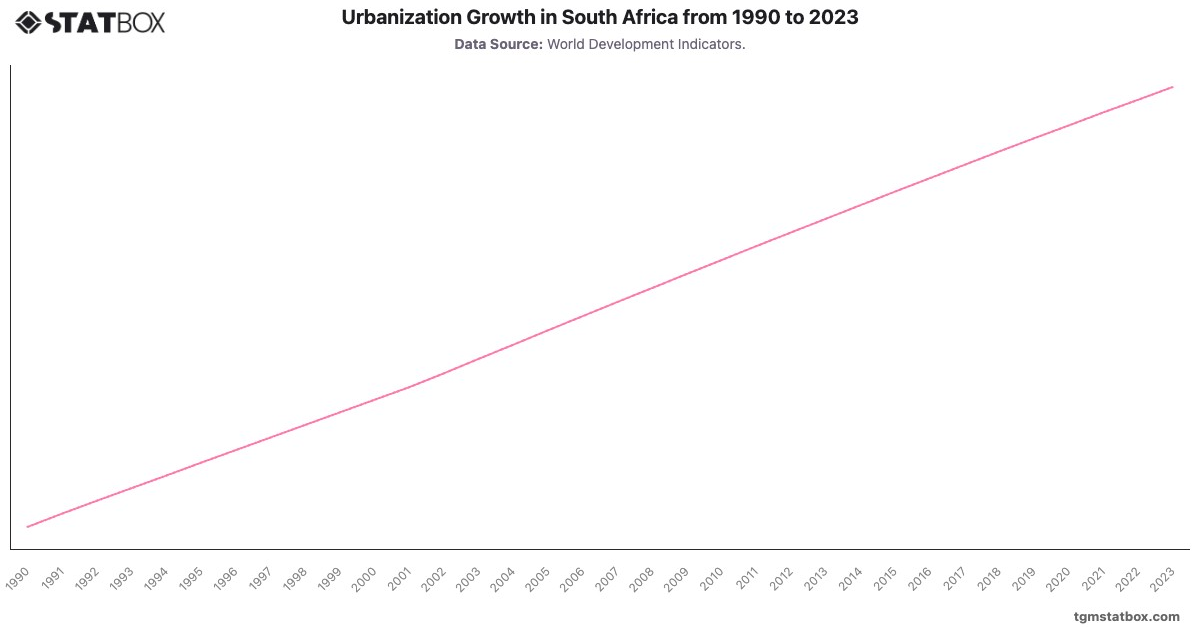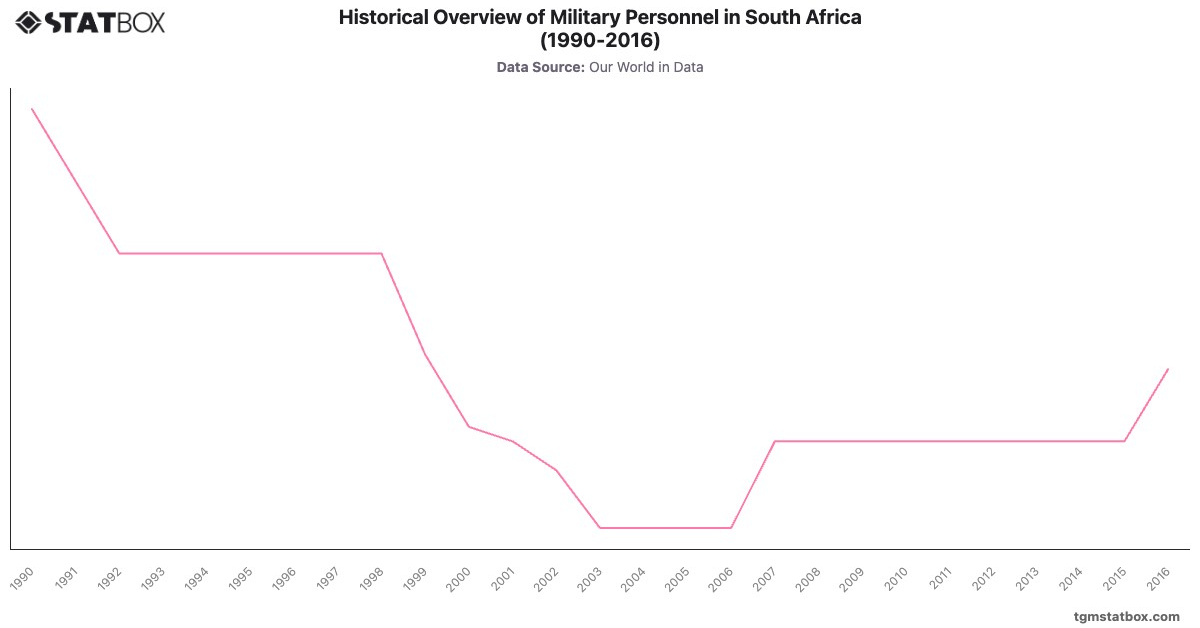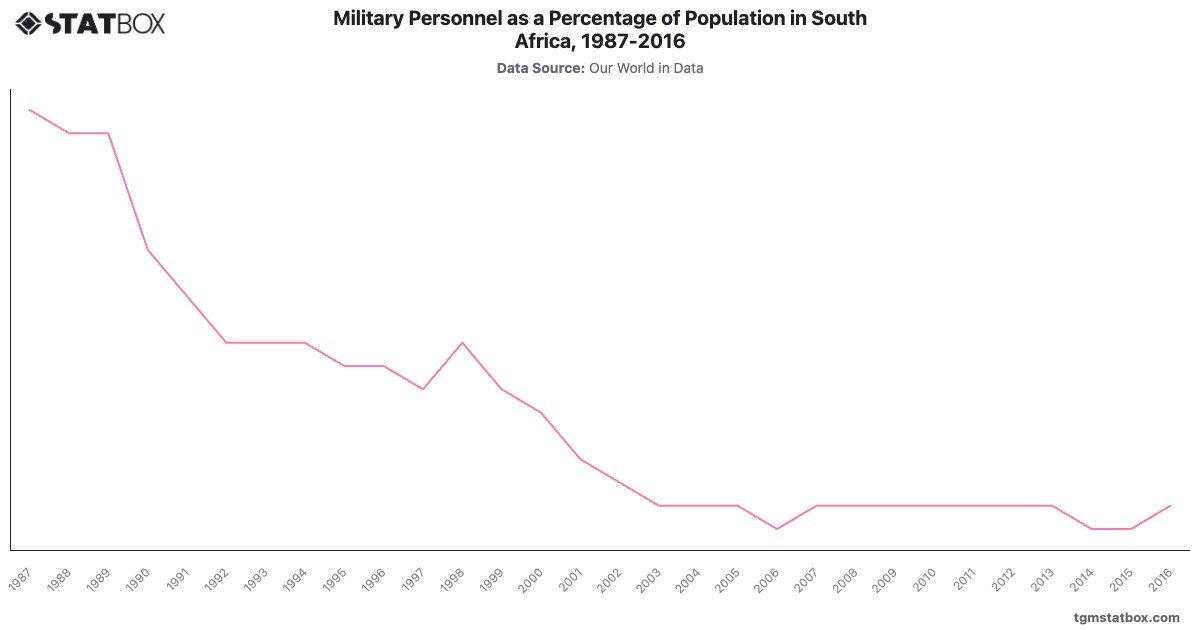
South Africa maintained a relatively low percentage of military personnel, starting at in 1987 and declining further by 1990 as apartheid ended and the country began to refocus on inclusive governance and economic growth. As urbanization increased, particularly in cities like Johannesburg and Cape Town, South Africa’s military reliance shifted towards modernization with minimal growth in personnel.
By the early 2000s, South Africa maintained a stable rate of , emphasizing professionalization within a smaller military structure. Urban growth remained steady, underscoring a trend away from military expenditure toward urban and economic development. This stability reflects South Africa’s broader regional priorities of social development and security restructuring within a largely urbanized framework.
By the early 2000s, South Africa maintained a stable rate of , emphasizing professionalization within a smaller military structure. Urban growth remained steady, underscoring a trend away from military expenditure toward urban and economic development. This stability reflects South Africa’s broader regional priorities of social development and security restructuring within a largely urbanized framework.
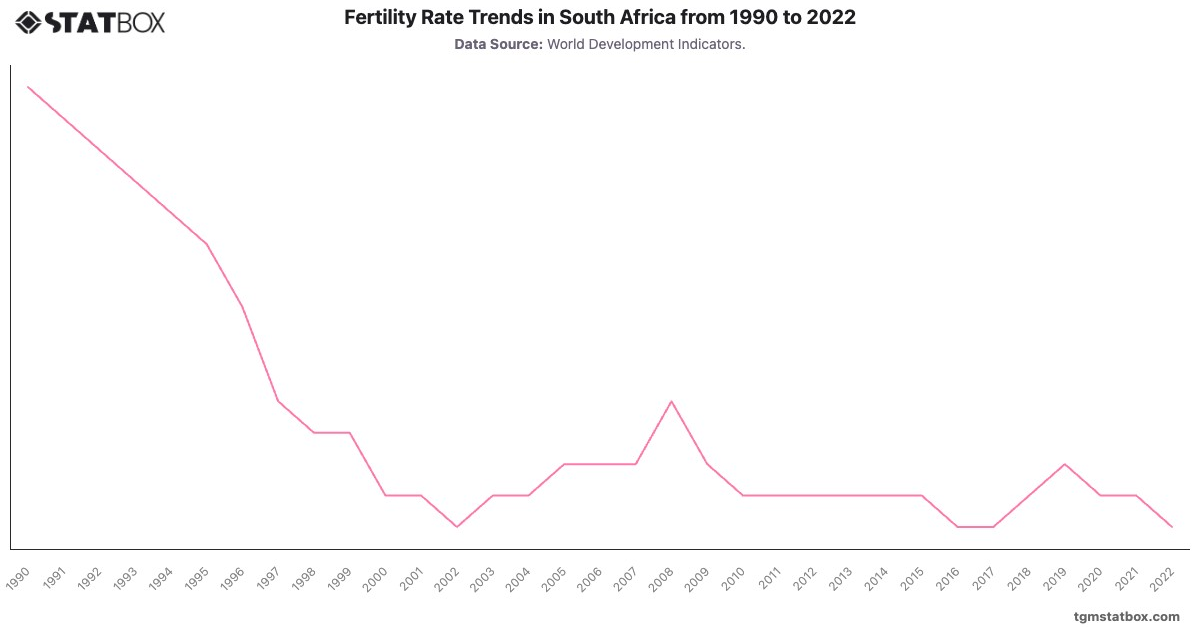
Find out more through related statistics on South Africa’s population size, South Africa’s fertility rate trends, South Africa’s population density.