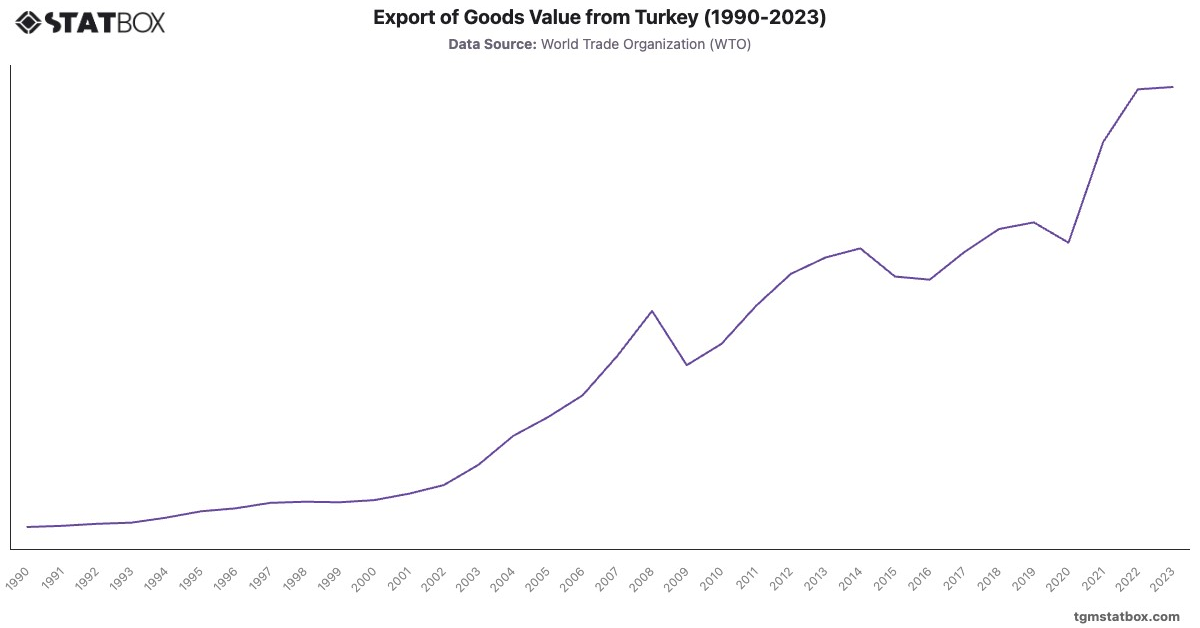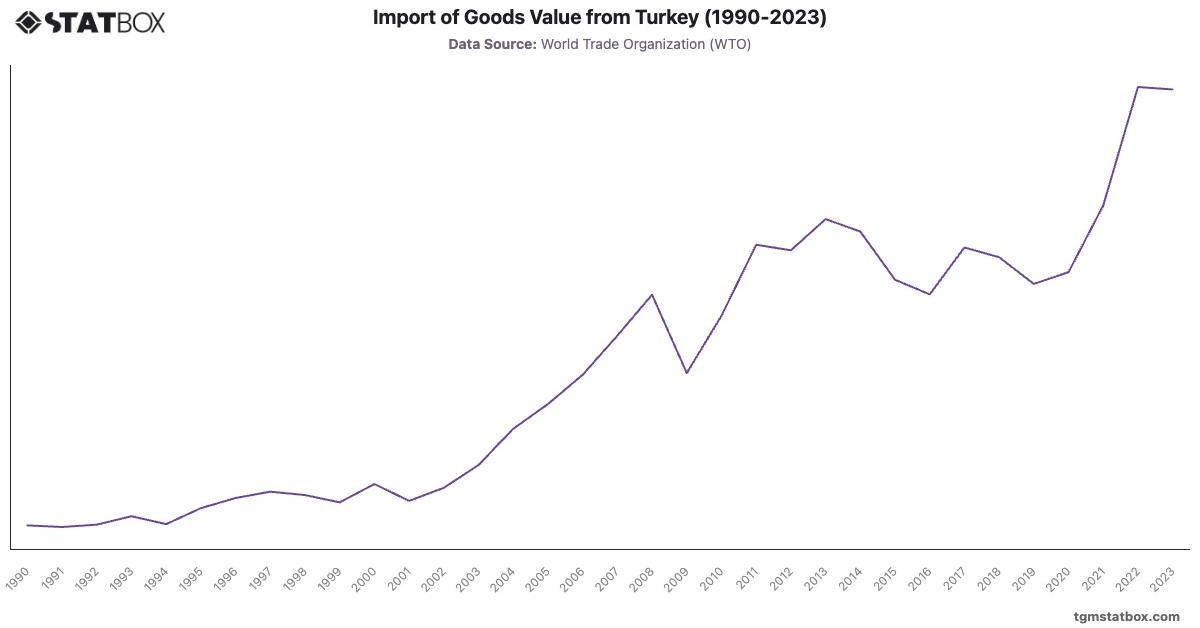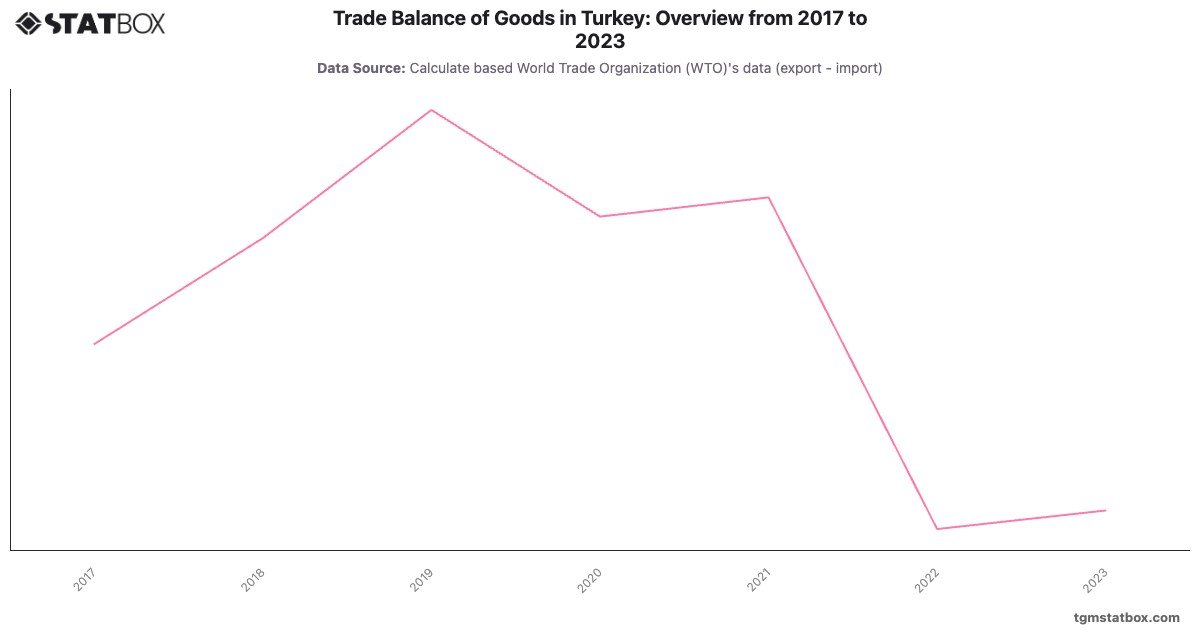
Turkey’s trade balance of goods remained in significant deficit throughout the 2017–2023 period, reflecting its heavy reliance on imports for energy, raw materials, and industrial goods. The deficit peaked at -109,540.6 million USD in 2022, driven by soaring energy prices and increased import demand amid robust domestic consumption.
In 2023, the deficit slightly narrowed to -105,997.0 million USD, as global energy prices moderated and export revenues from automotive, textiles, and electronics grew. Despite this improvement, Turkey’s trade balance remains vulnerable to external shocks, particularly due to its dependence on imported energy and its reliance on price-sensitive export markets.
In 2023, the deficit slightly narrowed to -105,997.0 million USD, as global energy prices moderated and export revenues from automotive, textiles, and electronics grew. Despite this improvement, Turkey’s trade balance remains vulnerable to external shocks, particularly due to its dependence on imported energy and its reliance on price-sensitive export markets.
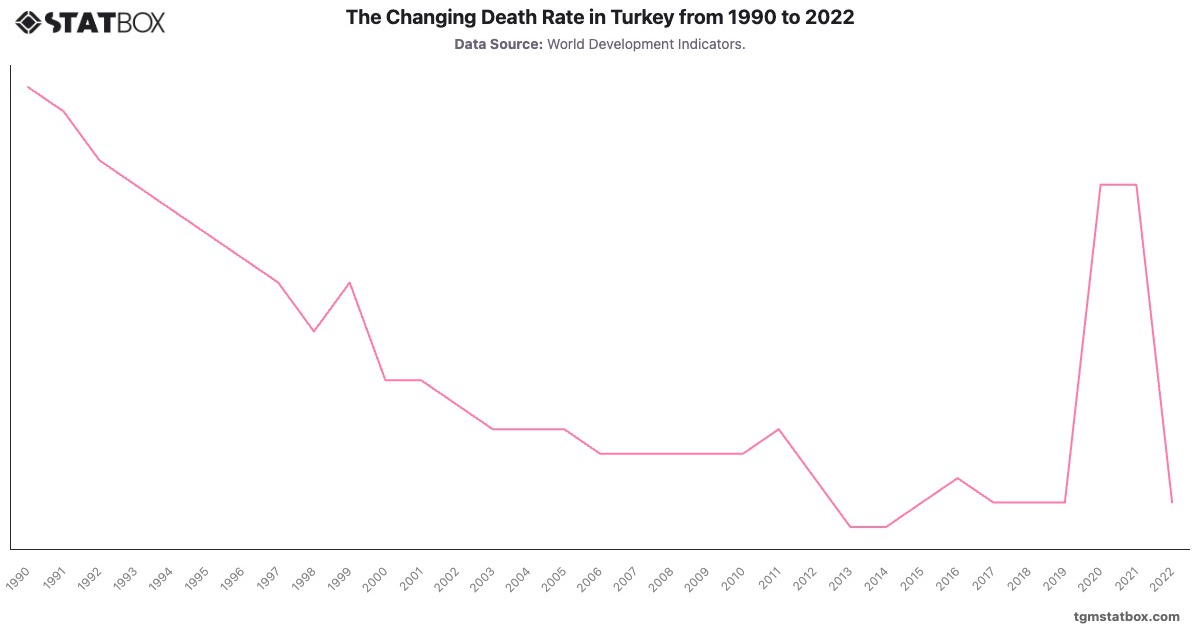
Explore related charts to gain a better understanding of Turkey’s population overview, Turkey’s death rate fluctuation, Turkey’s manufacturing sector share in GDP.