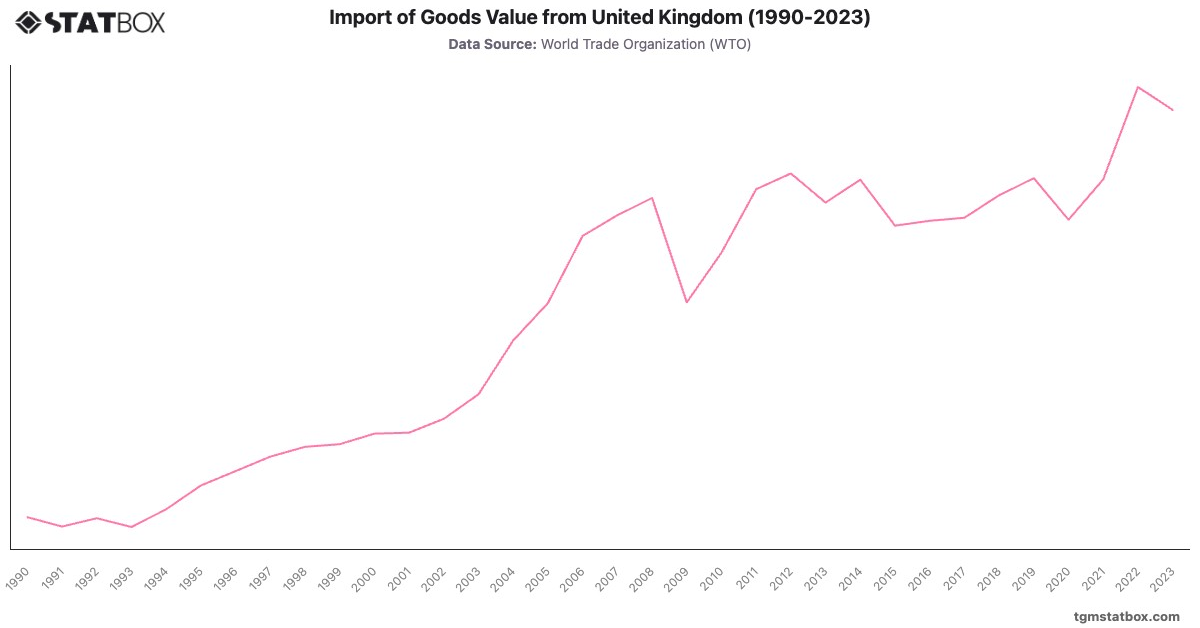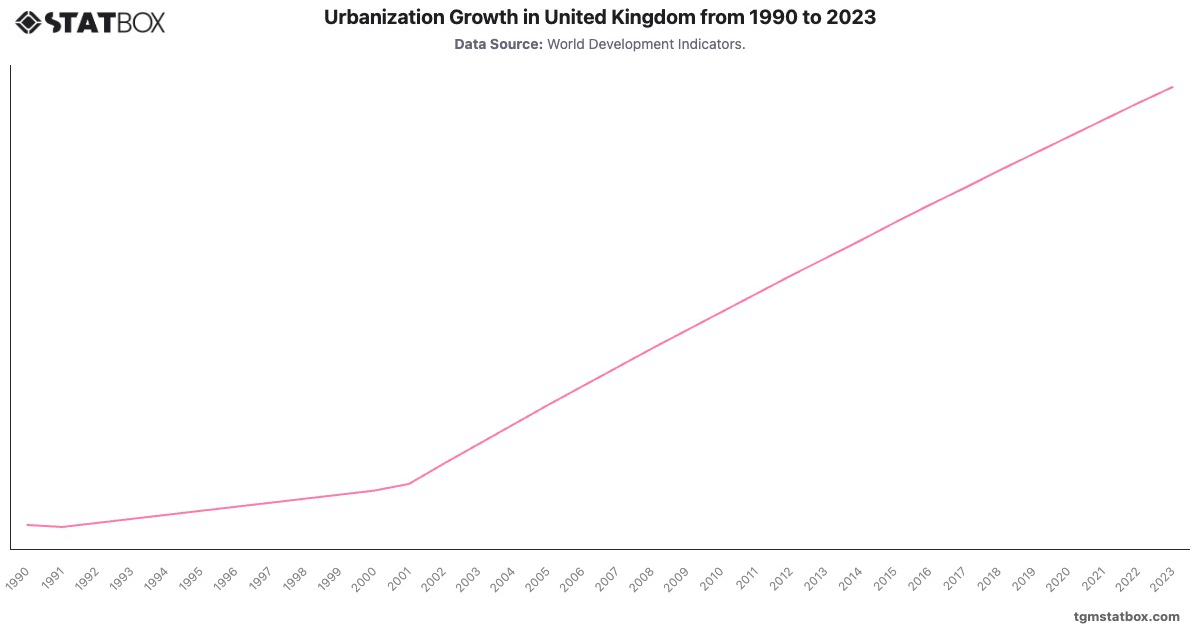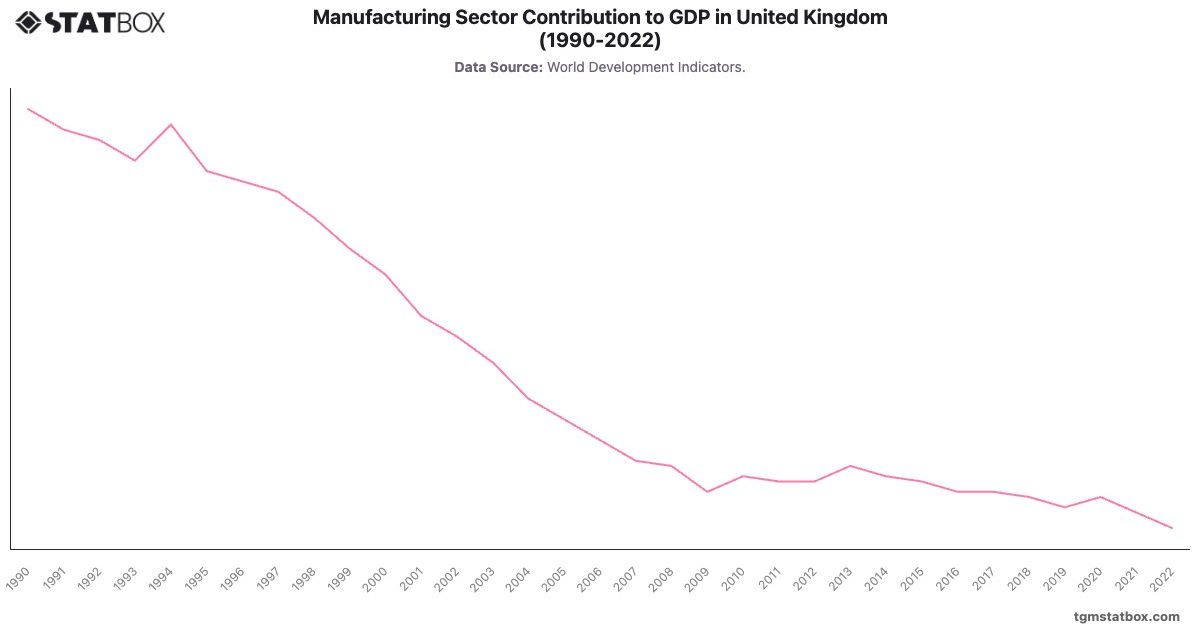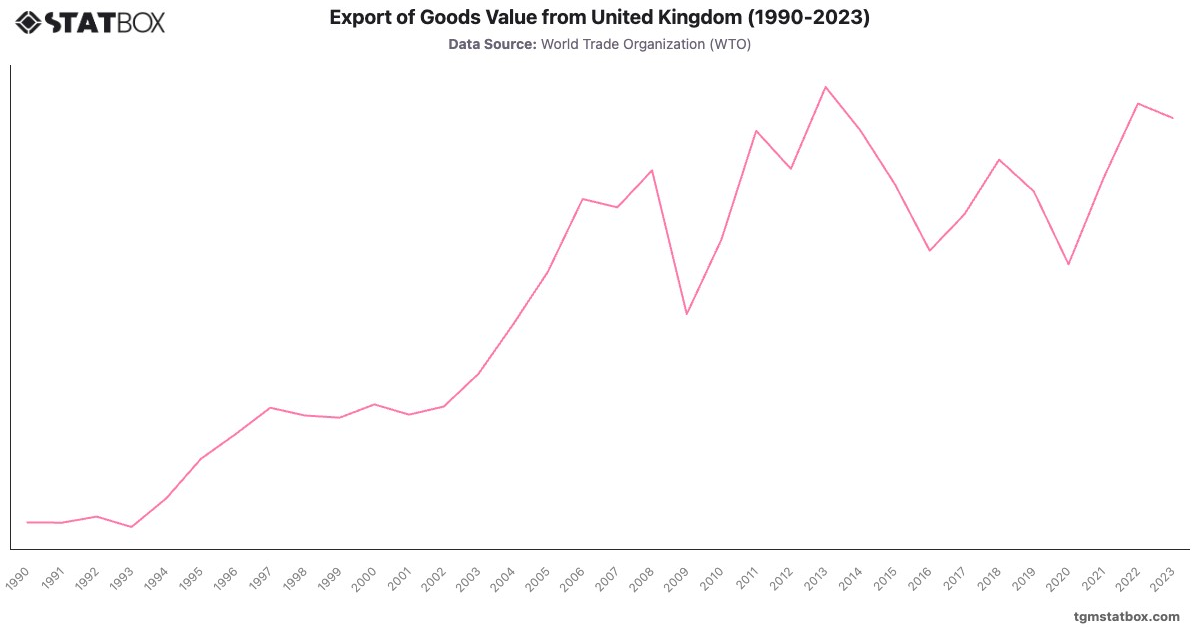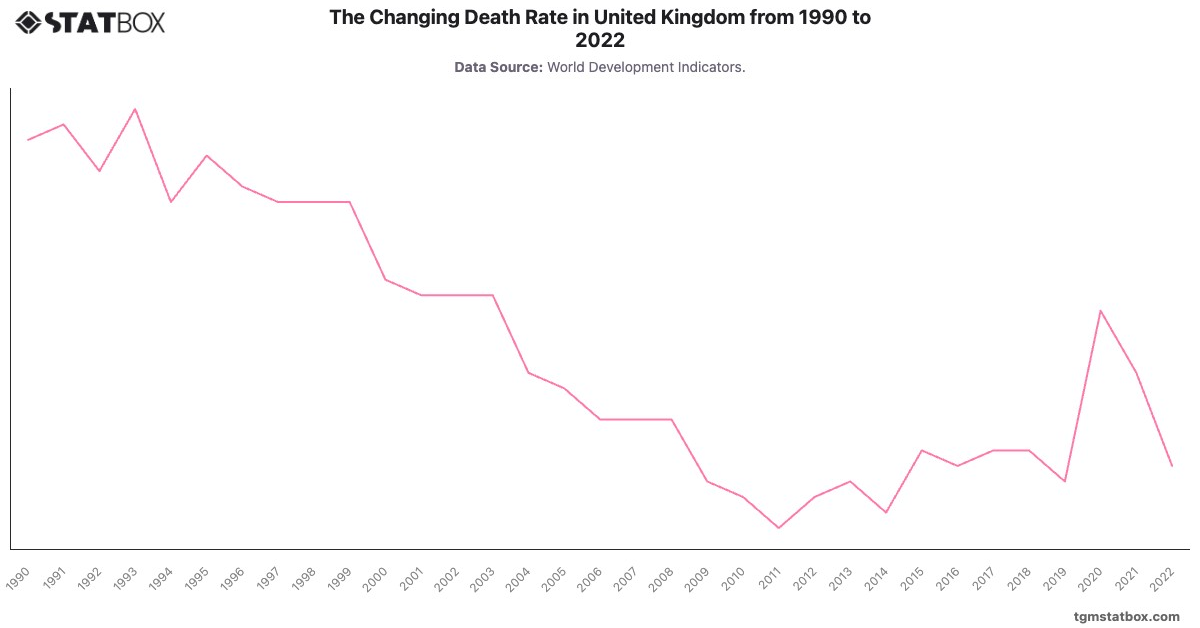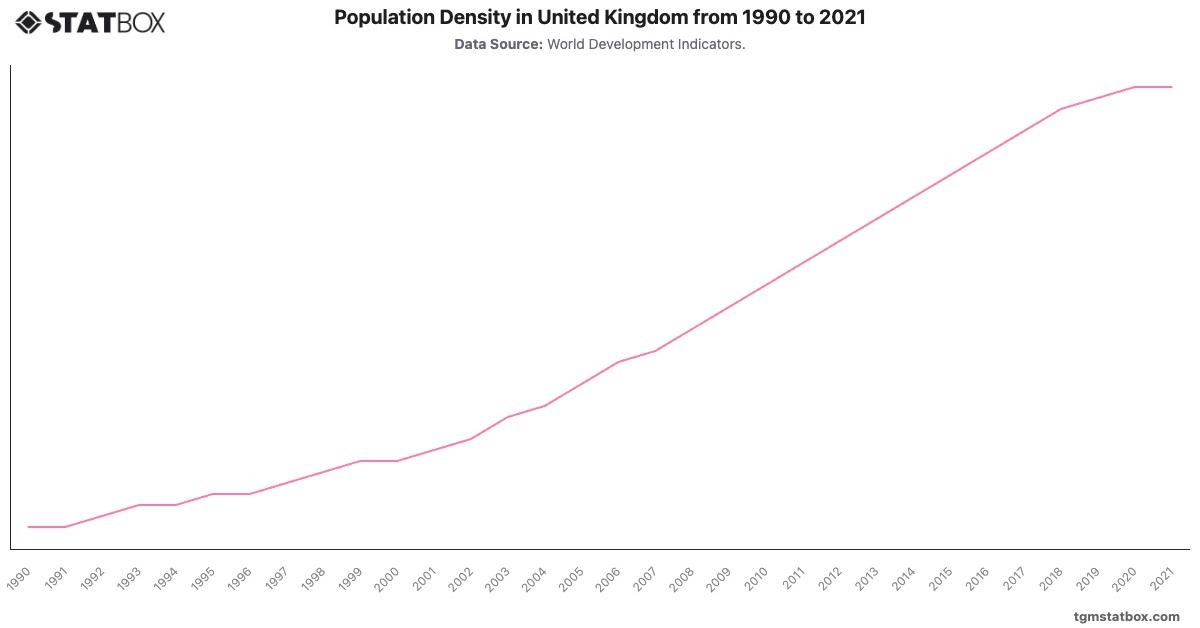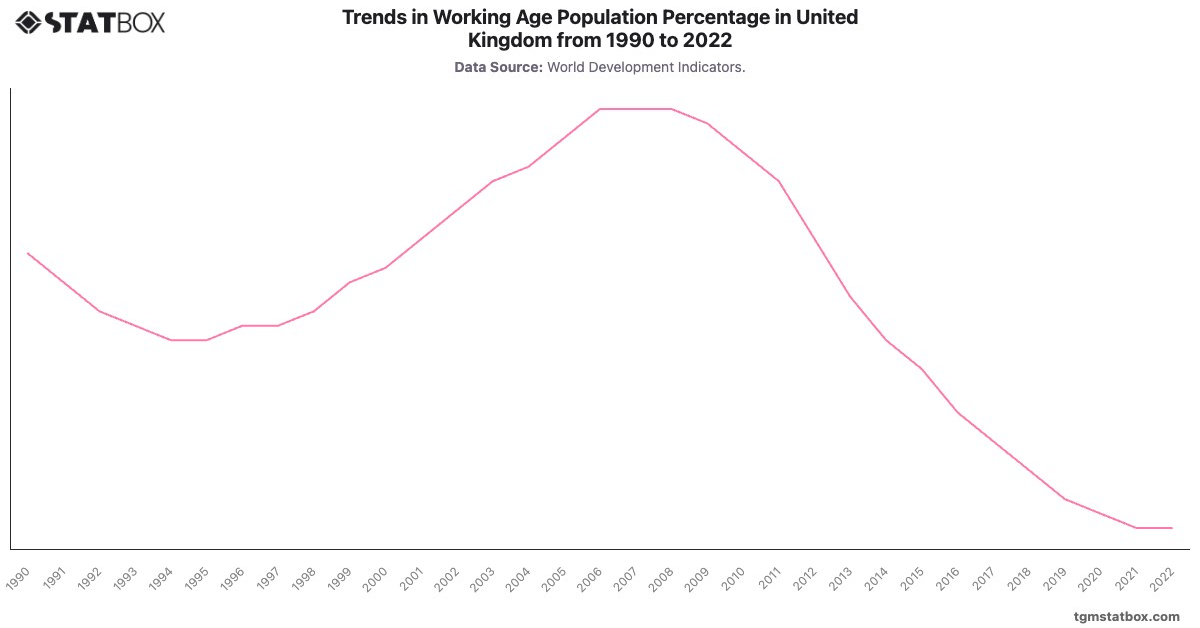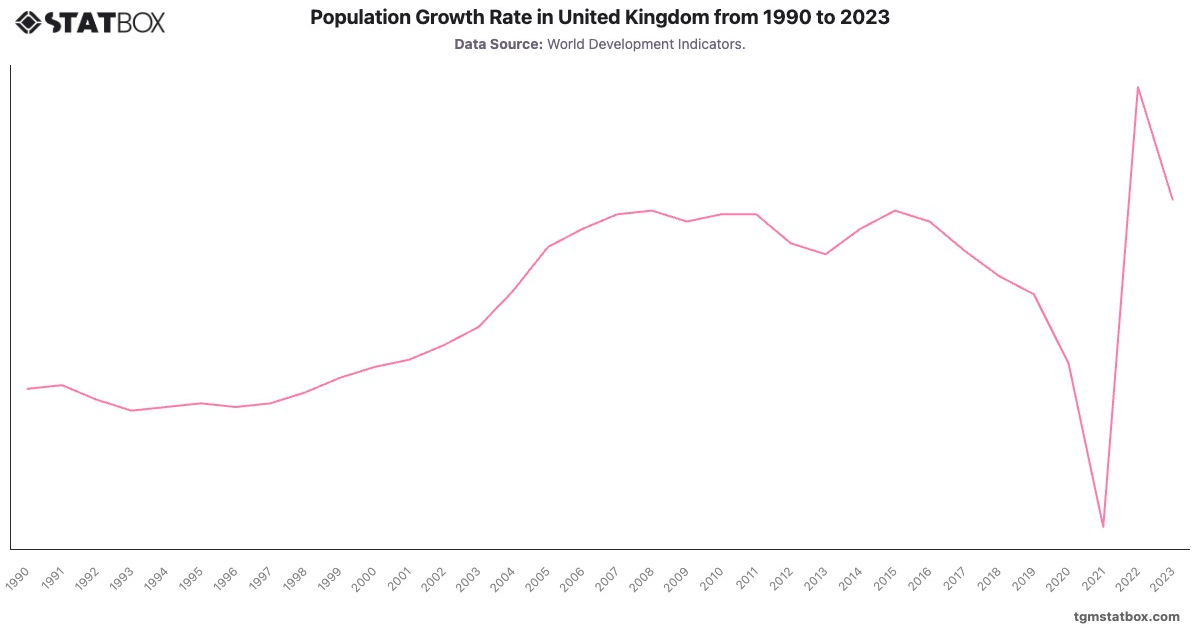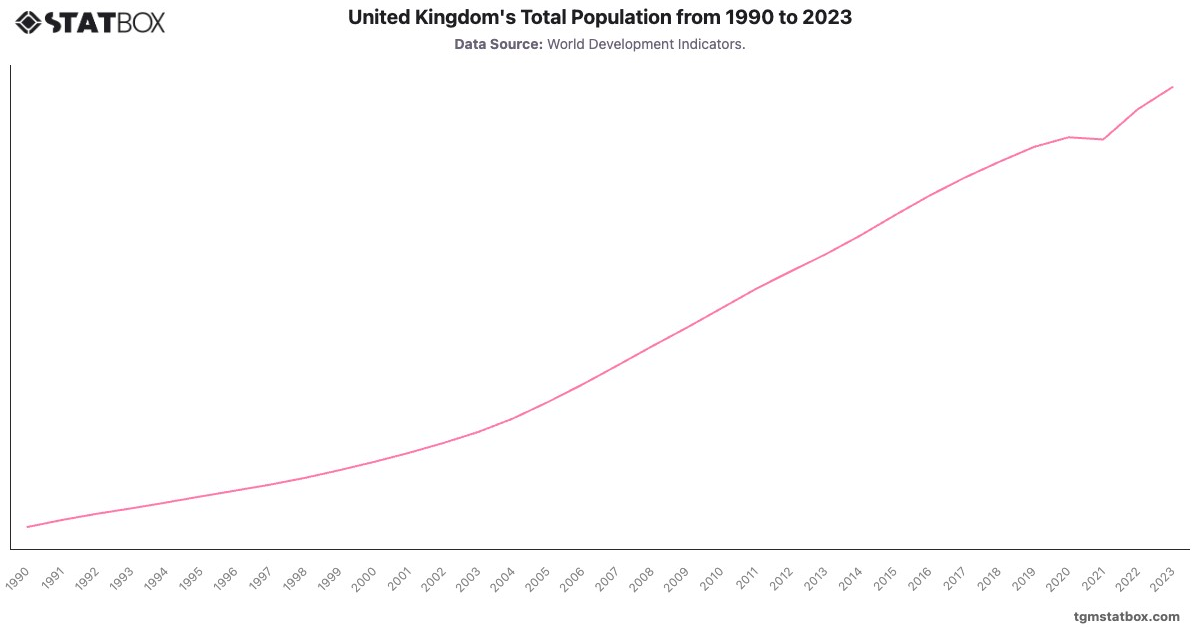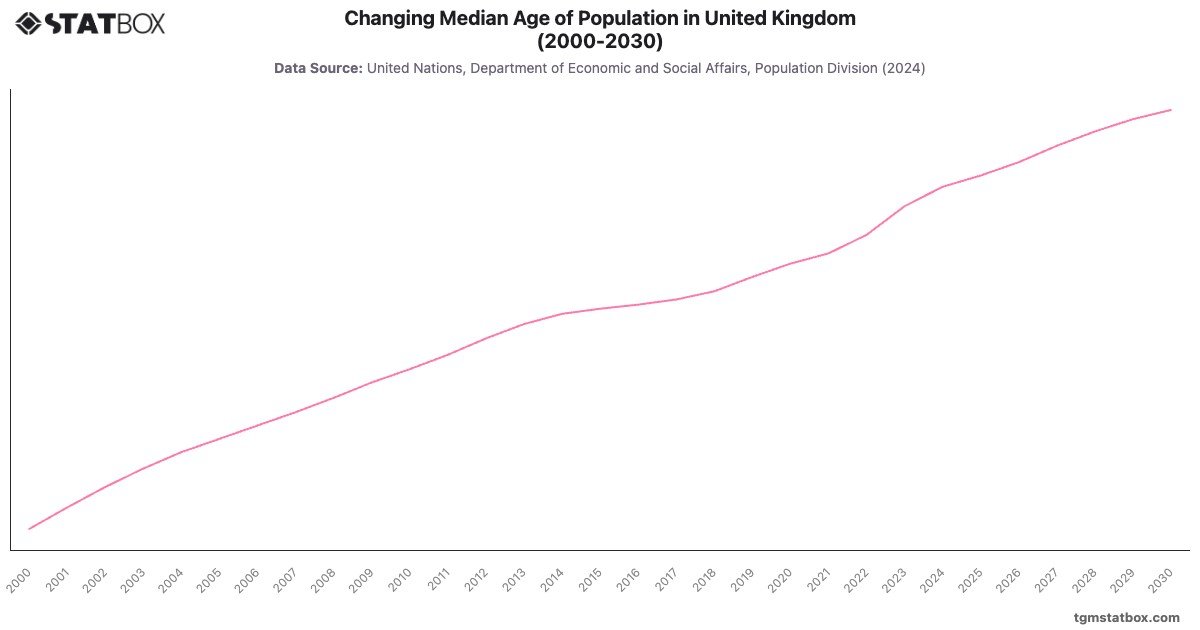
The United Kingdom's median age increased from 36.6 years in 2000 to an estimated 40.7 years by 2030, mirroring broader trends in developed nations with aging populations. Contributing factors include lower birth rates and higher life expectancies. Urbanization is another significant driver, as most of the UK population resides in cities, where enhanced healthcare and economic stability contribute to increased life spans and an aging demographic.
Between 2000 and 2020, the median age rose from 36.6 to 39.2 years, with a steady increase projected through 2030. This demographic shift suggests potential challenges in supporting an aging population in urban centers, where healthcare and elder care demands are expected to grow. The government’s response to this trend will likely shape the future of urban planning and economic policies in the coming years.
Between 2000 and 2020, the median age rose from 36.6 to 39.2 years, with a steady increase projected through 2030. This demographic shift suggests potential challenges in supporting an aging population in urban centers, where healthcare and elder care demands are expected to grow. The government’s response to this trend will likely shape the future of urban planning and economic policies in the coming years.
For a broader context, visit other statistics on UK’s life span metric, United Kingdom’s population growth, Urbanization trends in the UK.