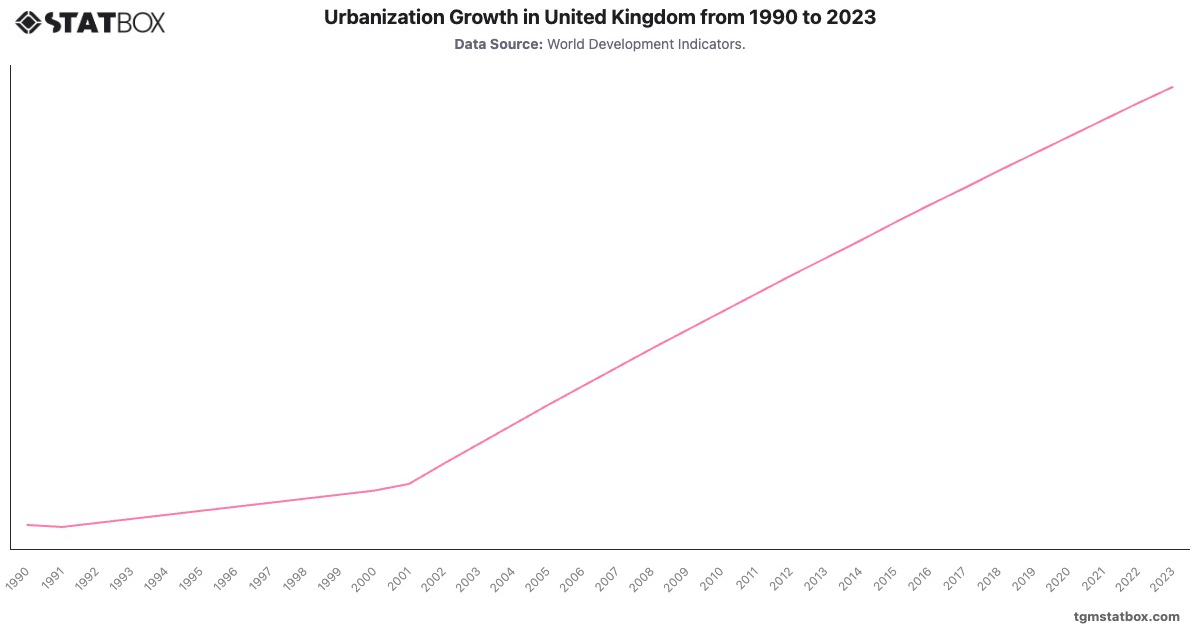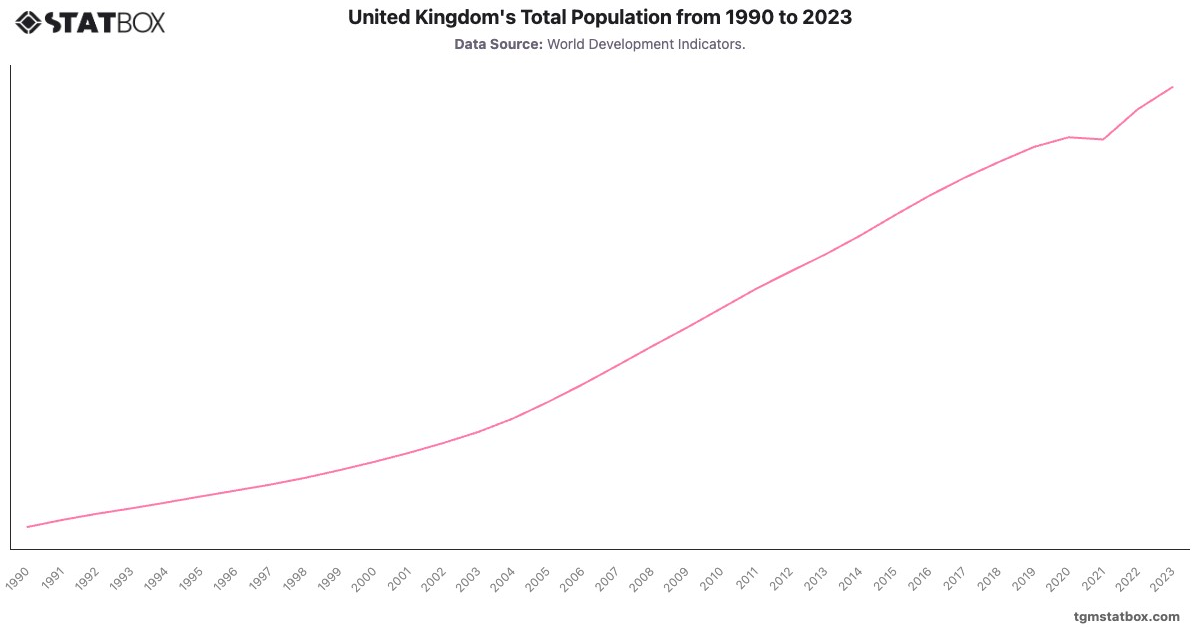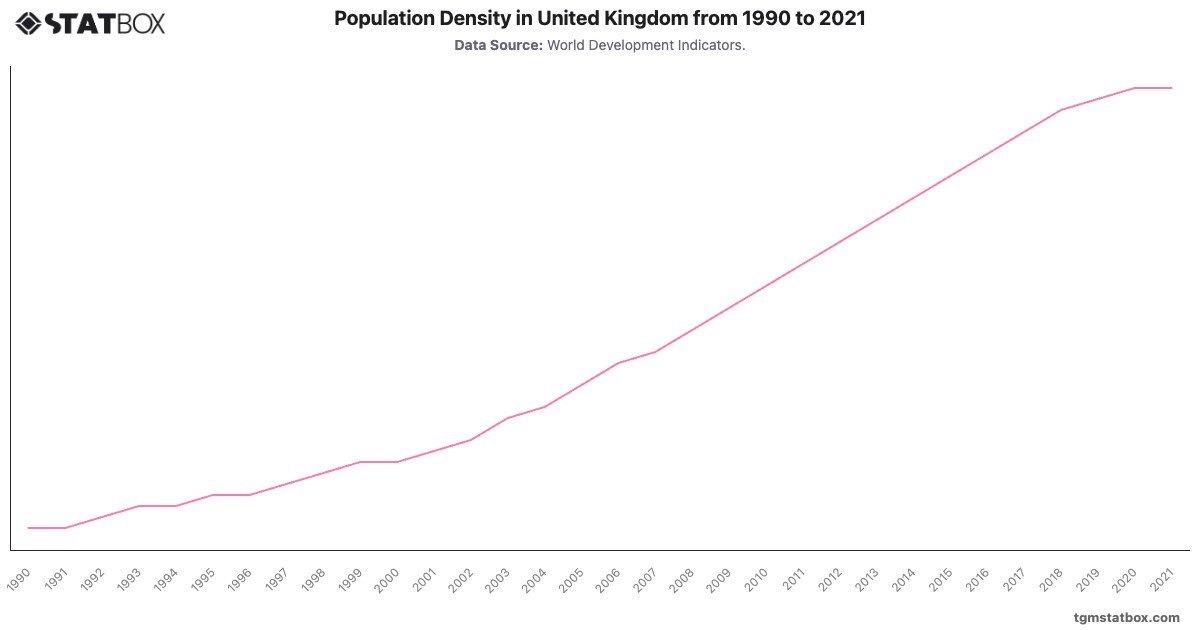
The United Kingdom experienced a consistent increase in population density, rising from 237 people per square kilometer in 1990 to 277 in 2021. This growth reflects the UK’s rapid urbanization, especially in densely populated areas such as London, Manchester, and Birmingham. The significant increase in density from the late 1990s to early 2000s corresponds with economic development, immigration, and housing demands in urban regions, fueling a steady influx of people into cities.
From 2010 onwards, the growth in density continued, albeit at a slightly slower pace, as the government implemented urban planning and housing policies to manage crowding in high-density areas. By 2021, the UK maintained one of the highest population densities in Europe, driven by both natural population growth and urban appeal in metropolitan regions, where job opportunities and cultural centers attract people despite limited land availability.
From 2010 onwards, the growth in density continued, albeit at a slightly slower pace, as the government implemented urban planning and housing policies to manage crowding in high-density areas. By 2021, the UK maintained one of the highest population densities in Europe, driven by both natural population growth and urban appeal in metropolitan regions, where job opportunities and cultural centers attract people despite limited land availability.
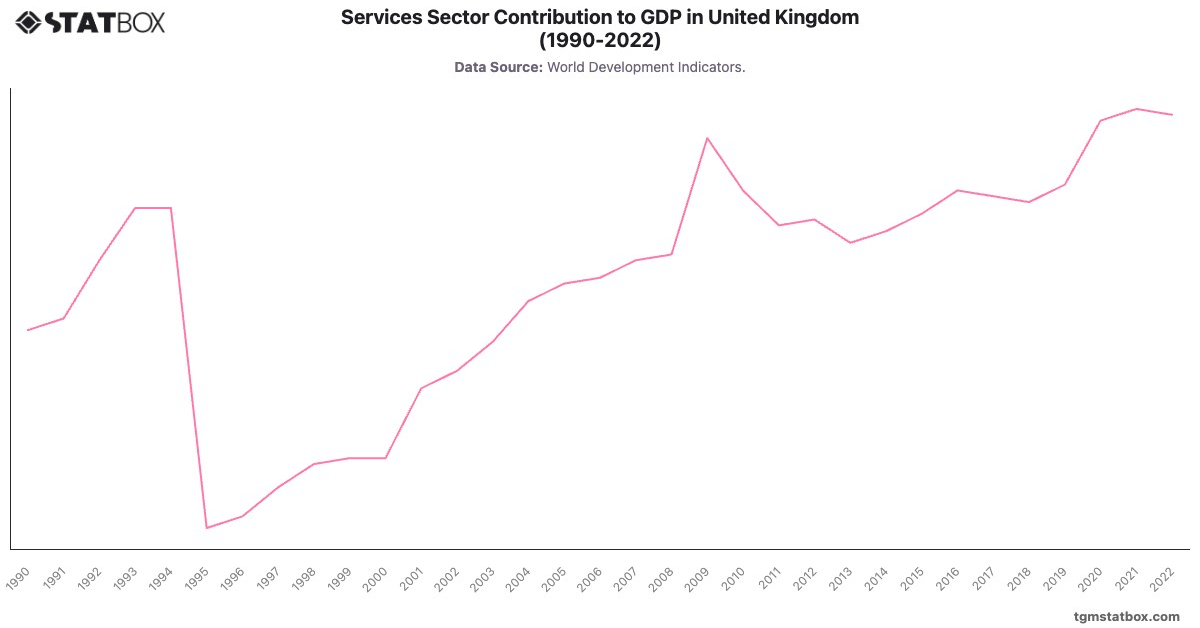
Find out more through related statistics on United Kingdom’s services sector share in GDP, Urbanization trends in the UK, United Kingdom’s population.