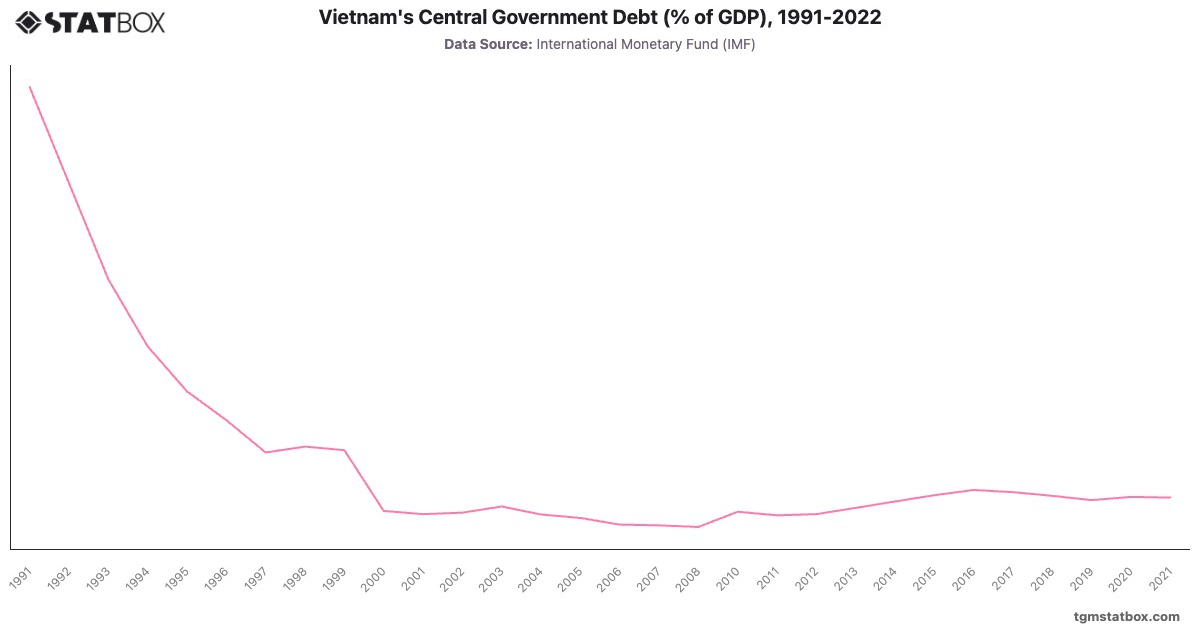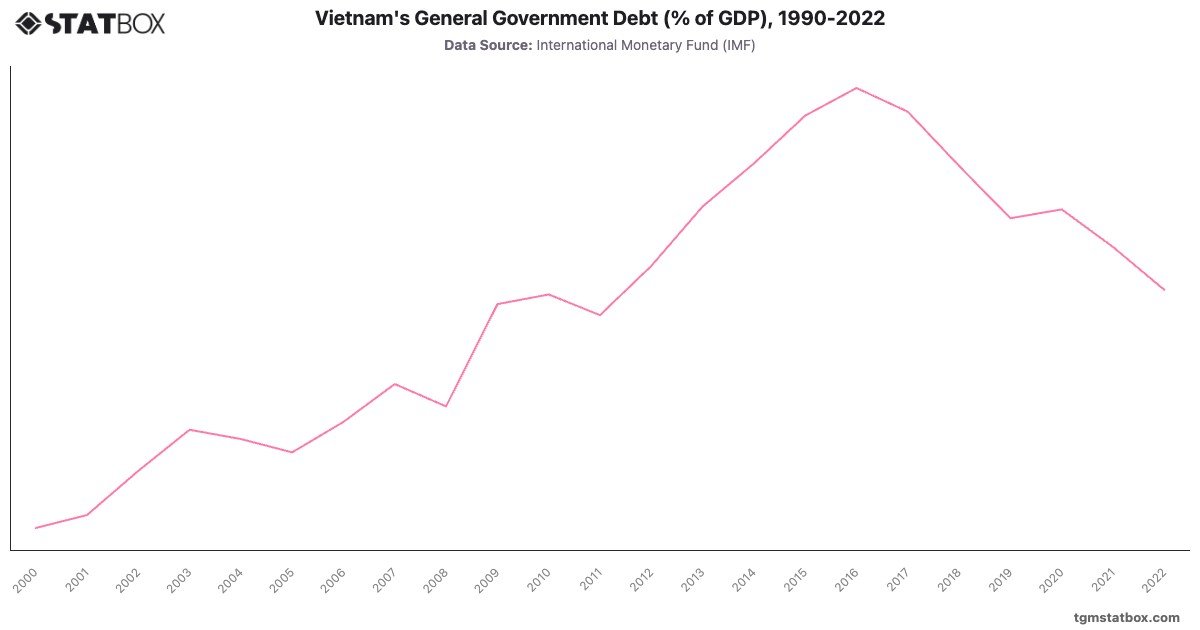
Vietnam’s government debt as a percentage of GDP showed gradual increases from 2000, with debt rising from to by 2007, in line with Vietnam’s extensive infrastructure development and modernization efforts. The 2008 financial crisis led to a temporary rise in debt, reaching in 2009. Over the next decade, debt continued to increase as Vietnam invested heavily in economic development and social programs, peaking at in 2016.
Subsequent fiscal reforms and efforts to manage borrowing resulted in a gradual decline, with debt levels reducing to by 2019. The COVID-19 pandemic slightly reversed this trend, causing debt to rise to in 2020 as Vietnam implemented economic support measures. By 2022, debt decreased to , reflecting Vietnam’s commitment to fiscal discipline and a gradual return to pre-pandemic economic growth.
Subsequent fiscal reforms and efforts to manage borrowing resulted in a gradual decline, with debt levels reducing to by 2019. The COVID-19 pandemic slightly reversed this trend, causing debt to rise to in 2020 as Vietnam implemented economic support measures. By 2022, debt decreased to , reflecting Vietnam’s commitment to fiscal discipline and a gradual return to pre-pandemic economic growth.
For a deeper dive into the topic, explore Vietnam’s military personnel percentage, Vietnam’s industry sector contribution to GDP, Vietnam’s public debt ratio.