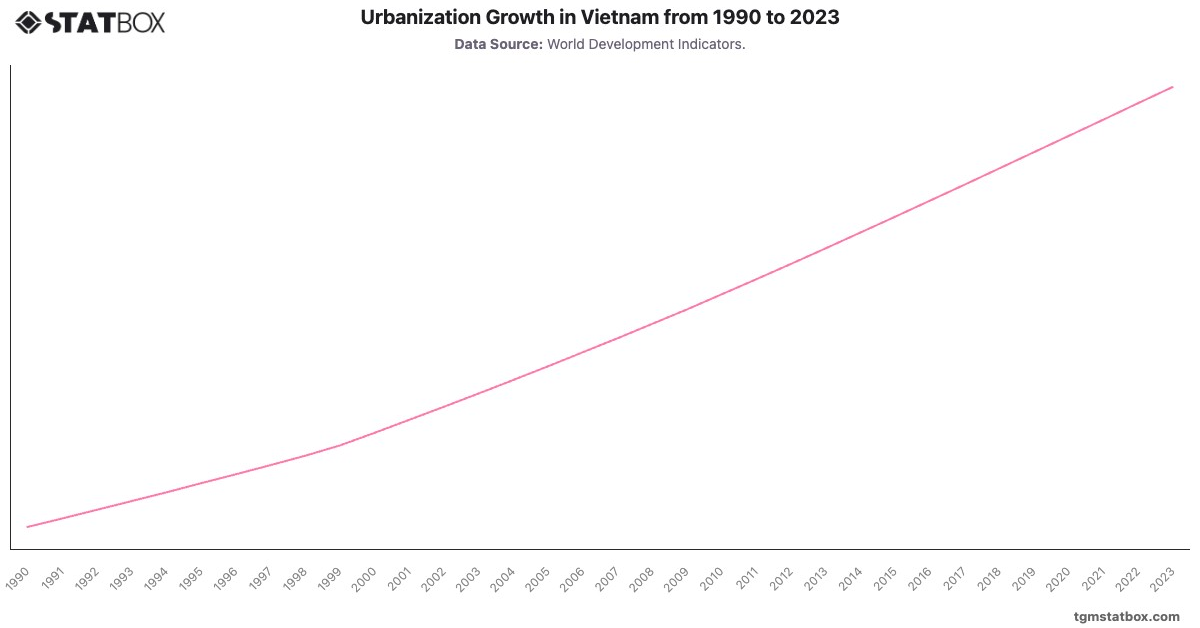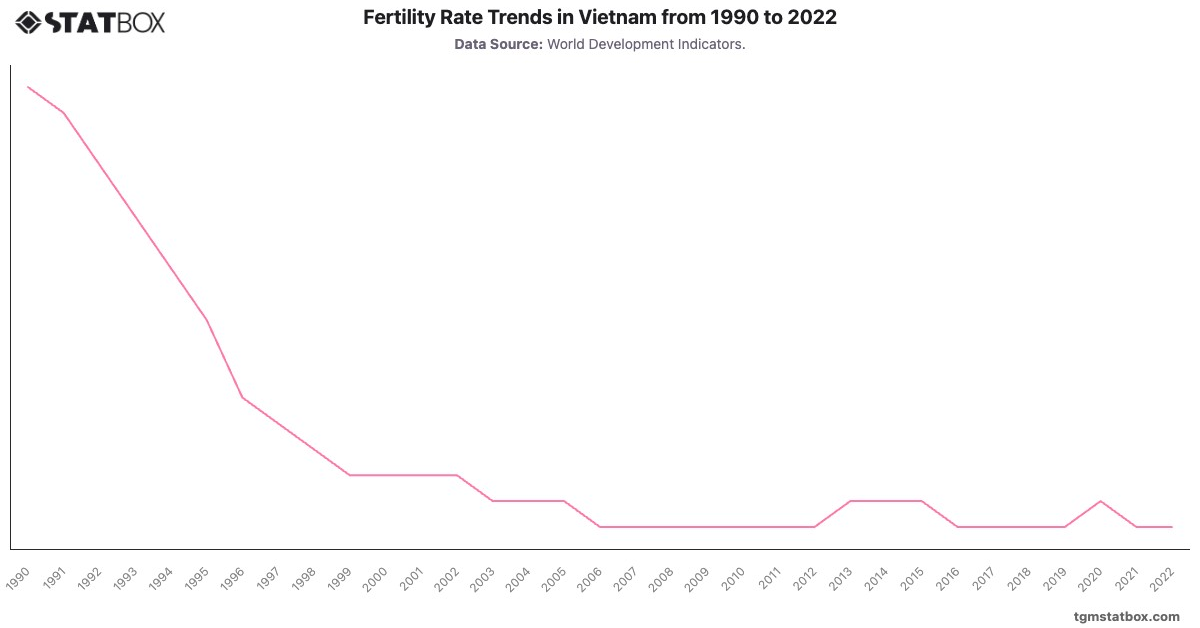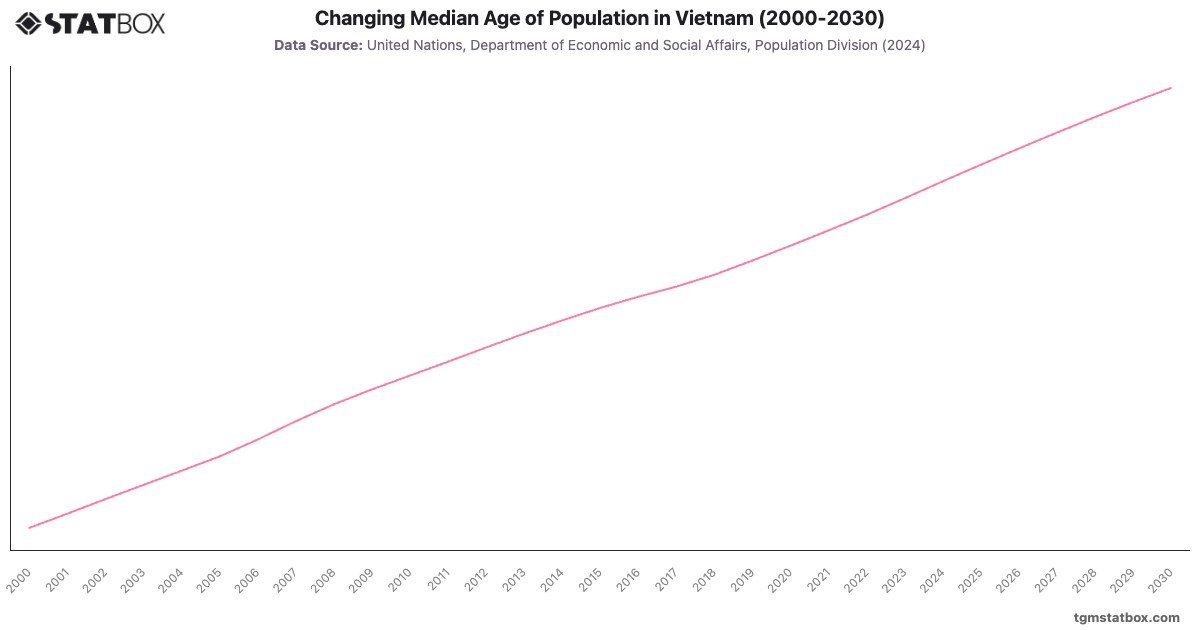
Vietnam's median age grew significantly from 22.7 years in 2000 to a forecasted 35.7 years by 2030, reflecting an aging population driven by declining birth rates and improved healthcare. The pace of urbanization has also played a role, as more individuals move to cities for better job prospects and healthcare access, which has contributed to rising life expectancy.
This demographic shift presents challenges, with the median age rising from 31.0 years in 2020 to 35.7 years by 2030. Vietnam’s urban centers are likely to face increased demands for healthcare and social support services to accommodate an aging population. Addressing these demographic shifts may require targeted policies and investment in elder care, particularly in urban areas that are experiencing the most significant demographic changes.
For a deeper dive into the topic, explore Vietnam’s fertility rate trends, Vietnam’s working-age population share, Vietnam’s population figures.