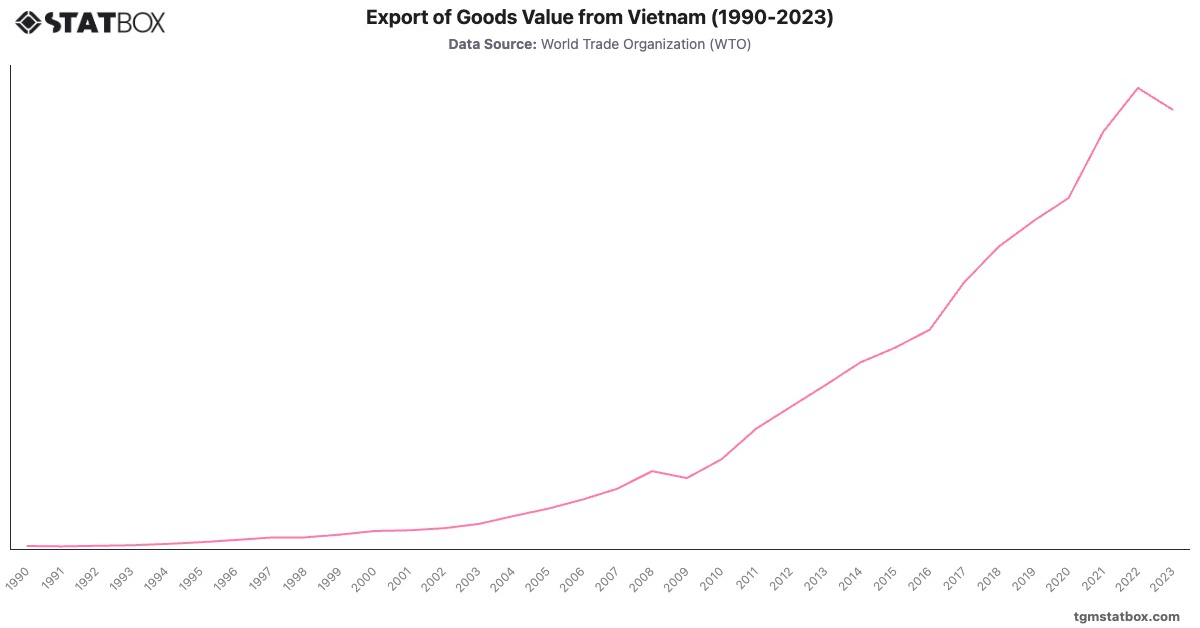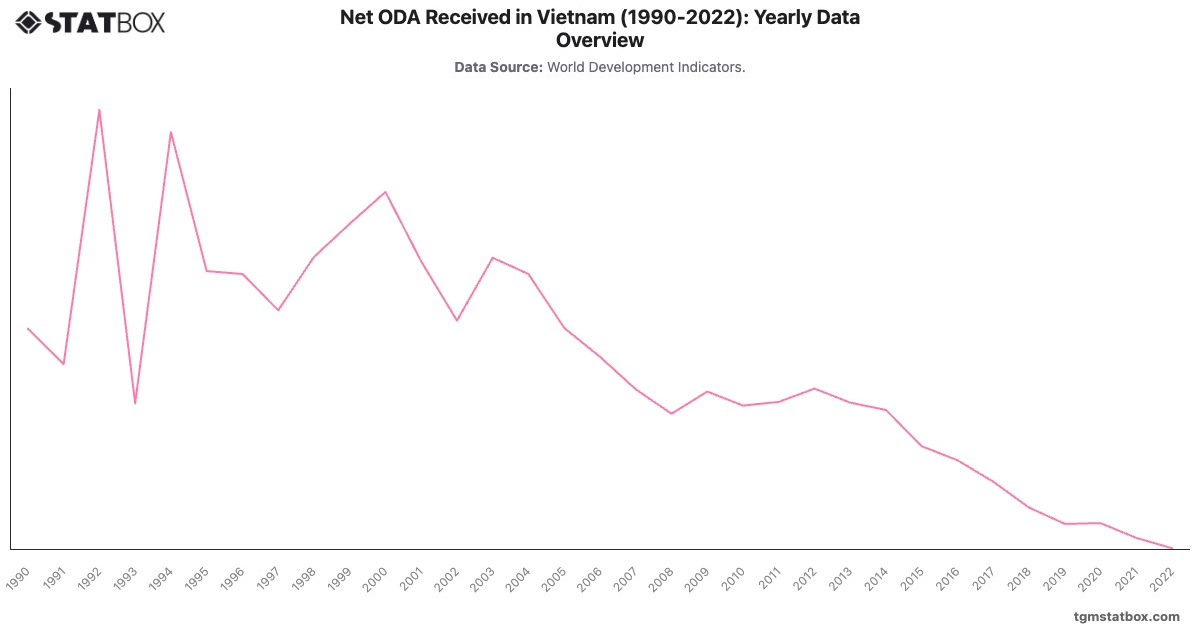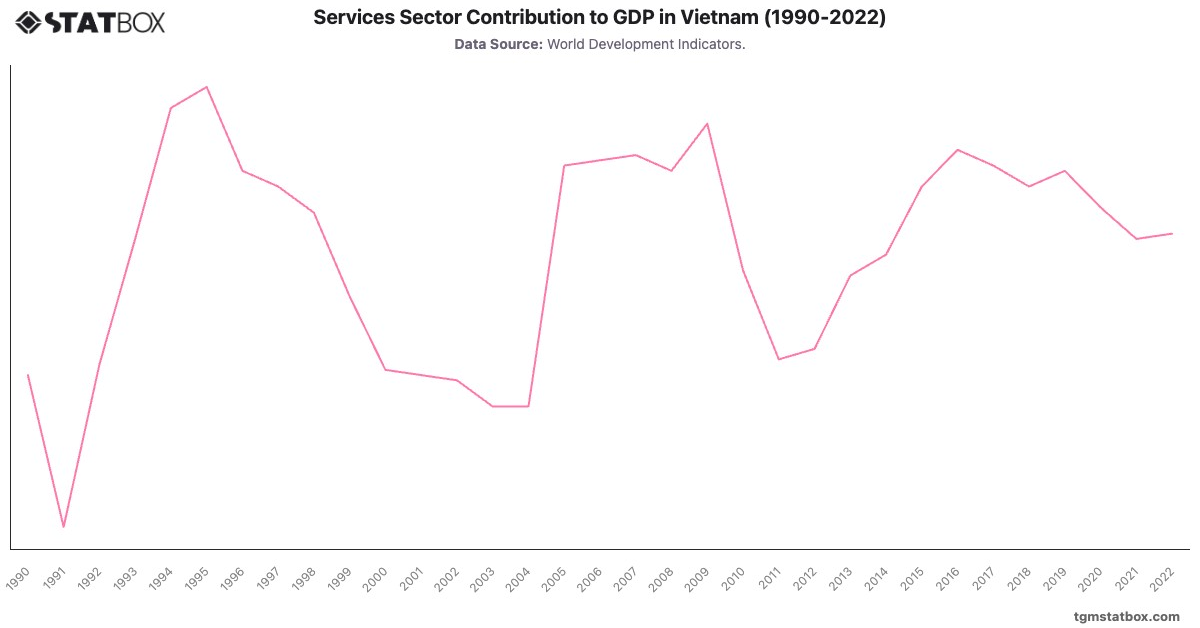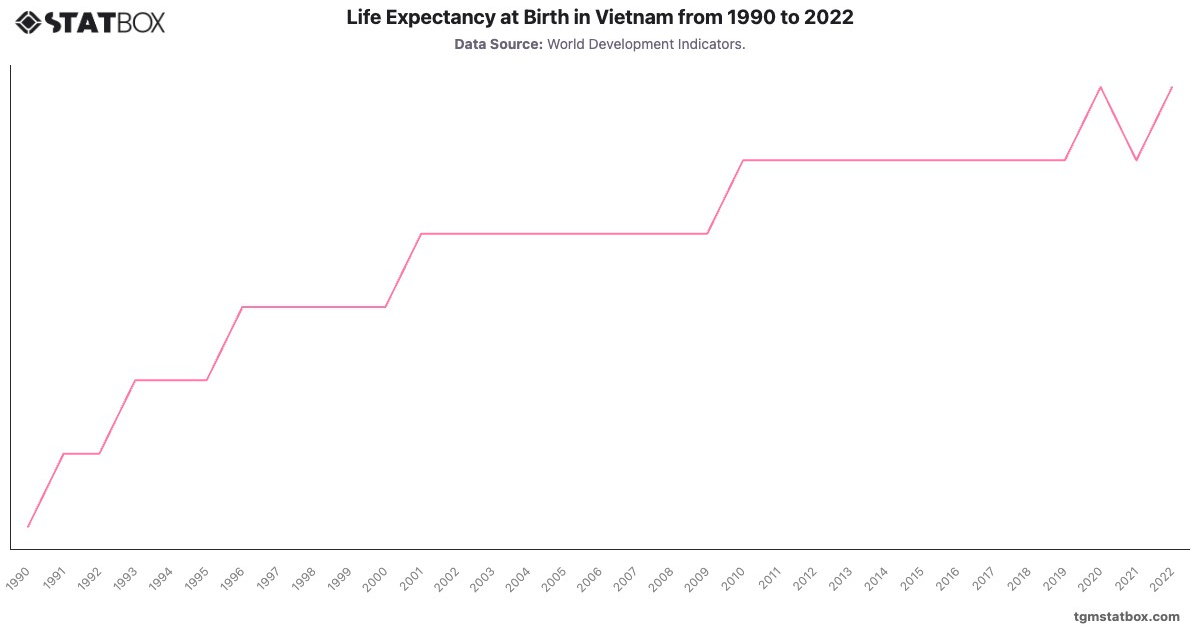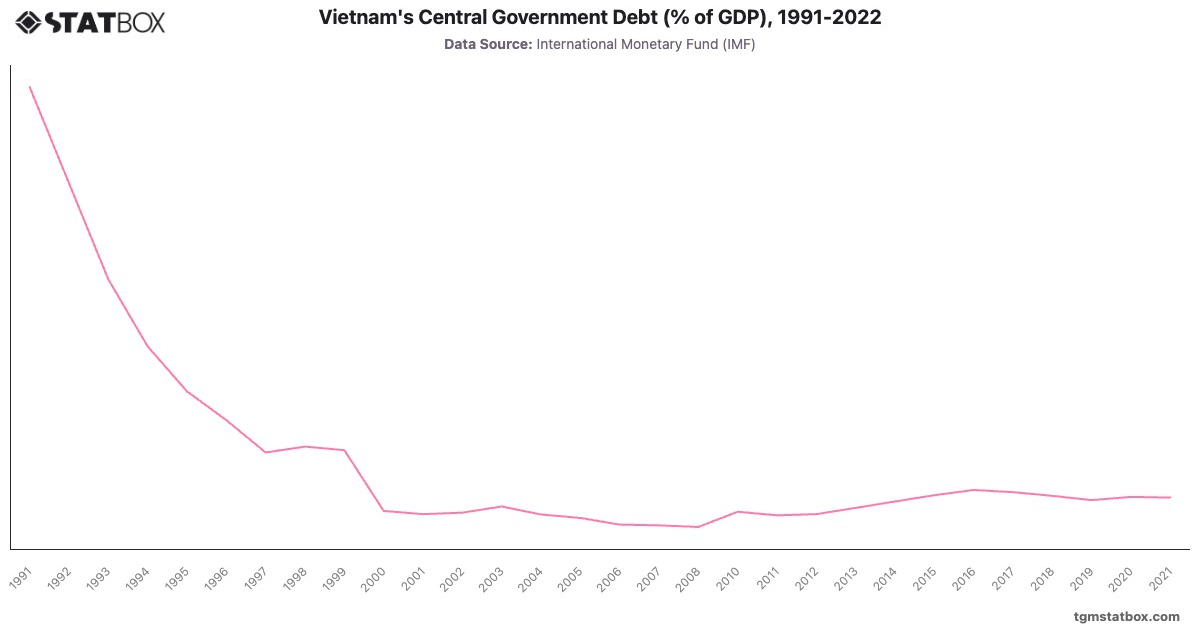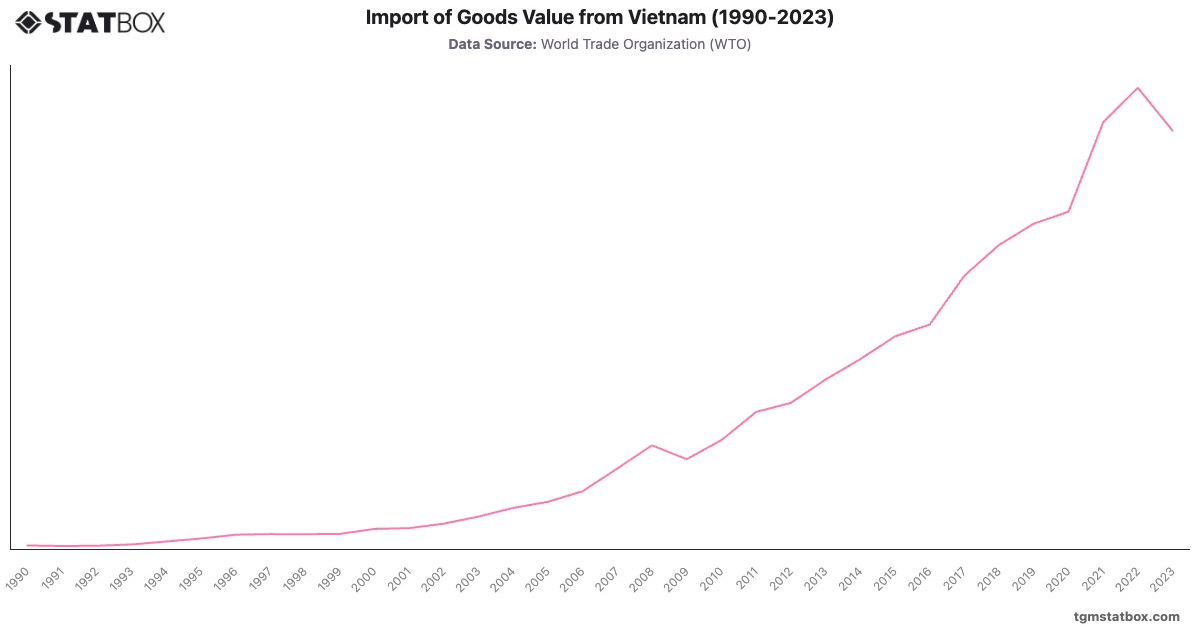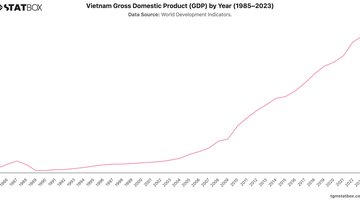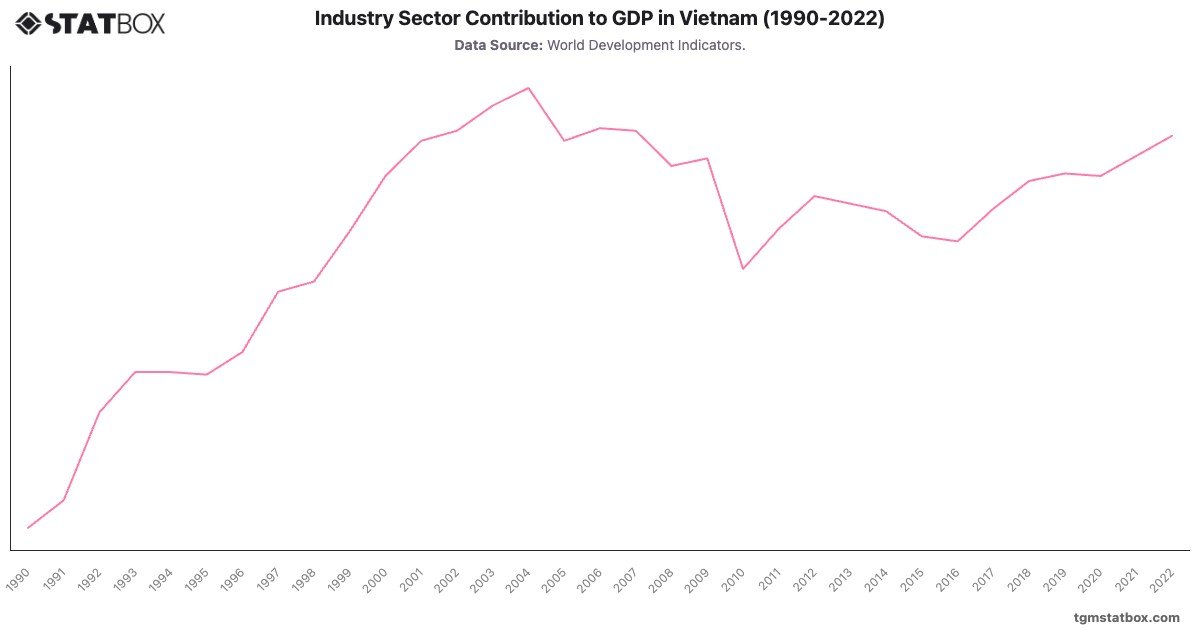
Vietnam’s industry sector contribution has consistently grown, starting at in 1990 and reaching by 2022. This growth is largely attributed to Vietnam’s transformation into a manufacturing hub, supported by foreign direct investment and trade liberalization. Significant increases occurred from the mid-1990s through the 2000s as Vietnam became integrated into global supply chains, especially in electronics and textiles.
The sector’s growth slowed briefly after the 2008 financial crisis but resumed its upward trend, supported by investments in infrastructure and a favorable business environment. By 2022, Vietnam’s industry sector continued to thrive, driven by its position as an alternative manufacturing base to China. The industry remains a key pillar of Vietnam’s economy, with continued growth expected as the country expands its capabilities in electronics, machinery, and high-tech manufacturing.
The sector’s growth slowed briefly after the 2008 financial crisis but resumed its upward trend, supported by investments in infrastructure and a favorable business environment. By 2022, Vietnam’s industry sector continued to thrive, driven by its position as an alternative manufacturing base to China. The industry remains a key pillar of Vietnam’s economy, with continued growth expected as the country expands its capabilities in electronics, machinery, and high-tech manufacturing.
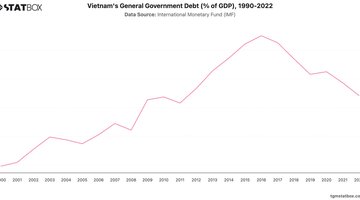
For a deeper dive into the topic, explore Vietnam’s annual GDP value, Vietnam’s government debt ratio, Vietnam’s annual GDP growth rate.