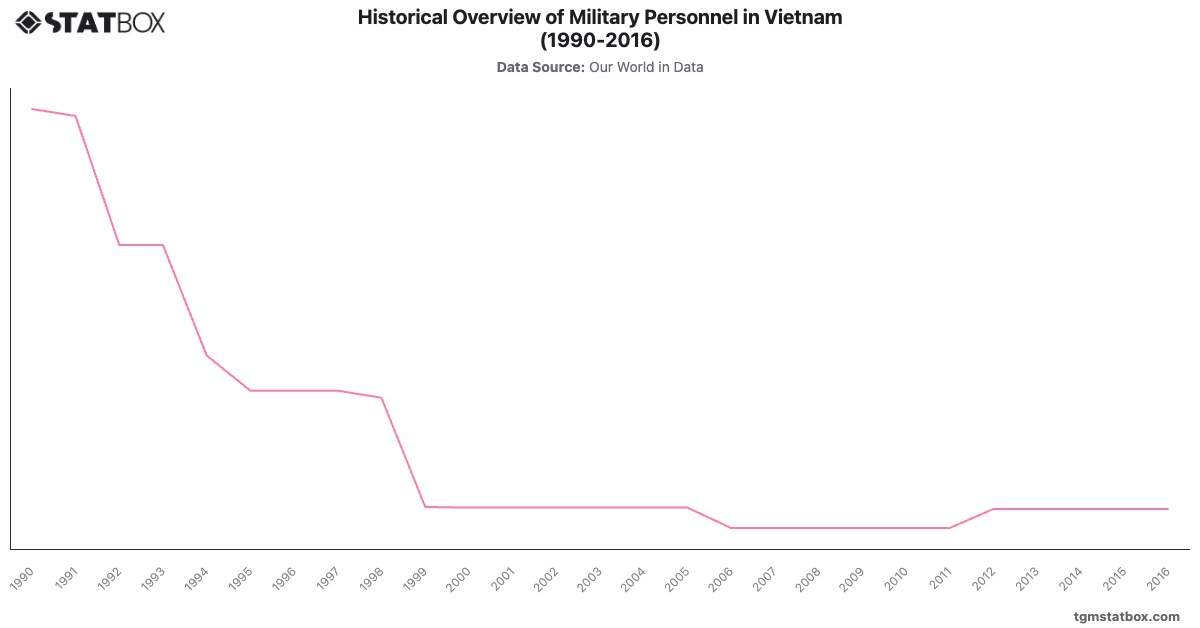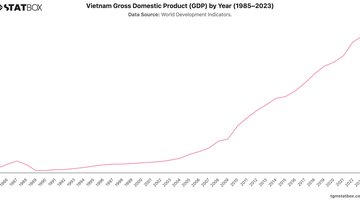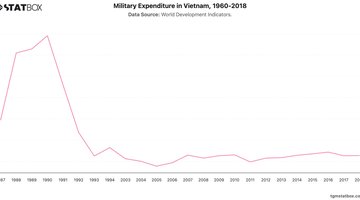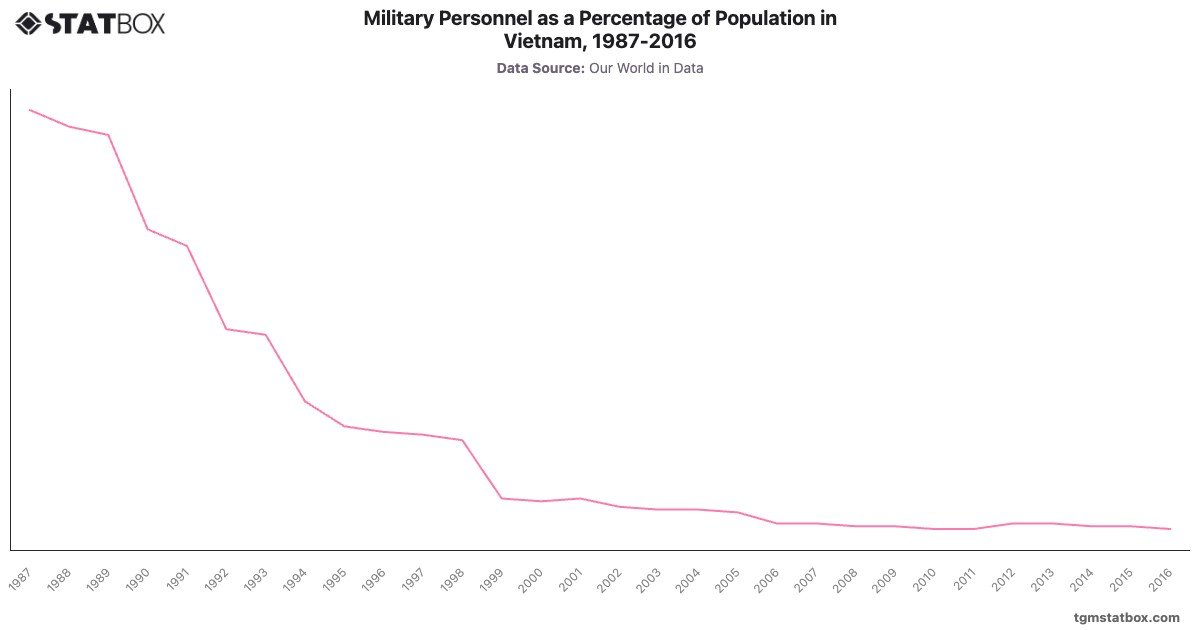
Vietnam experienced a significant reduction in military personnel as a percentage of its population from in 1987 to by 2016. This marked decrease aligns with Vietnam's transition toward economic reforms under Đổi Mới, encouraging urbanization and economic liberalization that drew focus away from military growth. The country’s urban population expanded rapidly, reshaping the workforce and contributing to the gradual decline in the military's share of the total population.
Post-1990, as Vietnam pursued integration into the global economy, military personnel ratios stabilized at in the 2000s. This period reflects a steady balance between maintaining military capacity and supporting economic development, as Vietnam shifted resources to sectors that fueled industrial and urban expansion while maintaining a leaner, more sustainable defense structure.
Post-1990, as Vietnam pursued integration into the global economy, military personnel ratios stabilized at in the 2000s. This period reflects a steady balance between maintaining military capacity and supporting economic development, as Vietnam shifted resources to sectors that fueled industrial and urban expansion while maintaining a leaner, more sustainable defense structure.
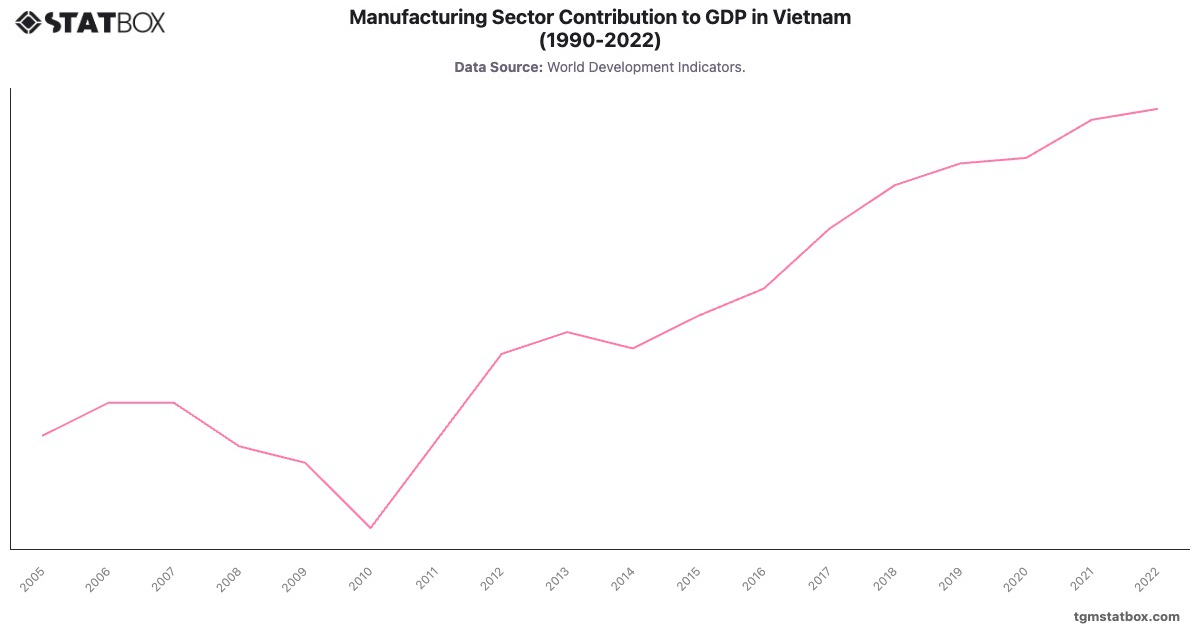
For additional information, visit statistics on Vietnam’s military personnel count, Vietnam’s working-age population share, Vietnam’s manufacturing sector share in GDP.