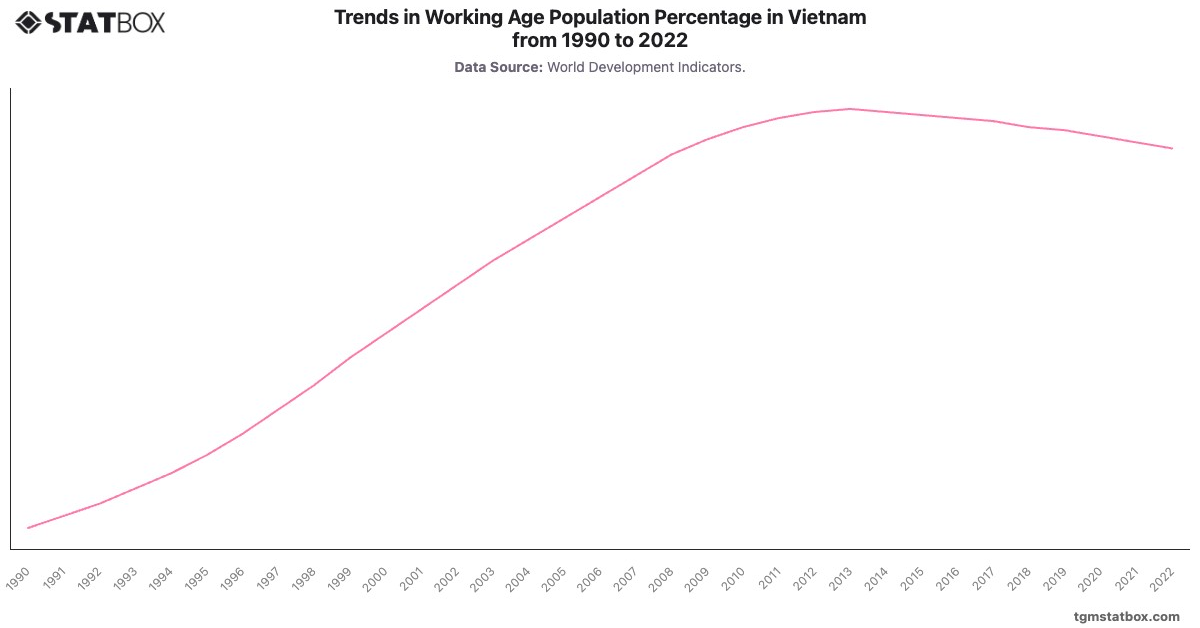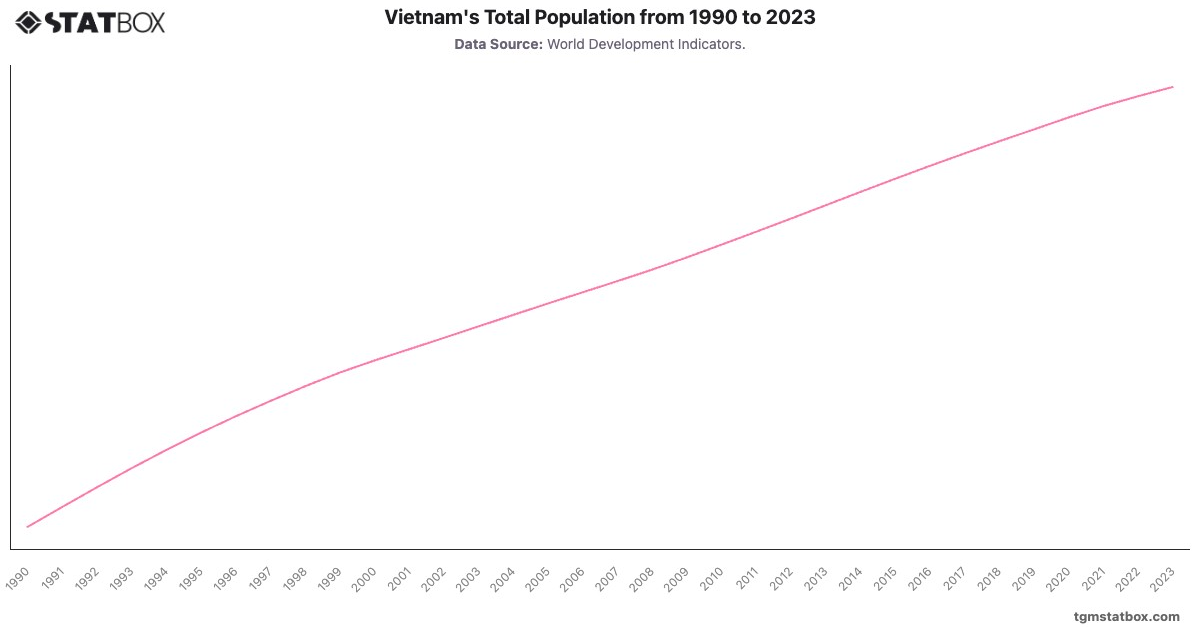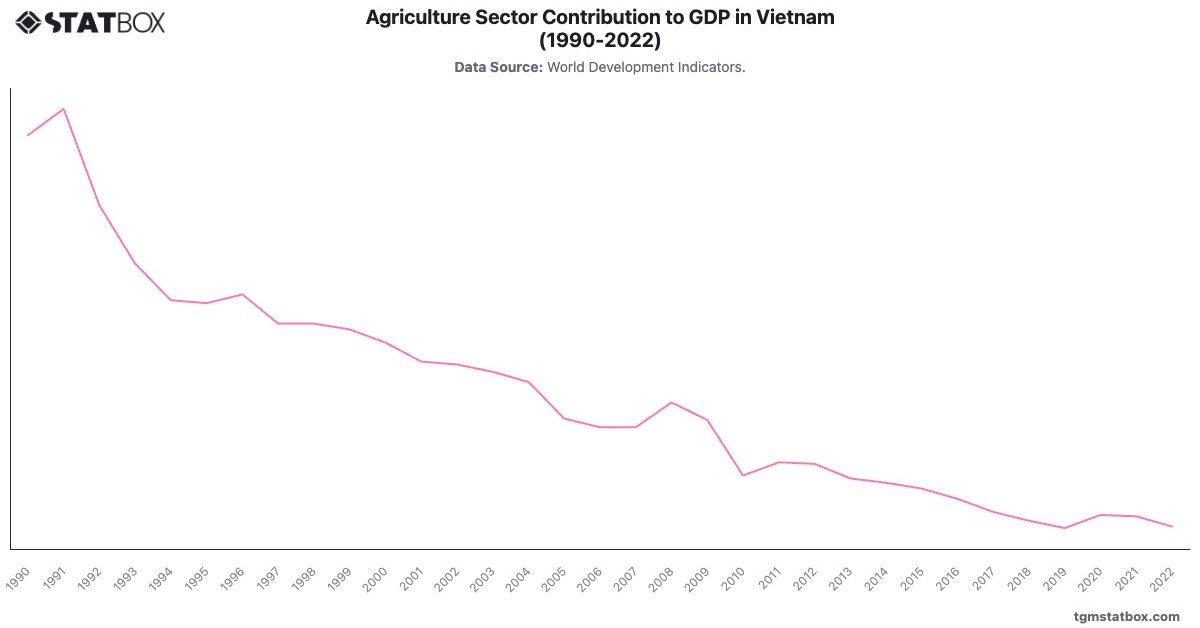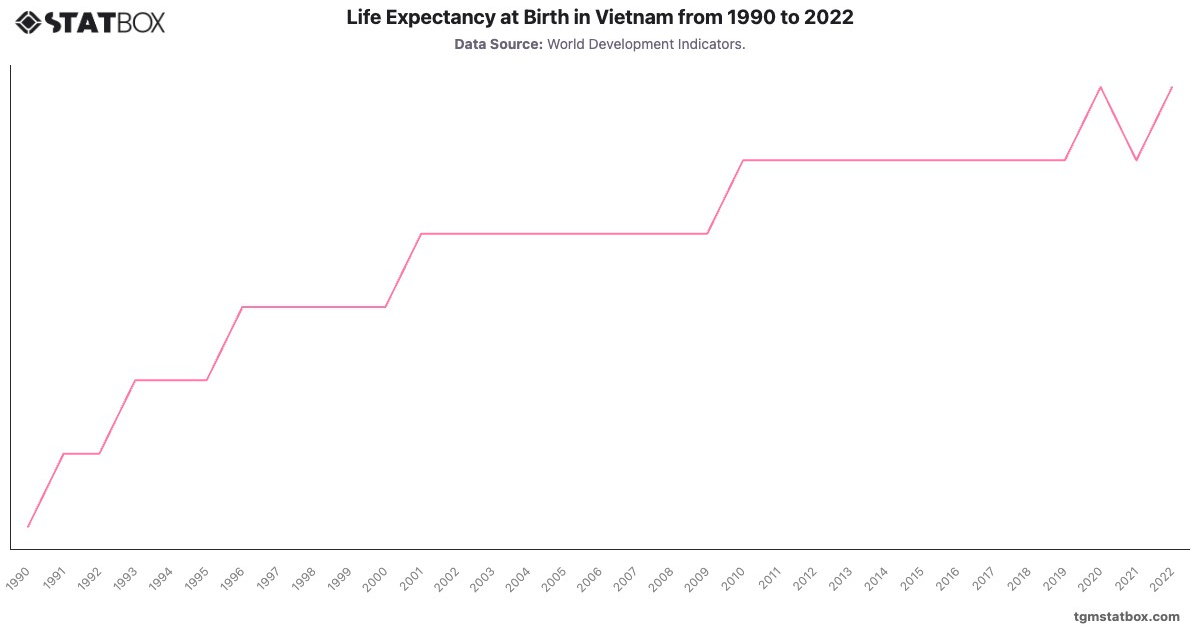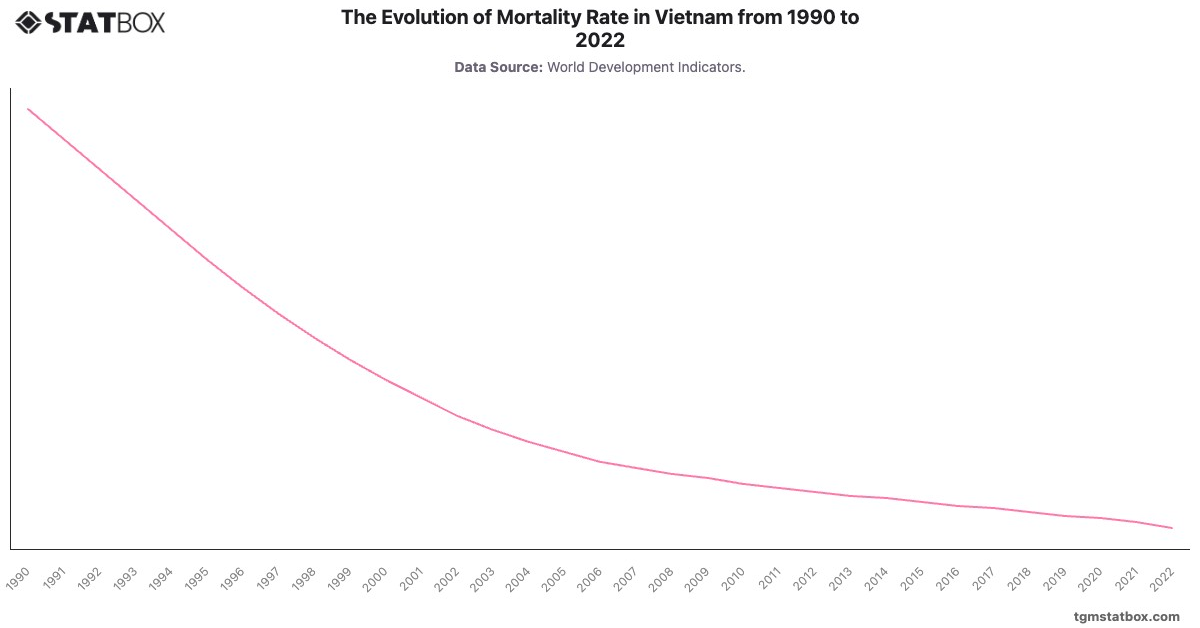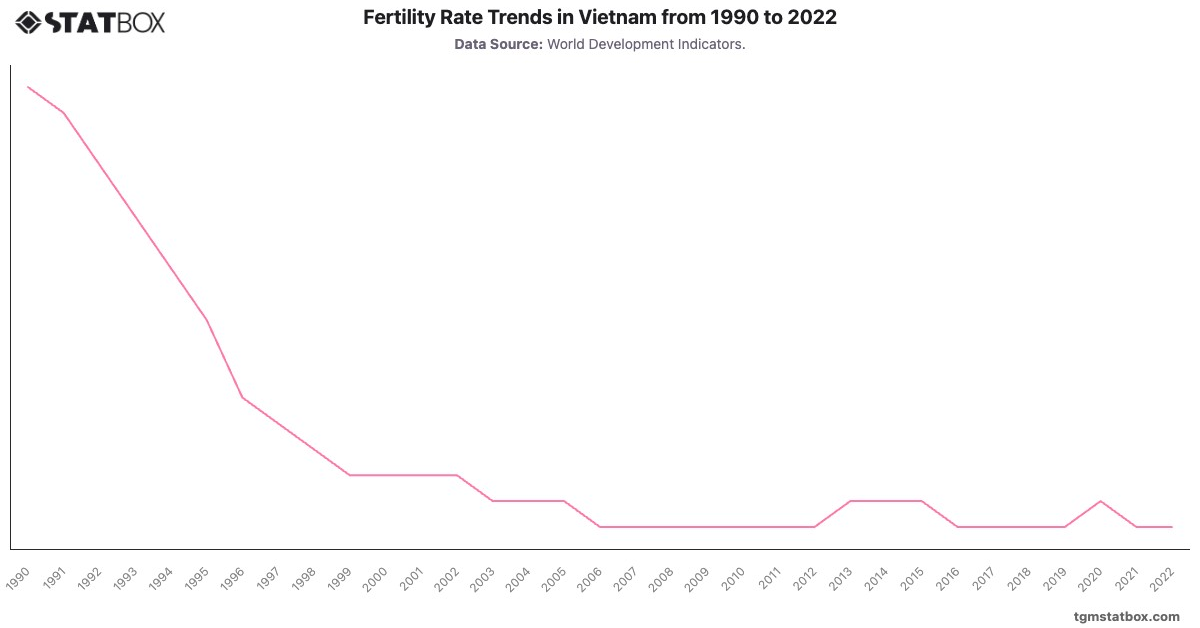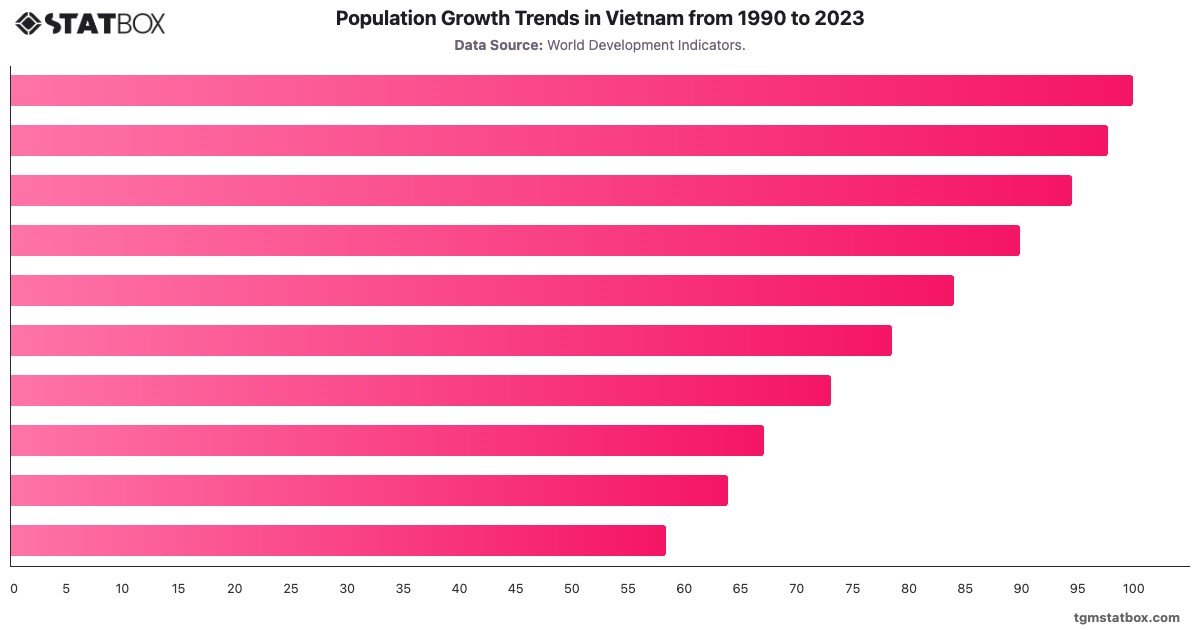
Vietnam’s population growth rate steadily declined over the decades as the country transitioned from high fertility rates to a more stabilized demographic profile. The early 1990s recorded growth rates above , reflecting the country's post-war recovery and high birth rates. However, by 2000, the rate fell to , reflecting effective government-led family planning policies.
From 2001 to 2019, the growth rate plateaued around , as urbanization and economic modernization encouraged smaller family sizes. Post-2020, the rate declined further to by 2023, partly due to the aging population and emigration trends. These changes underscore Vietnam's ongoing demographic shift towards a lower-growth, aging society, requiring adjustments in workforce and economic policies.
From 2001 to 2019, the growth rate plateaued around , as urbanization and economic modernization encouraged smaller family sizes. Post-2020, the rate declined further to by 2023, partly due to the aging population and emigration trends. These changes underscore Vietnam's ongoing demographic shift towards a lower-growth, aging society, requiring adjustments in workforce and economic policies.
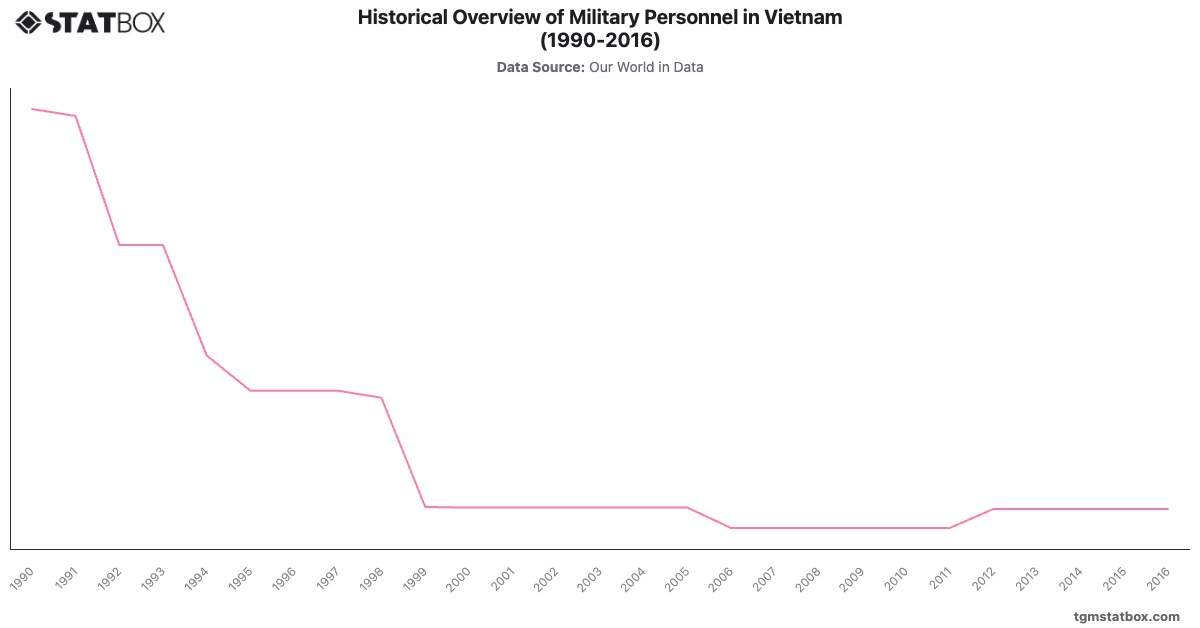
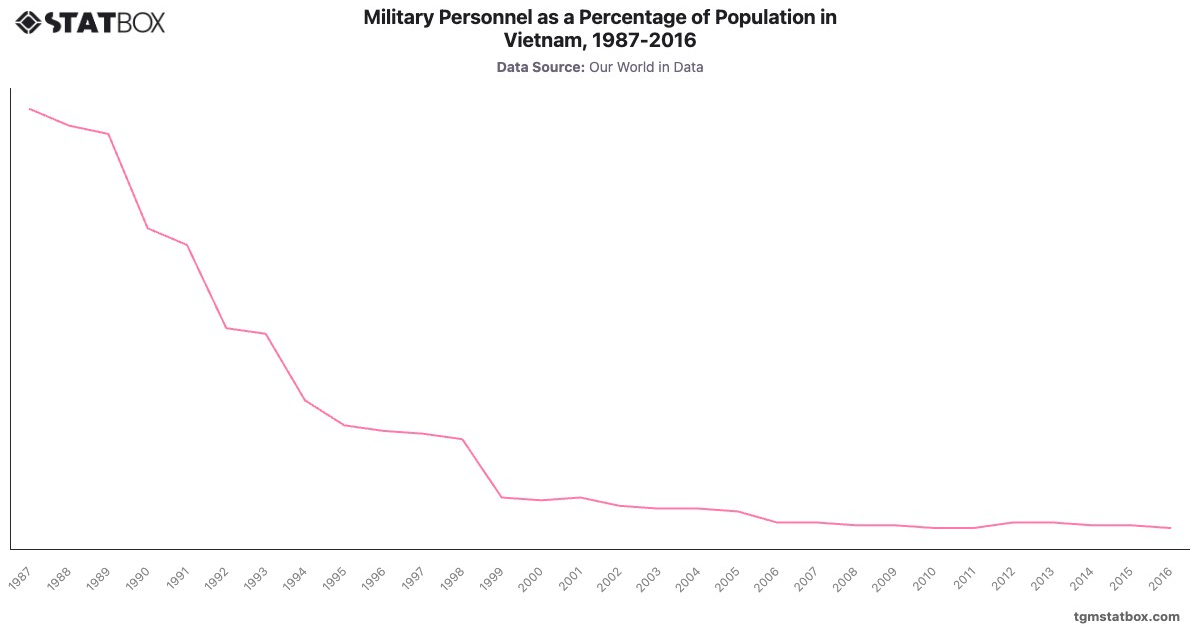
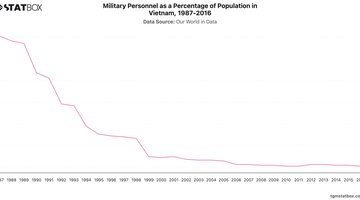
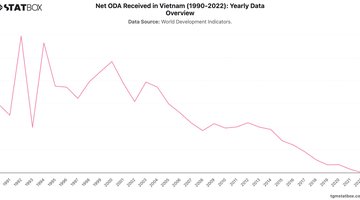
Gain a broader perspective by reviewing Vietnam’s annual net ODA figure, Vietnam’s annual GDP growth rate, Vietnam’s military personnel percentage.