Australia Gross Domestic Product (GDP) by Year (1961–2023)
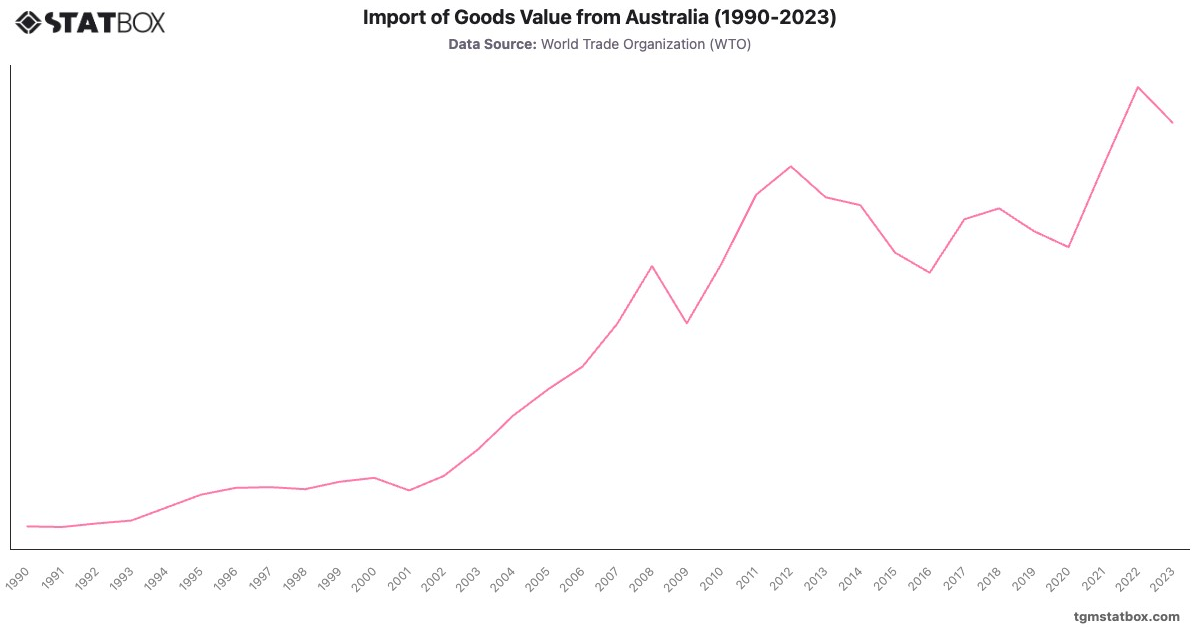
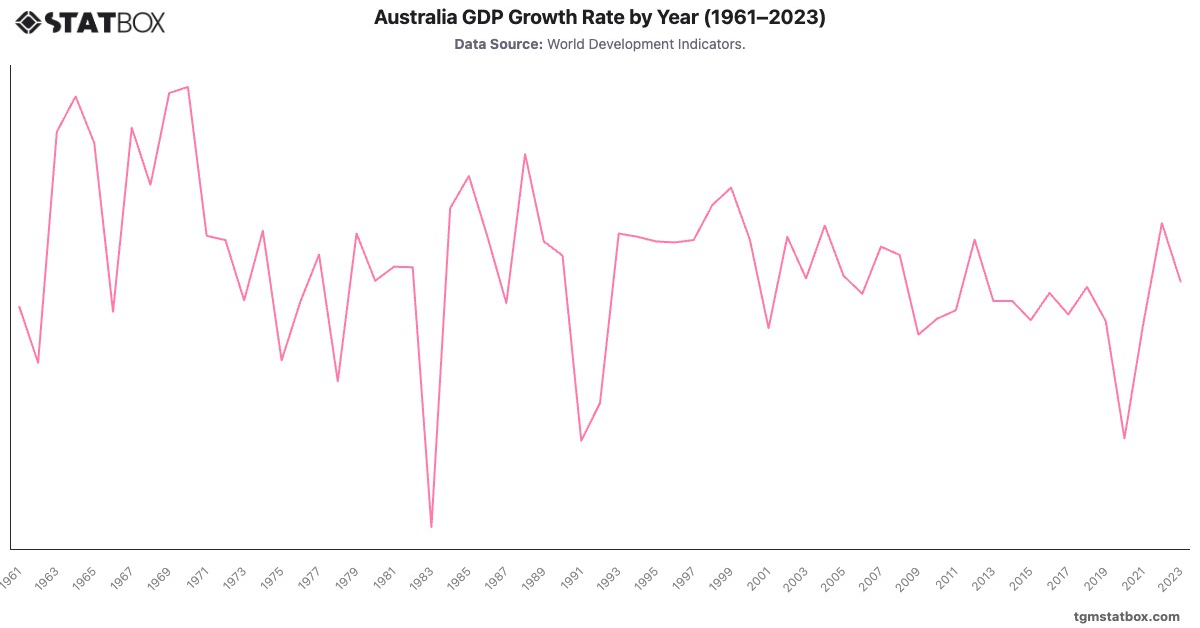
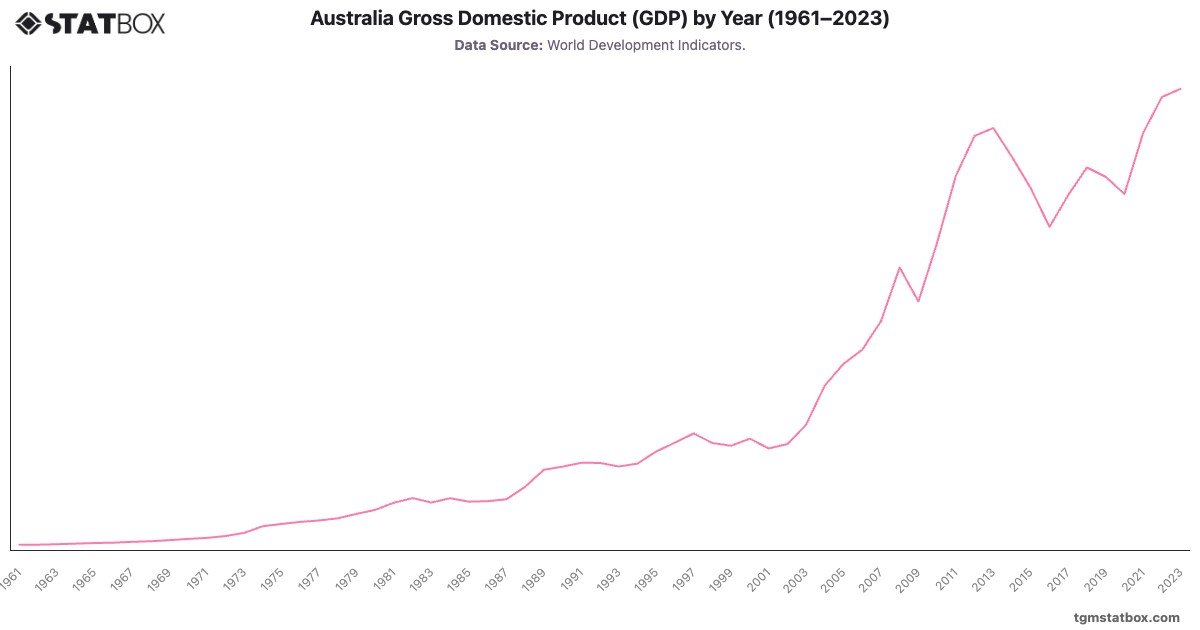
Australia's economic journey over the decades reflects its status as one of the most developed and resource-rich countries. Beginning with a GDP of nearly $20 billion in 1961, the nation's economy expanded considerably, surpassing the $1 trillion mark by the early 2010s. Key drivers of this growth include Australia’s natural resource exports, particularly in mining and energy, and the global demand for commodities like iron ore and coal.
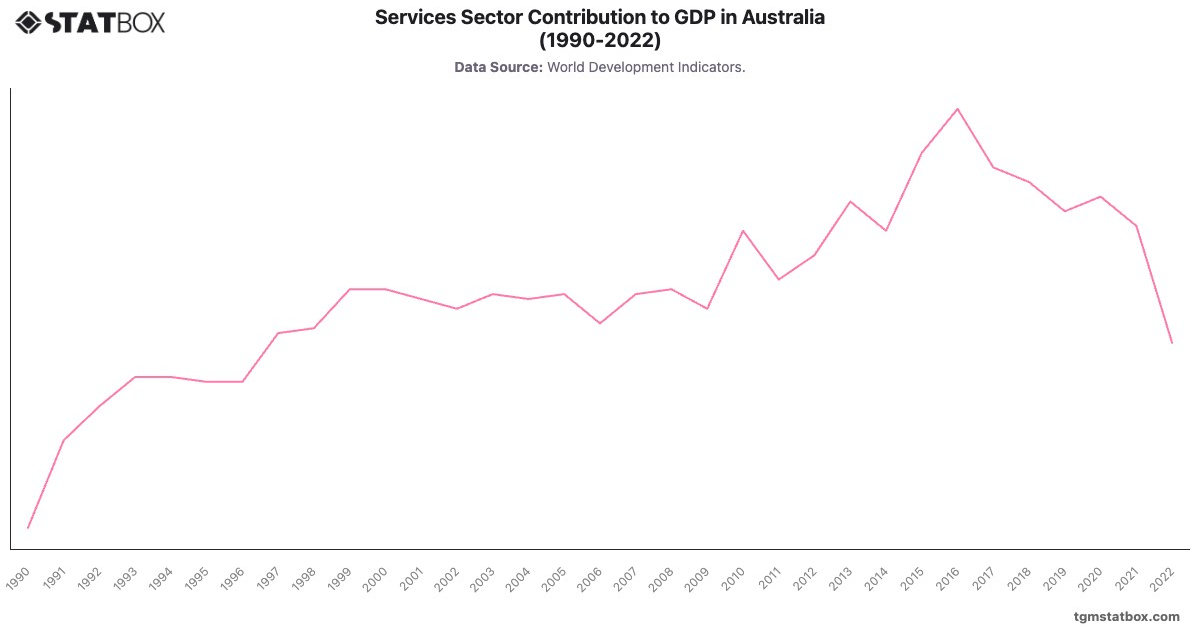
Australia’s strong ties with major trading partners like China and Japan, as well as its robust service sector, have also played a critical role in sustaining economic resilience amidst external shocks. In 2023, the GDP peaked at over $1.72 trillion, demonstrating the country's ability to recover from economic downturns and adapt to global economic shifts.
Australia's economic journey over the decades reflects its status as one of the most developed and resource-rich countries. Beginning with a GDP of nearly $20 billion in 1961, the nation's economy expanded considerably, surpassing the $1 trillion mark by the early 2010s. Key drivers of this growth include Australia’s natural resource exports, particularly in mining and energy, and the global demand for commodities like iron ore and coal.
Australia’s strong ties with major trading partners like China and Japan, as well as its robust service sector, have also played a critical role in sustaining economic resilience amidst external shocks. In 2023, the GDP peaked at over $1.72 trillion, demonstrating the country's ability to recover from economic downturns and adapt to global economic shifts.
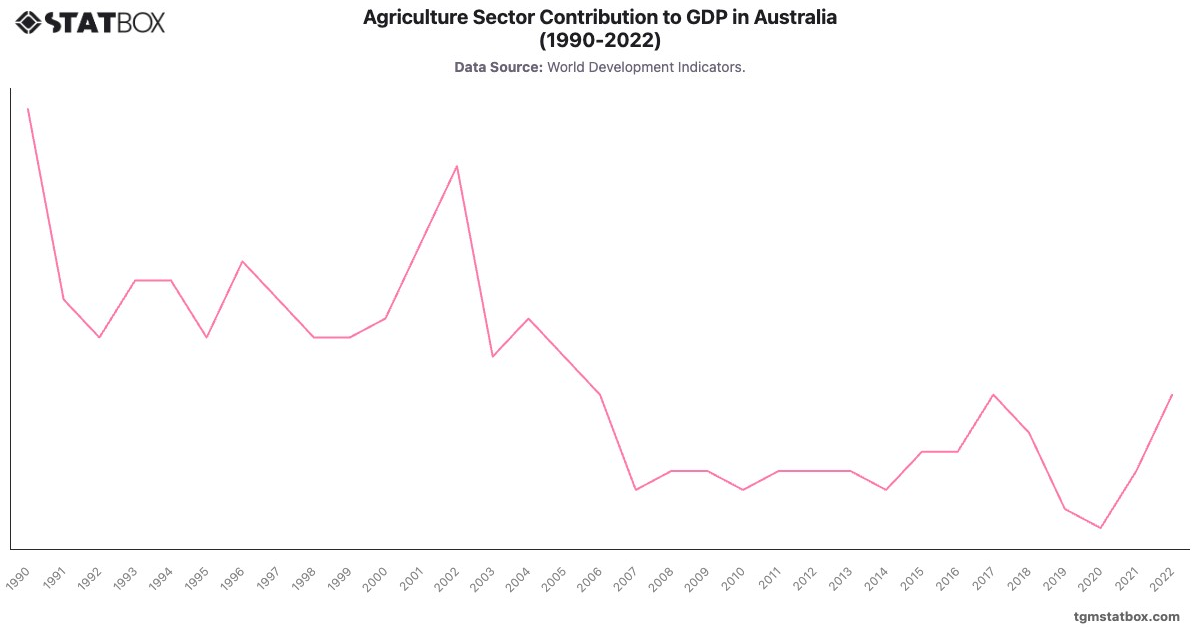
Discover additional trends and data on Australia’s goods trade balance overview, Australia’s agriculture sector GDP share, Australia’s goods export value.