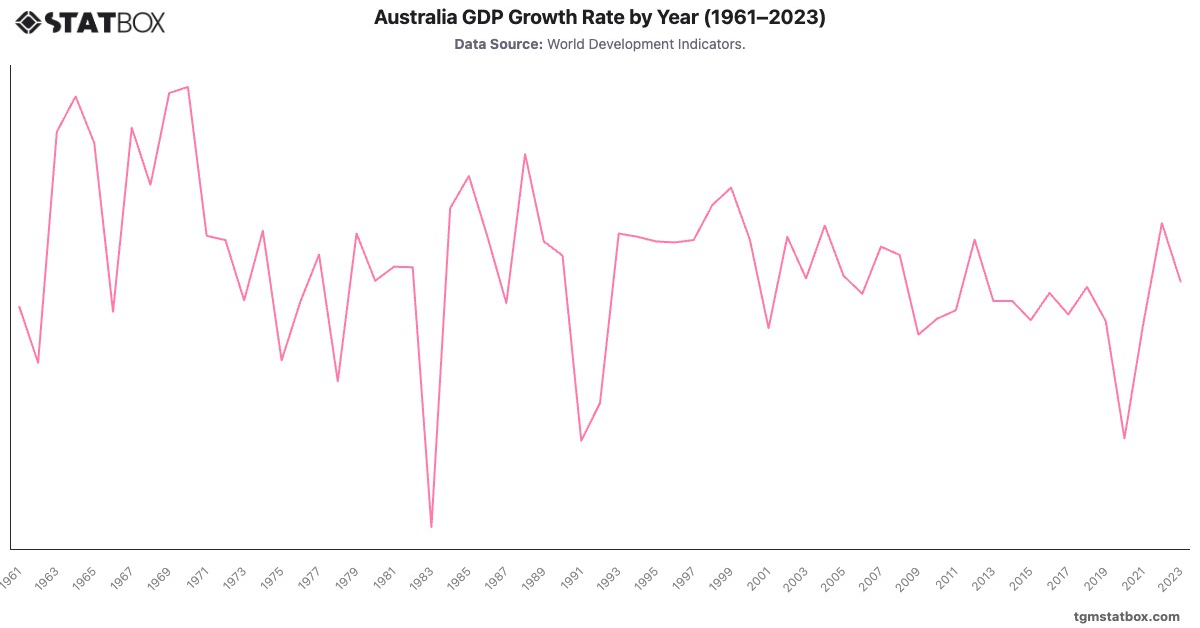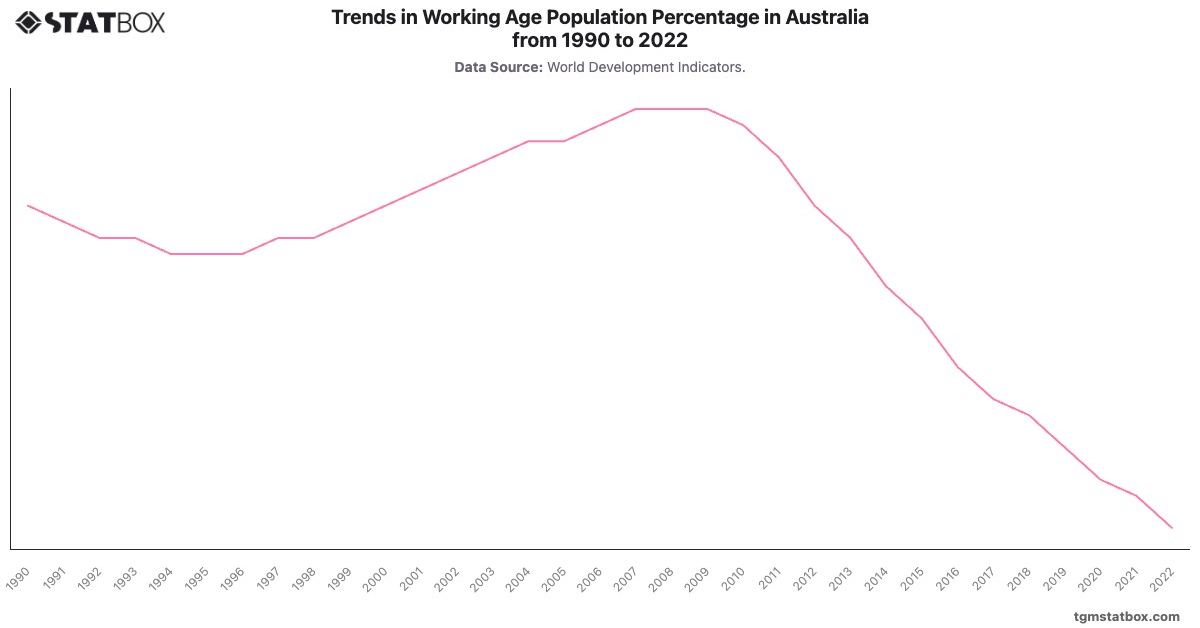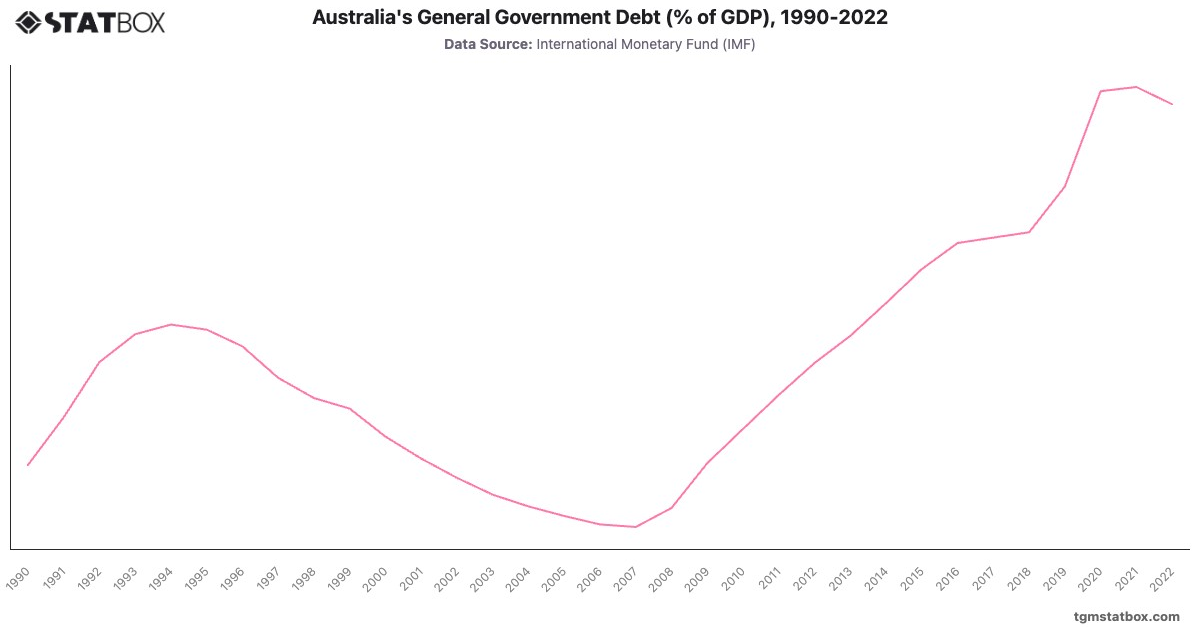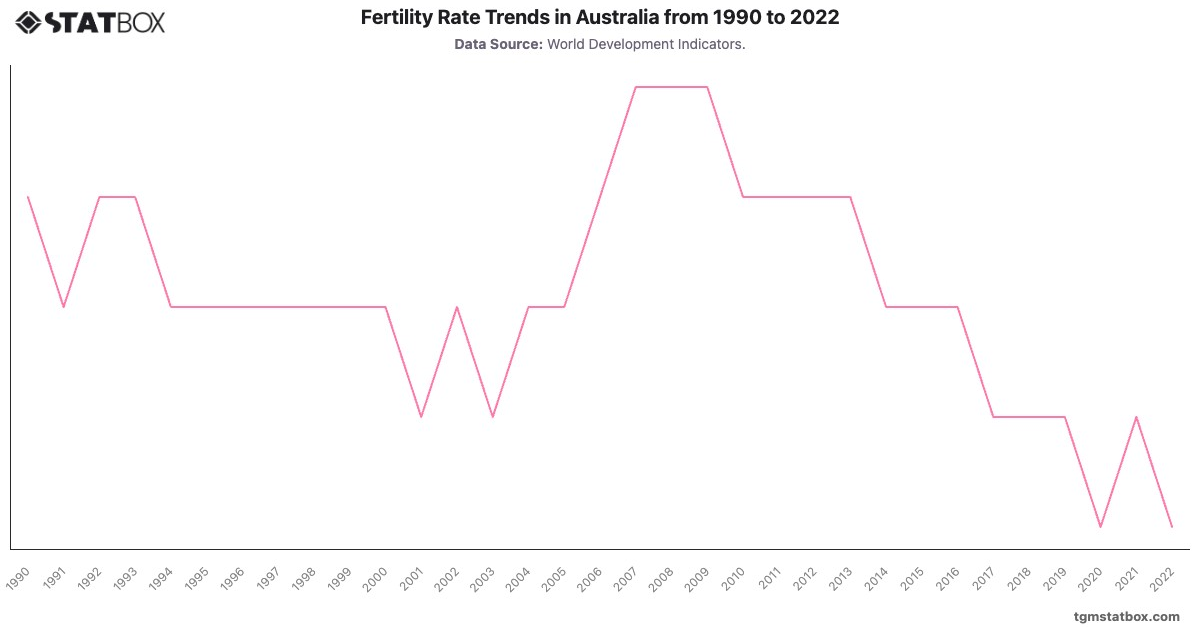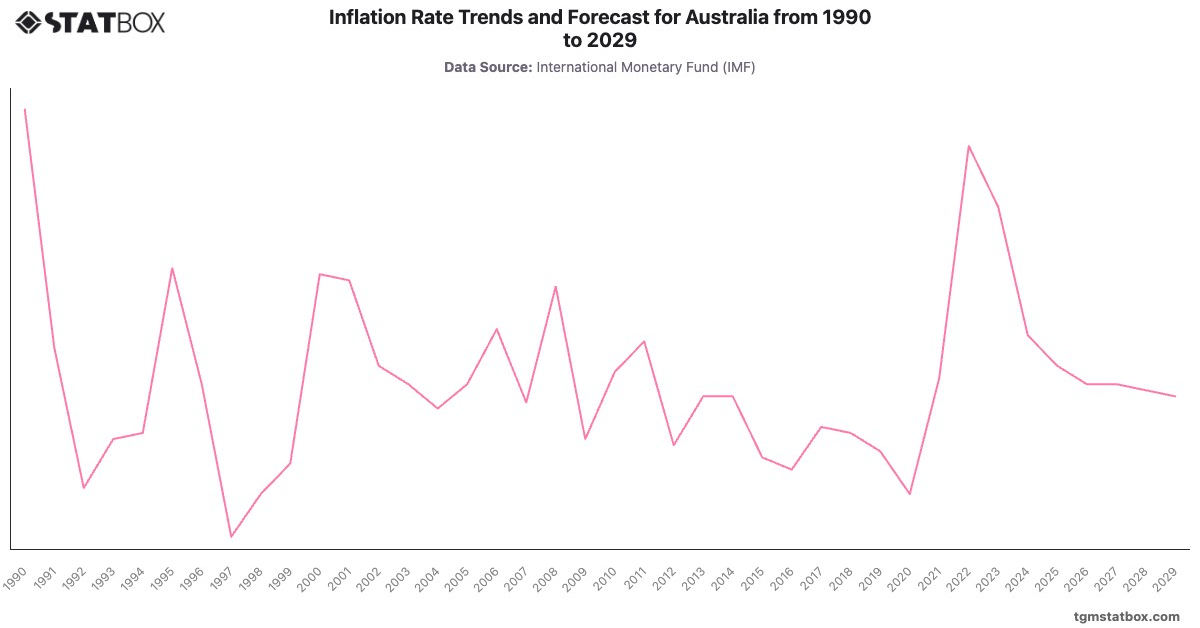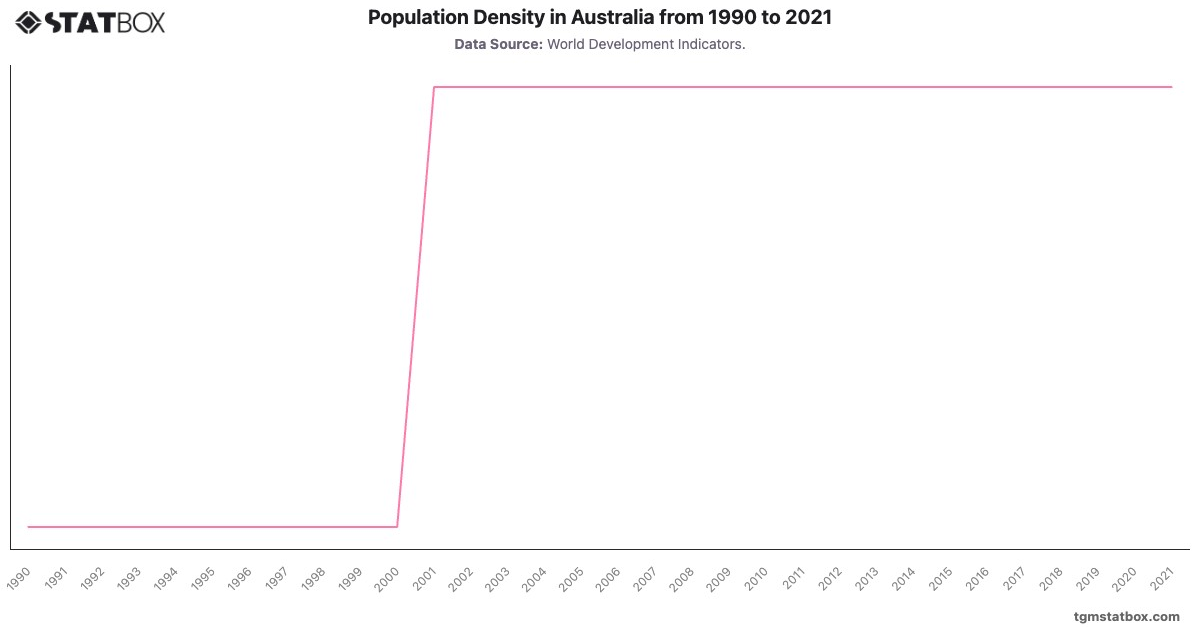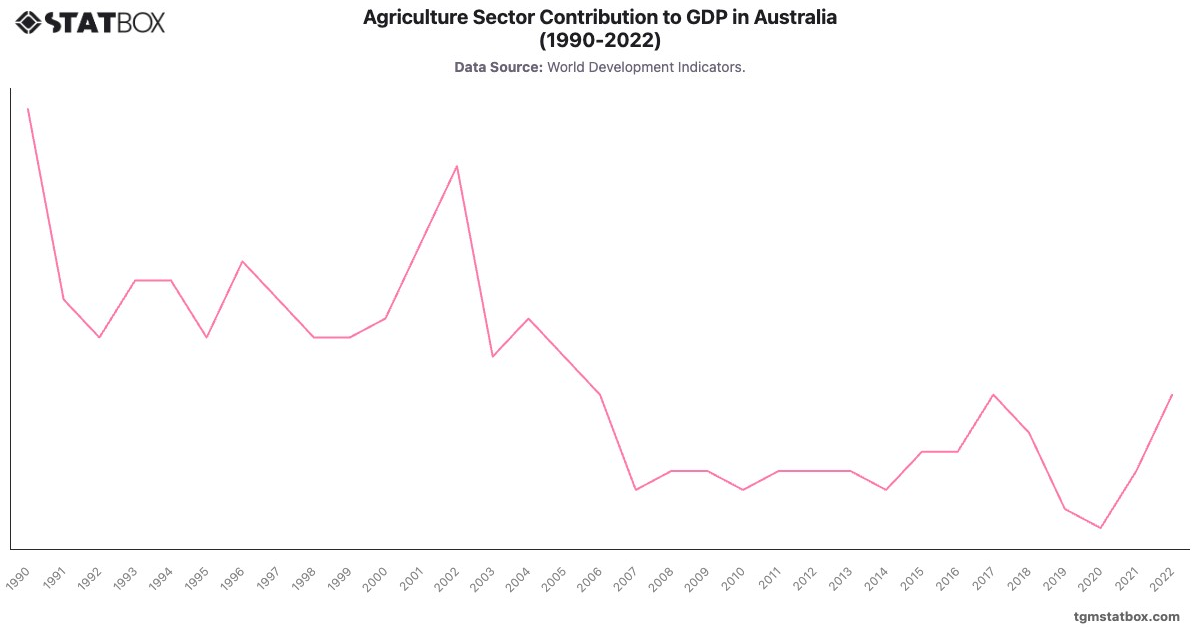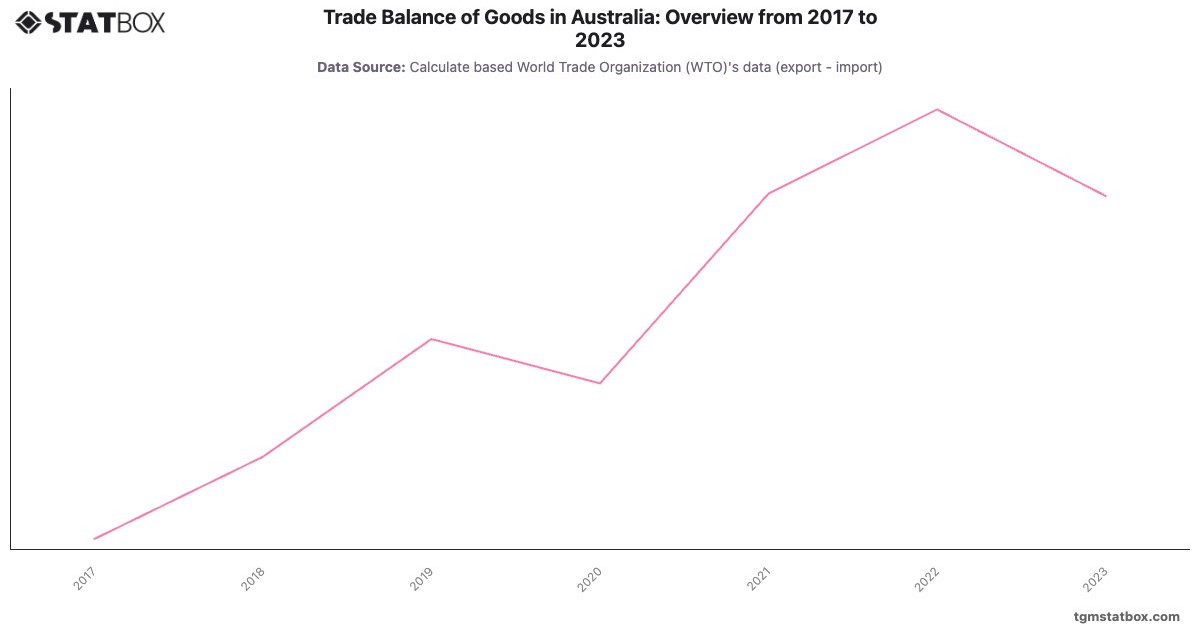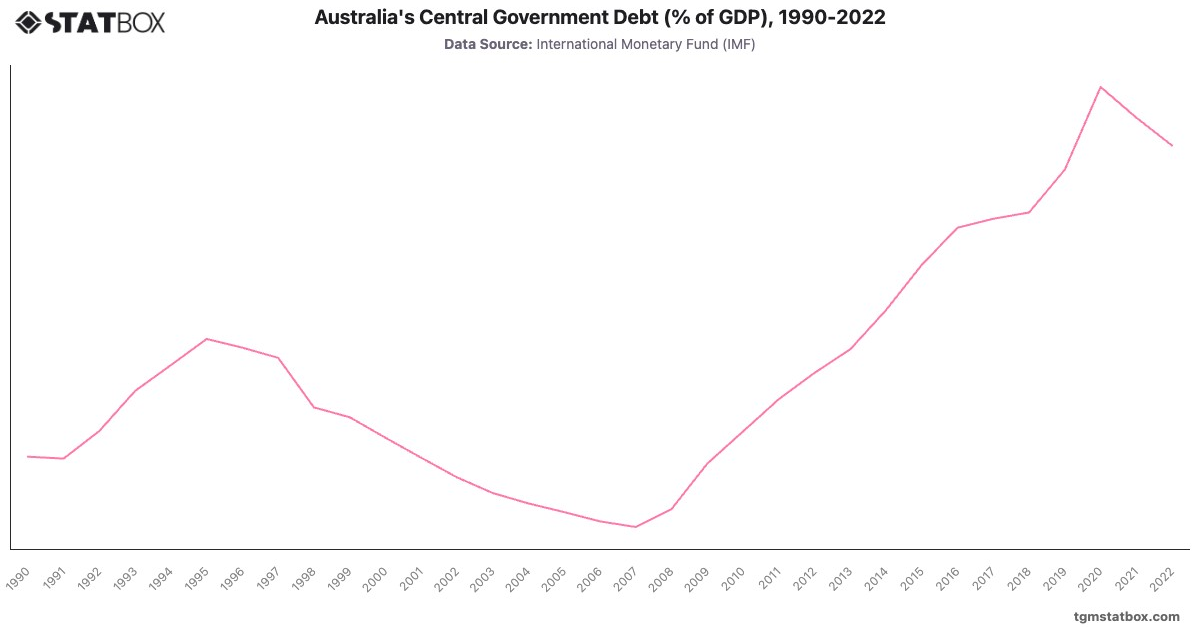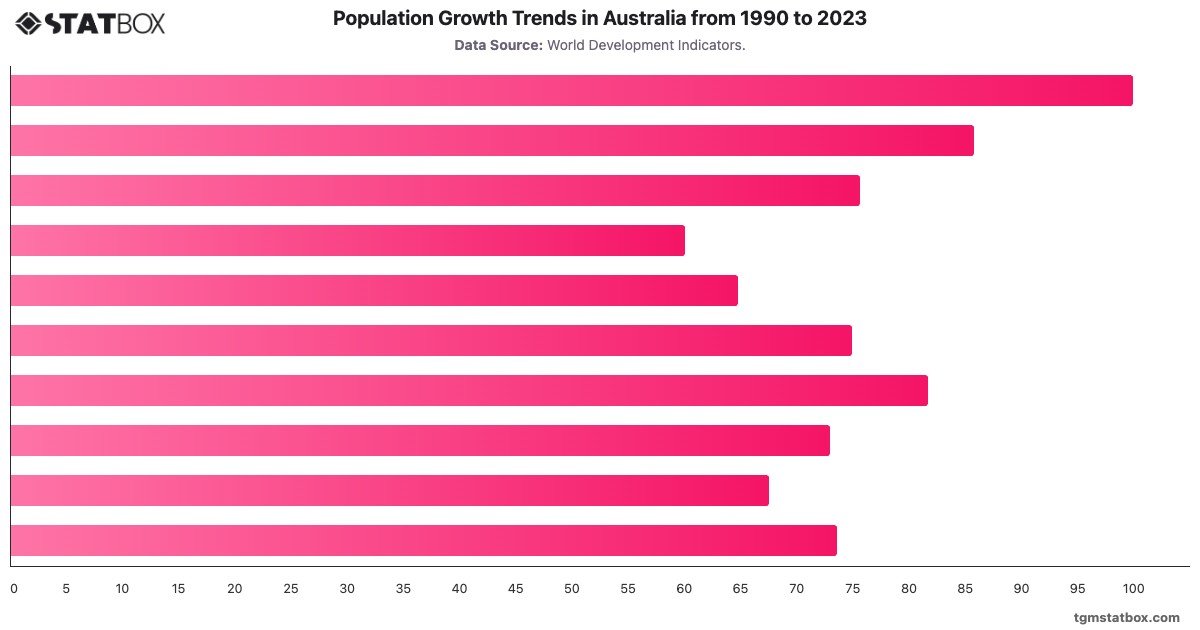
In the early 1990s, Australia’s growth rate declined from in 1990 to in 1993 due to a recession, which slowed migration and natural population increase. Recovery followed in the mid-1990s as growth returned to around -, reflecting policy adjustments to attract skilled migrants.
The late 2000s marked a peak period, with growth surging to in 2009 as Australia’s economy remained resilient during the global financial crisis, positioning it as an attractive destination for immigrants. Post-crisis, growth rates stabilized between and through the 2010s, supported by continued migration and favorable economic conditions.
In 2021, growth dropped sharply to , primarily due to COVID-19 restrictions that limited immigration and natural increase. However, by 2023, Australia experienced a substantial rebound to as borders reopened and immigration resumed, highlighting the country’s dependence on migration for sustained population growth.
The late 2000s marked a peak period, with growth surging to in 2009 as Australia’s economy remained resilient during the global financial crisis, positioning it as an attractive destination for immigrants. Post-crisis, growth rates stabilized between and through the 2010s, supported by continued migration and favorable economic conditions.
In 2021, growth dropped sharply to , primarily due to COVID-19 restrictions that limited immigration and natural increase. However, by 2023, Australia experienced a substantial rebound to as borders reopened and immigration resumed, highlighting the country’s dependence on migration for sustained population growth.
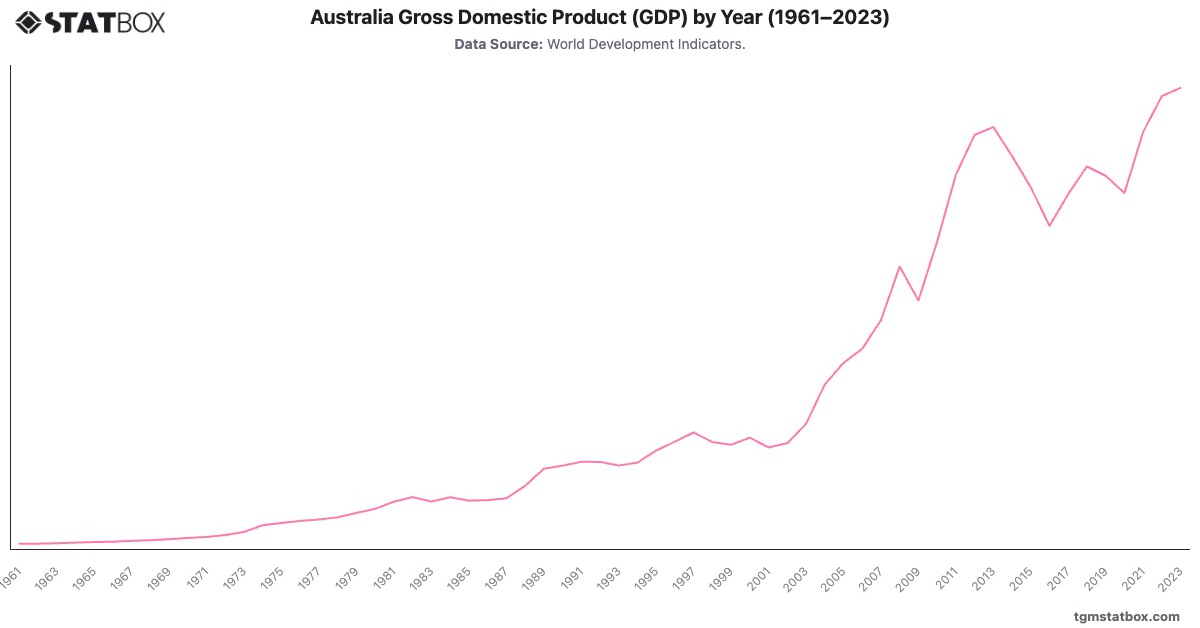
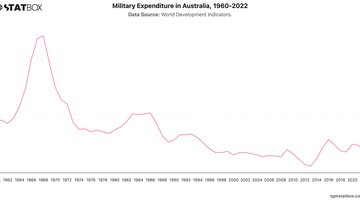
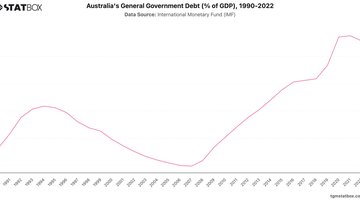
Find out more through related statistics on Australia’s urban population growth, Australia’s annual GDP, Australia’s military spending.