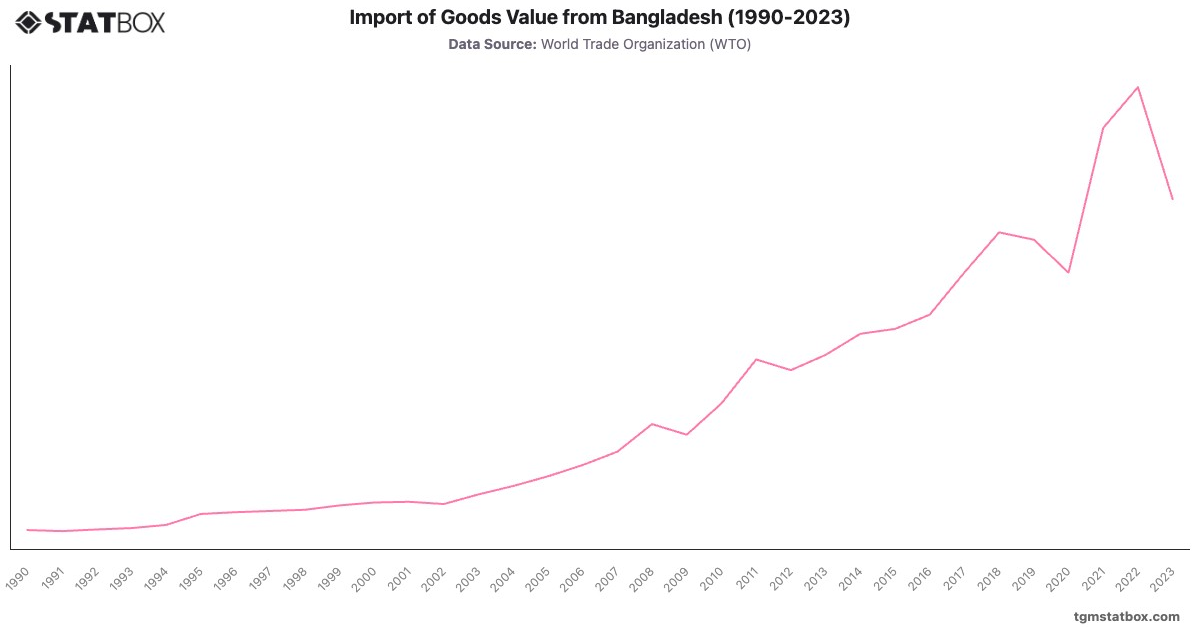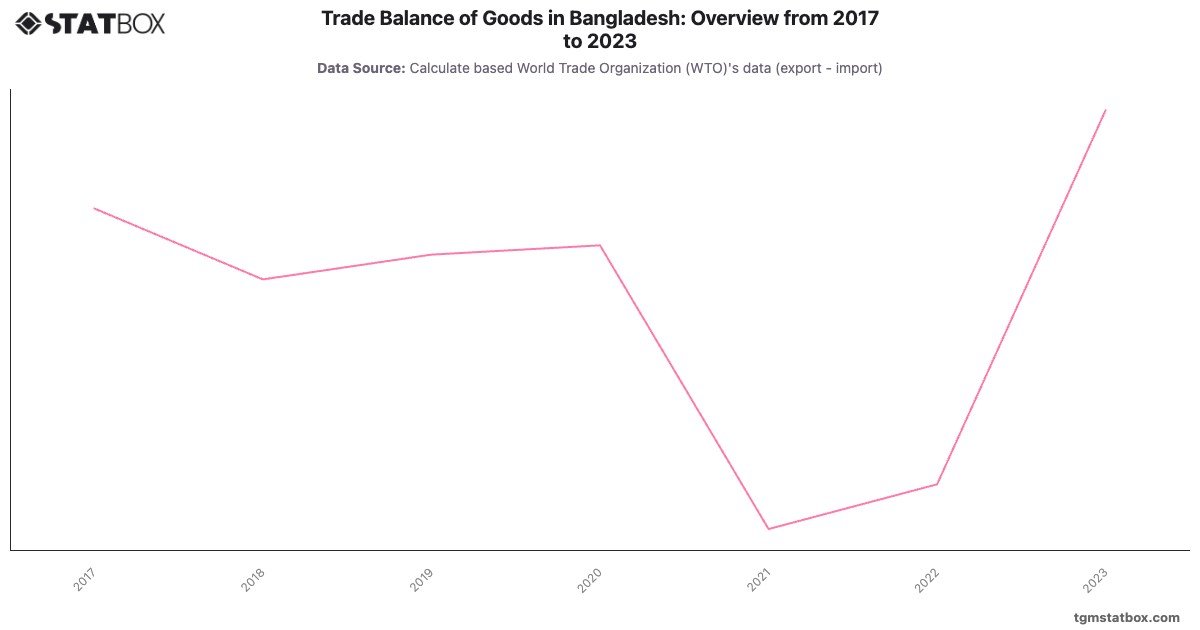
Bangladesh's trade balance of goods consistently remained in deficit throughout the period, reflecting its import-driven economy. The deficit widened significantly from -16,985.3 million USD in 2017 to a peak of -36,225.0 million USD in 2021, primarily driven by increased imports of raw materials, energy, and capital goods necessary to support the rapidly growing industrial and textile sectors. Rising global commodity prices and pandemic-related disruptions exacerbated the gap during this period.
In 2023, the trade deficit narrowed sharply to -11,074.6 million USD, signaling a potential shift. This improvement can be attributed to a combination of slowing import demand, stricter foreign currency controls, and efforts to boost exports in key sectors like textiles and garments. However, structural issues, including a dependency on imported energy and limited export diversification, continue to influence Bangladesh’s trade balance dynamics.
In 2023, the trade deficit narrowed sharply to -11,074.6 million USD, signaling a potential shift. This improvement can be attributed to a combination of slowing import demand, stricter foreign currency controls, and efforts to boost exports in key sectors like textiles and garments. However, structural issues, including a dependency on imported energy and limited export diversification, continue to influence Bangladesh’s trade balance dynamics.
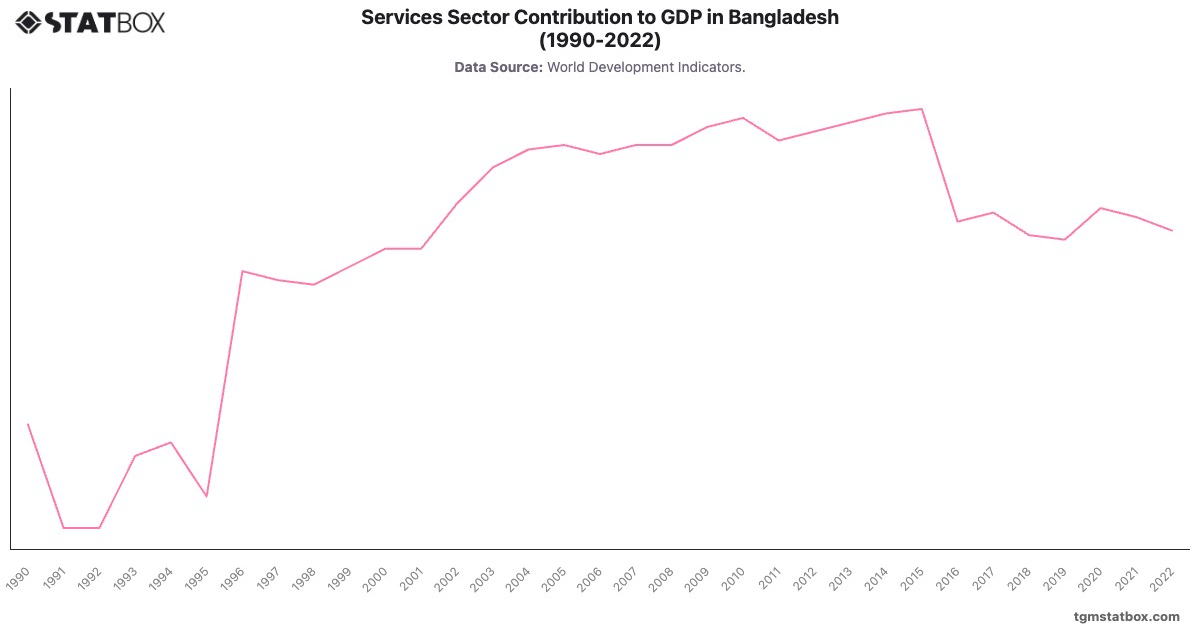
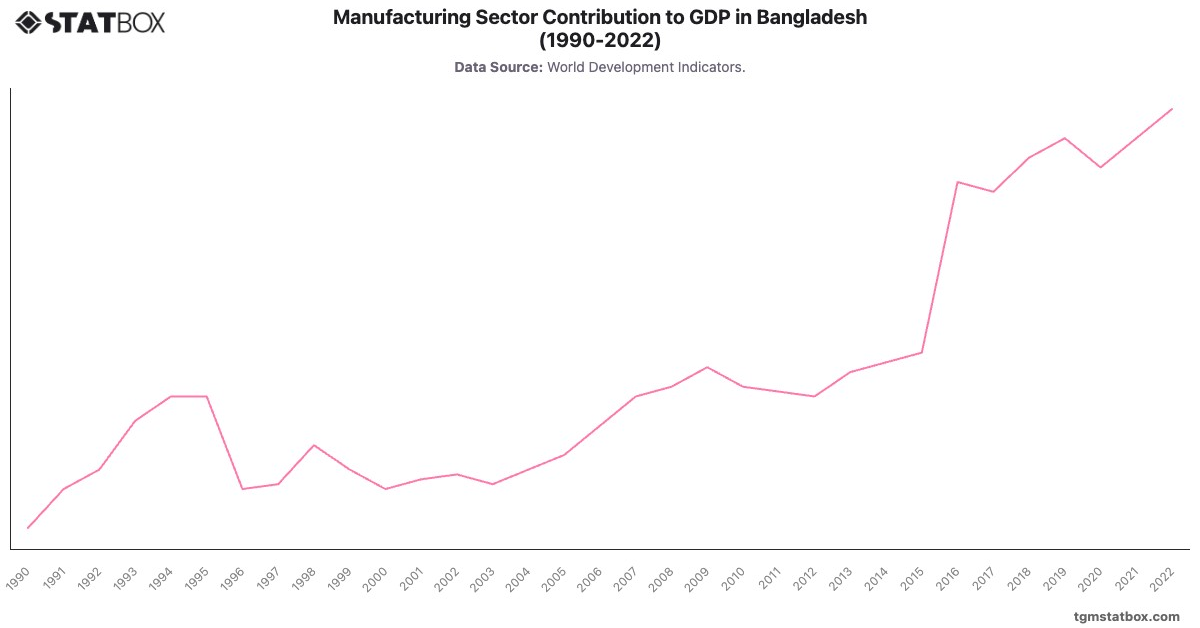
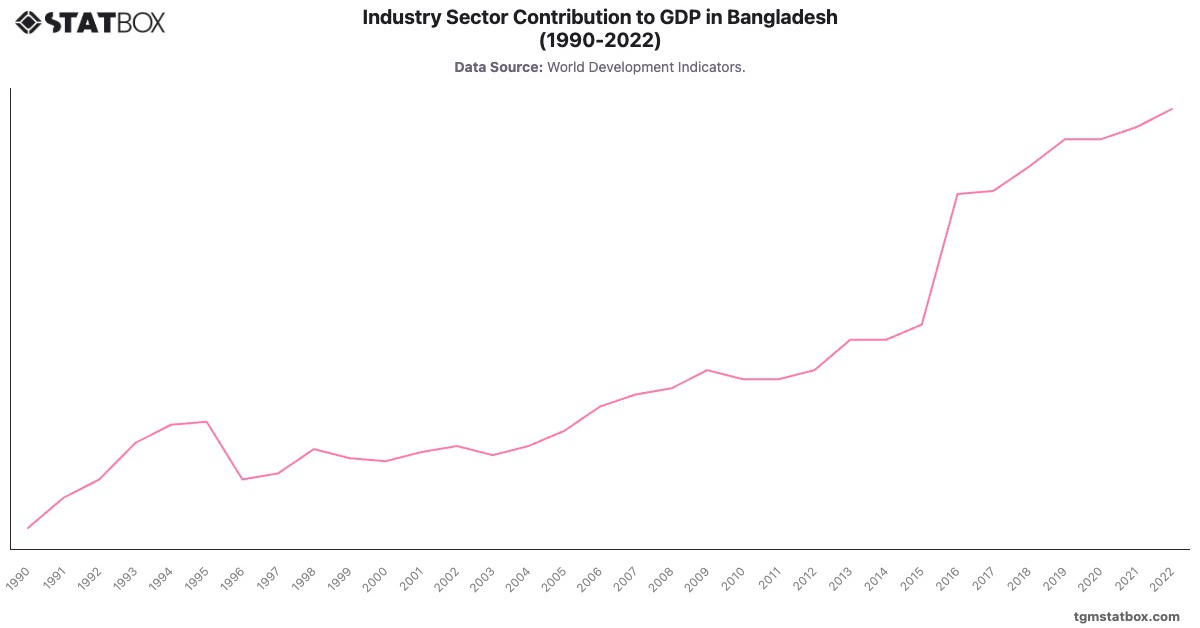
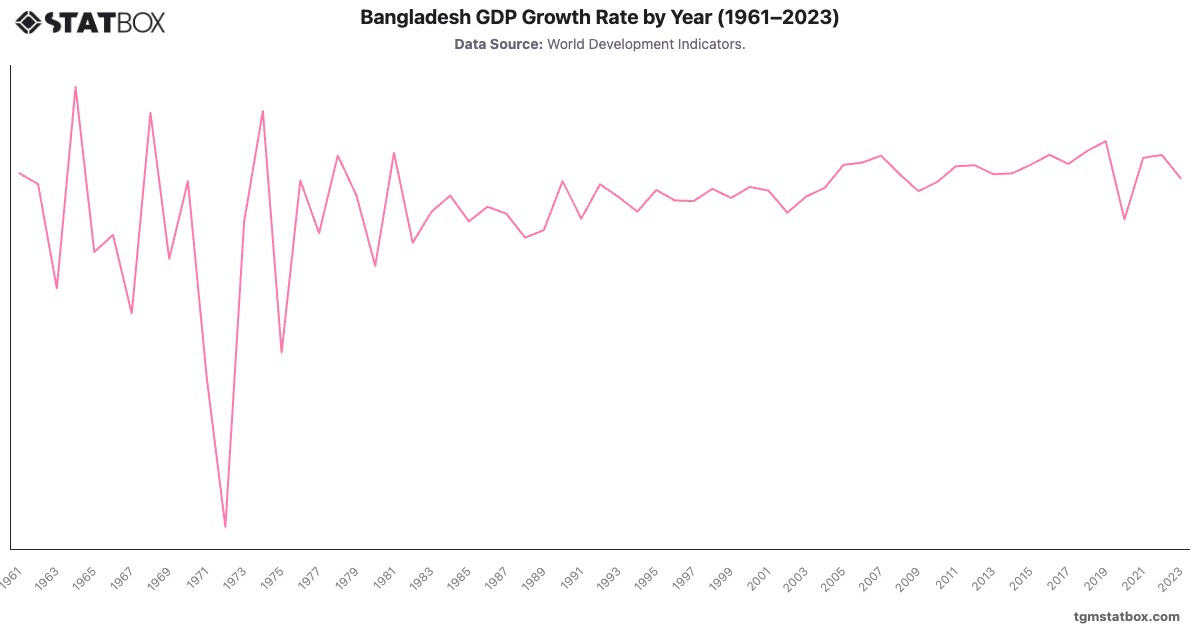
Explore related charts to gain a better understanding of Bangladesh’s manufacturing sector GDP share, Bangladesh’s population growth, Bangladesh’s services sector share in GDP.