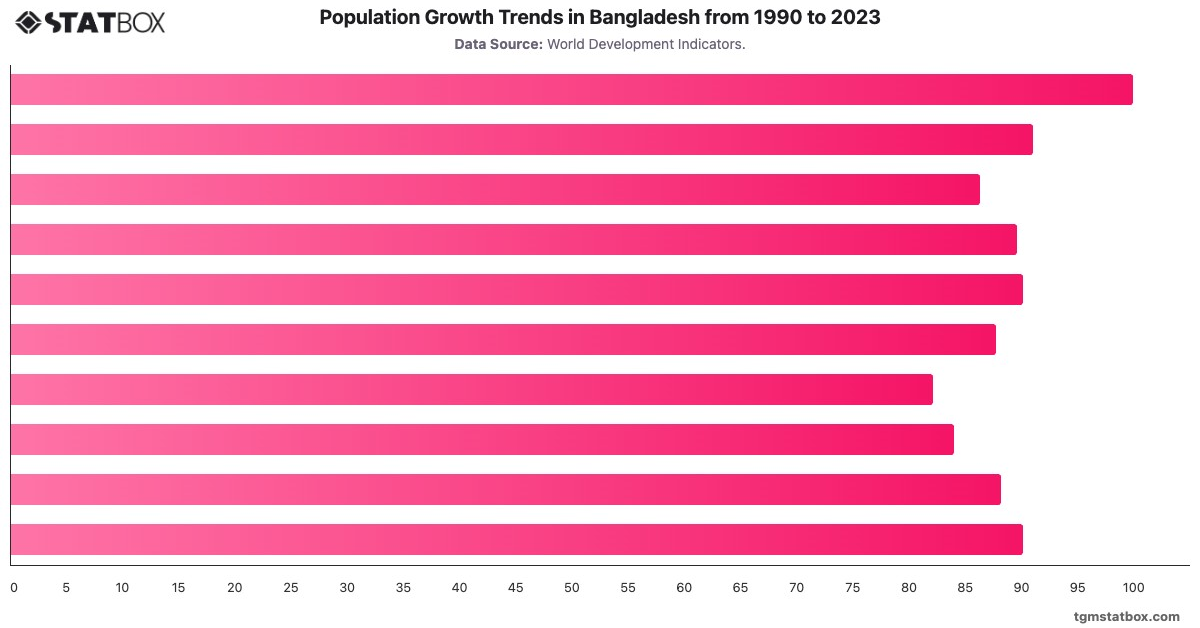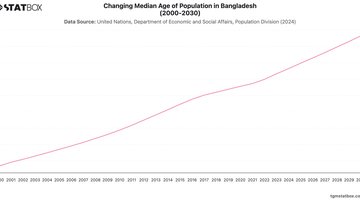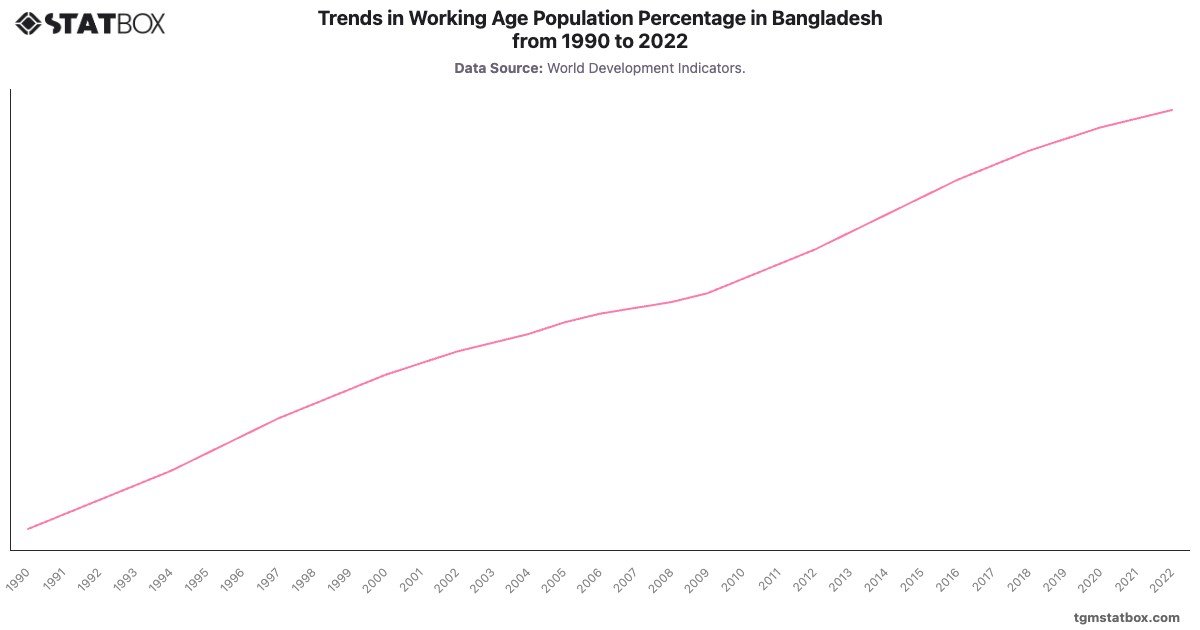
The working-age population percentage in Bangladesh has experienced a significant upward trajectory from 1990 to 2022. Starting at in 1990, the percentage steadily increased over the years, reaching by 2022. This growth can be attributed to various factors, including improved healthcare, rising educational attainment, and economic development that has encouraged greater workforce participation.
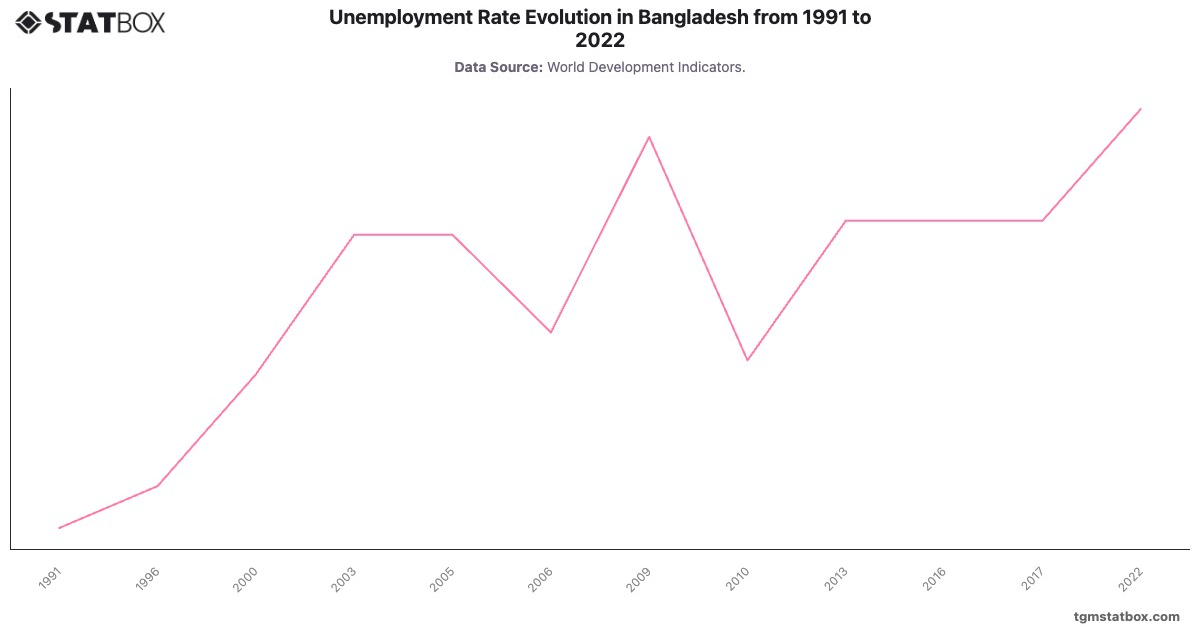
The consistent rise in the working-age population reflects demographic shifts, including declining fertility rates and a growing youth population entering the labor force. Notably, the percentage increased from in 2019 to in 2022, indicating a positive trend in labor market engagement. However, ongoing challenges, such as unemployment and underemployment, remain critical considerations for harnessing this demographic potential effectively.
The consistent rise in the working-age population reflects demographic shifts, including declining fertility rates and a growing youth population entering the labor force. Notably, the percentage increased from in 2019 to in 2022, indicating a positive trend in labor market engagement. However, ongoing challenges, such as unemployment and underemployment, remain critical considerations for harnessing this demographic potential effectively.
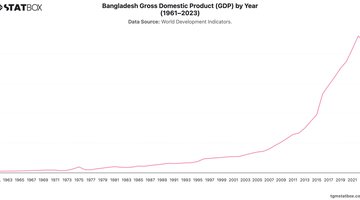
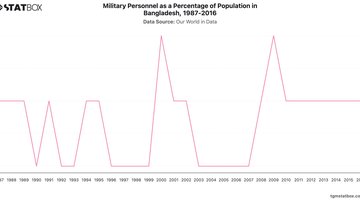
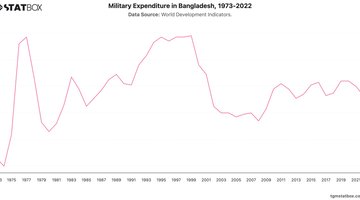
Explore related charts to gain a better understanding of Bangladesh’s annual GDP growth rate, Bangladesh’s industry sector share in GDP, Bangladesh's military personnel share in the population.