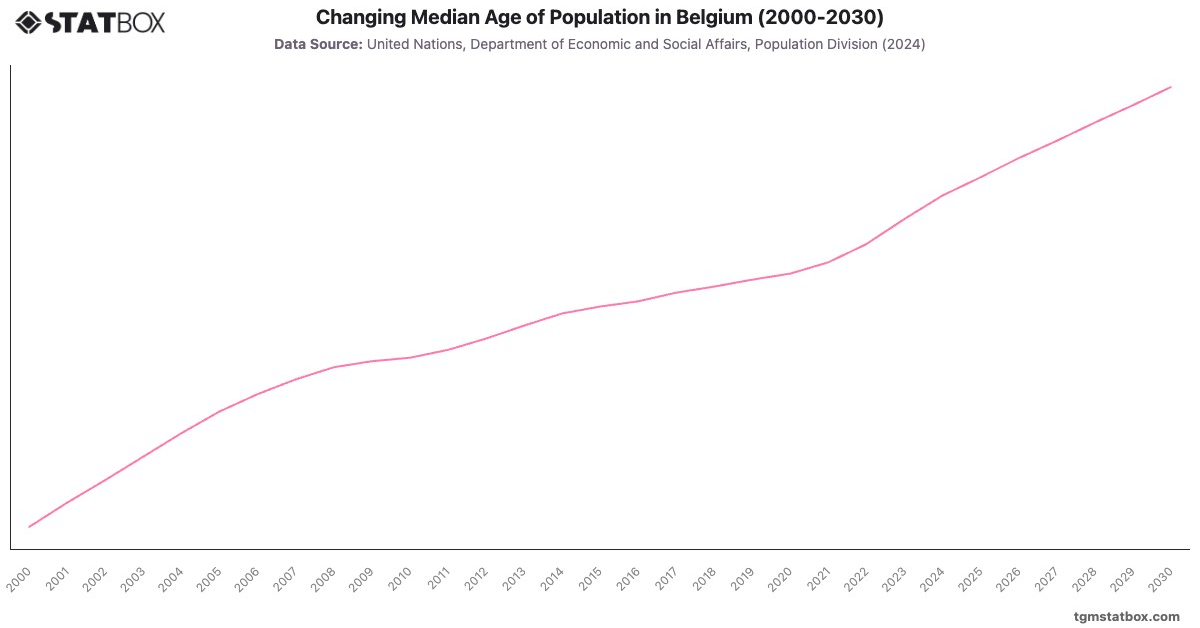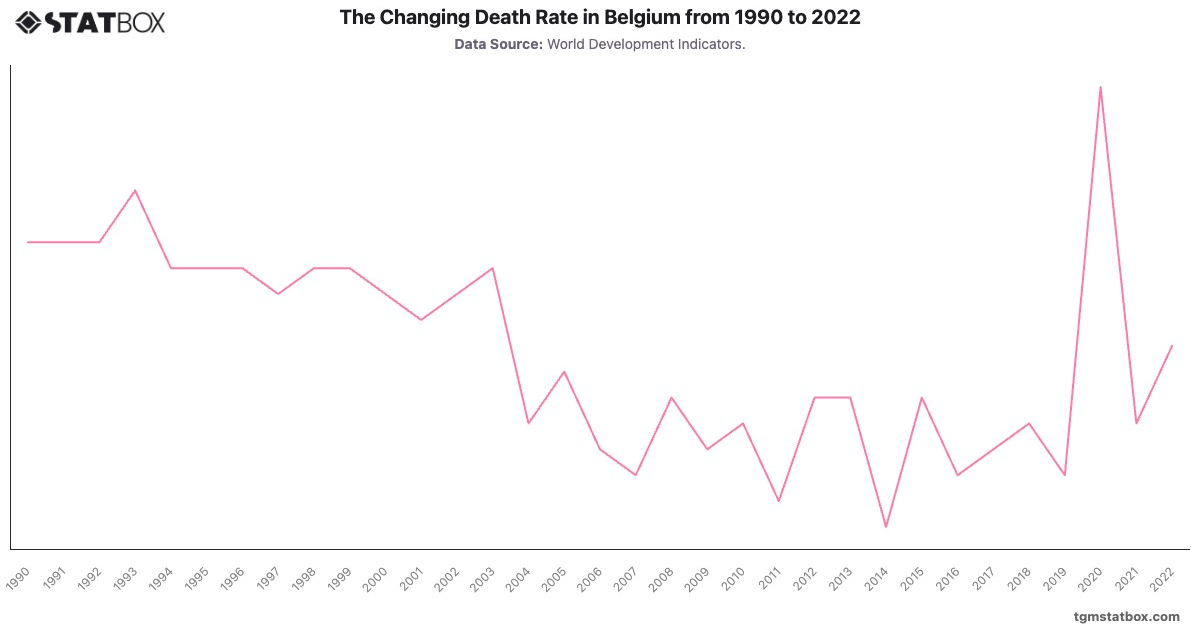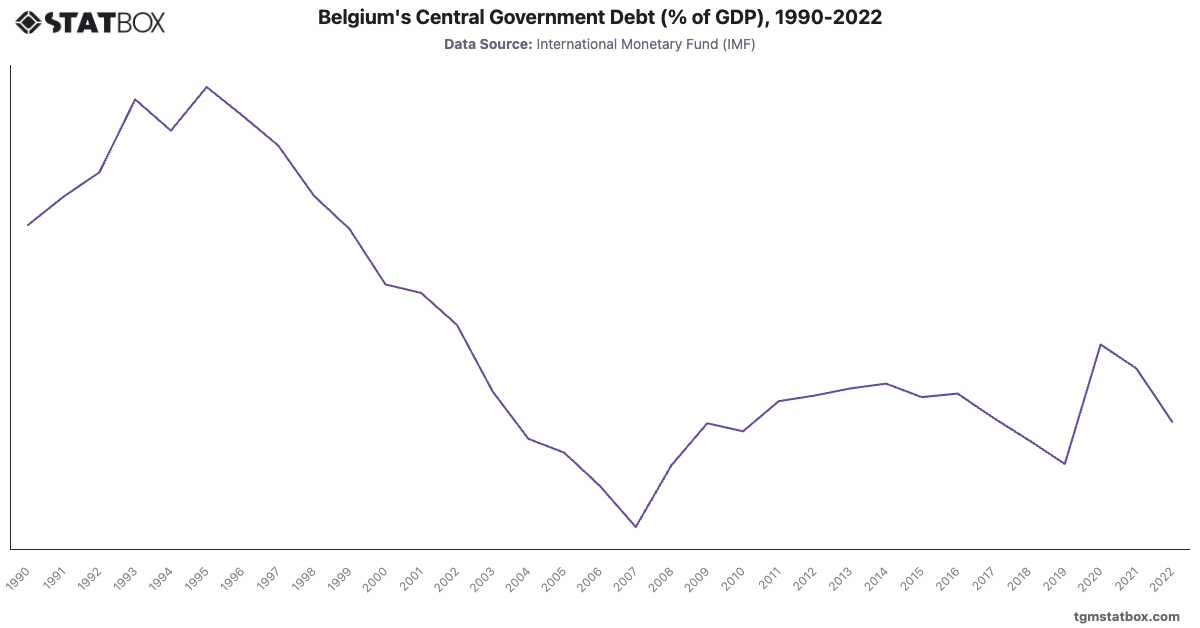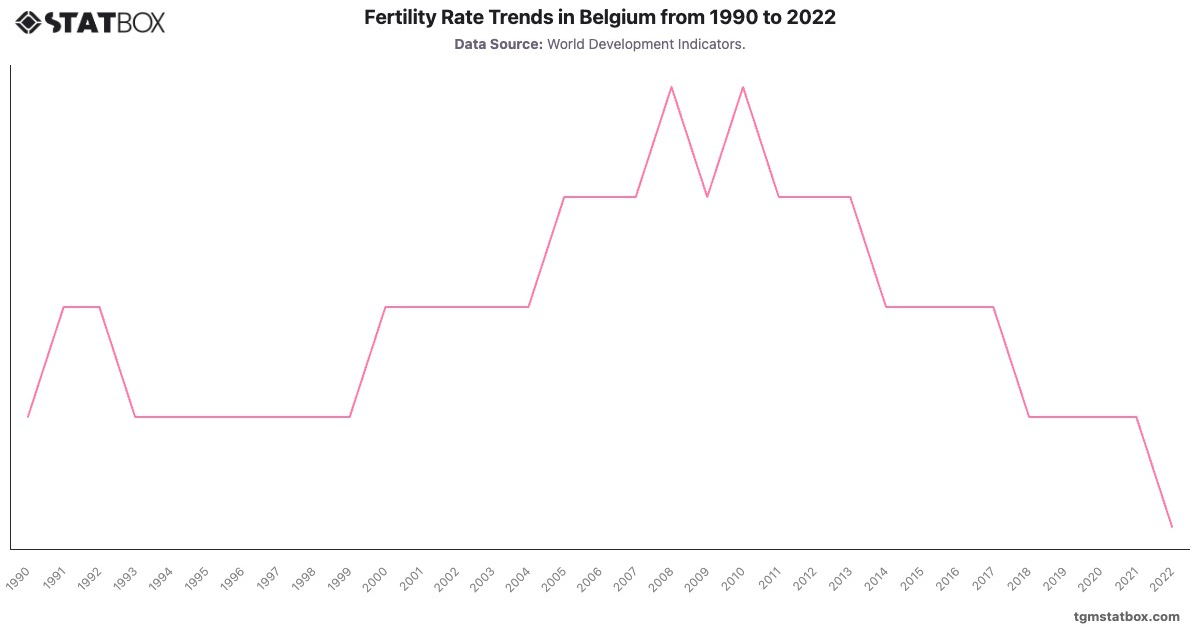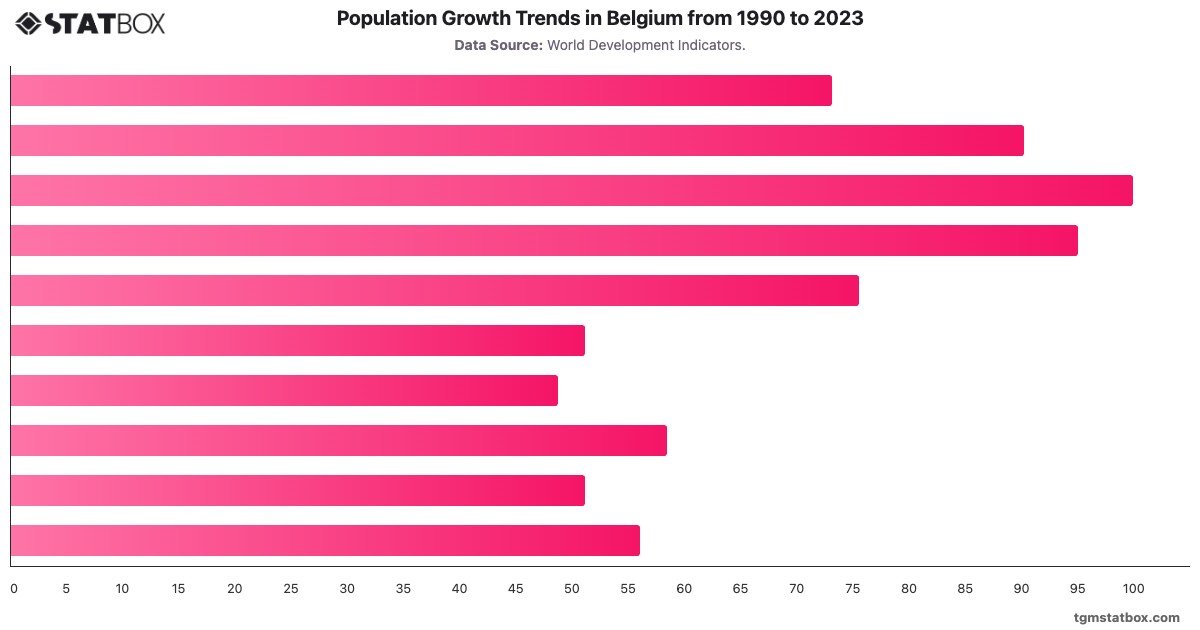
Belgium's population growth remained modest but steady throughout the 1990s and 2000s, fluctuating between and . Growth accelerated in 2011, reaching , driven by favorable immigration policies and the country's role as a political and economic center of the European Union.
After a temporary dip to - during the mid-2010s, the rate rebounded to by 2023. This resurgence is linked to post-pandemic recovery, increased immigration, and Belgium’s strategic importance in Europe. The steady upward trend highlights the impact of external migration and urbanization on the country’s population dynamics.
After a temporary dip to - during the mid-2010s, the rate rebounded to by 2023. This resurgence is linked to post-pandemic recovery, increased immigration, and Belgium’s strategic importance in Europe. The steady upward trend highlights the impact of external migration and urbanization on the country’s population dynamics.
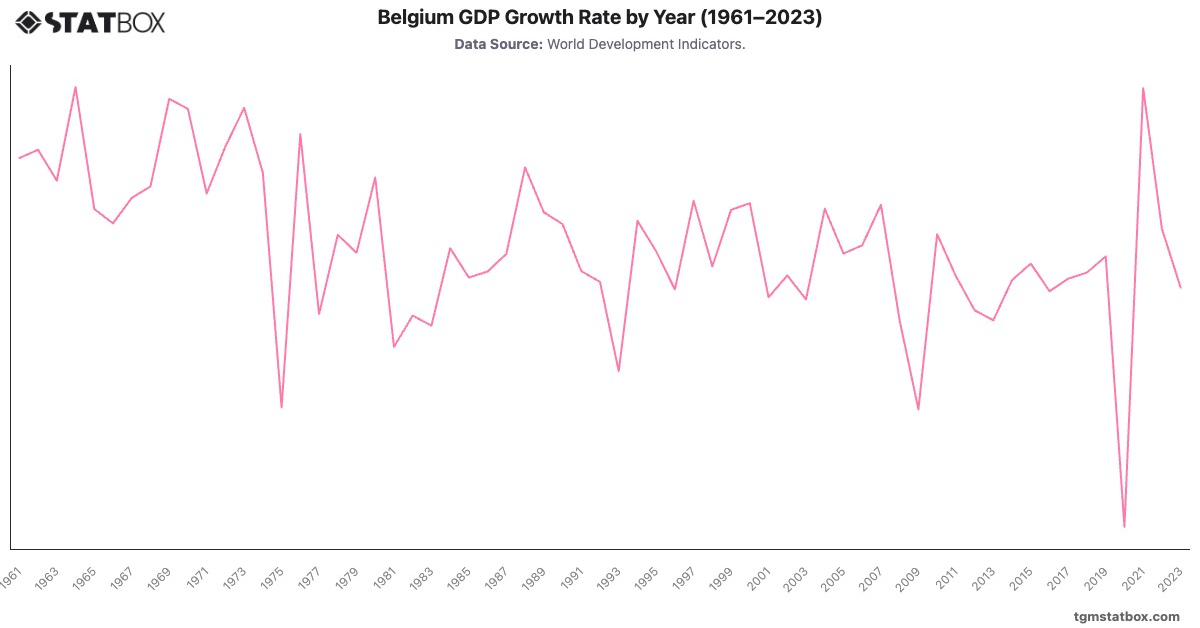
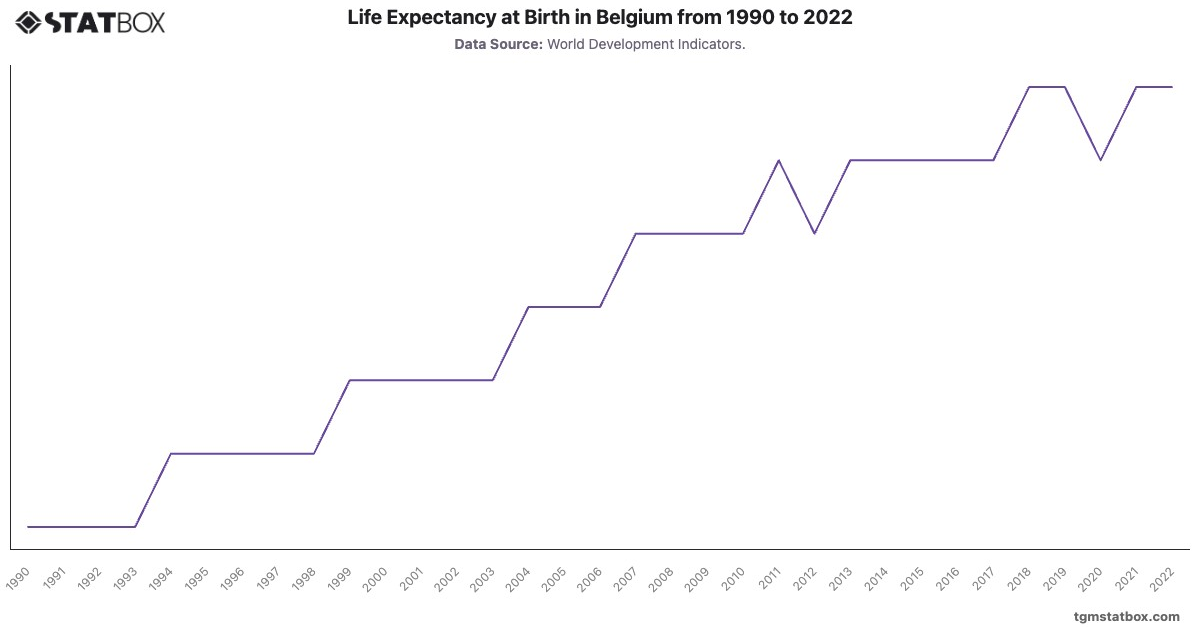
For a deeper dive into the topic, explore Belgium’s average lifespan at birth, Belgium’s annual GDP growth rate, Belgium’s unemployment rate trend.