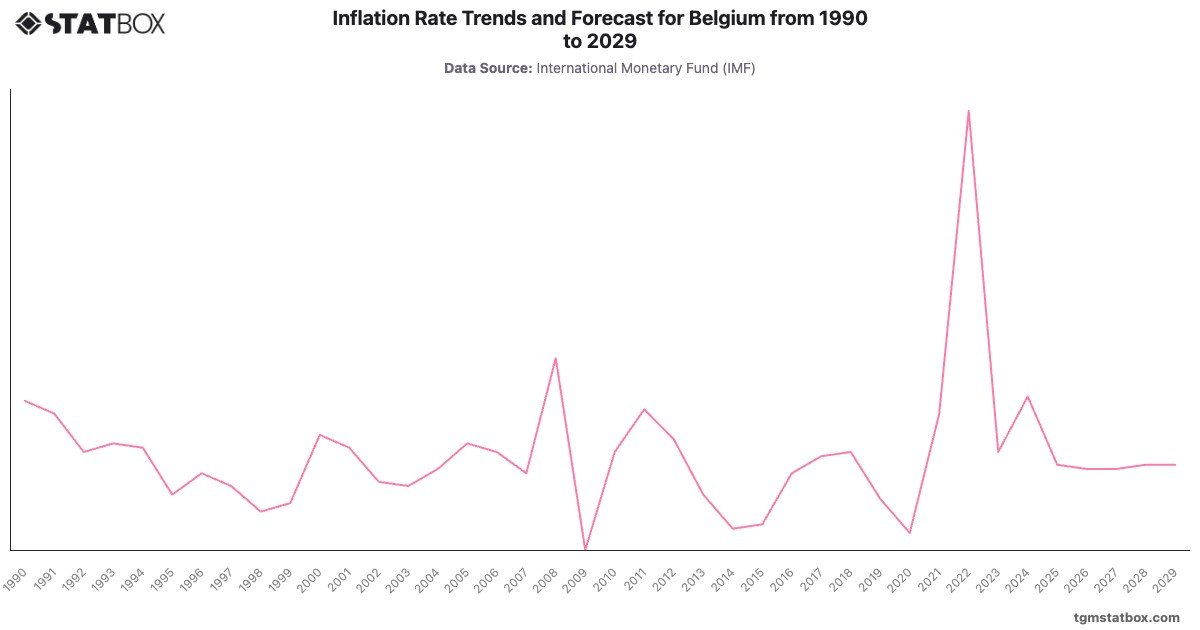
Belgium maintained relatively low inflation in the 1990s, averaging around 2-, aided by sound fiscal policies and European integration efforts. A significant spike occurred in 2008, with inflation hitting , driven by the global financial crisis. Inflation plunged to in 2009 as recessionary pressures dampened demand.
Recent years saw inflation reach in 2022, influenced by the energy crisis and supply chain issues. As these pressures ease, forecasts predict stabilization at by 2029, aligning with the European Central Bank's targets, reflecting a return to economic normalcy.
Recent years saw inflation reach in 2022, influenced by the energy crisis and supply chain issues. As these pressures ease, forecasts predict stabilization at by 2029, aligning with the European Central Bank's targets, reflecting a return to economic normalcy.
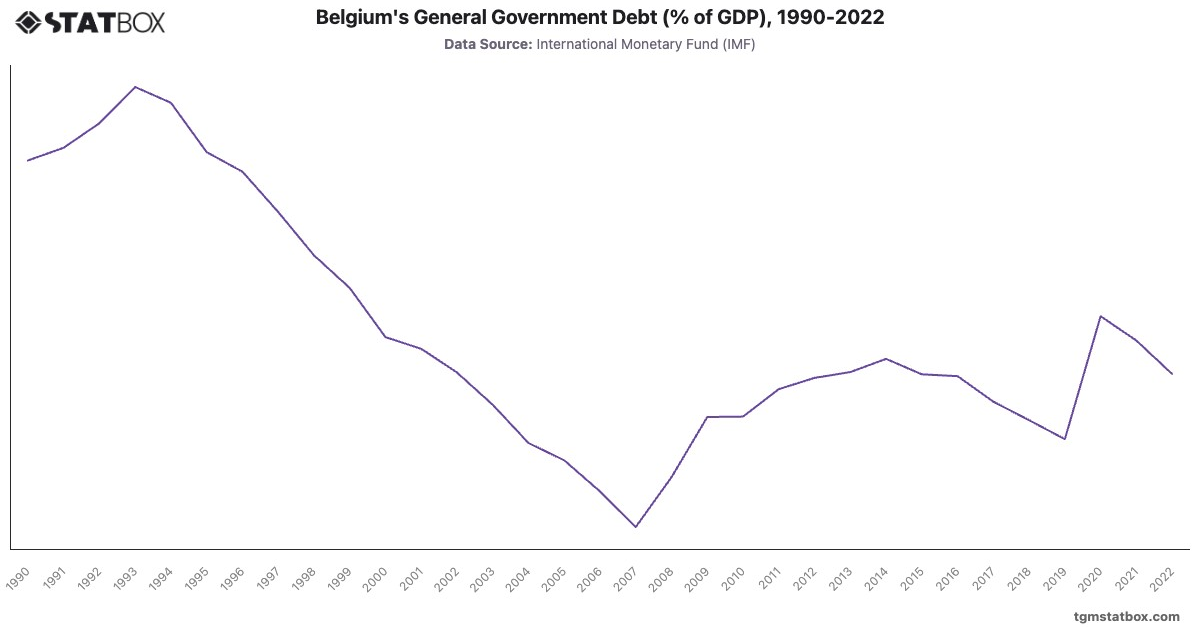
For a broader context, visit other statistics on Belgium’s public debt ratio, Belgium’s mortality rate, Belgium’s unemployment rate trend.