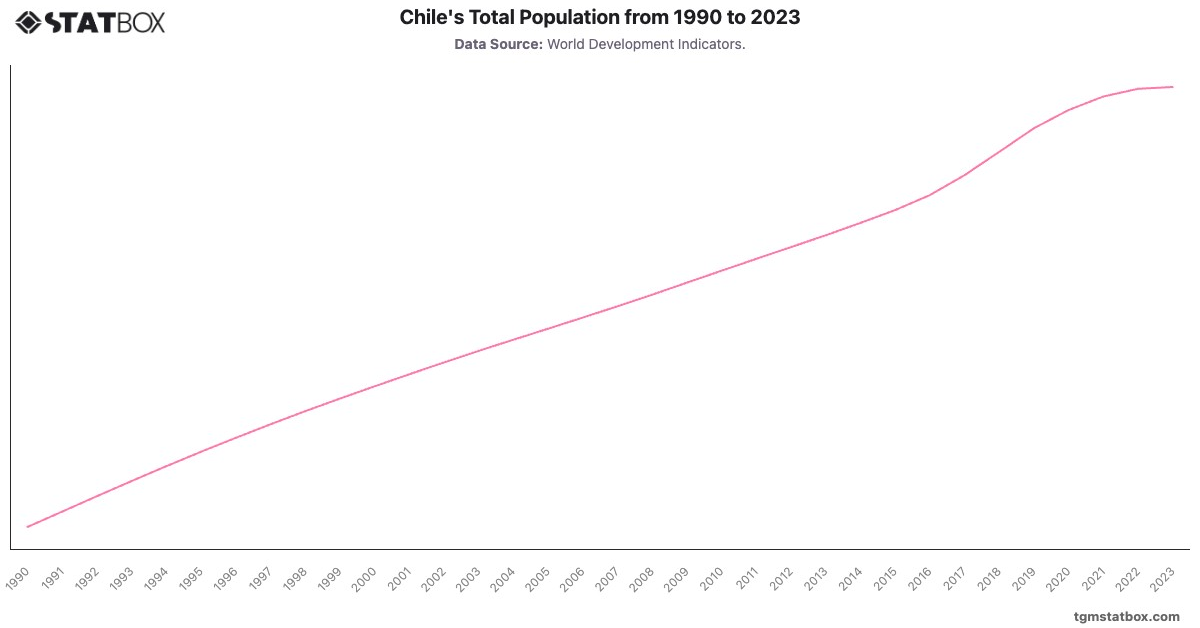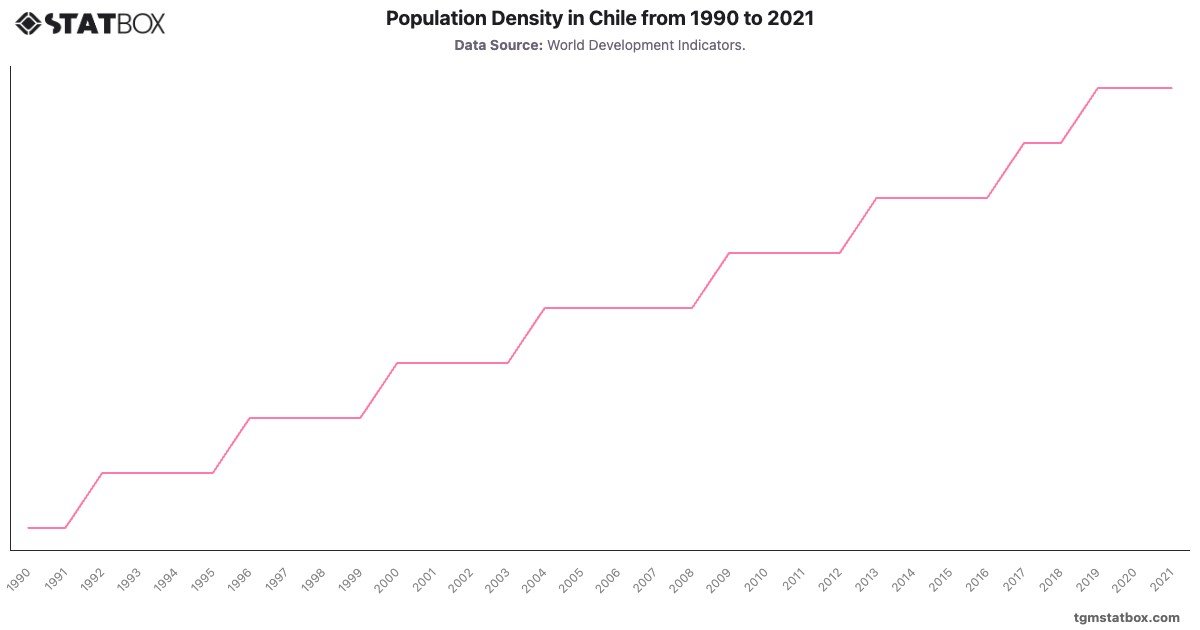
Chile's population density rose moderately, increasing from 18 to 26 people per square kilometer over the three decades. This gradual increase reflects the country's centralized urbanization, especially in Santiago and Valparaiso, where the concentration of economic activities has drawn residents. As Chile transitioned into a high-income economy, urban migration became more prominent, leading to moderate but steady growth in population density.
While the density growth rate remains relatively low, Chile's government has invested in regional development and housing to accommodate urban growth sustainably. This measured approach reflects a balance between urban expansion and preserving the country's diverse geographical landscape, from deserts to forests.
While the density growth rate remains relatively low, Chile's government has invested in regional development and housing to accommodate urban growth sustainably. This measured approach reflects a balance between urban expansion and preserving the country's diverse geographical landscape, from deserts to forests.
For a broader context, visit other statistics on Chile’s annual GDP growth rate, Chile’s evolving median age, Chile’s population total.