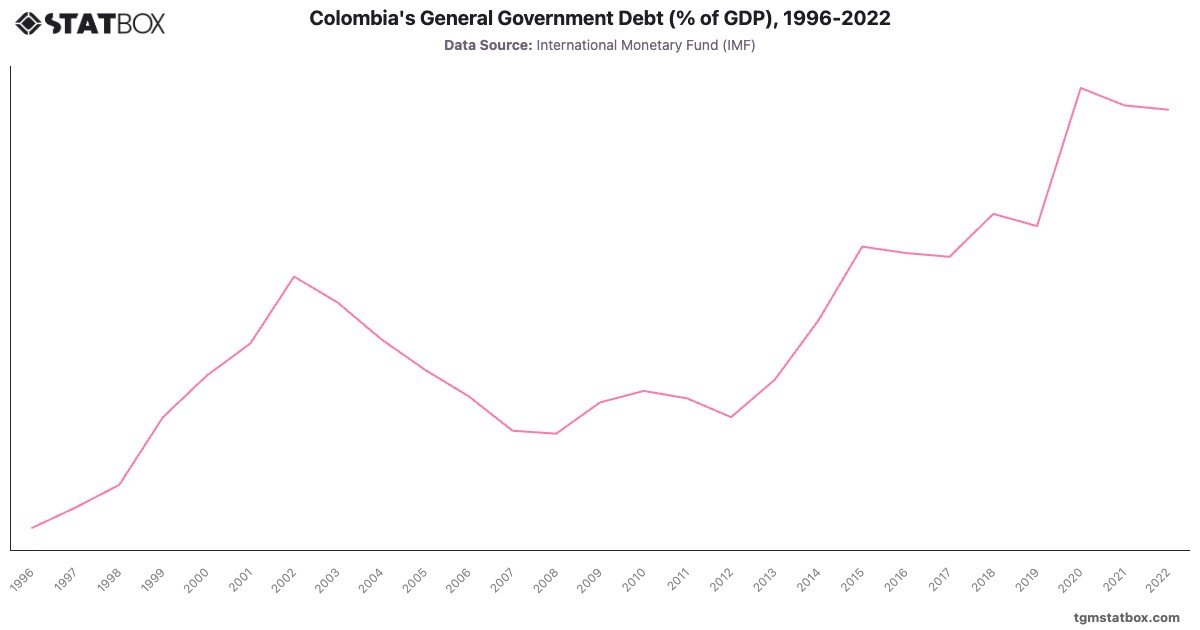
Colombia’s government debt as a percentage of GDP increased from in 1996 to in 2002, influenced by economic challenges and rising fiscal deficits. Efforts to stabilize the economy led to a reduction in debt in subsequent years, with the ratio decreasing to by 2008. However, the global financial crisis and resulting economic slowdown contributed to an uptick in debt, with the ratio reaching by 2010, as government spending rose to support economic growth.
From 2015 onward, debt levels grew significantly, peaking at in 2020 due to the economic strain of the COVID-19 pandemic. Post-2020, debt levels remained high but slightly decreased to by 2022. Colombia’s rising debt levels over the years reflect ongoing fiscal challenges and the impact of external shocks, underscoring the country’s efforts to balance economic growth with fiscal stability in a complex economic environment.
From 2015 onward, debt levels grew significantly, peaking at in 2020 due to the economic strain of the COVID-19 pandemic. Post-2020, debt levels remained high but slightly decreased to by 2022. Colombia’s rising debt levels over the years reflect ongoing fiscal challenges and the impact of external shocks, underscoring the country’s efforts to balance economic growth with fiscal stability in a complex economic environment.
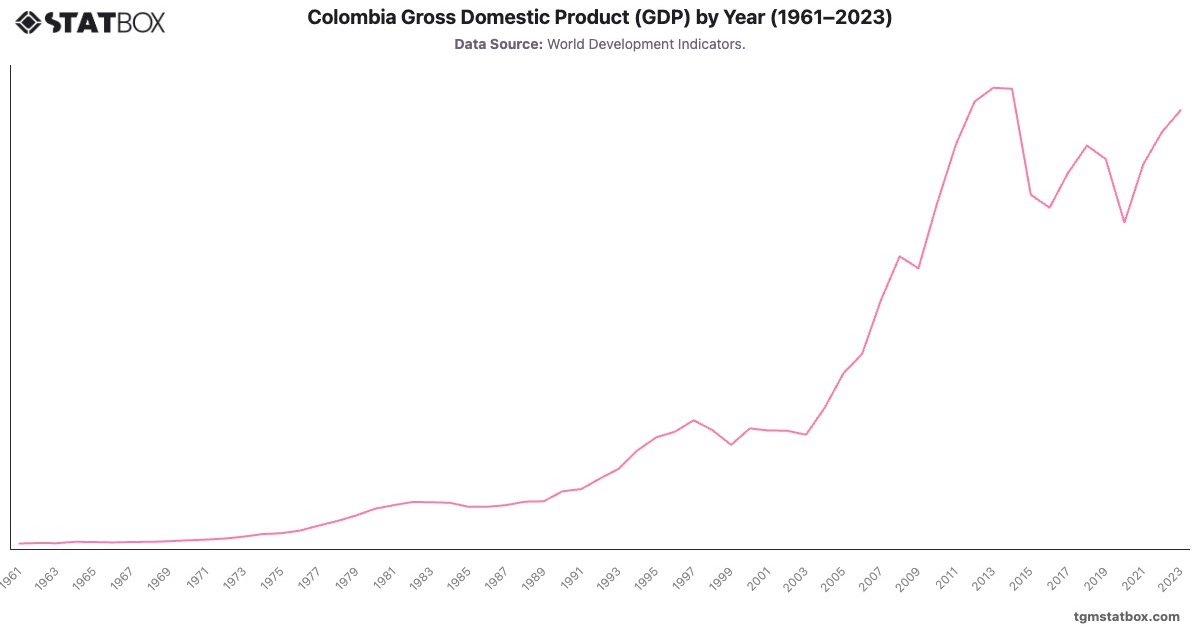
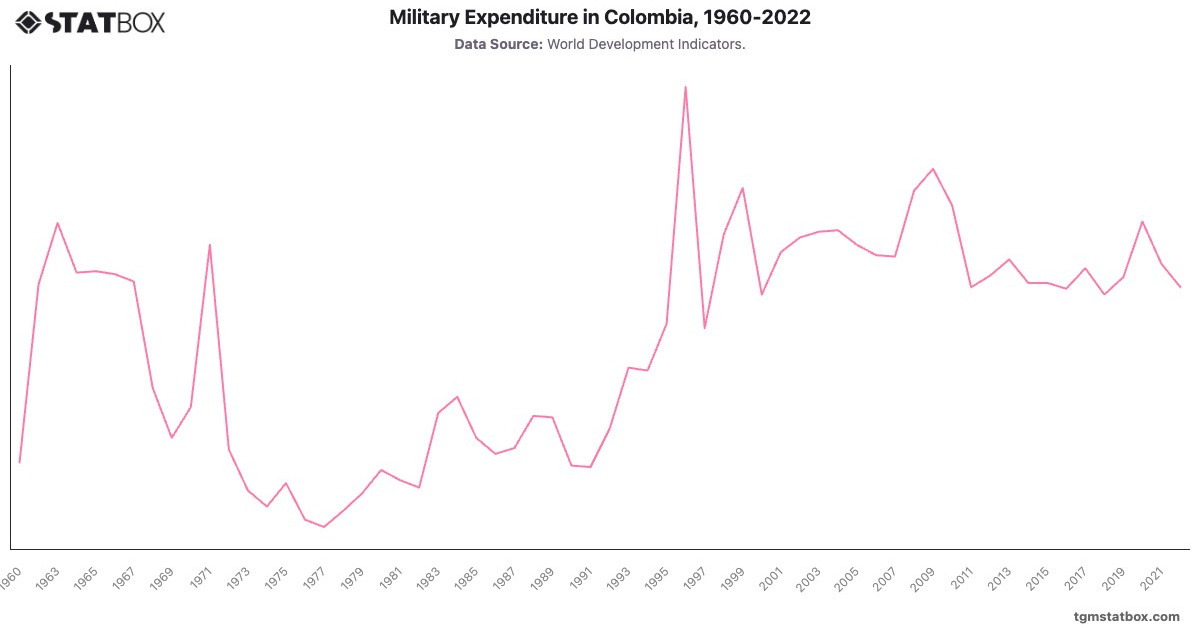
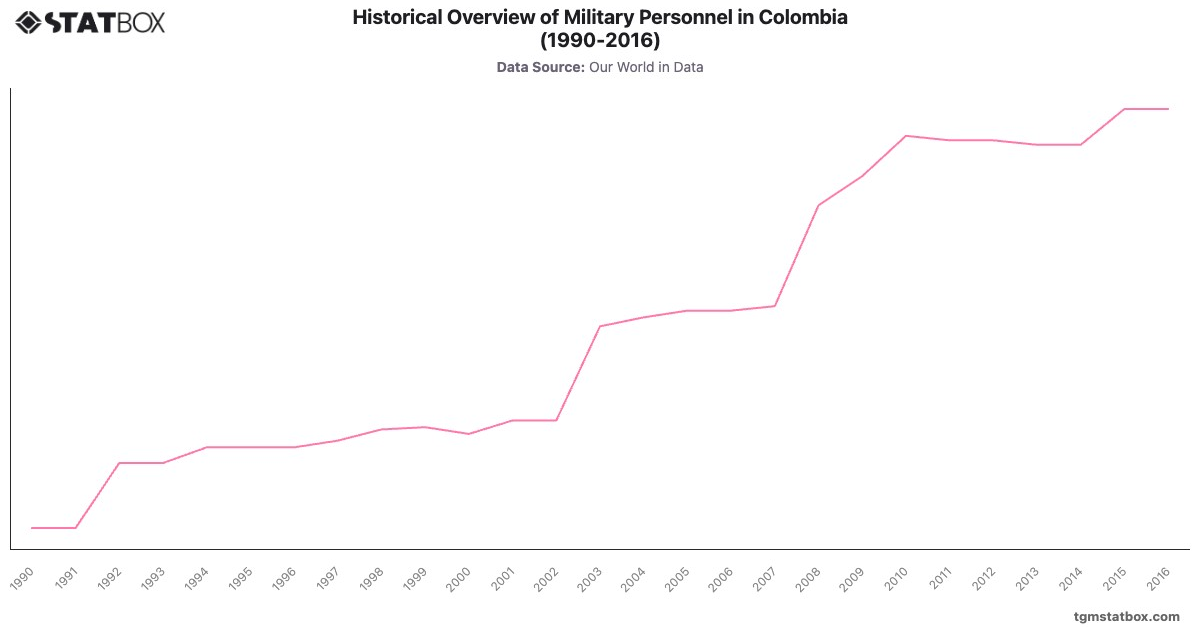
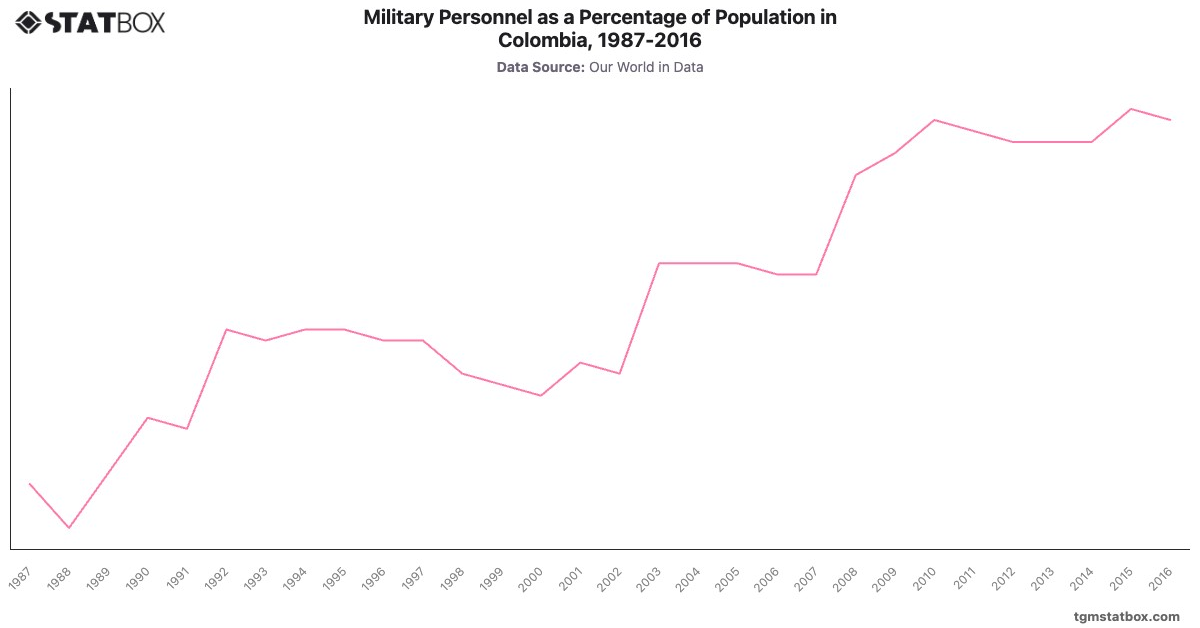
Discover additional trends and data on Colombia’s net ODA received, Colombia’s military personnel ratio, Colombia’s annual GDP growth rate.