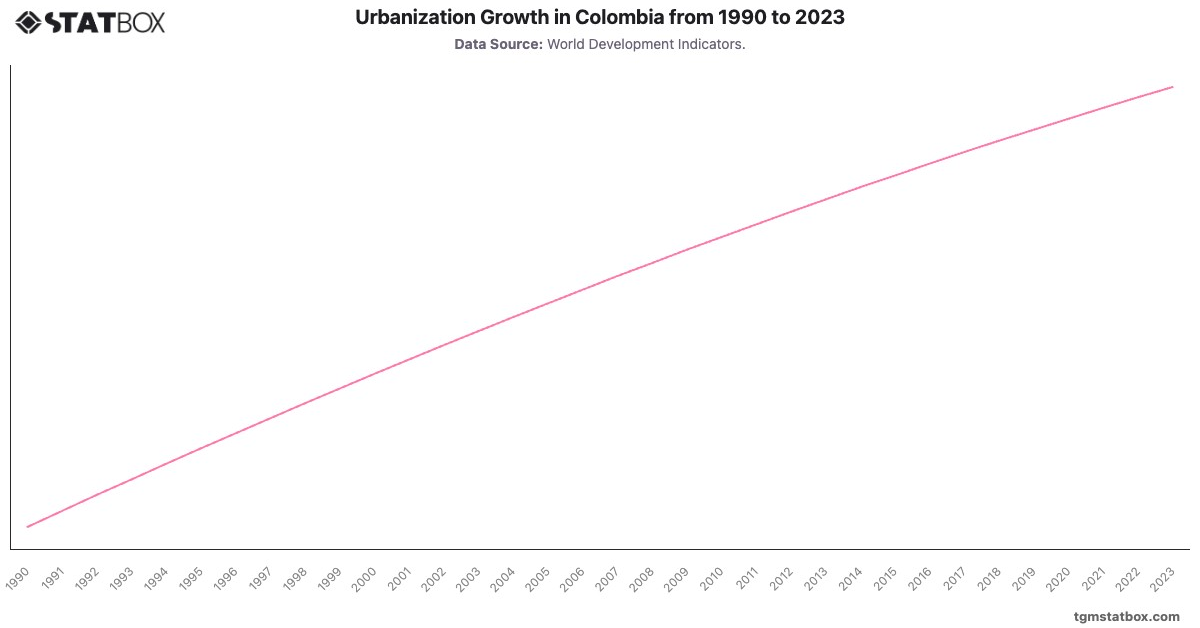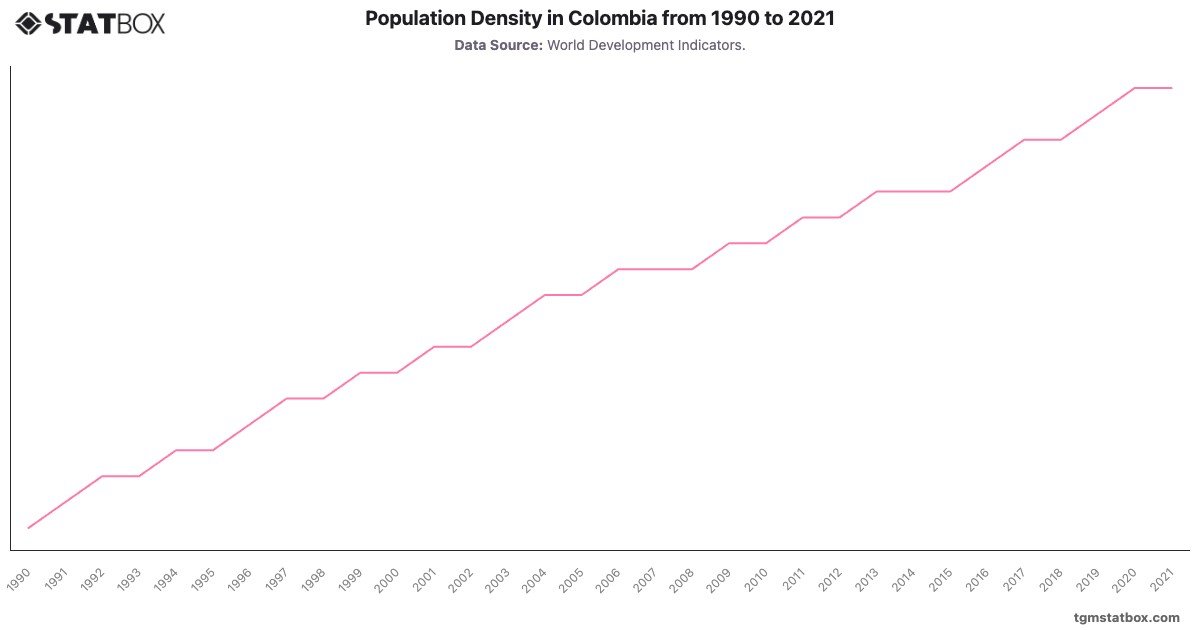
Colombia's population density rose from 29 to 46 people per square kilometer, showing a steady upward trend driven by urban migration and population growth. The cities of Bogotá, Medellín, and Cali, in particular, became urban centers, attracting people for employment, education, and infrastructure improvements. This shift aligns with Colombia's gradual economic development and improving living standards.
The urbanization surge in the 2000s, tied to improvements in infrastructure and security, further boosted population density. By 2021, the density reached 46 people per square kilometer, showcasing Colombia’s urban population growth trajectory. Despite this, vast rural areas remain less densely populated, reflecting a regional urban-rural divide.
The urbanization surge in the 2000s, tied to improvements in infrastructure and security, further boosted population density. By 2021, the density reached 46 people per square kilometer, showcasing Colombia’s urban population growth trajectory. Despite this, vast rural areas remain less densely populated, reflecting a regional urban-rural divide.
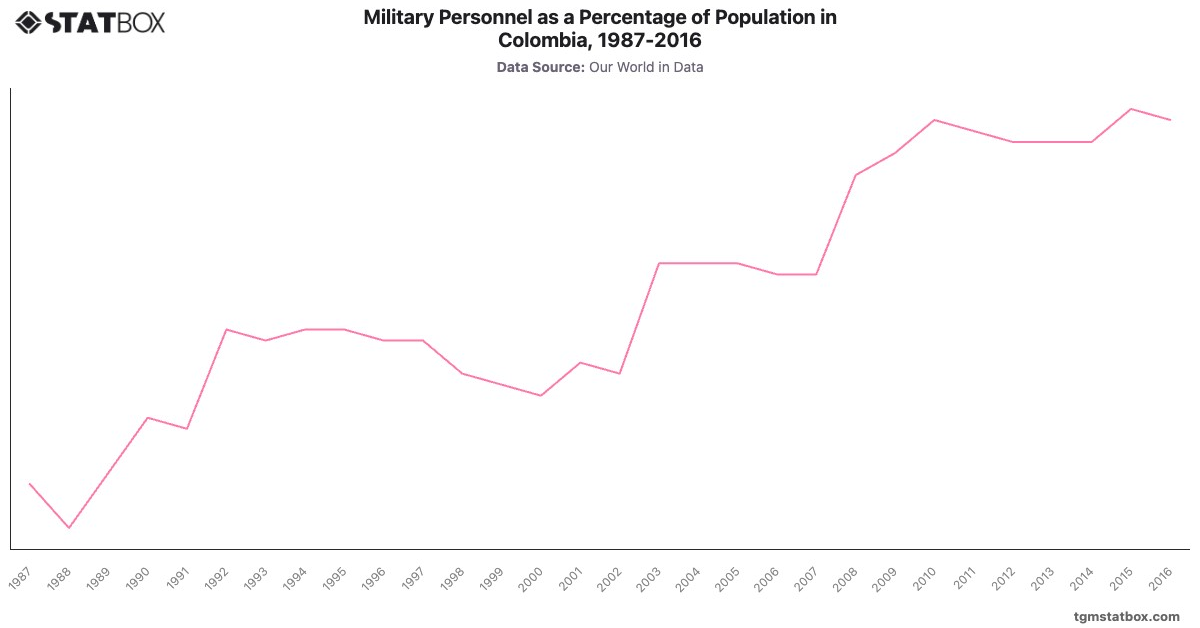
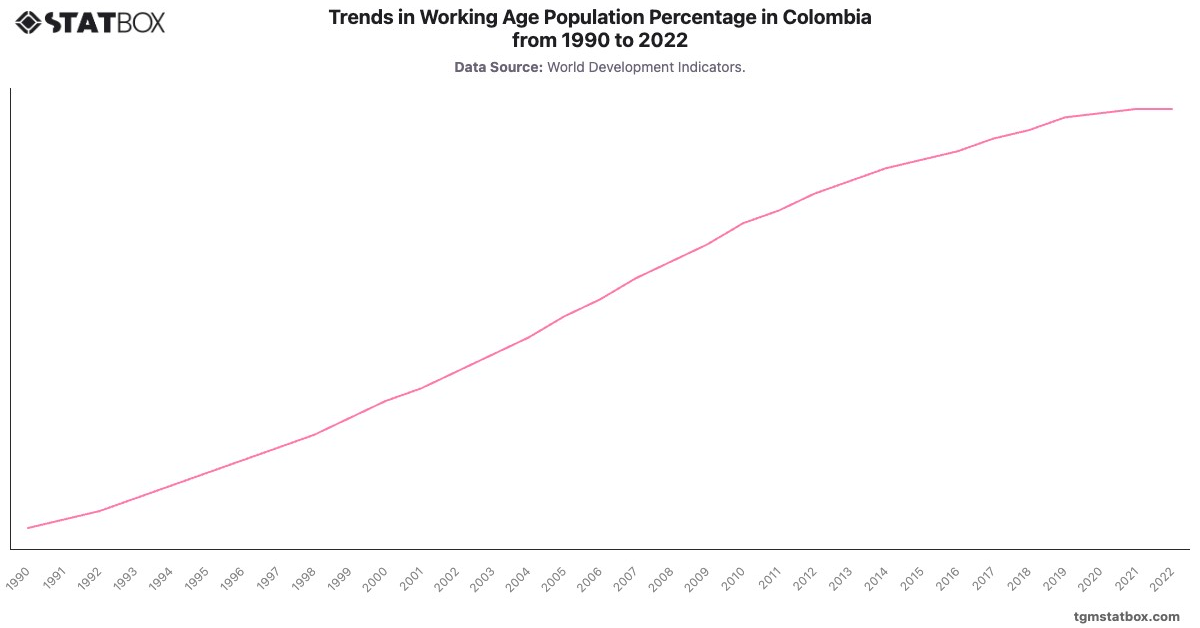
Explore related charts to gain a better understanding of Colombia’s military personnel ratio, Colombia’s urbanization rate, Colombia’s working-age population trends.