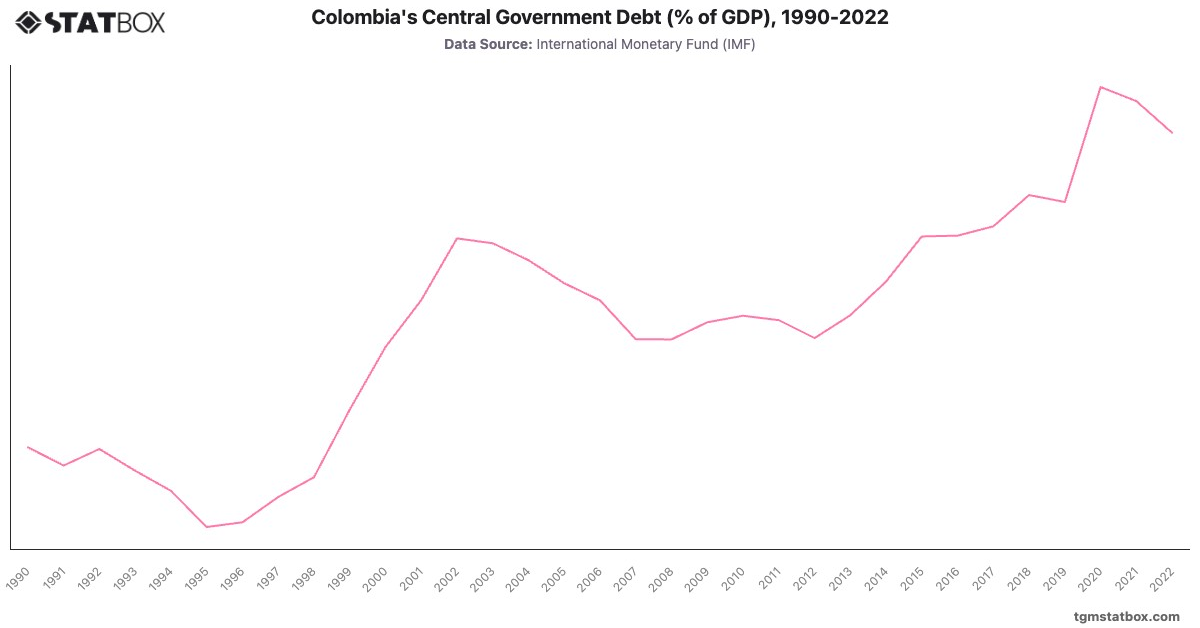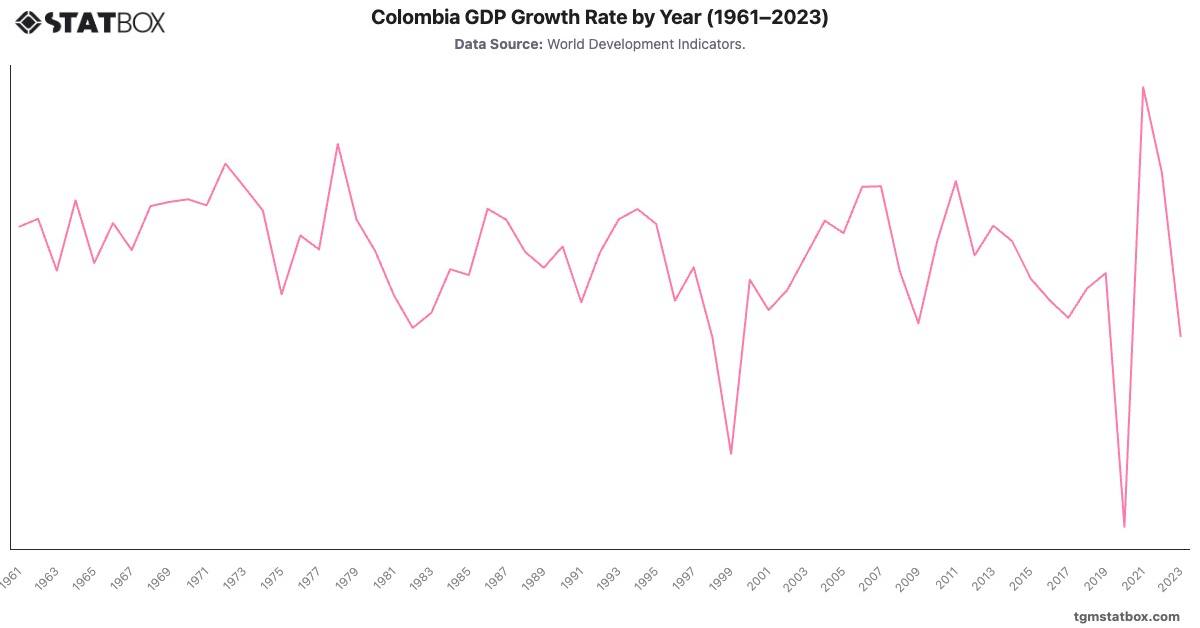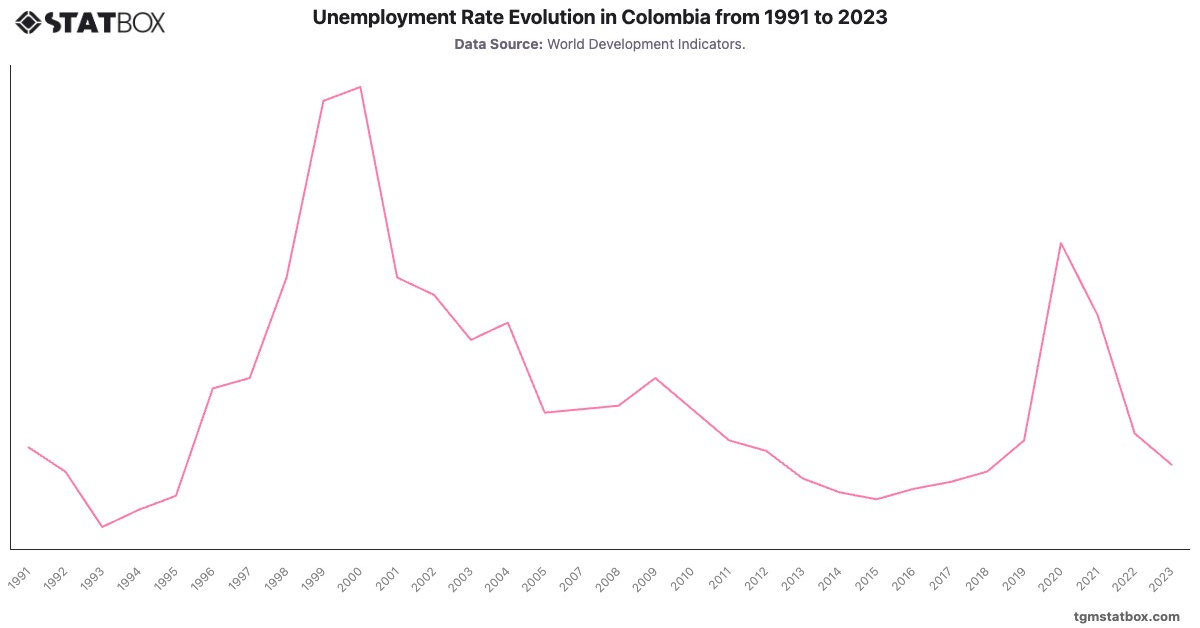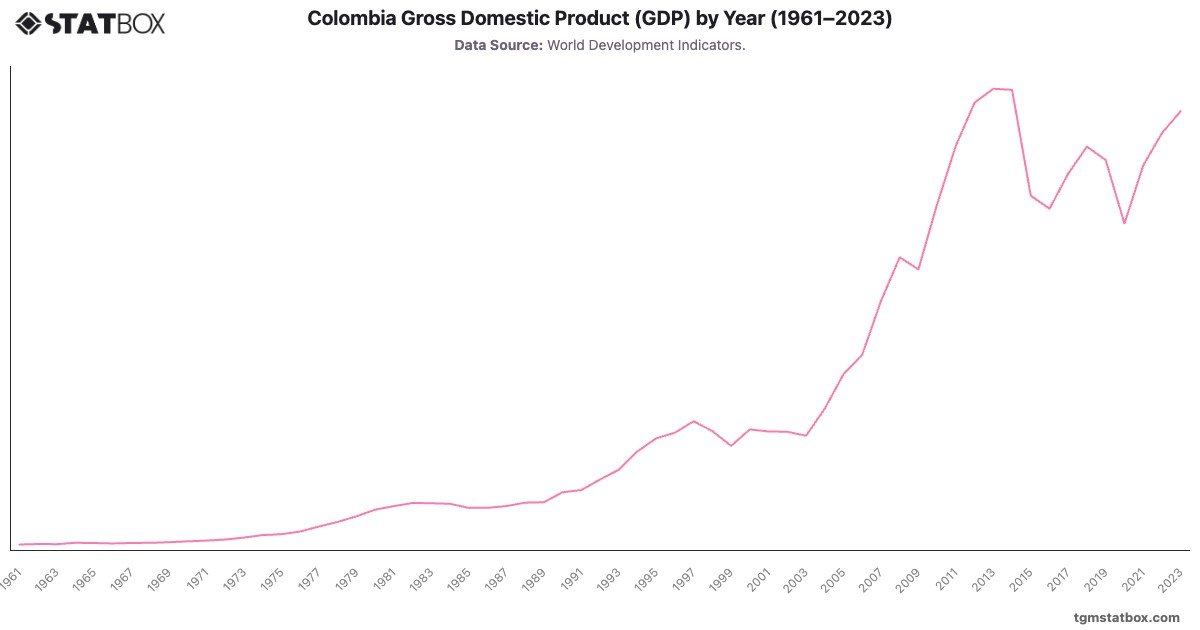
Colombia's GDP reflects gradual economic development influenced by agriculture, resource extraction, and policy reforms. Starting at $4.5 billion in 1961, GDP grew steadily, surpassing $100 billion in 2000. Political instability and a heavy reliance on oil exports caused fluctuations, particularly in 1999 when GDP fell to $86.2 billion.
Post-2000 reforms and a commodities boom propelled growth, with GDP peaking at $382 billion in 2013. The 2014 oil price crash and political tensions slowed growth, with GDP declining to $270 billion in 2020 during the pandemic. Recovery efforts have boosted GDP to $363.5 billion by 2023, supported by infrastructure investments and diversification.
Post-2000 reforms and a commodities boom propelled growth, with GDP peaking at $382 billion in 2013. The 2014 oil price crash and political tensions slowed growth, with GDP declining to $270 billion in 2020 during the pandemic. Recovery efforts have boosted GDP to $363.5 billion by 2023, supported by infrastructure investments and diversification.
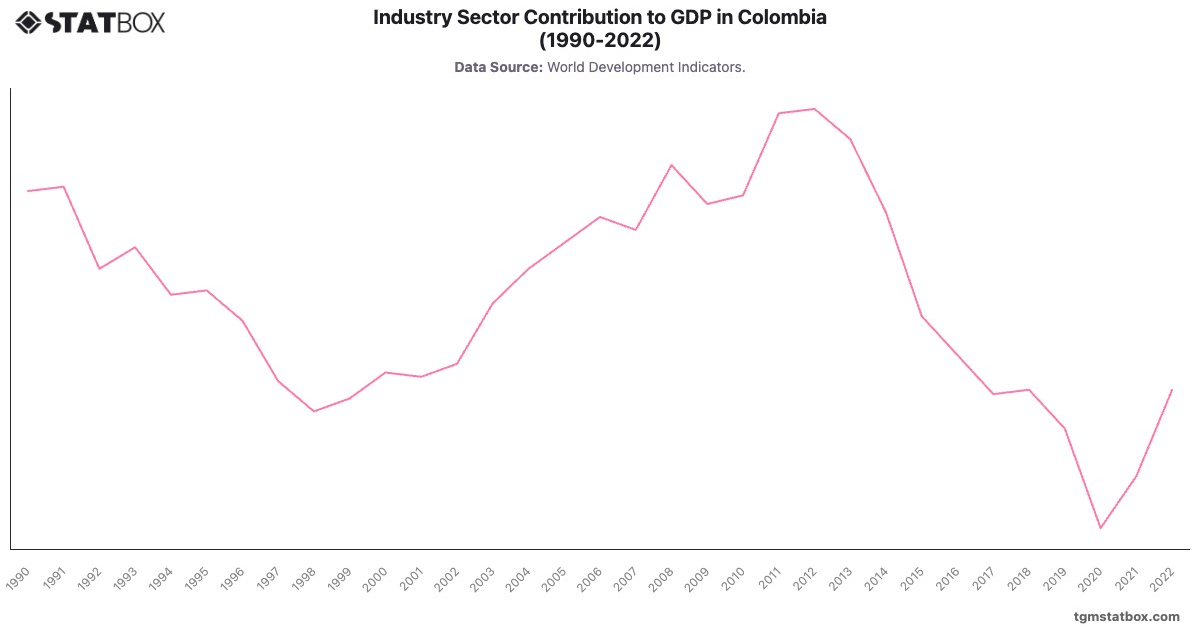
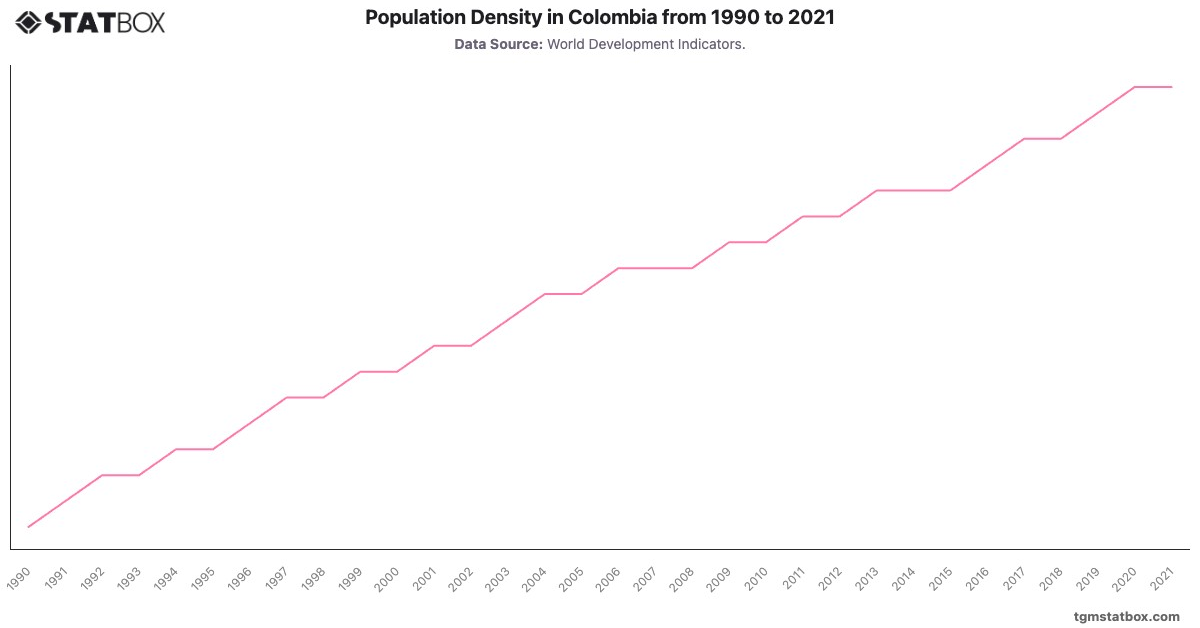
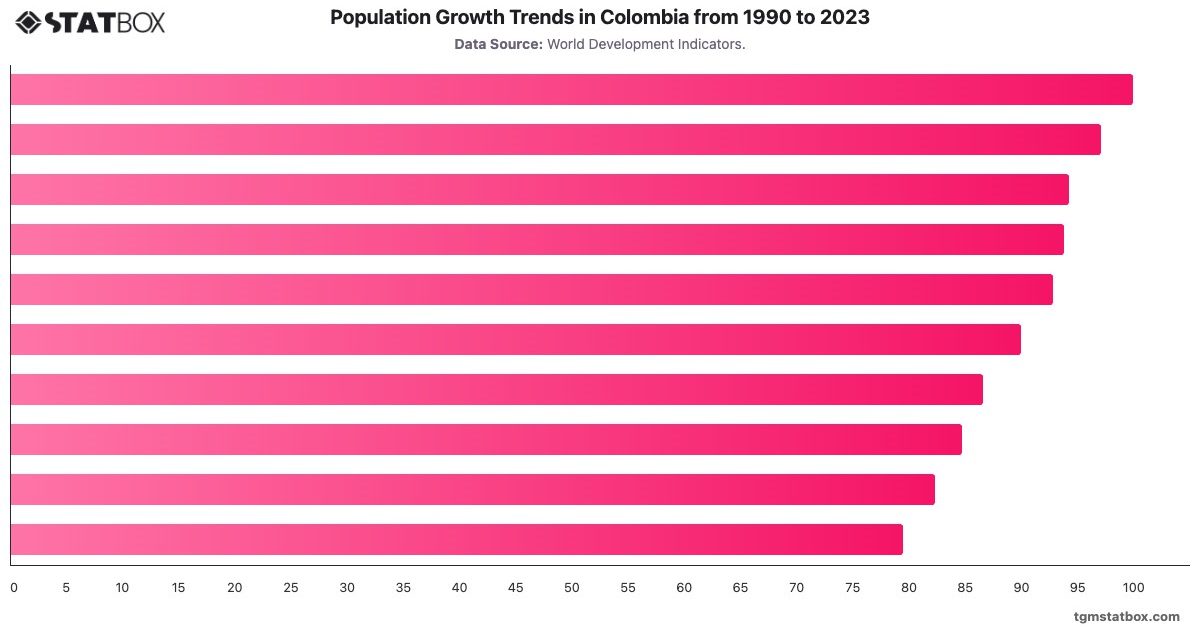
For additional information, visit statistics on Colombia’s manufacturing share in GDP, Colombia’s net lending/borrowing as a percentage of GDP, Colombia’s population growth trend.