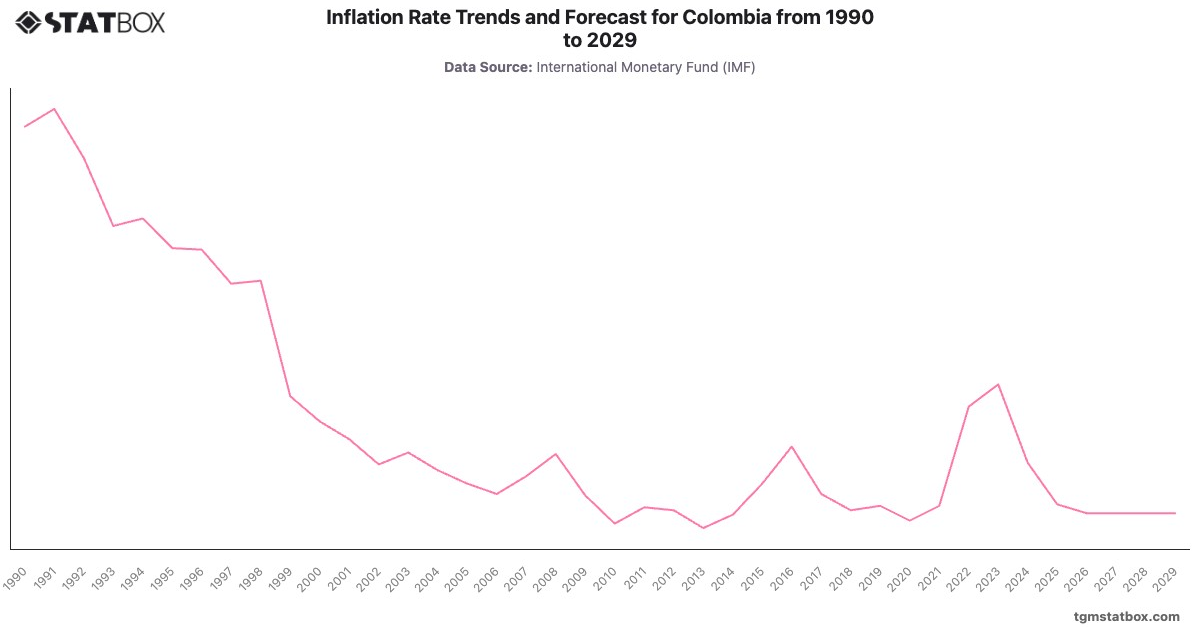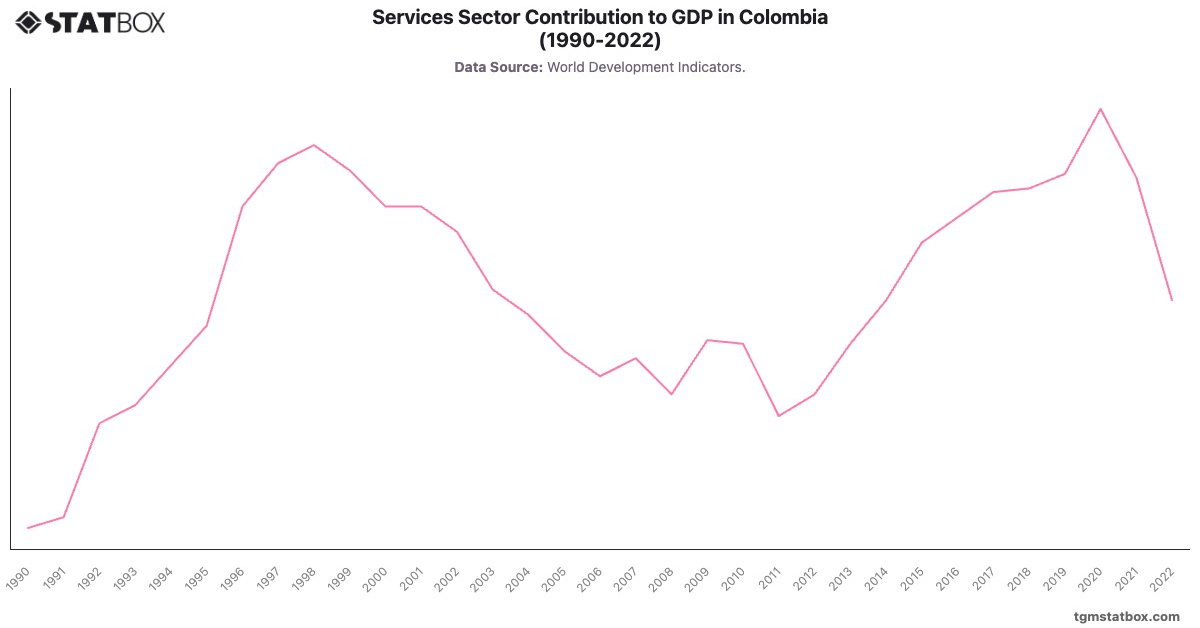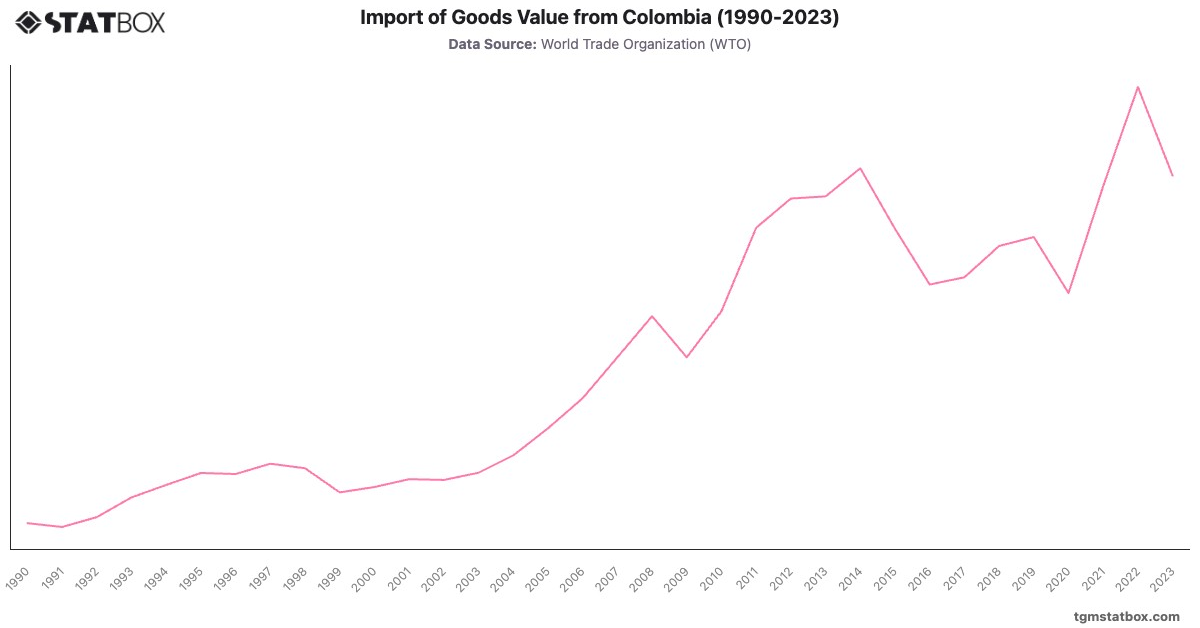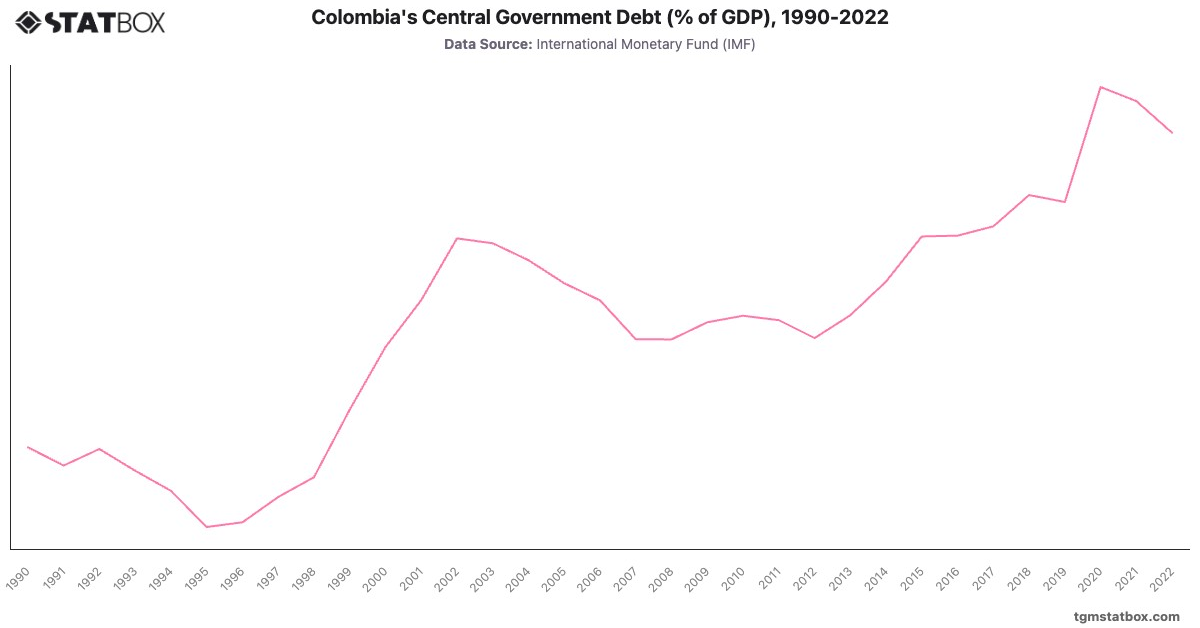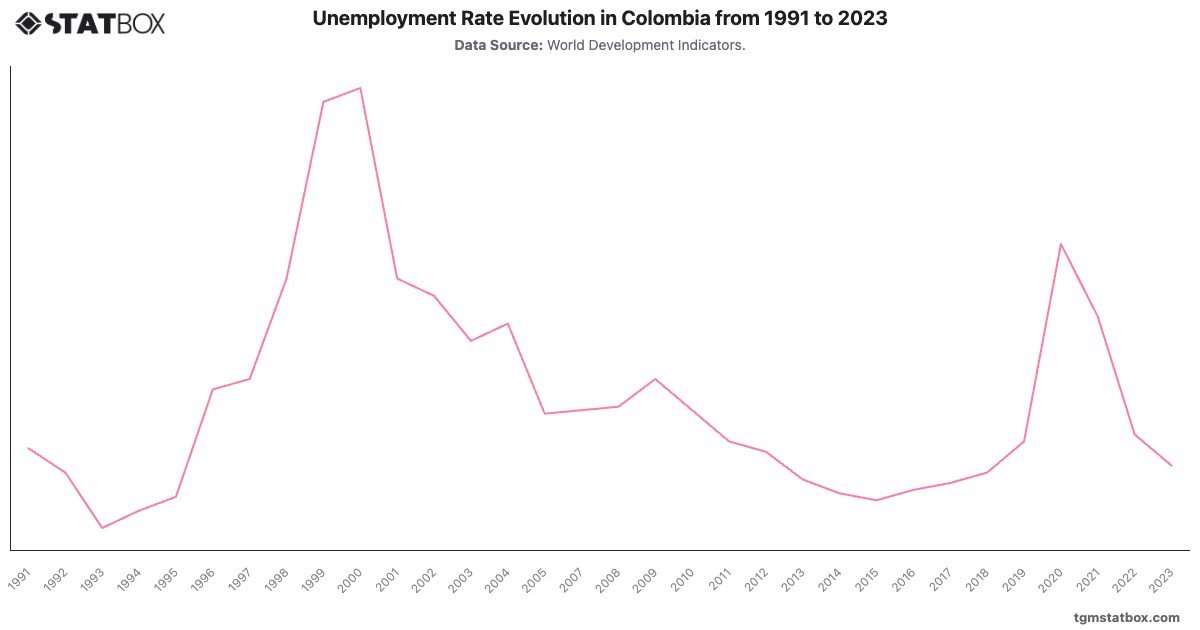
Colombia's unemployment rate experienced significant volatility from 1991 to 2021, with peaks and troughs reflective of the country’s socio-economic challenges. In the early 1990s, unemployment hovered around , reaching a low of in 1993 due to a period of economic growth and reforms aimed at stabilizing the labor market. However, the late 1990s economic crisis brought about a steep rise, and by 1999, unemployment spiked dramatically to , driven by financial instability and reduced economic growth.
Following this peak, Colombia implemented structural reforms that saw unemployment gradually decrease, settling around by 2008. However, the 2009 global recession again impacted the economy, leading to an uptick in unemployment. The COVID-19 pandemic in 2020 caused a sharp rise to , but by 2023, the rate declined to , reflecting Colombia's ongoing recovery efforts and economic resilience in the face of challenges.
Following this peak, Colombia implemented structural reforms that saw unemployment gradually decrease, settling around by 2008. However, the 2009 global recession again impacted the economy, leading to an uptick in unemployment. The COVID-19 pandemic in 2020 caused a sharp rise to , but by 2023, the rate declined to , reflecting Colombia's ongoing recovery efforts and economic resilience in the face of challenges.
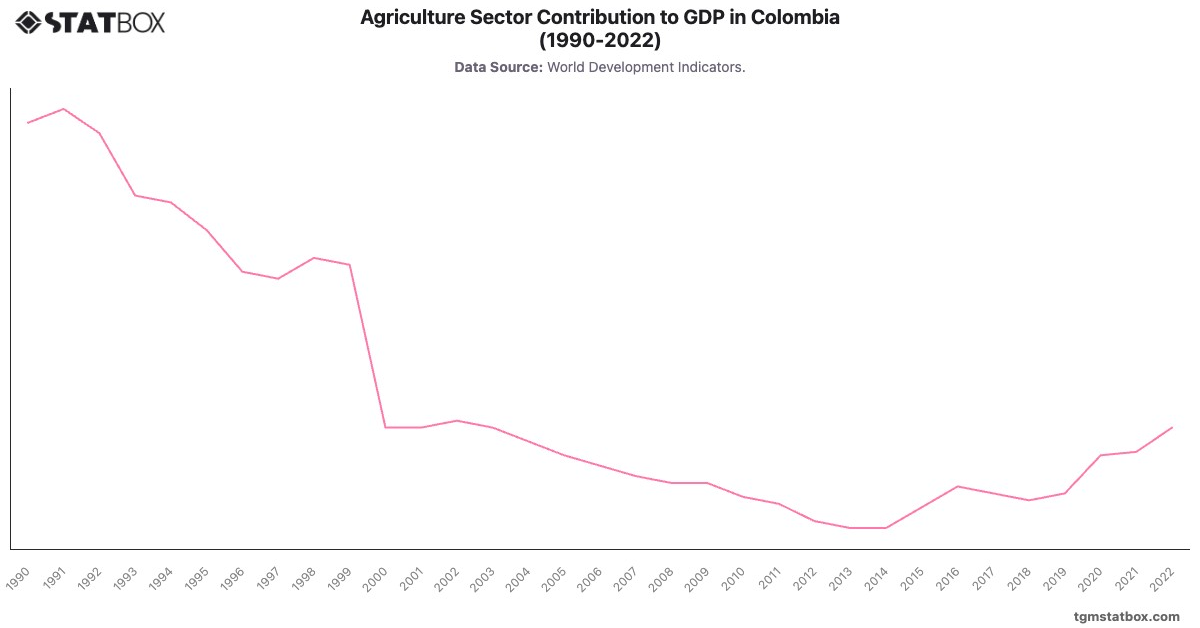
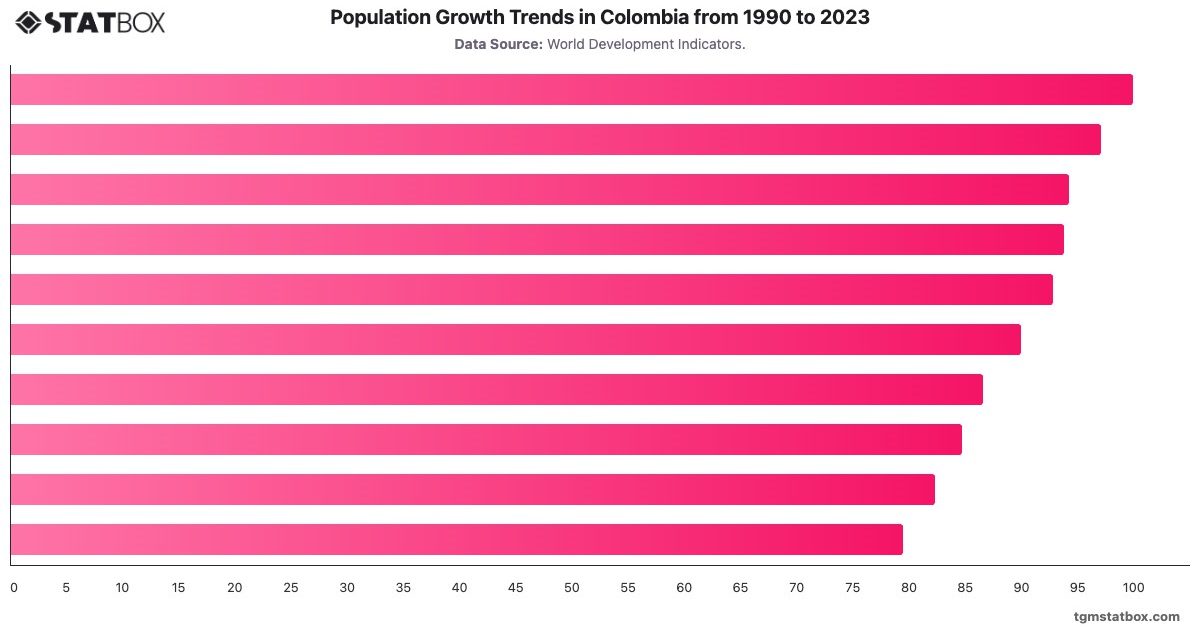
Gain a broader perspective by reviewing Colombia’s population numbers, Colombia’s military personnel ratio, Colombia’s agriculture share in GDP.