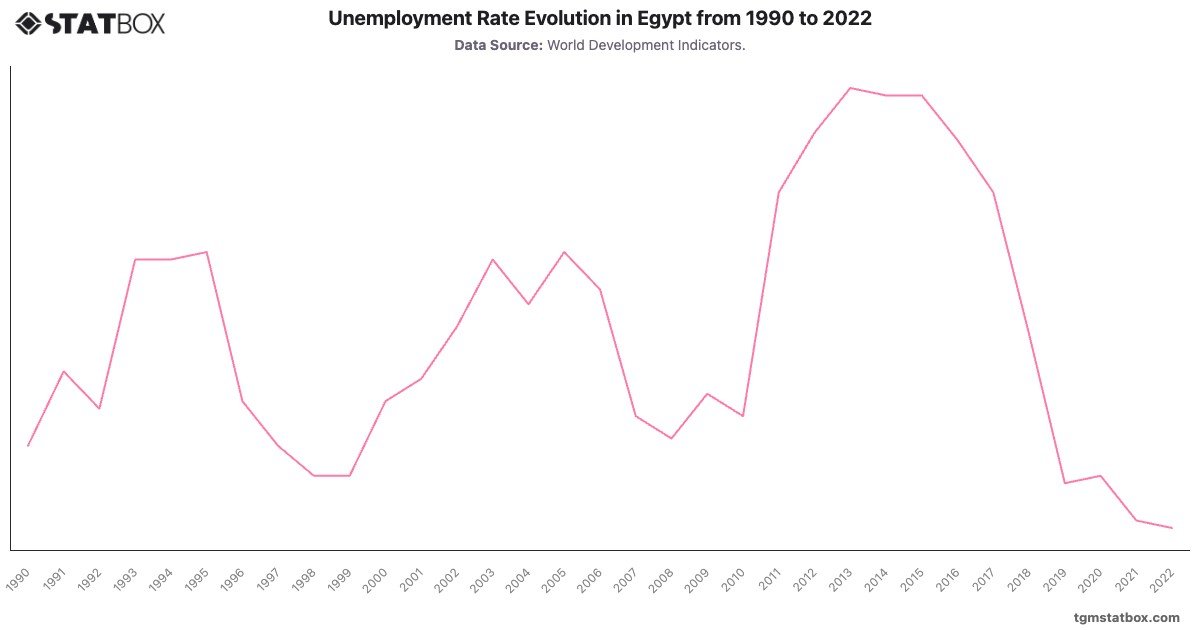
Egypt’s unemployment trends reveal the impact of political and economic shifts. In the early 1990s, Egypt maintained a relatively high unemployment rate, hovering around 8–, which persisted through various structural adjustments. Following the 2011 revolution, unemployment spiked to in 2013 as political instability impacted the economy. This high rate continued through 2016, marking Egypt’s struggles in achieving sustained economic growth.
Post-2016, as Egypt undertook economic reforms under the International Monetary Fund (IMF), unemployment gradually decreased. By 2019, it reached , its lowest level since the 1990s. While the COVID-19 pandemic caused a temporary rise to , Egypt quickly recovered, with unemployment standing at in 2022, reflecting ongoing improvements and economic resilience.
Post-2016, as Egypt undertook economic reforms under the International Monetary Fund (IMF), unemployment gradually decreased. By 2019, it reached , its lowest level since the 1990s. While the COVID-19 pandemic caused a temporary rise to , Egypt quickly recovered, with unemployment standing at in 2022, reflecting ongoing improvements and economic resilience.
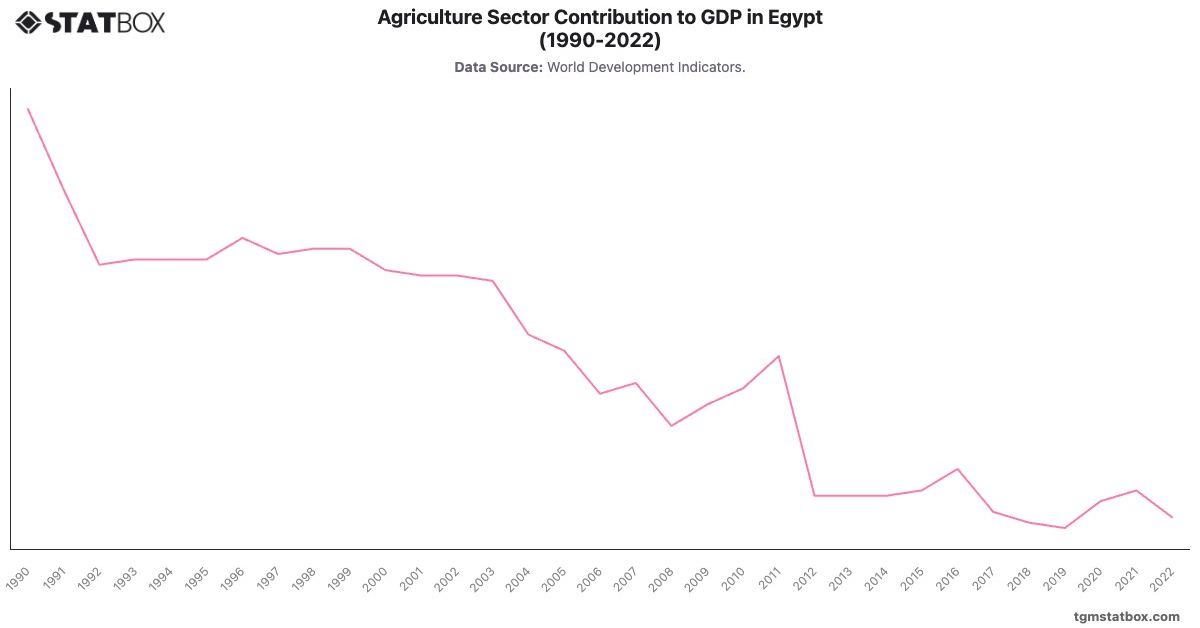
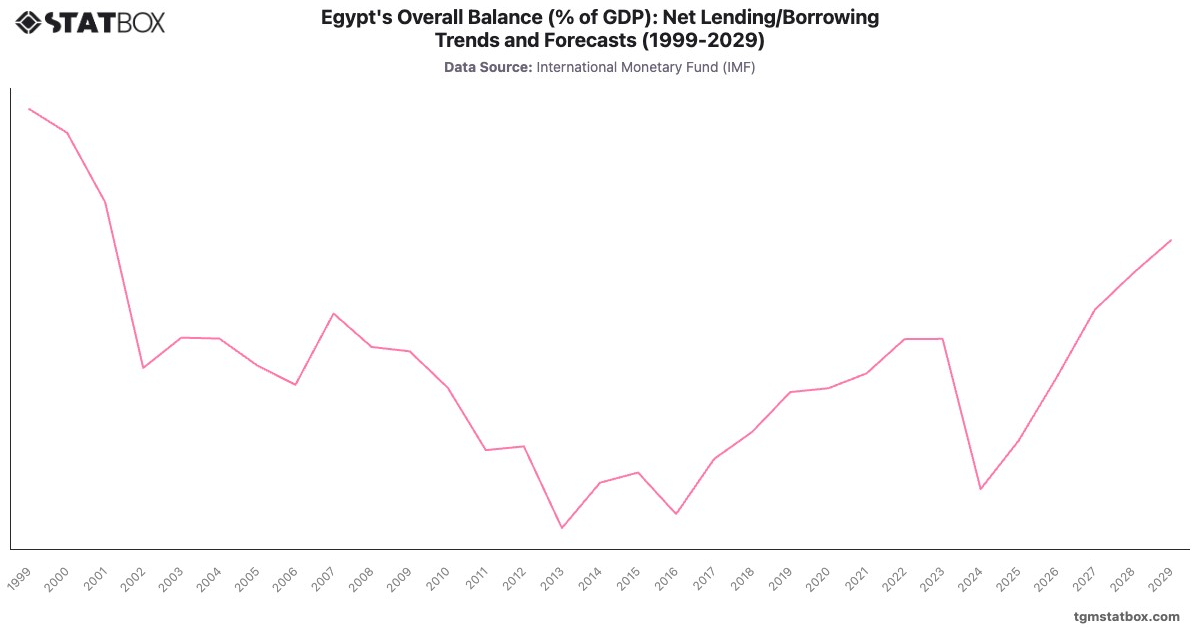
For a deeper dive into the topic, explore Egypt’s agriculture share in GDP, Egypt’s net lending/borrowing balance, Egypt’s mortality trend.