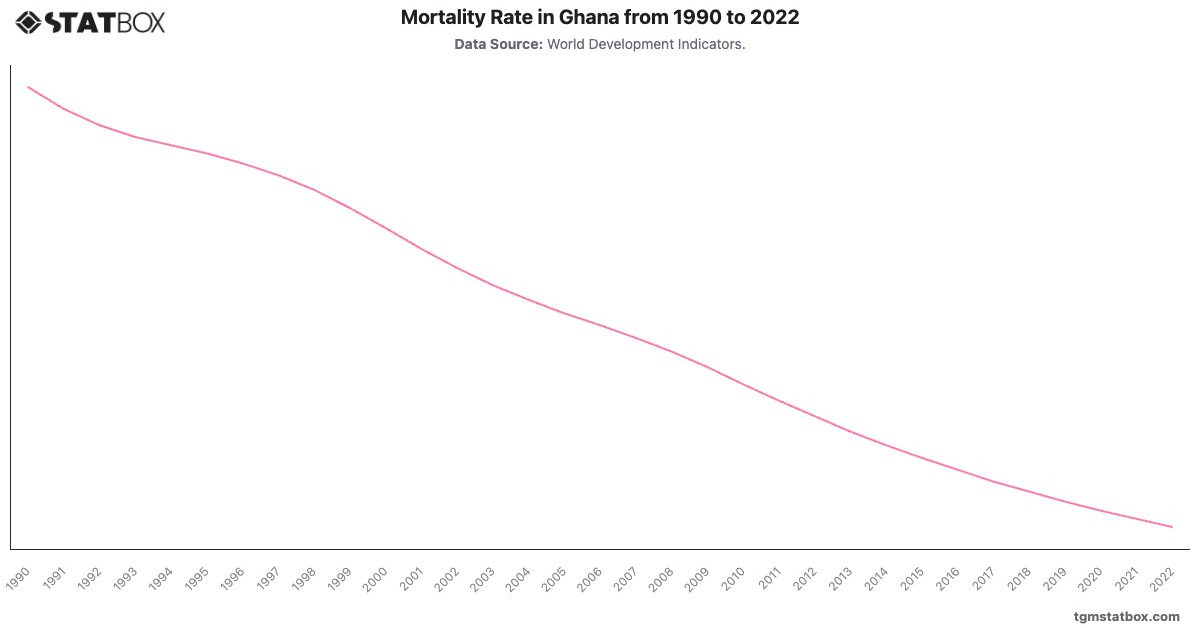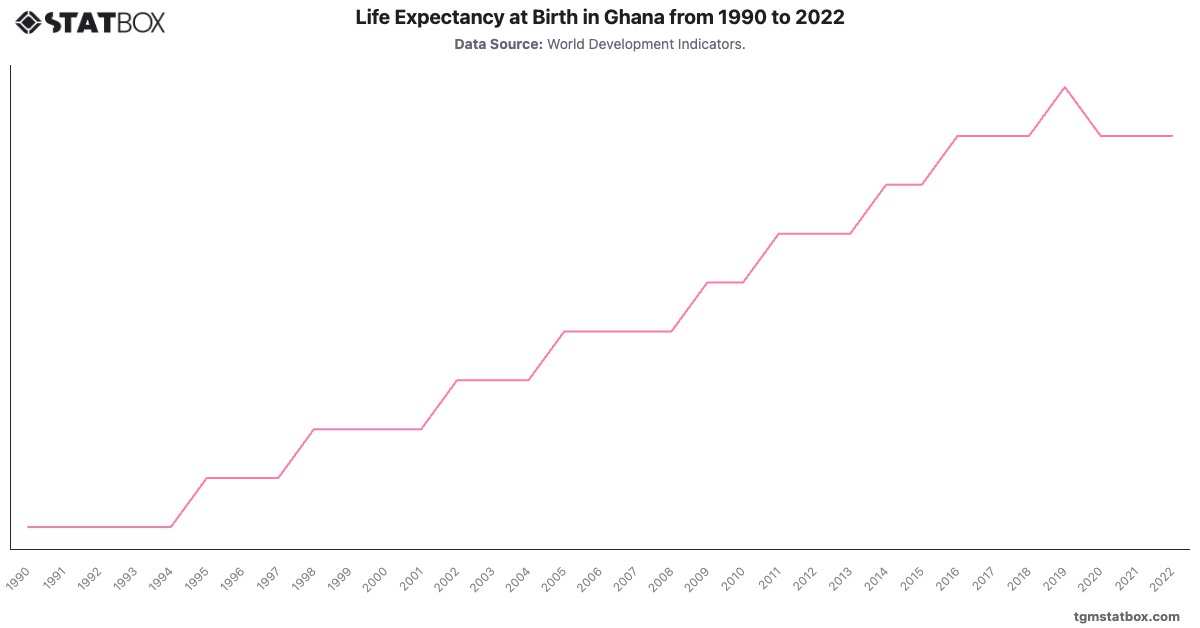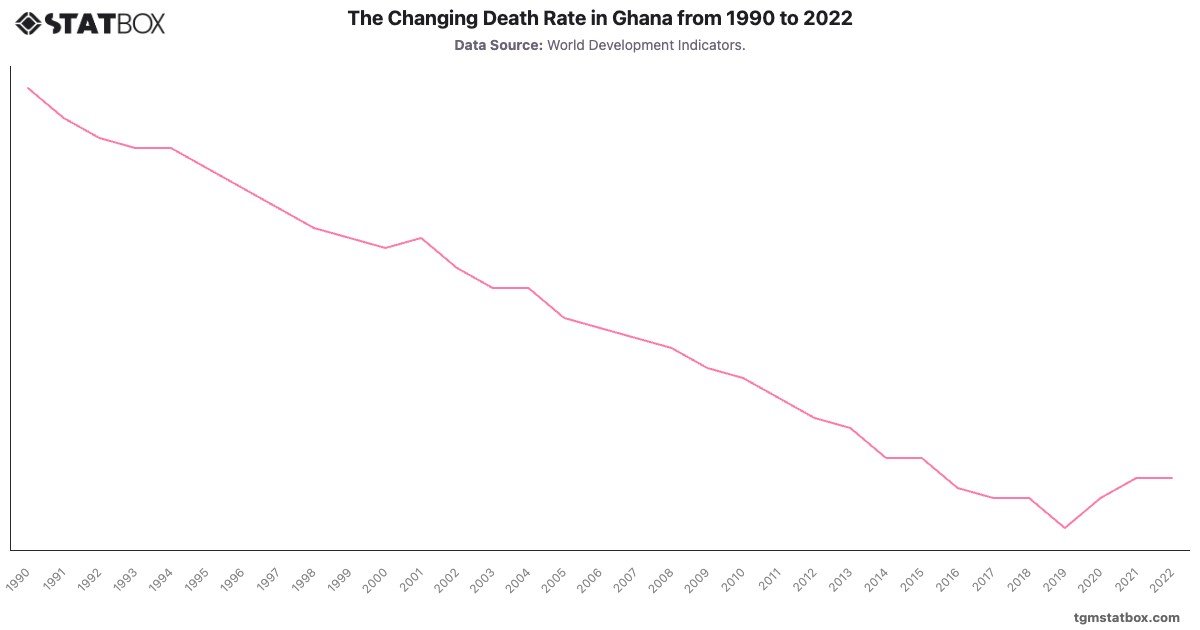
Ghana has experienced a steady decline in its death rate from 11.5 per 1,000 people in 1990 to 7.6 in 2022. The most significant reductions in mortality were seen in the early 2000s, as the country made strides in improving healthcare access, especially for maternal and child health. Better management of infectious diseases, coupled with increased life expectancy, has played a role in this steady decrease.
However, there was a slight rise in the death rate in 2020, when it reached 7.4, possibly due to the indirect effects of the COVID-19 pandemic on healthcare services. Despite this, Ghana continues to experience significant health improvements, particularly in reducing child mortality and improving public health infrastructure. Going forward, further investments in healthcare, particularly in rural areas, will be essential in continuing this downward trend.
However, there was a slight rise in the death rate in 2020, when it reached 7.4, possibly due to the indirect effects of the COVID-19 pandemic on healthcare services. Despite this, Ghana continues to experience significant health improvements, particularly in reducing child mortality and improving public health infrastructure. Going forward, further investments in healthcare, particularly in rural areas, will be essential in continuing this downward trend.
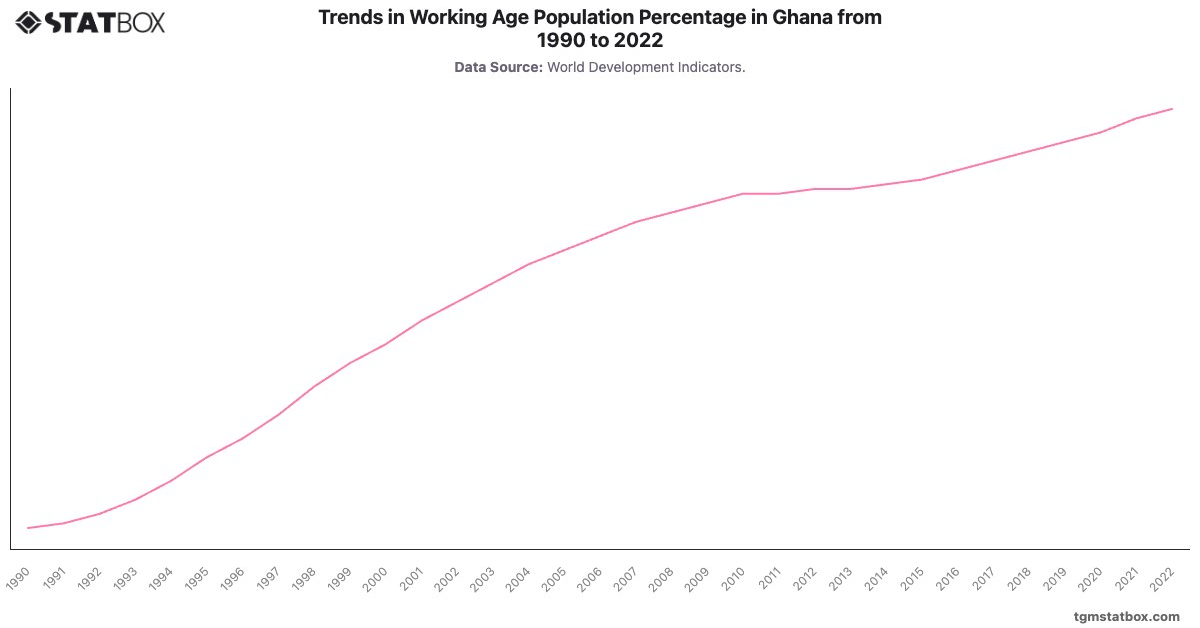
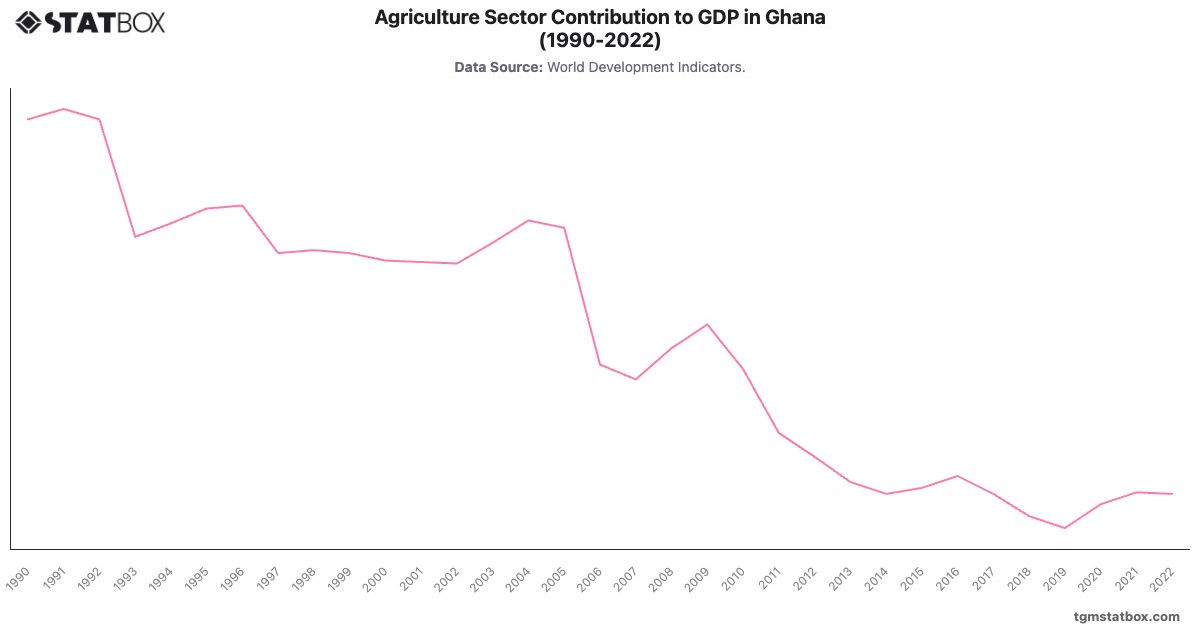
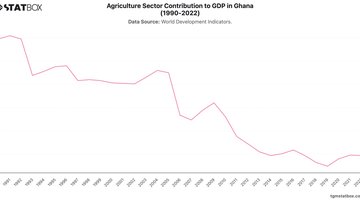
Gain a broader perspective by reviewing Ghana’s unemployment rate trend, Ghana’s working-age demographic share, agriculture sector’s GDP share in Ghana.